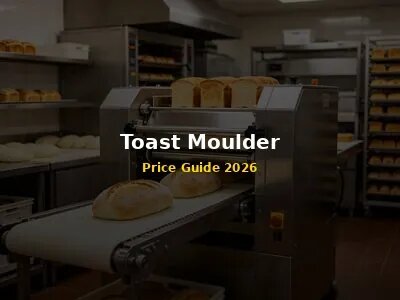
We have seen hundreds of bakeries deal with this exact issue. Here is what the successful ones do differently: "How much does a vertical dough sheeter cost?" It's a simple question with a complex answer, because vertical dough sheeter prices vary by a lot from roller width, machine size, capacity, brand, construction quality, and whether you buy new or used. But understanding the full cost picture — purchase price, operating costs, electricity consumption, flour usage, labor costs, floor space requirements, maintenance, and total cost of ownership — is a must for making a smart purchasing decision.
Quick Answer
Tabletop dough sheeter vs floor model complete comparison: A detailed comparison of tabletop and floor-standing dough sheeters, including capacity, performance, price, space requirements, ease of use, maintenance, and which is right for your bakery. (1) What is a dough sheeter—A dough sheeter (also called dough roller, pastry brake, laminator) is a machine that rolls dough to a uniform thickness using adjustable rollers. It is core for laminated dough products (croissants, danish, puff pastry) and any product requiring consistent dough thickness (pizza, flatbread, pie crust, cookies). It replaces manual rolling with a rolling pin, which is slow, inconsistent, and labor-intensive. (2) Tabletop dough sheeter overview—Design: Compact, sits on countertop or workbench. Small rollers (30-50cm wide). Lightweight (30-80kg). Usually single-pass or reversible manual/electric operation. Capacity: Low to medium: 10-50kg dough/hour. Suitable for small bakeries, cafes, pastry shops, restaurants. Can handle dough thickness 1-50mm. Roller width 30-50cm (fits half-sheet to full-sheet size dough). Price: $300-$1,500 for manual tabletop. $1,000-$4,000 for electric tabletop. Premium brands (Rondo, Seewer): $2,000-$6,000. Pros: Affordable (1/3 to 1/2 cost of floor model). Space-saving (fits on counter, no dedicated floor space). Portable (can move around, store when not in use). Easy to install (just plug in, no special installation). Good for small volumes and occasional use. Easy to clean (small, accessible parts). Cons: Limited capacity (can't handle high volume, large dough pieces). Narrow rollers (can't sheet wide dough, limited product sizes). Less durable (lighter construction, may not hold up to daily heavy use). Less precise (some manual models have less accurate thickness control). May move/vibrate on counter (needs securing). Limited to soft/medium dough (may struggle with stiff dough). Not suitable for continuous high-volume production. (3) Floor-standing dough sheeter overview—Design: Freestanding unit on its own legs/frame. Large rollers (50-80cm wide). Heavy (150-500kg). Usually electric, reversible, with conveyor belts on both sides. Some models have automatic dough feed and cutting attachments. Capacity: Medium to high: 50-300kg dough/hour. Suitable for medium-large bakeries, wholesale, pastry production. Can handle dough thickness 0.5-50mm. Roller width 50-80cm (fits full-sheet to extra-wide dough). Price: $3,000-$10,000 for mid-range floor model (50-60cm). $8,000-$18,000 for large floor model (70-80cm). Premium European brands (Rondo, Fritsch, Seewer): $10,000-$40,000. Pros: High capacity (handles large volumes, continuous production). Wide rollers (sheets large dough pieces, more product versatility). Durable construction (heavy-duty, built for daily commercial use, lasts 10-20 years). Precise thickness control (accurate to ±0.1mm, consistent results). Reversible operation (dough passes back and forth for lamination, easier croissant making). Conveyor belts (hands-free operation, less labor, faster production). Can handle all dough types (soft, medium, stiff, laminated). More stable (heavy frame, no vibration, consistent performance). Can add attachments (cutters, dusters, stackers) for automation. Cons: Expensive (2-4x cost of tabletop). Large footprint (needs dedicated floor space 1-2 sq meters). Heavy (difficult to move, needs strong floor, professional delivery/rigging). More complex installation (may need dedicated circuit, assembly). Harder to clean (larger, more parts, belts need careful cleaning). Overkill for small volumes (underused = waste of money/space). (4) Side-by-side comparison—Reason | Tabletop | Floor-standing: Price: $300-$4,000 | $3,000-$40,000. Capacity: 10-50kg/hour | 50-300kg/hour. Roller width: 30-50cm | 50-80cm. Thickness range: 1-50mm | 0.5-50mm. Weight: 30-80kg | 150-500kg. Footprint: 0.3-0.6 sq m (on counter) | 1-2 sq m (floor). Power: 110/220V, 0.25-1kW | 220/380V, 1-3kW. Durability: 3-8 years (light use) | 10-20 years (heavy use). Best for: Small bakery, cafe, restaurant, low volume, occasional use, limited space, startup budget | Medium-large bakery, wholesale, pastry production, high volume, daily use, dedicated space, growth plans. Labor: 1 operator (hands-on) | 0.5-1 operator (semi-automated). Dough types: Soft-medium | All types including stiff/laminated. Precision: ±0.5-1mm | ±0.1-0.5mm. (5) Which should you choose—Choose tabletop if: You produce <50kg laminated dough/day. You've limited counter/floor space. Your budget is <$4,000. You only need sheeter occasionally (a few times/week). You make small products (croissants, danish, small pastries) that fit 30-50cm width. You're a startup/cafe/restaurant with limited pastry volume. You need portability (move between locations, store when not in use). Choose floor-standing if: You produce 50+kg laminated dough/day. You've dedicated floor space (1-2 sq meters). Your budget is $5,000+. You need sheeter daily or for continuous production. You make large products (full-sheet dough, large croissant batches, industrial pastry) needing 50-80cm width. You're a medium-large bakery, wholesale, or pastry production facility. You need precision (±0.1mm) for consistent laminated products. You want durability (10-20 years) and heavy-duty construction. You plan to add automation attachments (cutters, stackers). You make stiff dough or high-volume laminated dough that tabletop can't handle. Middle ground: If you're between sizes (50-100kg/day, moderate budget), consider: A large tabletop (50cm, electric, heavy-duty) — may handle moderate volume. A small floor model (50cm, entry-level) — more capacity without full size cost. Used floor model — 40-60% savings, get more capacity for budget. Two tabletops — if space allows, parallel production (but more labor). (6) ROI comparison—Tabletop sheeter ROI: Cost: $1,000-$3,000 (electric tabletop). Labor savings: replaces 1 person rolling dough manually for 2-4 hours/day. At $15/hour × 3 hours × 250 days = $11,250/year labor savings. Consistency/waste reduction: manual rolling ±10-15% thickness variation vs machine ±1-2% = less waste, more consistent product. Savings: $1,000-$3,000/year. Total annual savings: $12,000-$14,000. Payback period: 1-3 months. Even for small bakeries, tabletop sheeter pays for itself quickly. Floor-standing sheeter ROI: Cost: $5,000-$15,000 (mid-range floor model). Labor savings: replaces 1-2 people for 4-8 hours/day. At $15/hour × 1.5 people × 6 hours × 250 days = $33,750/year labor savings. Capacity increase: enables higher production volume = more revenue. If sheeter enables $500/day extra production at 30% margin = $37,500/year extra profit. Consistency/waste reduction: $2,000-$5,000/year. Total annual savings/extra profit: $70,000-$75,000. Payback period: 1-3 months for high-volume bakeries. Conclusion: Both tabletop and floor-standing sheeters have Great ROI (under 6 months payback) for any bakery making laminated dough. The choice depends on volume and space, not whether to buy (You should buy one if making 10kg+ laminated dough/week). (7) Top brands by type—Tabletop brands: Pastaline (Italy): good quality, affordable, popular for small shops. Imperia (Italy): well-known, durable, manual and electric options. Rondo (Switzerland): premium, precise, expensive but Great quality. Sinmag (Taiwan): good value, reliable, mid-range price. Various Chinese manufacturers: affordable ($300-$800), but quality varies—look for CE certification, factory look over. Floor-standing brands: Rondo (Switzerland): industry leader, precision, wide range, premium price. Seewer (Switzerland): premium, innovative, high quality. Fritsch (Germany): industrial-grade, automation, high capacity, expensive. Sinmag (Taiwan): good value, reliable, mid-range, popular worldwide. WP Bakery (Canada/US): strong in North America, good service. Bongard (France): Great for pastry/bread, premium. (8) Common mistakes—Buying tabletop when you need floor model: Underestimating volume, then outgrowing tabletop in 6-12 months = wasted money. Calculate 2-3 year volume needs before buying. Buying floor model when tabletop suffices: Overbuying = wasted money, wasted space, underused equipment. Match to realistic volume. Ignoring roller width: Buying 30cm tabletop when You should sheet full-sheet (60cm) dough = can't use for your products. Measure your dough sizes before buying. Not securing tabletop: Tabletop sheeters vibrate and can move on counter—secure with clamps or non-slip mat. Not checking dough compatibility: Some sheeters can't handle stiff dough or quite soft/sticky dough. Test with your dough if possible. Ignoring maintenance: Belts, rollers, bearings need regular cleaning and lubrication. Poor maintenance = premature wear, inconsistency, breakdowns. Not training staff: Improper use (forcing dough, incorrect thickness settings, overloading) = damage, inconsistent results, safety hazards. Train all operators. Skipping thickness calibration: Thickness settings drift over time. Calibrate monthly with a thickness gauge. (9) FAQ—Q: Can a tabletop sheeter handle croissant production? A: Yes, for small-scale croissant production (50-200 croissants/day). Tabletop sheeters with 40-50cm rollers and reversible operation can laminate croissant dough (butter block, folding, rolling). However, for high-volume croissant production (200+ per day), a floor-standing sheeter with 60cm+ rollers and conveyor belts is much more efficient and consistent. Tabletop limitations for croissants: narrower dough (fewer croissants per sheet), slower (manual feeding), less consistent thickness (some manual models), operator fatigue (repetitive feeding). If you're serious about croissants as a major product, invest in floor-standing. If croissants are a small part of your menu, tabletop is fine. Q: How much space do I need for a floor-standing sheeter? A: Typical floor-standing sheeter dimensions: Width: 80-120cm (including conveyor belts extended). Depth: 60-100cm. Height: 100-130cm (working height). Footprint: 1-2 sq meters (0.5m × 1m to 1m × 2m). Additional clearance needed: 60cm on all sides for operation and cleaning. 100cm in front for operator and dough handling. Access for belt removal and cleaning. If conveyor belts extend, add 50-100cm on each side when in use (can fold up on some models when not in use). Total space needed: 2-4 sq meters including operating clearance. Measure your space carefully before buying. If space is tight, look for compact floor models or tabletop. Q: Can I use a dough sheeter for pizza dough? A: Yes, dough sheeters work well for pizza dough, especially for consistent thickness in high-volume pizza operations. Advantages for pizza: consistent thickness (every pizza same), fast (5-10 seconds per dough ball vs 1-2 minutes hand-stretching), less skill needed (anyone can operate), less labor, uniform shape. Considerations: Pizza dough is often softer/stickier than pastry dough—may need flour dusting or use a sheeter with non-stick belts/rollers. Pizza dough balls are usually 200-500g—tabletop sheeter can handle, but high-volume pizza (100+ pizzas/day) benefits from floor model. Some pizza-specific dough rollers exist (horizontal rollers), but a standard sheeter works for most pizza operations. If you make both pizza and pastry, a standard dough sheeter is versatile. If pizza is your only product, a dedicated pizza dough roller may be more efficient. Q: How often should I clean and maintain a dough sheeter? A: Daily cleaning (after each use or at end of day): Wipe down rollers and belts with food-safe cleaner/dough scraper. Remove flour/dough residue. Clean exterior surfaces. Empty flour/dough collection trays. Weekly deep cleaning: Remove belts (if removable) and wash with warm soapy water, sanitize, air dry. Clean between rollers with brush/dough scraper. Clean all food-contact surfaces thoroughly. check belts for wear/cracks. Monthly maintenance: Check belt tension and adjust if needed. Lubricate moving parts (bearings, chains) per manufacturer instructions (use food-grade lubricant for food-contact parts). Calibrate thickness setting (use thickness gauge, adjust if inaccurate). Check electrical connections and power cord. check rollers for damage/wear. Quarterly: Professional checkion by technician (if under service contract). Replace worn belts, bearings, seals. Check motor and gearbox. Annual: Full overhaul, replace major wear parts, motor check. Keep maintenance log. Proper cleaning and maintenance extends life from 5-8 years to 10-20 years, ensures consistent performance, and prevents food safety issues. Q: Is it worth buying a used dough sheeter? A: Used can be a good value if you know what to check: Advantages: 40-60% savings vs new. Immediate availability (no lead time). Can get higher-end brand/model for budget of new mid-range. Disadvantages: No warranty (or short 30-90 day dealer warranty). Unknown condition/maintenance history. Worn belts/rollers may need replacement ($200-$800). Older model may lack features or parts availability. What to check when buying used: Run the machine (listen for unusual noise, check both directions). Check rollers (should be smooth, no dents, corrosion, or excessive wear). Check belts (look for cracks, fraying, stretching—replacement cost $100-$500). Check thickness adjustment (should move smoothly, calibrate with gauge). Check safety features (emergency stop, guards). Check motor (should run smoothly, no overheating, no burning smell). Check electrical (cord, plug, switches). Check frame (no cracks, rust, structural damage). Ask for: age, brand/model, service records, reason for selling. Buy from: reputable used equipment dealer (checks, refurbishes, offers warranty), not Craigslist/unknown private seller. Budget for: replacement belts ($100-$500), professional checkion ($100-$300), any needed repairs. If used is from a reputable brand (Rondo, Sinmag, WP), less than 10 years old, and passes checkion, it can be an Great value. If it's a no-name brand, 15+ years old, or has visible problems, skip it. Summary: tabletop vs floor-standing dough sheeter comparison = what is dough sheeter, tabletop overview (design, capacity, price, pros, cons), floor-standing overview (design, capacity, price, pros, cons), side-by-side comparison (12 factors), which to choose (tabletop criteria, floor-standing criteria, middle ground options), ROI comparison (both pay back in 1-3 months), top brands by type, common mistakes, FAQ. Important: choose from your dough volume (<50kg/day = tabletop, 50+kg/day = floor-standing), available space, budget, and product types; both have Great ROI for laminated dough production; focus on reputable brands, proper maintenance, and staff training regardless of type.
Table of Contents
- Vertical Dough Sheeter Price Ranges by Roller Width (2026)
- Vertical vs Tabletop Dough Sheeter: Which is Right for You?
- Additional Costs Beyond the Machine Itself
- New vs Used Vertical Dough Sheeter Price Comparison
- Ongoing Operating Costs
- ROI Calculation: How Fast Does a Vertical Dough Sheeter Pay for Itself?
- Tips for Getting the Best Price on a Vertical Dough Sheeter
- Often Asked Questions
- Important Takeaways
- Related Articles
Too many bakery owners focus only on the sticker price and end up surprised by the ongoing costs — especially labor, which for vertical sheeters can be 20-50x the purchase price over the machine's lifespan. Others overpay for premium brands when a value brand would meet their needs just as well. And some buy machines that are too small or too large for their production, or that don't fit in their available space, wasting money either way.After a decade in the bakery equipment industry, we've seen it all. The bakeries that thrive aren't the ones with the fanciest machines — they're the ones that understand their production needs and choose So. This vertical dough sheeter guide is from real market data, hundreds of equipment sales, and feedback from bakery owners worldwide.
"When I decided to add croissants and Danish pastries to my bakery menu, I knew I needed a dough sheeter. I started with a cheap tabletop model for $400, but it was a nightmare — the rollers were inconsistent, the dough kept sticking, and I could only sheet small pieces. My croissants were uneven and my lamination was all over the place. After six months of frustration, I upgraded to a medium vertical sheeter for $1,500. Night and day difference! The conveyor belts made sheeting effortless, the roller pressure was consistent, and I could sheet large dough blocks for wholesale orders. My croissant quality improved by a lot, and I could produce 3x more in half the time. The vertical sheeter paid for itself in 2 months from increased croissant sales alone. The lesson: don't cheap out on a sheeter if you're serious about laminated doughs. A good vertical sheeter is worth every penny."
— Maria G., Bakery Owner in Spain
When it comes to vertical sheeter, choosing the right equipment is crucial for bakery success. HNH Bakery Equipment provides professional vertical sheeter solutions for bakeries worldwide. In this guide, we explore everything you need to know about vertical sheeter and how to select the best equipment for your bakery.
Vertical Dough Sheeter Price Ranges by Roller Width (2026)
The biggest reason affecting vertical dough sheeter price is the roller width — the width of the dough sheet the machine can produce. Roller widths range from small (300-400mm) to extra-large (750mm+). Small is cheapest, extra-large is most expensive — there can be a 5-10x price difference between the two extremes. Here are current market prices for new vertical dough sheeters by roller width, across different brand tiers:
Important Insight: Roller width is the biggest price reason, but machine size and automation level are close behind. A medium vertical sheeter with conveyor belts, variable speed, and digital controls can cost as much as a large basic model. Always compare features, not just roller width. For most bakeries, a medium (450-550mm) vertical sheeter offers the best balance of capacity, versatility, and price.
Vertical vs Tabletop Dough Sheeter: Which is Right for You?
One of the most important decisions is whether to buy a vertical or tabletop dough sheeter. Vertical models are more expensive and larger, but handle higher volume, wider dough, and continuous production. Tabletop models are cheaper and more compact, but have lower capacity and are designed for intermittent use. Here's a quick comparison:
Important insight: Vertical sheeters are typically 2-3x more expensive than tabletop models, but handle 2-5x more volume, allow hands-free operation, and produce more consistent results — especially for laminated doughs. For low-to-medium volume (<50-100 kg/day), tabletop is usually the best value. For medium-to-high volume (>100 kg/day), vertical is often more cost-effective over 10-15 years Because of lower labor costs and higher production capacity. Calculate total cost of ownership before deciding.
Additional Costs Beyond the Machine Itself
Total first-year investment example (medium capacity at $1,500):
Equipment: $1,500 + Shipping: $200 + Installation: $50 + Spare parts: $100 + Flour: $30 = $1,880 total first-year investment
New vs Used Vertical Dough Sheeter Price Comparison
Used machines typically cost 40-70% of new price, depending on age and condition. Vertical sheeters are quite durable (15-25+ year lifespan), so a well-maintained used machine can be an Great value. However, check rollers, conveyor belts, motor, and gearbox carefully before buying, ensure You've adequate floor space, and thoroughly sanitize before use. A $400 used machine that needs $500 in roller/belt replacement soon after purchase may not be a better deal than a $1,000 new machine with warranty.
Ongoing Operating Costs
Vertical dough sheeters have moderate ongoing operating costs — higher than tabletop models Because of more powerful motors and conveyor belts, but still relatively low compared to other bakery equipment. The biggest ongoing cost is labor:
Annual Operating Costs (excluding labor, medium capacity)
worth noting: Labor is by far the biggest ongoing cost, though vertical sheeters reduce labor by 30-50% compared to tabletop models. At $15/hour, annual labor costs are $3,000-$7,500 for medium volume. Over 15 years, labor costs ($45,000-$112,500) are 20-50x the purchase price! This is why for medium-to-high volume production, vertical sheeters are often more cost-effective than tabletop despite higher upfront cost — the labor savings far exceed the purchase price difference.
ROI Calculation: How Fast Does a Vertical Dough Sheeter Pay for Itself?
Vertical dough sheeters offer Great ROI for medium-to-high volume bakeries — typically paying for themselves within 1-12 months — because they by a lot reduce labor costs (compared to hand sheeting or tabletop sheeting), improve product consistency, reduce dough waste, and increase production capacity. Here's a typical ROI calculation:
Note: These are conservative calculations (only labor + waste savings, not including increased revenue from higher capacity). When factoring in increased sales (if demand exists), payback can be under 1 month and ROI can exceed 7,000%. Actual ROI depends on your specific production volume, labor costs, dough costs, and market demand. For low-volume production (<30-50 kg/day), tabletop sheeters may offer better ROI Because of lower purchase price.
"I did a vertical vs tabletop total cost analysis before buying my sheeter. I was producing about 150 kg of dough per day, mostly croissants and Danish pastries. The tabletop model was $600 and the vertical was $1,800 — three times the price! But when I calculated labor costs, the vertical made sense. The tabletop required constant manual feeding, keeping one operator tied to the machine for 4 hours a day. The vertical with conveyor belts and foot pedal allowed the same operator to sheet in 1.5 hours and then do other tasks. Over 10 years, the vertical would save about $18,000 in labor costs, far exceeding the $1,200 price difference. Plus, my croissant quality improved because the vertical produced more consistent lamination. I bought the vertical, and it was the right decision. It paid for itself in 3 months. The lesson: don't just look at purchase price — calculate total cost of ownership including labor. For medium volume, vertical is almost always cheaper Over time."
— Hans K., Bakery Owner in Germany
Tips for Getting the Best Price on a Vertical Dough Sheeter
- Compare multiple suppliers — Get quotes from at least 3 suppliers (premium, mid-range, value). Don't accept the first offer.
- Ask about package deals — Buying sheeter + mixer + oven + divider together often gets 5-15% discount.
- Negotiate — Many suppliers have 5-10% price flexibility, especially for larger orders or repeat customers.
- Consider value brands — Chinese manufacturers like HNH offer commercial-grade quality at 40-60% lower prices than European brands.
- Buy during slow seasons — Prices may be more negotiable during off-peak periods (Q1, late summer).
- Ask about promotions — Many suppliers offer discounts at trade shows or end-of-year sales.
- Consider used equipment — For startups on tight budget, a well-maintained used vertical sheeter can be a great value. check rollers, belts, motor, and gearbox thoroughly and sanitize before use.
- Reason in total cost — Don't just look at purchase price; consider labor savings, waste reduction, electricity costs, flour costs, durability, warranty, floor space requirements, and after-sales support. For medium-to-high volume, calculate vertical vs tabletop total cost of ownership.
- Buy direct from manufacturer — Cut out middlemen/dealers for better prices (like buying directly from HNH).
- Ensure You've adequate floor space — Vertical sheeters need large floor space (1-3 sqm) and ceiling height (1.5-2.5m). Measure your space before buying.
- Consider conveyor belts and foot pedals — These features reduce labor by 30-50%, noticeably boosting ROI. They may add $300-$1,000 to purchase price but pay for themselves quickly in labor savings.
📋 Bakery Equipment Checklist
Download our complete bakery equipment checklist with budget estimates for 5 different bakery types.
Free Bakery Equipment Checklist →📋 Bakery Equipment ROI Calculator
Use our interactive ROI calculator to see how quickly your bakery equipment investment pays off.
Calculate Your Equipment ROI →📋 Bakery Equipment Maintenance Calendar
Get our printable maintenance calendar to keep your bakery equipment running at peak performance.
Printable Maintenance Calendar →📋 Bakery Equipment Energy Cost Calculator
Estimate your bakery equipment energy costs and find ways to reduce your utility bills.
Calculate Energy Costs →🏭 Bakery Equipment Capacity Calculator
Not sure what size equipment you need? Use our free interactive calculator to find the perfect dough divider, mixer, oven, and proofer capacity for your production volume.
Calculate Your Equipment Needs →⚖️ Bakery Equipment Comparison Tool
Compare dough dividers, spiral mixers, ovens, proofers and dough sheeters side by side. View specs, prices, capacity and features to find the best equipment for your bakery.
Compare Equipment Now →Often Asked Questions
Q: How much does a vertical dough sheeter cost in 2026?
A: Vertical dough sheeter prices vary by roller width, machine size, capacity, brand, construction. New prices: small (300-400mm) $200-$1,800; medium (450-550mm) $500-$3,500; large (600-700mm) $1,200-$6,000; extra-large (750mm+) $2,500-$10,000. Value brands (Chinese): small $200-$800, medium $500-$1,800, large $1,200-$3,200, extra-large $2,500-$6,000. Mid-range: small $300-$1,200, medium $800-$2,500, large $1,800-$4,500, extra-large $3,500-$8,000. Premium European: small $500-$1,800, medium $1,200-$3,500, large $2,500-$6,000, extra-large $5,000-$10,000. Roller width: small 300-400mm $200-$1,800; medium 450-550mm $500-$3,500; large 600-700mm $1,200-$6,000; extra-large 750mm+ $2,500-$10,000. Features adding cost: wider roller (+$500-$2,000), stainless steel (+$200-$800), adjustable roller gap digital (+$100-$500), reversible rollers (+$200-$600), conveyor belts (+$300-$1,000), safety guards (+$100-$400), variable speed (+$150-$500), foot pedal (+$100-$300), removable rollers (+$100-$400), digital control panel (+$100-$400). Vertical vs tabletop: vertical $500-$6,000 vs tabletop $200-$1,500; vertical 2-3x more expensive but higher capacity. Used (3-5yr): 40-60% of new. Additional costs: shipping $50-$2,000, installation $0-$200, electrical work $0-$300, spare parts $50-$300, training $0-$100, flour $20-$50. Total first-year for medium: ~$1,880. Important factors: roller width, machine size/capacity, brand/origin, construction quality, vertical vs tabletop, new vs used, quantity, customization. At HNH, small vertical starts at $200, medium starts at $500. Contact us for detailed quote.
Q: Vertical vs tabletop dough sheeter: which is best?
A: Depends on production volume, available space, product types, budget, physical setup. VERTICAL advantages: higher production capacity (100-500+ kg/hr vs 20-100), wider roller width (450-750mm vs 300-500mm), continuous operation (8+ hrs/day vs intermittent), better for laminated dough (more consistent lamination), hands-free operation (conveyor belts, foot pedal), more powerful motors (0.5-2 kW vs 0.2-0.75 kW), more consistent thickness, better for large dough pieces (5-20+ kg vs 1-5 kg). VERTICAL disadvantages: higher purchase price ($500-$8,000+ vs $200-$1,500), larger footprint (1-3 sqm floor vs countertop), harder to move (80-300+ kg vs 20-60 kg), may require professional installation, higher shipping costs, overkill for small operations, higher energy consumption, more complex maintenance. TABLETOP advantages: lower purchase price ($200-$1,500), compact size (countertop), easy to move (portable), easy to clean, lower shipping costs, no installation required, good for small batches, lower energy consumption, simpler maintenance. TABLETOP disadvantages: lower production capacity (20-100 kg/hr), narrower roller width (300-500mm), intermittent use only, less consistent for laminated dough, requires constant manual operation, less powerful motors (may struggle with stiff dough), limited dough piece size (1-5 kg), may require sturdy countertop. Price comparison (medium 450-500mm): vertical $800-$3,000 vs tabletop $300-$1,200; vertical 2-3x more expensive. Total cost of ownership (10yr, 200 kg/day): vertical ~$15,000 vs tabletop ~$18,800; vertical saves $3,800! Buy VERTICAL if: medium-high volume (100+ kg/day), budget allows ($800+), have dedicated floor space (1-3 sqm), need continuous heavy use (8+ hrs/day), make laminated doughs regularly, need wider roller (500mm+), want hands-free operation, process stiff doughs regularly, need maximum consistency, want maximum durability (15-25+ yr), plan for long-term high-volume. Buy TABLETOP if: startup limited budget (<$800), low volume (<50-100 kg/day), limited floor space (small bakery, cafe, food truck), need portability (mobile, farmers market, temporary), small-batch/specialty production, have sturdy countertop, dough pieces small (1-5 kg), dough soft-to-medium, don't make laminated doughs regularly, plan to upgrade later. Hybrid: start with tabletop for low-volume/specialty, add vertical for high-volume as business grows. a priority: calculate total cost of ownership, consider growth plans (if volume will grow noticeably in 1-3yr, vertical now may be cheaper than tabletop + upgrade later), measure floor space and ceiling height, consider product types (laminated dough = vertical strongly recommended), dough type, operator ergonomics, energy consumption. At HNH, we offer both vertical and tabletop, and provide free recommendations from your volume, space, product types, and budget. Contact us to discuss your needs.
Q: What size vertical dough sheeter do I need?
A: Step-by-step: 1) Calculate daily dough production (kg/day across all products). 2) figure out operating hours (vertical can operate continuously, but changeovers take time). 3) Calculate required kg/hour = daily kg ÷ operating hours. 4) Add 30-50% headroom (real capacity is 60-80% of rated Because of loading/unloading, changeovers, operator breaks). Example: 200 kg/day ÷ 3 hours = 67 kg/hr × 1.4 = 94 kg/hr needed → medium capacity (450-550mm roller, 100-200 kg/hr). 5) figure out dough piece size and sheet width: small pastries 1-3 kg blocks, 300-450mm width; medium bread 3-8 kg, 450-550mm; large bread/pizza 5-15 kg, 550-700mm; industrial 15-30+ kg, 700-750mm+. Size guide: tiny (20-50 kg/day) → small vertical (300-400mm) or tabletop; small (50-150 kg/day) → small or medium vertical (400-500mm); medium (150-400 kg/day) → medium vertical (450-550mm, most common); large/wholesale (400-800 kg/day) → large vertical (600-700mm); extra-large/industrial (800+ kg/day) → extra-large vertical (750mm+) or multiple machines. Factors: product mix (changeover time), dough type (stiff processes slower), laminated doughs (need precise roller pressure, medium-to-large with conveyor best), peak demand (size for busiest), growth plans (30-50% headroom), operating hours, floor space (small ~0.5x1m, medium ~0.8x1.5m, large ~1x2m, extra-large ~1.2x2.5m), ceiling height (1.5-2.5m), dough block size, multiple machines vs one large. Common mistakes: buying too small (#1), buying too large, only current demand, using rated instead of realistic capacity, ignoring changeover time, ignoring dough type, ignoring laminated dough needs, ignoring peak demand, ignoring floor space/ceiling height, not Given dough block size, not comparing vertical vs tabletop. When in doubt: consult suppliers (HNH offers free size analysis and vertical vs tabletop comparison). At HNH, we offer free size analysis and vertical dough sheeter sizing recommendations. Contact us for personalized recommendation.
Q: What are the ongoing operating costs of a vertical dough sheeter?
A: Vertical dough sheeters have moderate ongoing costs (excluding labor). Breakdown: 1) ELECTRICITY: small (0.5-0.75 kW) $50-$150/yr; medium (0.75-1.5 kW) $100-$300/yr; large (1.5-2 kW) $200-$450/yr; extra-large (2-3 kW) $300-$600/yr. Vertical consumes 2-5x more than tabletop. 2) FLOUR/DUSTING: $75-$900/yr (0.5-3 kg/day, $0.50-$2.00/kg). Vertical with conveyor may use more flour than tabletop. 3) MAINTENANCE: small $80-$200/yr; medium $150-$350/yr; large $250-$500/yr; extra-large $400-$700/yr. More involved than tabletop Because of conveyor belts, motors, gearboxes. 4) REPAIRS: years 1-3 (warranty) $0-$100/yr; years 4-7 $100-$300/yr; years 8-12 $200-$500/yr; years 13+ $300-$800/yr. Common: conveyor belt $100-$500, roller refurbish/replace $200-$800, motor $200-$800, gearbox $300-$1,000, bearing $50-$200. Total repairs over 15yr: $1,500-$6,000 average. 5) LABOR (biggest cost, though vertical reduces vs tabletop): small 100-300 hrs/yr; medium 200-500 hrs/yr; large 300-700 hrs/yr. At $15/hr: small $1,500-$4,500; medium $3,000-$7,500; large $4,500-$10,500. Vertical with conveyor/foot pedal reduces labor by 30-50% vs tabletop. 6) CONSUMABLES: conveyor belts every 3-7yr ($100-$500), rollers every 7-12yr (refurbish $200-$500, replace $500-$1,500), bearings every 5-8yr ($50-$200), drive belts every 3-5yr ($30-$100), lubricant $30-$100/yr, flour $75-$900/yr. Annual $100-$500. 7) CLEANING SUPPLIES: food-grade sanitizer $50-$150/yr, brushes/tools $20-$60/yr, lubricant $30-$100/yr, belt cleaner $20-$60/yr. Annual $120-$370. 8) INSURANCE: 1-3% of equipment value ($15-$45 for $1,500 machine). Total annual operating cost (medium, excluding labor): $735-$2,315 (average ~$1,300/year). Including labor: $3,735-$9,815 (average ~$5,500/year). Over 15yr: $11,025-$34,725 (excluding labor), $56,025-$147,225 (including labor). Total cost of ownership ($1,500 machine over 15yr): $12,525-$36,225 (excluding labor), $57,525-$148,725 (including labor). Purchase price = only 1-3% of total including labor! Labor is by far the biggest cost. Vertical vs Tabletop Total Cost (15yr, 200 kg/day): Vertical $66,000 vs Tabletop $80,300 — vertical saves $14,300! At HNH, we provide detailed operating cost estimates and vertical vs tabletop total cost comparisons. Contact us for personalized analysis.
Q: What is the ROI for a vertical dough sheeter?
A: Vertical dough sheeters offer Great ROI for medium-to-high volume — typically 1-12 months payback, 4,000%+ 5-year ROI — because they by a lot reduce labor costs (vs hand/tabletop sheeting), improve consistency, reduce waste, and increase capacity. However, for low-volume (<30-50 kg/day), tabletop may offer better ROI Because of lower purchase price. Calculation: Payback = Total Initial Investment ÷ Annual Net Savings. ROI = (Annual Net Savings × Years - Total Investment) ÷ Total Investment × 100%. Step-by-step: 1) Total initial investment (equipment + shipping + installation + spare parts + flour + electrical work). Example (medium): $1,500 + $200 + $50 + $100 + $30 = $1,880. 2) Annual labor savings: hand sheeting 5-15 min/kg vs tabletop 2-5 min/kg vs vertical (conveyor) 0.5-2 min/kg. Time saved vs hand: 3-13 min/kg; vs tabletop: 1-3 min/kg. Example (upgrading from tabletop, 200 kg/day, tabletop 3 min/kg vs vertical 1.5 min/kg): 1.5 min/kg × 200 kg = 300 min/day = 5 hrs/day × 300 days = 1,500 hrs/yr × $15 = $22,500/yr. 3) Annual waste savings: hand/tabletop ±15-30% vs vertical ±5-10% = 5-15% dough cost savings. Example ($15,000/yr dough cost): hand/tabletop 15% = $2,250, vertical 5% = $750, savings = $1,500/yr. 4) Annual increased revenue (if demand exists): vertical can produce 2-4x more than hand, 1.5-2x more than tabletop. Example (20% increase, $80K revenue, 35% margin): $5,600 additional profit. 5) Annual operating costs (excluding labor): $735-$2,315 (average ~$1,300). 6) Annual net savings = labor savings + waste savings + increased profit - operating costs. Conservative (upgrading from tabletop, labor + waste only): $22,500 + $1,500 - $1,300 = $22,700/yr. Including increased revenue: $22,500 + $1,500 + $5,600 - $1,300 = $28,300/yr. 7) Payback: conservative $1,880 ÷ $22,700 = 0.08yr (~1 month); including revenue $1,880 ÷ $28,300 = 0.07yr (~0.8 months). 8) 5-year ROI: conservative ($22,700×5 - $1,880) ÷ $1,880 = 5,938%; including revenue ($28,300×5 - $1,880) ÷ $1,880 = 7,421%. Examples by size: tiny (small vertical, $500, hand sheeting 30 kg/day) → labor $4,500 + waste $300 - operating $400 = $4,400 net, payback ~1.3 months, 5yr ROI 4,300%; small (small/medium vertical, $1,000, tabletop 80 kg/day) → labor $9,000 + waste $800 - operating $700 = $9,100 net, payback ~1.3 months, 5yr ROI 4,450%; medium (medium vertical, $1,880, tabletop 200 kg/day) → $22,700 net (conservative), payback ~1 month, 5yr ROI 5,938%; large/wholesale (large vertical, $4,000, tabletop/hand 500 kg/day) → labor $56,250 + waste $5,000 + increased profit $15,000 - operating $2,500 = $73,750 net, payback ~0.6 months, 5yr ROI 9,119%. Important observations: very fast payback (1-12 months, often under 3), quite high ROI (4,000%+), important is maximizing use, labor cost biggest reason (high-wage regions = faster payback), vs hand sheeting labor savings alone often pay in under 1 month, vs tabletop still fast payback (3-12 months), for low-volume (<30-50 kg/day) tabletop may be better ROI. Vertical vs Tabletop ROI (200 kg/day, 15yr): Vertical $338,620 total savings vs Tabletop $224,200 — vertical saves $114,420 more! Factors affecting ROI: labor costs, production volume, dough cost, machine use, purchase price, operating costs, thickness accuracy, increased sales, current method (hand vs tabletop), laminated dough production. How to improve ROI: maximize use, train operators, maintain properly (rollers, belts), batch production, improve schedule, focus on high-value products, buy value brands (HNH), reduce waste, increase sales, consider conveyor belts and foot pedals (reduce labor 30-50%). important caveats: ROI calculations are estimates, be conservative, consider risk, machine is one part of business, resale value (10-30% at end of life), demand must exist, labor savings may be partial, if currently using tabletop calculate incremental ROI, training time (1-2 weeks), for low-volume calculate vertical vs tabletop total cost. At HNH, we provide detailed ROI calculations and vertical vs tabletop total cost comparisons. Contact us with your production details, labor costs, dough costs, and sales data for personalized ROI analysis.
Important Takeaways
A vertical dough sheeter is one of the most impactful equipment investments a medium-to-high volume bakery can make — it by a lot reduces labor costs (compared to hand sheeting or tabletop sheeting), improves product consistency (especially for laminated doughs like croissants and Danish), reduces dough waste, and increases production capacity. But as this vertical dough sheeter guide shows, vertical dough sheeters offer Great value for medium-to-high volume — they typically pay for themselves within 1-12 months and generate ROI of 4,000%+ over 5 years. The important is choosing the right machine for your specific needs, budget, production volume, product types, and available space.
Don't make the common mistake of focusing only on the sticker price. The total cost of ownership — purchase price plus labor plus electricity plus flour consumption plus maintenance plus repairs plus floor space requirements minus resale value — is what quite matters. For vertical sheeters, labor is by far the biggest cost (20-50x the purchase price over 15 years). For medium-to-high volume, vertical is cheaper overall than tabletop despite higher upfront cost, because labor savings far exceed the purchase price difference. Calculate the full picture before deciding.
Also, don't buy the cheapest machine You can find — there's usually a reason it's cheap. Poor roller quality, flimsy conveyor belts, underpowered motors, and no after-sales support can cost you far more Over time in downtime, repairs, and inconsistent products. And make sure You've adequate floor space and ceiling height — vertical sheeters need large space (1-3 sqm floor, 1.5-2.5m height). A machine that doesn't fit in your space is useless. Look for the best VALUE — good quality at a fair price, with reliable after-sales support, and a setup that fits your space. For most medium-to-high volume bakeries, a mid-range value brand like HNH offers the best balance of quality, price, and support.
Finally, keep in mind that a vertical dough sheeter is a tool — its value depends on how you use it. Maximize your ROI by using the machine for all sheeting tasks (don't revert to hand or tabletop sheeting), training your operators for efficient loading and thickness adjustment, maintaining it properly (especially rollers, conveyor belts, and motor), ensuring You've adequate floor space and electrical capacity, and investing the savings from labor and waste reduction into growing your business (marketing, hiring, product development). And consider adding conveyor belts and foot pedals — these features reduce labor by 30-50%, noticeably boosting ROI despite the additional upfront cost.
At HNH Bakery Equipment, we've helped hundreds of bakery owners around the world choose the right vertical or tabletop dough sheeter for their needs and budget. We offer competitive pricing, commercial-grade quality (precision rollers, durable conveyor belts, powerful motors, food-safe stainless steel), complete after-sales support, and free vertical vs tabletop total cost comparisons. Whether you're a startup looking for your first sheeter or an established bakery looking to upgrade or expand, we can help you find the perfect machine at the right price.
Ready to get a quote? Contact us today with your production details (products, daily kg quantities, dough piece sizes, operating hours, dough types, available space, budget) and we'll provide a detailed quote including equipment, shipping, and after-sales support. We'll also help you calculate the expected ROI and total cost of ownership, and recommend whether vertical or tabletop is best for your volume and space. No pressure, no obligation — just honest advice and competitive pricing.
Get Expert Advice for Your Bakery
Tell us about your bakery, your production volume, and your budget. We will recommend the right equipment for your specific needs — no pressure, no obligation.
View Vertical Dough Sheeters & Get Quote