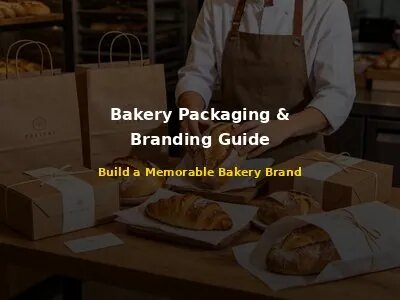
A story from our customer in Portland, Oregon: "When we opened our artisan bakery, we focused all our energy on making the best sourdough bread and pastries in town. We used plain white paper bags and generic boxes - we thought the product spoke for itself. Sales were okay, but not great. Customers would buy our bread, but they didn't seem to remember our name or tell their friends about us. Then we invested in branding: we designed a simple logo, printed it on kraft paper bags, added custom labels with our story, and started using twine to tie our bread loaves. The change was immediate and dramatic. Customers started commenting on how beautiful our packaging was. They started posting photos of our packaged products on Instagram - tagging us, sharing with their friends. Our social media following tripled in 3 months. Sales increased 40% in 6 months. Customers started asking for our branded gift boxes for holidays and special occasions - a whole new revenue stream we hadn't considered. We learned that packaging isn't just a container for your product - it's a marketing tool, a brand builder, and a customer experience. People don't just buy bread; they buy the story, the feeling, the brand. Our packaging now tells our story: handcrafted, local, artisanal. Customers feel like they're buying something special, not just a loaf of bread. The investment in branding and packaging was the best money we ever spent - it paid for itself in increased sales within 2 months. If you're not investing in your packaging and branding, you're leaving money on the table and missing an opportunity to connect with your customers."
Packaging and branding are two of the most underrated and powerful tools in a bakery's marketing arsenal. Yet many bakeries treat packaging as an afterthought - a plain bag or generic box that simply holds the product. This is a costly mistake. Your packaging is often the first physical touchpoint a customer has with your brand. It's what they carry down the street, what they put on their kitchen counter, what they show their friends and family. It's a walking billboard for your bakery.
Branding goes beyond packaging - it encompasses your logo, colors, fonts, store design, employee uniforms, website, social media, and the overall feeling customers get when they interact with your bakery. A strong brand builds recognition, trust, loyalty, and the ability to charge premium prices. As our Portland customer showd, investing in branding and packaging can increase sales by 30-50% within months, with a return on investment that pays for itself quickly.Last year, a bakery owner in Nigeria called us in a panic. His new divider had broken down after just 3 months, and he was losing $500 a day in production. The problem? He'd bought the wrong machine for his dough type. Whether you're just starting out or looking to elevate your existing brand, this bakery packaging and guide will give you the knowledge and tools to build a memorable bakery brand that sells.
When it comes to bakery packaging, choosing the right equipment is crucial for bakery success. HNH Bakery Equipment provides professional bakery packaging solutions for bakeries worldwide. In this guide, we explore everything you need to know about bakery packaging and how to select the best equipment for your bakery.
1. Why Packaging and Branding Matter
1.1 First Impressions and Customer Experience
Your packaging is often the first physical impression a customer has of your brand. A beautifully packaged product creates anticipation and excitement before the customer even takes the first bite. It signals quality, care, and attention to detail. A plain, generic package, on the other hand, suggests that the product inside is ordinary and not special. Customers eat with their eyes first - and your packaging is the first thing they see.
1.2 Brand Recognition and Walking Advertising
Every customer who walks out of your bakery carrying your branded bag or box is a walking advertisement for your business. People on the street see your logo and brand colors. When the customer gets home, your packaging sits on their kitchen counter or dining table, visible to family members and guests. When they post a photo of your product on social media, your packaging is in the photo. This repeated exposure builds brand recognition in your community - the more people see your brand, the more familiar and trustworthy it becomes.
1.3 Premium Pricing and Perceived Value
Beautiful, branded packaging allows you to charge premium prices. Customers are willing to pay more for a product that looks special, feels like a gift, or comes in beautiful packaging. A loaf of sourdough in a plain plastic bag might sell for $5. The same loaf in a branded kraft paper bag with a custom label and twine might sell for $7-$8 - and customers will happily pay the premium because it feels like a higher-quality, more special product. Packaging can increase your perceived value and profit margins noticeably.
1.4 Customer Loyalty and Emotional Connection
Strong branding creates an emotional connection with customers. When your packaging tells a story (family recipes, local ingredients, traditional techniques), customers feel like they're part of something meaningful. They don't just buy bread - they buy into your story, your values, and your community. This emotional connection builds fierce customer loyalty - customers who choose your bakery over competitors, who recommend you to friends, and who come back week after week.
1.5 Giftability and New Revenue Streams
Beautifully packaged products are giftable. Customers buy branded gift boxes for holidays, birthdays, corporate gifts, and thank-you gifts. This opens up a whole new revenue stream - gift boxes and hampers can have 50-70% profit margins and are especially popular during holiday seasons. Without attractive, branded packaging, you miss out on this lucrative market fully.
2. Building Your Brand Identity
2.1 Define Your Brand Story and Positioning
Before you design a logo or choose packaging, You should define what your brand stands for. Answer these fundamental questions: What is your bakery's story? (Why did you start? What's your family history? What makes you passionate about baking?) Who is your target customer? (Age, income, lifestyle, values, what they care about) What are your brand values? (Quality, sustainability, community, tradition, innovation, health, affordability) What is your brand personality? (Warm and friendly? Sophisticated and elegant? Rustic and artisanal? Fun and playful?) What makes you unique? (Family recipes? Local ingredients? Unique flavors? Traditional techniques? Organic/sustainable? A specific niche like gluten-free or vegan?)
Write a 1-2 paragraph brand positioning statement that summarizes: who You're, who you serve, what you offer, and what makes you different. This statement will guide all your branding decisions - from logo design to packaging choices to social media content. Example: "HNH Artisan Bakery is a neighborhood bakery serving our community with handcrafted sourdough bread and pastries made from locally sourced, organic ingredients. We believe in slow fermentation, traditional techniques, and building community through good food. What makes us different is our 3-generation family recipes and our commitment to sustainability - we compost all food waste and use 100% compostable packaging."
2.2 Choose Your Business Name
Your business name is one of your most important brand assets. It should be: memorable and easy to pronounce, relevant to baking or your specific niche, unique (not already used by another bakery in your area), available as a domain name and social media handles, and not too long or complicated. Popular naming strategies include: using your own name (e.g., "Maria's Bakery", "Johnson & Sons Baking Co."), using your location (e.g., "Main Street Bakery", "Riverside Baking Co."), using baking-related words (e.g., "Crust & Crumb", "Flour & Fire", "The Rolling Pin"), and using a personal story or family name (e.g., "Nonna's Kitchen", "Grandma's Oven"). Always check availability before committing: search your state's business name database, Google, Facebook, Instagram, and domain registrars (GoDaddy, Namecheap).
2.3 Design Your Logo
Your logo is the visual centerpiece of your brand. It should be simple (works at small sizes - on a sticker, social media profile, or pen), relevant (relates to baking or your brand story), memorable (customers can see and recall it), versatile (works in color, black and white, on different backgrounds), and timeless (doesn't look dated in 5-10 years).
Budget logo design options: DIY with Canva (Free or $12.99/month - hundreds of bakery logo templates to customize), hire a designer on Fiverr ($10-$100 - look for 4.8+ star ratings and 100+ look overs), hire a design student ($20-$50 - local art/design schools), use a logo maker website ($0-$50 - Looka, Hatchful, Tailor Brands), or hire a professional brand designer ($500-$5,000+ - for established bakeries or those wanting a complete brand identity).
Logo design tips: Use 1-3 colors max, ensure it works in black and white (for single-color printing), get a vector file (AI, EPS, SVG) from your designer - this allows scaling to any size without pixelation, avoid trendy design elements that will look dated, and consider how your logo will look on packaging (it should be readable at small sizes).
2.4 Choose Brand Colors and Fonts
Colors: Choose 2-4 brand colors: a primary color (used most frequently - logo, signage, packaging), a secondary color (for accents, point outs), and 1-2 neutral colors (white, cream, gray, black - for backgrounds and text). Color psychology for bakeries: warm colors (red, orange, yellow) stimulate appetite and energy - good for casual, family-friendly bakeries; brown/tan/kraft conveys rustic, artisanal, natural, homemade - good for artisan bread bakeries; pink/rose is sweet, feminine, elegant - good for cupcake shops and patisseries; blue conveys trust, calm, professionalism - good for wholesale/commercial bakeries; green conveys natural, organic, healthy, sustainable - good for health-focused bakeries; gold/cream conveys luxury, premium, elegance - good for high-end patisseries. Use a color palette generator (Coolors.co, Adobe Color) to create harmonious combinations.
Fonts: Choose 2-3 fonts: a display font (for logo, headings, signage - distinctive and on-brand) and a body font (for menus, website, labels - readable at small sizes). Free font resources: Google Fonts (free, 1,000+ fonts), DaFont (free, check commercial use licenses), Font Squirrel (free, commercial-use fonts), Canva's built-in fonts. Tips: pair a decorative/display font with a simple, readable body font, avoid using more than 2-3 fonts, ensure your fonts are readable at small sizes (especially for ingredient labels), and check licensing - some free fonts are for personal use only.
3. Packaging Types and Materials
3.1 needed Packaging Types
| Packaging Type | Best For | Cost (Plain) | Cost (Custom Printed) |
|---|---|---|---|
| Paper bags (kraft/white) | Bread, pastries, cookies, general | $0.05-$0.20 each | $0.15-$0.50 each |
| Bakery boxes (window/plain) | Cakes, pastries, cookies, gift boxes | $0.20-$0.80 each | $0.50-$1.50 each |
| Labels/stickers | Branding on plain packaging, product info | $0.03-$0.15 each | $0.05-$0.25 each |
| Tissue paper | Wrapping pastries, lining boxes | $0.02-$0.08/sheet | $0.10-$0.30/sheet |
| Ribbon/twine | Tying packages, gift wrapping | $0.02-$0.08/package | $0.10-$0.30/yard |
| Cellophane bags | Cookies, candies, individual pastries | $0.05-$0.15 each | $0.10-$0.30 each |
| Custom stamps | Branding on plain bags/boxes (one-time cost) | $15-$50 each | N/A (you stamp) |
| Rigid gift boxes | Premium gift boxes, holiday hampers | $2.00-$8.00 each | $3.00-$12.00 each |
3.2 Packaging Design Principles
- Simplicity: Don't overcrowd your packaging with too many elements. A clean, simple design with your logo, product name, and fundamental information is more effective than a cluttered design.
- Brand consistency: Use your logo, colors, and fonts consistently across all packaging types. Your bread bags, cake boxes, cookie labels, and tissue paper should all look like they belong to the same brand.
- Functionality: Packaging must protect the product, be easy to open and close, and be the right size. A beautiful package that doesn't protect the product or is frustrating to open will frustrate customers.
- Visual hierarchy: Design your packaging so the most a priority information (logo, product name) is most prominent, followed by secondary information (flavor, weight), then details (ingredients, allergens).
- Tactile experience: The feel of your packaging matters. Kraft paper has a rustic, artisanal feel. Glossy paper feels modern and premium. Textured paper feels luxurious. Choose materials that align with your brand personality.
- Shelf impact: If your products are sold in retail stores or at farmers markets, your packaging must stand out on a crowded shelf or table. Use bold colors, interesting shapes, or unique materials to catch the customer's eye.
3.3 Packaging Solutions by Product Type
- Artisan bread: Kraft paper bags with custom stamp or label, tied with twine. For sourdough and rustic breads, paper bags allow the crust to stay crisp. Include a window on the bag so customers can see the bread.
- Croissants and pastries: Individual cellophane bags with a custom sticker/label, or paper bags lined with tissue paper. For multiple pastries, use a pastry box with a window.
- Cakes: Cake boxes with a window (so customers can see the cake without opening the box), with a custom label on the side or top. For tiered or specialty cakes, use a taller cake box.
- Cookies: Cellophane bags tied with ribbon (for individual or half-dozen), or cookie boxes with a window (for dozen or gift boxes). Include a custom label with flavor and ingredients.
- Muffins and cupcakes: Individual clamshell containers (for single servings), or cupcake boxes with inserts (to hold cupcakes securely during transport).
- Gift boxes and hampers: Rigid setup boxes with custom printing, tissue paper lining, ribbon, and a handwritten card. These command premium prices ($25-$100+) and are especially popular during holidays.
4. Sustainable Packaging Trends
Sustainable packaging is one of the fastest-growing trends in the bakery industry, driven by consumer demand for eco-friendly products and increasing environmental regulations. Customers - especially millennials and Gen Z - actively seek out businesses with sustainable practices and are willing to pay more for sustainable packaging.
4.1 Sustainable Packaging Options
- Recycled paper/cardboard: Packaging made from 100% post-consumer recycled (PCR) paper or cardboard. This is the most common and affordable sustainable option. Look for FSC-certified (Forest Stewardship Council) paper from responsibly managed forests.
- Compostable materials: Packaging made from plant-based materials (PLA - polylactic acid from corn starch, PHA - polyhydroxyalkanoate from microorganisms, mushroom mycelium, seaweed) that break down in commercial composting facilities. Note: PLA requires commercial composting (high temperatures) - it won't break down in home composts or landfills.
- Biodegradable materials: Packaging that breaks down naturally in the environment (though "biodegradable" is a loosely regulated term - look for certified biodegradable products like BPI-certified).
- Reusable packaging: Packaging designed to be reused by customers (glass jars, tins, cloth bags, ceramic containers). This creates a stronger brand connection and reduces waste. Some bakeries offer a discount for customers who return reusable packaging.
- Minimal packaging: Reducing the amount of packaging used - e.g., selling bread unwrapped (or in a simple paper bag without extra tissue/labels), using one label instead of a box + label + tissue. This reduces costs AND environmental impact.
- Plant-based inks: Printing with inks made from soy, vegetable, or other plant-based sources instead of petroleum-based inks. These are more environmentally friendly and often produce richer colors.
4.2 Marketing Your Sustainability
Sustainable packaging is only valuable if customers know about it. Communicate your sustainability efforts on your packaging (e.g., "100% compostable packaging", "Made from recycled materials", "Please recycle/compost"), on your website and social media (share your sustainability journey and commitments), in your store (signage explaining your packaging choices), and in conversations with customers (train staff to mention your sustainable packaging when appropriate). Sustainability is a powerful brand differentiator - use it.
5. Legal Labeling Requirements
Bakery products sold in the United States are subject to federal (FDA) and state labeling requirements. The specific requirements depend on whether products are pre-packaged or unpackaged, and whether you're selling under cottage food laws or from a licensed commercial kitchen.
5.1 Required Label Elements for Pre-Packaged Products
- Product Name: Common or usual name (e.g., "Sourdough Bread", "Chocolate Chip Cookies"), prominently displayed on the front of the package.
- Net Quantity: Net weight in both U.S. customary (oz/lb) and metric (g/kg) units, on the front panel in the bottom 30%.
- Ingredient List: All ingredients in descending order of predominance by weight. Sub-ingredients of compound ingredients listed in parentheses.
- Allergen Declaration: Top 9 allergens (milk, eggs, fish, crustacean shellfish, tree nuts, peanuts, wheat, soybeans, sesame) declared either in the ingredient list or in a separate "Contains" statement.
- Manufacturer/Distributor Info: Name and deal with (street, city, state, ZIP) of the manufacturer, packer, or distributor.
- Nutrition Facts Panel: Required for most packaged foods, unless you qualify for a small business exemption (less than $1M in annual food sales and less than $100K in sales to consumers, with an exemption notice filed with FDA).
- Date Marking: Not federally required for most shelf-stable bakery products, but recommended for quality. Required for some refrigerated products and by some state laws.
5.2 Additional Requirements
- Organic claims: If labeled "organic", must be certified by a USDA-accredited agent, with certifying agent name and USDA Organic seal (if 95%+ organic).
- Gluten-free claims: If labeled "gluten-free", must contain <20 ppm gluten, with verification.
- Cottage food labeling: Many states require "Made in a home kitchen" or similar statement for cottage food products, plus producer name/deal with, date, and allergens.
- State/local requirements: Always check your state health department's specific requirements, which may exceed federal requirements.
6. Packaging Cost Analysis and Suppliers
6.1 Packaging as Percentage of Product Cost
Packaging should typically be 5-15% of the product's selling price. For example: a $3 cookie should have $0.15-$0.45 in packaging cost; a $25 cake should have $1.25-$3.75 in packaging; a $50 gift box should have $2.50-$7.50 in packaging. If packaging costs more than 15% of selling price, you're either over-packaging or underpricing your products.
6.2 Tips for Reducing Packaging Costs
- Start with plain packaging + custom labels/stamps: The most cost-effective branding option. A $20 custom stamp + $5 ink pad + plain bags ($0.10 each) gives branded packaging for $0.15 per bag, with no minimum order.
- Buy in bulk: Per-unit costs drop noticeably with larger quantities. Buy 3-6 months of packaging at once if You've storage space.
- Use standard sizes: Custom-sized boxes/bags cost noticeably more than standard sizes. Design products to fit standard packaging.
- Compare suppliers: Get quotes from multiple suppliers (Uline, Packlane, ClearBags, Etsy, Alibaba, local packaging stores). Prices can vary by 50%+.
- Simplify your packaging: Do you quite need custom tissue + ribbon + label? Sometimes a simple branded bag with a sticker is enough.
- Use digital printing for small runs: Digital printing has lower minimums (50-250 units) than offset printing (500-1,000+), making it accessible for small bakeries.
- Join a buying group: Bakery associations and co-ops often offer group purchasing discounts on packaging.
7. Common Branding and Packaging Mistakes
- Using plain, generic packaging: The biggest mistake. Plain packaging misses the opportunity to build brand recognition, create a premium experience, and turn customers into walking advertisements.
- Inconsistent branding: Using different logos, colors, fonts, or styles across different packaging types, signage, social media, and your website. Inconsistency confuses customers and weakens brand recognition. Pick your brand elements and use them consistently everywhere.
- Over-packaging: Using excessive packaging (multiple layers, unnecessary elements) increases costs, creates waste, and can frustrate customers who value sustainability. Package your products appropriately - protect them, but don't overdo it.
- Poor label readability: Using tiny fonts, low-contrast colors, or cluttered designs that make labels hard to read. Customers need to be able to read product names, ingredients, and allergens easily. Use at least 6-8 point font with good contrast.
- Ignoring legal labeling requirements: Missing required label elements (allergen declarations, ingredient lists, net weight, manufacturer info) can lead to recalls, fines, and legal issues. Always ensure your labels comply with FDA and state requirements.
- Not telling your story: Packaging that only has a logo and product name misses the opportunity to connect with customers emotionally. Include your story, your values, or a personal message on your packaging to build emotional connections.
- Choosing packaging that doesn't protect the product: Beautiful packaging that doesn't protect the product (e.g., a flimsy box that crushes cakes, a bag that doesn't keep bread fresh) frustrates customers and damages your reputation. Functionality comes first - beauty second.
- Not Given the unboxing experience: For gift boxes and premium products, the unboxing experience matters. Tissue paper, ribbon, a handwritten note, and a well-designed box create excitement and make customers feel special. Don't just put products in a box - create an experience.
- Copying competitors' branding: Using a logo, colors, or packaging design that's too similar to a competitor's creates confusion and can lead to legal issues (trademark infringement). Create a unique brand identity that stands out from competitors.
- Not updating your branding as you grow: A brand identity that worked for a small home bakery may not work for a growing retail business. Periodically look over your branding and packaging to ensure they still reflect your business, your customers, and your goals. A brand refresh every 3-5 years can keep your brand fresh and relevant.
8. 30-Day Branding and Packaging Upgrade Plan
Week 1: Brand Foundation
- Day 1-2: Define your brand story, values, target customer, and unique positioning. Write a brand positioning statement.
- Day 3-4: Choose or refine your business name. Check availability (domain, social media, state business registry).
- Day 5: Choose your brand colors (2-4 colors) using a color palette generator. Get HEX, RGB, and CMYK codes for each color.
- Day 6-7: Choose your brand fonts (1 display + 1 body font). Download and install them. Create a simple brand style guide (1-2 pages) documenting logo, colors, fonts, and usage rules.
Week 2: Logo and Visual Identity
- Day 8-9: Design your logo (DIY with Canva, hire on Fiverr, or work with a designer). Create 2-3 concepts, get feedback, and finalize.
- Day 10: Get your logo in all necessary formats: vector (AI/EPS/SVG), high-res PNG (transparent background), JPG (for print), and small versions (for social media profiles/favicons).
- Day 11-12: Design your core branded materials: business cards, social media profile pictures and cover photos, email signature, and a simple letterhead/invoice template (use Canva).
- Day 13-14: Print business cards (250-500 from Vistaprint or local print shop). Set up or update your social media profiles with your new branding.
Week 3: Packaging Design and Sourcing
- Day 15-16: look over your current packaging. What works? What doesn't? What packaging types do you need? (bags, boxes, labels, tissue, ribbon, etc.)
- Day 17-18: Design your packaging: custom labels/stickers (for plain packaging), custom stamp design (if using stamping), or custom-printed packaging design. Ensure all legal label elements are included (ingredients, allergens, net weight, manufacturer info).
- Day 19-20: Get quotes from 3-5 packaging suppliers (Uline, Packlane, ClearBags, local suppliers, Alibaba). Compare prices, minimum orders, quality, and shipping times.
- Day 21: Order packaging samples from your top 2-3 suppliers. judge quality, feel, and print quality before placing a large order.
Week 4: put in placeation and Launch
- Day 22-23: Place your packaging order (from sample evaluation). Start with a moderate quantity (1-3 months of supply) to test before committing to larger orders.
- Day 24-25: While waiting for packaging, update all digital touchpoints: website (if You've one), Google Business Profile, Yelp, and any online ordering platforms with your new branding.
- Day 26-27: Train your staff on the new branding and packaging: how to package products, what to say about your brand/story, how to explain sustainable packaging choices. Create packaging guidelines for staff.
- Day 28: Launch your new packaging! Start using the new packaging for all products. Take photos of your beautifully packaged products for social media.
- Day 29-30: Promote your new branding/packaging on social media: behind-the-scenes of the rebrand, photos of new packaging, customer reactions. Offer a special promotion to celebrate the launch. Gather customer feedback and make adjustments as needed.
9. Conclusion
Packaging and branding are far more than just containers and logos - they're powerful marketing tools that build recognition, create emotional connections, justify premium pricing, and turn customers into walking advertisements for your bakery. As our Portland customer showd, investing in branding and packaging can increase sales by 30-50% within months, with a return on investment that pays for itself quickly.
The important principles to remember are: define your brand story and positioning before designing anything, keep your logo simple and versatile, use your colors and fonts consistently across all touchpoints, choose packaging that protects your products AND reflects your brand, comply with all legal labeling requirements, consider sustainable packaging as a brand differentiator, keep packaging costs at 5-15% of selling price, and create an unboxing experience that makes customers feel special.
You don't need a Large budget to build a great brand. With $50-$200, You can create a professional logo, choose brand colors and fonts, and start branding your packaging with custom stamps or labels. Start simple, be consistent, tell your story, and upgrade as your business grows. The investment in branding and packaging is one of the highest-return investments You can make in your bakery - it pays dividends in increased sales, customer loyalty, and brand recognition for years to come.
Ready to Take the Next Step?
Whether You're just starting out or looking to upgrade your existing line, we have the equipment and the expertise to help you succeed. Contact us for a free quote today.
View Our Bakery Equipment📋 Bakery Equipment Checklist
Download our complete bakery equipment checklist with budget estimates for 5 different bakery types.
Free Bakery Equipment Checklist →📋 Bakery Equipment ROI Calculator
Use our interactive ROI calculator to see how quickly your bakery equipment investment pays off.
Calculate Your Equipment ROI →📋 Bakery Equipment Maintenance Calendar
Get our printable maintenance calendar to keep your bakery equipment running at peak performance.
Printable Maintenance Calendar →📋 Bakery Equipment Energy Cost Calculator
Estimate your bakery equipment energy costs and find ways to reduce your utility bills.
Calculate Energy Costs →Related Articles
Learn More
- 👉 Bakery Equipment Selection Complete Guide: Choose by Output & Product
- 👉 Bakery Equipment Maintenance Schedule: Daily, Weekly, Monthly, Yearly
- 👉 Dough Divider Rounder Troubleshooting: 15 Common Problems & Solutions
- 👉 Small Bakery Equipment ROI & Payback Period Calculator
- 👉 Bakery Equipment Energy Consumption & Energy Saving Guide
- 👉 Bakery Equipment Food Safety & Hygiene Compliance Complete Guide