
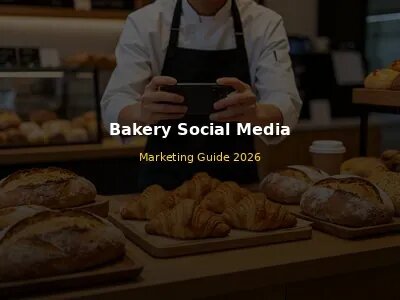
A story from our customer in Portland, Oregon: "When we opened our small artisan bakery in 2020, we had zero social media presence. We just focused on making great bread and assumed word of mouth would carry us. For the first 6 months, we were barely surviving - slow foot traffic, barely enough revenue to cover rent. Then one Saturday, a customer posted a photo of our sourdough on Instagram with the hashtag #PDXbread. That photo got 2,000 likes, and suddenly we had a line out the door these weekend. That was our wake-up call. We immediately started an Instagram account and began posting daily: photos of fresh bread coming out of the oven, behind-the-scenes of our 4 AM baking routine, close-ups of our croissants, customer photos (with permission), and Stories with polls and Q&A. Within 3 months, we grew from 0 to 3,000 followers. Within a year, we had 15,000 followers and our revenue had tripled. We now get 30-40% of our new customers from Instagram. We added Facebook for our older customers and local community, and TikTok for fun baking videos that occasionally go viral. Social media is now our #1 marketing channel, and it costs us almost nothing - just time and creativity. The important lessons we learned: post consistently (even when you don't feel like it), make your food look irresistible (invest in good lighting and composition), engage genuinely with every comment and DM, encourage customers to tag you and repost their photos, and tell your story (people connect with the human behind the bread). If You're a bakery and You're not on social media, You're invisible to an entire generation of customers. Start today - even one post per day can transform your business."
Social media has revolutionized how bakeries market themselves and connect with customers. Before, bakeries relied on word of mouth, local newspaper ads, Yellow Pages listings, and storefront signage. Today, social media platforms like Instagram, Facebook, and TikTok allow bakeries to reach thousands (or even millions) of potential customers with beautiful photos and engaging videos - often for free. Food is one of the most shareable and visually appealing types of content on social media, making bakeries uniquely positioned to succeed on these platforms.
But social media marketing for a bakery is not just about posting random photos of bread. It requires a strategic way: choosing the right platforms, creating compelling content, posting consistently, engaging with your audience, using hashtags effectively, collaborating with influencers, running contests, and measuring results. A well-executed social media plan can drive meaningful foot traffic, increase brand awareness, build customer loyalty, and finally grow your revenue. A poorly executed plan (or no plan at all) means missing out on one of the most powerful marketing tools available to local businesses.What's the one decision that figure outs whether your bakery succeeds or fails? It's not your recipes. It's not your location. It's the equipment you choose — and how well it matches your production needs. Whether You're a new bakery just getting started on social media or an established bakery looking to improve your results, this bakery social media guide will help you grow your audience, increase engagement, and turn social media followers into paying customers.
When it comes to bakery social, choosing the right equipment is crucial for bakery success. HNH Bakery Equipment provides professional bakery social solutions for bakeries worldwide. In this guide, we explore everything you need to know about bakery social and how to select the best equipment for your bakery.
1. Choosing the Right Social Media Platforms for Your Bakery
Not all social media platforms are equal, and You don't need to be on every one. Each platform has a different audience, content format, and algorithm. The important is to focus your time and energy on the platforms where your target customers are most active and where your content will perform best. Here is a breakdown of the major platforms and how they apply to bakeries:
| Platform | Primary Audience | Content Format | Best For Bakeries | Priority |
|---|---|---|---|---|
| Ages 18-45, visual-focused, food enthusiasts, local look atrs | Photos, short videos (Reels), Stories, Live | Product showcase, brand building, local discovery, behind-the-scenes, customer engagement, food photography | HIGHEST - a must for every bakery | |
| Ages 25-65+, broad demographic, local community | Posts, photos, videos, Stories, Events, Groups, Live | Local community, look overs, events, customer engagement, older demographic, local ads, community groups | HIGH - core for local reach | |
| TikTok | Ages 16-35, trend-driven, entertainment-focused | Short-form videos (15-60 seconds), trending sounds, effects | Viral reach, younger audience, behind-the-scenes, satisfying baking videos, trends, ASMR | MEDIUM-HIGH - high potential if you do video |
| Google Business Profile Posts | Local searchers, people actively looking for bakeries | Short posts, offers, events, products, photos | Local SEO, search visibility, direct customer acquisition, offers/events | HIGH - core for local search |
| Ages 25-45, mostly women, planners, food/recipe seekers | Images, infographics, recipe pins, long-tail discovery | Recipe content, cake inspiration, wedding/seasonal content, driving website traffic, long-tail SEO | MEDIUM - good if you do recipes/tutorials | |
| YouTube | All ages, tutorial seekers, deep content consumers | Long-form videos (5-30+ minutes), tutorials, vlogs | Baking tutorials, behind-the-scenes documentaries, brand storytelling, SEO, authority building | LOW-MEDIUM - good if You've time for long video |
| X (Twitter) | Ages 18-45, news/real-time, conversational | Short text posts, photos, videos, threads | Real-time updates, customer service, conversations, local engagement | LOW - not fundamental for most bakeries |
| Professionals, B2B, business networking | Professional posts, articles, company updates | B2B/wholesale marketing, hiring, business credibility, industry networking | LOW - only if you do wholesale/B2B |
1.1 Recommended Platform Plan for Most Bakeries
Start Smart: 2-3 Platforms Max
For 90% of bakeries, the optimal platform plan is:
1) Instagram (primary platform - most worth noting for visual food content and local discovery)
2) Facebook (secondary platform - for local community, older demographic, look overs, and events)
3) Google Business Profile Posts (necessary for local SEO - takes minimal time but drives direct local search traffic)
Then, if You've additional time and creativity, add: TikTok (for viral short-form video reach) or Pinterest (for recipe/cake inspiration content).
Do NOT try to be on every platform at once. It is far better to be Great on 2-3 platforms than mediocre on 6-8. Start with Instagram + Facebook + GBP, get comfortable and see results, then gradually add more platforms if You've the bandwidth.
1.2 Setting Up Your Profiles for Success
Once You've chosen your platforms, set up your business profiles properly. A complete, professional profile makes a strong first impression and helps customers find and trust you.
- Profile photo: Use your bakery logo (clear, high-resolution, recognizable even at small sizes). If you don't have a logo, use a high-quality photo of your storefront or signature product. Use the SAME profile photo across all platforms for brand consistency.
- Bio/About section: Write a concise, compelling bio that includes: what you do (artisan bakery, custom cakes, etc.), what makes you unique (local ingredients, family recipes, gluten-free, etc.), your location (city/neighborhood), your hours or a link to them, and a call to action (order online, visit us, call us). Include relevant keywords naturally. For Instagram, You've 150 characters - make them count.
- Contact information: Include your phone number, email, website, physical deal with, and hours. Make it easy for customers to contact you or find you. On Instagram, use the contact button features (call, email, directions) available on business profiles.
- Website link: Link to your website (or online ordering page, menu, or Google Maps location if you don't have a website). On Instagram, You can only have one link in your bio - use a link-in-bio tool (Linktree, Beacons, or Meta's own link feature) to link to multiple pages (menu, ordering, catering, blog, etc.).
- Business category: Select the correct business category (Bakery, Cake Shop, Coffee Shop, etc.) on each platform. This helps the platform's algorithm show your content to the right people and helps customers find you in category searches.
- point outs (Instagram): Create Instagram Story point outs for important permanent content: Menu, Hours, Location, About Us, look overs, Catering, Custom Cakes, Behind the Scenes. point outs appear below your bio and are visible to visitors. Use custom cover images for a polished look.
- Consistent username/handle: Use the same (or quite similar) username across all platforms (e.g., @yourbakeryname on Instagram, Facebook, TikTok). This makes it easy for customers to find you and builds brand consistency. If your preferred username is taken on one platform, use a close variation (e.g., @yourbakerynamepdx or @yourbakery_name).
- Switch to business/creator profile: On Instagram and TikTok, switch to a business or creator account (free). This gives you access to analytics (Insights), contact buttons, advertising features, and additional tools. On Facebook, create a Facebook Business Page (not a personal profile) for your bakery.
2. Creating a Winning Content Plan for Your Bakery
A successful social media presence starts with a clear content plan. Without a plan, You'll post randomly, get inconsistent results, and likely burn out. With a plan, You'll know exactly what to post, when to post, and how each post contributes to your goals.
2.1 Define Your Goals
Before creating content, define what you want to achieve with social media. Common goals for bakeries include:
- Brand awareness: Getting your bakery's name and brand in front of more local people.
- Foot traffic: Driving more customers to visit your physical bakery.
- Online orders: Increasing online ordering, pre-orders, and catering inquiries.
- Customer engagement: Building relationships and loyalty with existing customers.
- Community building: Becoming a seed and loved part of the local community.
- Product promotion: Promoting specific products, new items, seasonal specials, or limited-time offers.
- Recruitment: Attracting job applicants (if You're hiring).
- Wholesale/B2B: Attracting wholesale clients, cafes, restaurants, or corporate accounts.
Choose 2-3 primary goals and ensure your content plan supports them. For example, if your primary goal is foot traffic, your content should focus on: showcasing your products (making people hungry), point outing your location and hours, promoting in-store specials, and sharing customer look overs/testimonials. If Your goal online orders, your content should include clear calls to action to order online, links to your ordering page, and pre-order promotions.
2.2 Content Pillars: What to Post
Content pillars are the main categories or themes of content You'll post. Having 4-6 content pillars ensures variety, keeps your content fresh, and makes planning easier. Here are the most effective content pillars for bakeries:
| Content Pillar | What to Post | Examples | Goal Served |
|---|---|---|---|
| Product Showcase | Beautiful photos/videos of your products | Fresh croissant close-up, sourdough loaf, custom cake, cookie assortment, seasonal pastry | Brand awareness, foot traffic, product promotion |
| Behind-the-Scenes | The baking process, your team, your space | 4 AM baking routine, kneading dough, lamination process, fresh bread out of oven, baker at work | Brand building, engagement, storytelling |
| Customer Content / UGC | Customer photos, look overs, testimonials, shoutouts | Repost customer photo, share a 5-star look over, customer enjoying your products, customer shoutout | Social proof, trust, engagement, community |
| Storytelling / Brand Story | Your story, values, team, community involvement | Why we started the bakery, meet our head baker, our ingredient sources, charity donation, local partnership | Brand loyalty, emotional connection, community |
| Educational / Tips | Baking tips, recipes, how-tos, ingredient education | How to store sourdough, bread scoring tips, what is a croissant, our favorite flour, baking hack | Authority, engagement, shareability, website traffic |
| Promotions / Offers | Special deals, new products, seasonal items, events | Weekend special, new flavor launch, holiday pre-order, pop-up event, catering offer, contest/giveaway | Foot traffic, online orders, immediate sales |
| Community / Local | Local partnerships, events, neighborhood content | Partner with local coffee roaster, at farmers market, local event, neighborhood spotlight, supporting local charity | Community building, local SEO, goodwill |
Aim for a balanced mix of content pillars. A good rule of thumb for most bakeries: 30-40% product showcase, 20-25% behind-the-scenes, 15-20% customer content/UGC, 10-15% storytelling, 10-15% educational/tips, and 10-15% promotions/offers. Avoid posting only promotional content (it comes across as salesy and turns people off) - the 80/20 rule applies: 80% value/entertainment/engagement content, 20% promotional content.
2.3 Content Calendar: Plan Your Posts
A content calendar is a schedule of what You'll post and when. It ensures consistent posting, avoids last-minute scrambling, and helps you maintain variety. Here is how to create one:
- Choose your posting frequency: From your available time and platform (see Section 3 for recommendations). For example: 3 Instagram feed posts/week, 5 Instagram Stories/week, 2 Facebook posts/week, 1 GBP post/week.
- Plan weekly or monthly: Sit down once per week (or once per month) and plan your posts. Use a simple spreadsheet, calendar app, or social media management tool (Later, Buffer, Hootsuite, Meta Business Suite).
- Map content to pillars: Assign each planned post to a content pillar to ensure variety. For example: Monday = product showcase, Wednesday = behind-the-scenes, Friday = customer content, Saturday = promotion, plus daily Stories with a mix.
- Plan around events and seasons: Include seasonal products, holidays, special events, and promotions in your calendar. For example: plan pumpkin spice content for September/October, holiday cake content for November/December, Valentine's Day content for February.
- Batch create content: Set aside 1-2 hours per week to create multiple posts at once: take photos, write captions, study hashtags, and schedule posts. This is much more efficient than creating posts one at a time. Use scheduling tools to schedule posts in advance.
- Leave room for spontaneity: While a calendar is important, leave room for spontaneous content: a beautiful loaf that just came out of the oven, a customer's great photo, a trending sound on TikTok, a local event you decide to attend. Some best-performing content is spontaneous.
- look over and adjust: At the end of each week/month, look over what performed best (highest engagement, reach, clicks) and adjust your calendar So. Double down on what works, drop what doesn't.
3. Food Photography and Videography for Social Media
On visual platforms like Instagram and TikTok, the quality of your photos and videos is everything. Beautiful, mouthwatering food photos stop the scroll, get likes and saves, and make people want to visit your bakery. Blurry, dark, unappetizing photos get scrolled past and can actually hurt your brand. You don't need an expensive camera - a modern smartphone with good lighting and composition can produce Great results. Here is how to take great bakery photos and videos for social media:
3.1 Food Photography Tips
- Lighting is everything: Natural light is the best light for food photography. Take photos near a window with soft, diffused natural light (avoid direct harsh sunlight, which creates harsh shadows). Avoid using your camera's flash (it creates harsh, unflattering light and shiny reflections on food). If natural light is not available, use a soft, warm artificial light (like a ring light or softbox) positioned at a 45-degree angle to the food. The best time for natural light photography is usually mid-morning or mid-afternoon (not midday when the sun is harsh).
- Composition: Use composition techniques to make your photos visually appealing: Rule of thirds (place the main subject at the intersection of imaginary grid lines, not dead center), leading lines (use lines in the scene to draw the eye to the food), negative space (leave empty space around the food to make it stand out and allow room for text overlays), and symmetry (for certain shots like a flat lay of an assortment). Try different angles: 45-degree angle (the most flattering for most food), overhead/flat lay (great for assortments, ingredient spreads, process shots), and eye-level (great for showing height/layers of cakes, towering pastries).
- Styling and props: Style your food to make it look its best: Use clean, simple backgrounds (marble, wood, linen, ceramic) that complement your food (avoid busy, distracting backgrounds). Add props sparingly: a napkin, a knife, a cup of coffee, some flour dust, fresh ingredients (berries, herbs, chocolate), a hand holding the food (adds scale and human part). Keep props minimal - the food should be the star. Use fresh, perfectly prepared products for photos (don't photograph a day-old croissant or a lopsided cake - use your best-looking product).
- Make it look fresh and appetizing: Techniques to make food look its best: Brush pastries with a simple syrup or egg wash for shine, add a light dusting of flour or powdered sugar for a "freshly made" look, use steam (carefully - You can create steam with a small amount of hot water or a steamer, but be careful not to overdo it), show the "money shot" (the cross-section of a croissant showing the layers, the pull-apart of a soft bread, the oozing chocolate, the layered cake slice). Action shots (someone pulling apart bread, pouring glaze, taking a bite) are quite engaging.
- Edit lightly: Use photo editing apps (Snapseed, Lightroom Mobile, VSCO, or the built-in editor on your phone) to improve your photos: adjust brightness and exposure (make food look bright and inviting), increase contrast slightly (makes food pop), adjust white balance (warm tones are generally more appetizing for baked goods), increase saturation/vibrance slightly (make colors rich but not unnatural), and sharpen slightly (improves texture details). Avoid over-editing - the goal is to make the food look like its best self, not to create a false image. Use a consistent editing style/filter across your posts for a cohesive feed aesthetic.
- Phone camera tips: You don't need a DSLR - modern smartphone cameras are Great for food photography. Tips: clean your lens (smudges cause blurry photos), tap to focus and adjust exposure (tap on the food to focus, then slide up/down to adjust brightness), use portrait mode (for beautiful background blur, but be careful - it can sometimes blur parts of the food), use burst mode (for action shots like pouring or sprinkling), avoid digital zoom (it degrades quality - move closer instead), and use the grid feature (turn on grid lines in camera settings to help with composition).
3.2 Video Content Tips (Reels, TikTok, Stories)
Video content gets noticeably more reach and engagement than photos on Instagram and TikTok. Short-form videos (15-60 seconds) are the most effective format for bakeries. Here are tips for creating great bakery videos:
- Satisfying baking processes: The most viral bakery videos show satisfying baking processes: kneading dough (especially the stretch and fold), croissant lamination (folding and rolling the butter layers), dough rising (time-lapse), bread scoring (the decisive slash), fresh bread coming out of the oven (the reveal), pouring melted chocolate or glaze, pulling apart soft bread (showing the crumb), sprinkling powdered sugar or flour. These videos are inherently satisfying and shareable.
- ASMR content: Autonomous Sensory Meridian Response (ASMR) videos focus on satisfying sounds: the crackle of a fresh crust, the squish of soft bread, the sizzle of baking, the crunch of a croissant, the pour of coffee. Use good audio (or add satisfying sound effects) and keep the video simple and focused on the sound. ASMR content performs quite well on TikTok and Instagram Reels.
- Time-lapses: Time-lapse videos compress long processes into short, engaging clips: dough rising over 2 hours, bread baking in the oven, a cake being decorated from start to finish, a full day of baking compressed into 30 seconds. Time-lapses are easy to create (most phones have a time-lapse mode) and quite engaging.
- Before/after and reveals: Videos that show a transformation: a ball of dough becoming a beautiful loaf, a plain cake becoming an go into detail decorated cake, raw croissant dough becoming golden, flaky croissants, an empty display case becoming full of pastries. The "reveal" moment is highly engaging.
- Behind-the-scenes and day-in-the-life: Show the human side of your bakery: your 4 AM baking routine, a day in the life of a baker, your team working together, the chaos and beauty of a busy morning, the cleanup at the end of the day. These videos build connection and loyalty.
- Quick tips and tutorials: Short educational videos: 30-second bread scoring tip, how to store sourdough, what makes a croissant flaky, our favorite baking hack, decorating a cookie in 15 seconds. Educational content gets saved and shared, positioning you as an expert.
- Trending sounds and formats: On TikTok and Instagram Reels, using trending audio sounds and popular video formats can by a lot increase your reach. Pay attention to what sounds and formats are trending, and create your own bakery version. For example: a "get ready with me" format but for baking, a "POV: you walk into our bakery at 6 AM" video, a transition video using a trending sound. But don't force it - only use trends that fit your brand and content.
- Video best practices: Keep videos short (15-30 seconds is ideal for most content, 60 seconds max for Reels/TikTok), use vertical format (9:16) for Reels/TikTok/Stories (horizontal videos perform poorly on these platforms), add captions/text overlays (many people watch without sound), use good lighting (same as photography - natural light near a window), keep it simple (one clear subject or action per video), and end with a call to action (visit us, order online, follow for more).
The #1 Photography Tip for Bakeries
If you remember only one thing about food photography, remember this: natural light near a window is your best friend. 90% of beautiful food photos are taken with soft, natural light near a window. Turn off your overhead lights (they cast harsh, yellowish light and create shadows). Move your food to a spot near a window. If the light is too harsh (direct sun), diffuse it with a sheer curtain or move to a spot with indirect light. Take photos at 45-degree angle to the window (so the light hits the food from the side, creating part and texture, rather than from the front (flat) or back (silhouette)). This one tip alone will by a lot improve your food photos.
4. Posting Frequency, Best Times, and Consistency
4.1 How Often to Post
| Platform / Content Type | Ideal Frequency | Minimum for Growth | Notes |
|---|---|---|---|
| Instagram Feed Posts | 3-5 per week | 2-3 per week | Quality over quantity. Consistent 3x/week beats inconsistent 7x/week. |
| Instagram Stories | 1-3 per day | 3-5 per week | Stories are casual and ephemeral. More frequent is expected and effective. |
| Instagram Reels | 2-4 per week | 1-2 per week | Reels get large algorithmic reach. Even simple Reels perform well. |
| Facebook Page Posts | 3-7 per week | 2-3 per week | Facebook favors consistent posting. Avoid low-quality filler posts. |
| Facebook Stories | 1-2 per day | 2-3 per week | Similar to Instagram Stories. |
| TikTok Videos | 3-7 per week | 2-3 per week | TikTok algorithm favors frequent posting. More posts = more chances to go viral. |
| GBP Posts | 1-3 per week | 1 per week | Posts expire after 7 days. Regular posting keeps profile active. |
| Pinterest Pins | 5-20 per day | 3-5 per day | Pinterest favors high volume. Use scheduling tools (Tailwind) to batch schedule. |
| YouTube Videos | 1-2 per week | 1 per 2 weeks | Longer videos require more production. Consistency matters more than frequency. |
4.2 Best Times to Post
The best posting times depend on your audience and platform, but here are general guidelines for bakeries (local time):
- Instagram: Best days: Tuesday through Friday, and Sunday. Best times: 11 AM-1 PM (lunchtime browsing), 5 PM-7 PM (evening downtime), and 8 PM-10 PM (late-night scrolling). For bakeries specifically, early morning (6 AM-8 AM) can work well (people are thinking about breakfast and their morning coffee run). Test different times and use Instagram Insights to see when your audience is most active.
- Facebook: Best days: Thursday through Sunday. Best times: 1 PM-4 PM (afternoon browsing), and 7 PM-9 PM (evening). Facebook engagement is generally highest on weekends.
- TikTok: Best days: Tuesday through Thursday, and Sunday. Best times: 6 AM-10 AM (morning commute), 7 PM-11 PM (evening/night). TikTok users are most active in the evenings. Test multiple times.
- Pinterest: Best days: Friday and Saturday (people planning weekends and meals). Best times: 8 PM-11 PM (evening planning/browsing). Pinterest has a longer content lifespan, so timing is less important than on other platforms.
The most worth noting principle is to post when YOUR audience is active. Use the analytics/insights on each platform to see when your followers are most active, and schedule your posts for those times. Also, consider the nature of your content: post breakfast items in the morning (6-9 AM), lunch items around 11 AM-1 PM, dinner/snack items in the afternoon/evening, and weekend specials on Friday/Saturday morning.
4.3 The Power of Consistency
Consistency is the #1 reason in social media growth. The algorithms on all platforms favor accounts that post consistently and regularly. An account that posts 3 times per week, every week, will grow faster than an account that posts 7 times one week and zero the next. Consistency also builds trust and habit with your audience - they come to expect and look forward to your posts.
Tips for maintaining consistency:
- Batch create content: Set aside 1-2 hours per week to create and schedule multiple posts at once. This is the #1 plan for maintaining consistency.
- Use scheduling tools: Meta Business Suite (free for Instagram/Facebook), TikTok scheduler (free), Buffer, Hootsuite, Later, Planoly. Schedule posts in advance so you don't have to post manually every day.
- Create a content bank: Build up a library of photos and videos (take photos whenever You've good light and nice products) so you always have content ready to post. Aim for 2-4 weeks of content in reserve.
- Set a realistic schedule: Don't commit to posting 7 times per week if you only have time for 3. It is better to set a realistic schedule (3x/week) and stick to it consistently than to set an unrealistic schedule and burn out.
- Involve your team: If You've staff, involve them in content creation: ask them to take photos/videos during their shifts, share behind-the-scenes content, and contribute ideas. This distributes the workload and provides different perspectives.
- Repurpose content: One piece of content can be used across multiple platforms: an Instagram Reel can be reposted to TikTok, a Facebook post can be shared to Instagram, a blog post can be broken into multiple social media posts, a customer photo can be used in Stories, feed posts, and GBP. Repurposing maximizes the value of each piece of content and reduces the amount of new content You should create.
5. Hashtag Plan for Bakeries
Hashtags are a powerful tool for increasing the discoverability of your content on Instagram, TikTok, and other platforms. When used strategically, hashtags can expose your content to people who do not follow you but are searching for or interested in bakery-related content. The important is to use the RIGHT hashtags - not just the most popular ones (which are oversaturated) but a mix of broad, niche, and local hashtags.
5.1 Types of Hashtags to Use
| Hashtag Type | Description | Examples for a Bakery | Quantity per Post |
|---|---|---|---|
| Broad / Popular | Large, general food/bakery hashtags with millions of posts. High reach but high competition - your post may get lost in the noise. | #bakery, #bread, #croissant, #foodie, #baking, #pastry, #dessert, #foodphotography | 2-4 |
| Niche / Specific | More specific hashtags with thousands to hundreds of thousands of posts. Lower competition, more targeted audience interested in your specific type of baking. | #sourdough, #artisanbread, #customcakes, #glutenfreebakery, #croissantlove, #breadbosses, #homebaking, #cakepops | 4-6 |
| Local / Geographic | Location-specific hashtags. THE most important type for local bakeries - connects you with local customers. | #bakery[yourcity], #[yourcity]food, #[neighborhood]eats, #bestbakery[yourcity], #[yourcity]bakery, #eat[yourcity], #[yourcity]foodie, #localbakery | 4-6 |
| Branded / Unique | Your own unique hashtag for your bakery. Encourages user-generated content and creates a community around your brand. | #[yourbakeryname], #[yourbakery]bread, #[yourbakery]cakes, #eat[yourbakeryname] | 1-2 |
| Trending / Seasonal | Hashtags related to current trends, seasons, or events. Increases relevance and discoverability. | #pumpkinspice (fall), #valentinesday (Feb), #holidaybaking (Dec), #nationalcroissantday, #sourdoughsept, #breadweek | 1-2 (when relevant) |
5.2 Hashtag Best Practices
- Use a mix of sizes: Do not use only Large hashtags (1M+ posts) - your post will be buried. Do not use only tiny hashtags (100 posts) - no one will see them. Use a mix: 2-4 broad (100K+ posts), 4-6 niche (10K-100K posts), 4-6 local (1K-50K posts), 1-2 branded. This mix gives you the best chance of being seen by both broad and targeted audiences.
- Number of hashtags: On Instagram, You can use up to 30 hashtags per post, but the optimal number is 5-15 (too many can look spammy and may actually hurt reach). On TikTok, 3-5 hashtags is typical. On Facebook, 1-2 hashtags. Focus on quality and relevance over quantity.
- study hashtags: Before using a hashtag, search for it on the platform to see: how many posts use it, what kind of content appears (is it relevant to your bakery?), and whether your content would fit in. Look at what hashtags similar bakeries in your area use - this is a great way to find relevant local hashtags. Build a hashtag bank (a list of 30-50 hashtags organized by type) that You can mix and match for each post.
- Local hashtags are most matters: For a local bakery, local/geographic hashtags are the most valuable because they connect you with people in your area who are potential customers. Spend the most time studying and using local hashtags. Include your city, neighborhood, and surrounding areas. Examples: #portlandbakery, #pdxfood, #seportlandeats, #bestbakeryportland, #portlandfoodie, #eaportland.
- Use hashtags in Stories too: On Instagram Stories, You can add hashtag stickers (up to 10 per Story). Hashtag Stories can appear in the hashtag's story feed, increasing discoverability. Use 1-3 relevant hashtags per Story.
- Create a branded hashtag: Create a unique hashtag for your bakery (e.g., #[yourbakeryname] or #eat[yourbakeryname]) and encourage customers to use it when posting photos of your products. Include your branded hashtag on your packaging, receipts, signage, and in your bio. When customers use your hashtag, their photos become discoverable by others, and You can repost them (with permission). This builds community and provides free user-generated content.
- Avoid banned or restricted hashtags: Some hashtags are banned or restricted by Instagram (they may be associated with inappropriate content or spam). Using banned hashtags can result in your post being shadowbanned (hidden from search). If a hashtag seems to have an unusually low number of posts for a common term, or the content seems unrelated, avoid it. When in doubt, search the hashtag first.
- Rotate your hashtags: Do not use the exact same 10 hashtags on every post (this can look spammy and may trigger the algorithm). Mix and match from your hashtag bank, using different combinations for different posts. Use the most relevant hashtags for each specific post (e.g., use cake-related hashtags for a cake post, bread-related for a bread post).
6. Engagement: Building Community and Loyalty
Social media is not a billboard - it is a conversation. Posting great content is only half the equation; the other half is engaging with your audience and community. Accounts that engage genuinely and consistently grow faster, have higher engagement rates, and build stronger customer loyalty. Here is how to engage effectively:
6.1 Engaging With Your Audience
- Respond to every comment: When someone takes the time to comment on your post, respond! Even a simple "thank you!" or an emoji shows that you value their engagement. For more substantive comments, write a genuine, specific response. Responding to comments boosts your post's engagement rate (which the algorithm loves) and makes commenters feel valued (which makes them more likely to comment again and become loyal customers). Aim to respond to comments within 24 hours (ideally within a few hours).
- Respond to DMs promptly: Direct messages are often customer inquiries (hours, menu, catering, custom orders, allergies) - these are potential sales! Respond to DMs as quickly as possible (within a few hours during business hours, same day at minimum). Set up quick replies for common questions (hours, location, menu link, catering inquiry) to speed up response time. A prompt DM response can turn an inquiry into a customer.
- Ask questions in captions and Stories: Encourage engagement by asking questions in your post captions and Stories: "What is your favorite pastry? Croissant or donut? Comment below!" "What should we bake tomorrow? Let us know in the comments!" Use Instagram Story interactive stickers: polls (A or B questions), Q&A ("ask us anything!"), quizzes ("how much do you know about sourdough?"), emoji sliders ("how much do you love our croissants?"), and countdowns (for new product launches or events). Questions and interactive stickers by a lot increase engagement.
- Like and comment on your followers' posts: Social media is reciprocal. When someone follows you or engages with your content, check out their profile and like/comment on a few of their posts (genuinely, not just "great post!"). This builds relationships, makes people feel valued, and increases the likelihood that they will continue to engage with your content. Focus especially on local customers and food enthusiasts.
- Engage with local community and businesses: Follow and engage with other local businesses, food bloggers, community organizations, and influencers in your area. Like and comment on their posts genuinely. Share their content (if relevant) and tag them. Collaborate on cross-promotions. This builds your local network, increases your visibility to local audiences, and creates goodwill in the community.
- Share user-generated content: When customers post photos of your products (tagging you or using your branded hashtag), repost their content to your Stories or feed (with their permission). This makes customers feel special and valued, encourages more UGC, and provides you with authentic, trusted content. Always credit the original poster (tag them in the photo and mention them in the caption).
- Go live occasionally: Instagram Live and Facebook Live are great for real-time engagement: a live baking demo, a Q&A session, a behind-the-scenes tour, a product launch, or a collaboration with another local business. Live videos get high algorithmic reach and allow for real-time interaction with your audience. Even 10-15 minute live sessions can be effective.
- Build genuine relationships: The important to engagement is authenticity. Be a real person, not a corporate account. Share your personality, your passions, your struggles, and your successes. Remember regular customers' names and preferences (and mention them in comments/DMs). Celebrate their milestones (birthdays, anniversaries). The more genuine and human You're, the more people will connect with and loyalty to your brand.
6.2 Handling Negative Comments and look overs
Despite your best efforts, You'll occasionally receive negative comments or look overs on social media. How you handle them matters greatly - a thoughtful response can turn a negative experience into a positive one and show your commitment to customer service to everyone who sees it. Here is how to handle negative feedback:
- Respond promptly and professionally: Respond within 24 hours. Do not ignore negative comments - ignoring them makes the situation worse and signals to other customers that you don't care. Do not respond defensively or angrily (even if the complaint is unfair). Take a deep breath and respond with professionalism and empathy.
- Apologize and empathize: Start with a sincere apology: "We are so sorry your experience did not meet our expectations" or "We apologize for the issue with your order." Even if you believe the complaint is unfair, apologize for their experience ("we are sorry you felt that way" or "we are sorry this happened"). Empathy goes a long way.
- Take it offline: After apologizing, invite the customer to contact you directly (DM, email, or phone) to resolve the issue: "Please send us a DM or call us at [phone number] so we can make this right." Do not argue or debate the issue publicly - this never ends well. Move the conversation to a private channel where You can resolve it without an audience.
- Make it right: In private, listen to the customer's concern fully, offer a sincere apology, and provide a fair resolution: a refund, a replacement product, a discount on their next visit, or a gift card. The goal is to turn an unhappy customer into a happy one. Most customers appreciate a sincere apology and a fair resolution, and many will become loyal customers after a positive recovery experience.
- Learn and improve: Use negative feedback as an opportunity to learn and improve. If multiple customers complain about the same issue (e.g., dry bread, slow service, incorrect orders), look into and fix the root cause. Share feedback with your team and use it for training and process improvement. Negative feedback, while unpleasant, is valuable information that can help you improve your business.
- Know when to disengage: In rare cases, You can encounter a troll or someone who is unreasonable and cannot be satisfied. In these cases, respond politely once (apologize, offer to make it right), and then disengage. Do not engage in a back-and-forth argument. Do not delete negative comments (unless they are abusive, hateful, or violate platform guidelines) - deleting comments can make you look guilty and can escalate the situation. Most onlookers will appreciate your professional response and see unreasonable behavior for what it is.
7. Influencer Collaborations and Partnerships
Collaborating with local food influencers, bloggers, and content creators is one of the fastest ways to expose your bakery to a large local audience. A single feature or recommendation from a popular local food influencer can introduce your bakery to thousands of local followers and drive large foot traffic. Here is how to way influencer collaborations:
7.1 spoting the Right Influencers
- Focus on local micro-influencers: For local bakeries, micro-influencers (1,000-10,000 followers) are often more effective than macro-influencers (100K+ followers). Micro-influencers typically have higher engagement rates (their followers are more genuinely interested and interactive), their audience is more local and targeted, they are more accessible and affordable (many will collaborate for free products), and their recommendations feel more authentic and trustworthy (less like a paid ad). Search for local food bloggers, Instagram food accounts, TikTok food creators, and YouTube food vloggers in your city/region.
- Look for relevant content and audience: Choose influencers whose content is relevant to food/baking and whose audience matches your target customers. Check their engagement rate (likes+comments / followers - aim for 3%+), the quality of their content (are their photos/videos good?), their posting consistency, and the tone/vibe of their content (does it align with your brand?). Avoid influencers with fake followers (You can spot this by looking at engagement rates - if an account has 50K followers but only 20 likes per post, the followers are likely fake).
- Where to find them: Search local food hashtags (e.g., #portlandfood, #pdxeats) and see who posts frequently with good engagement. Search for "[your city] food blog" or "[your city] food influencer" on Google. Look at who posts about other local bakeries/cafes you admire. Check local food publications and their writers/social media accounts. Use influencer marketing platforms (Upfluence, aimIQ, or local influencer networks) if you want a more structured way.
7.2 Approaching and Collaborating With Influencers
- Start with genuine engagement: Before reaching out, follow the influencer and engage with their content genuinely (like and comment on their posts for 1-2 weeks). This builds familiarity and makes your outreach more personal. When you reach out, they will already see your name/brand.
- Reach out with a personalized message: Send a polite, personalized DM or email. Introduce your bakery, mention specific things you like about their content (show that you actually follow them, not just spamming), and propose a collaboration: "We love your food content and the way you showcase local Portland bakeries! We would love to invite you for a complimentary tasting at our bakery - we would be honored if You'd share your experience with your followers. Would you be interested?" Keep it concise, friendly, and professional.
- Offer value: Most micro-influencers will collaborate for free products (a tasting, a gift basket, a custom cake, a catering spread) - they get free food and content, and you get exposure. For larger influencers, You can need to offer payment (typically $50-$500 per post depending on their following and engagement). Be clear about what You're offering and what you expect in return (e.g., "we would love for you to share a post and/or Story about your visit"). Do not demand specific positive look overs - let them share their honest experience (authenticity is important). If your products are great, the look over will be positive.
- Make the experience great: When an influencer visits your bakery, make their experience Great: welcome them personally, offer your best products, share your story, give them a behind-the-scenes tour if appropriate, and send them home with a goodie bag of products. The better their experience, the more enthusiastic and detailed their content will be. Treat every influencer visit as a brand-building opportunity.
- Respect their creative freedom: Do not dictate exactly what they should post or say. Give them creative freedom to share their experience in their own authentic voice and style. Influencers know their audience best and know what content performs well with their followers. Forced, overly scripted content feels inauthentic and performs poorly. Provide them with important information (your story, unique selling points, product details) but let them create the content.
- Engage with and share their content: When the influencer posts about your bakery, engage enthusiastically: like the post, leave a genuine comment, share it to your Stories (tagging them), and express your gratitude. This amplifies the content's reach and shows the influencer that you value their work. Build an ongoing relationship - invite them back for new product launches, seasonal items, or special events. Long-term influencer relationships are more valuable than one-off collaborations.
- Track results: Track the results of each influencer collaboration: increase in followers during/after the post, increase in DMs/inquiries, foot traffic mentions ("I saw you on [influencer's] page!"), and sales. This helps you spot which influencers drive the most value and where to focus future collaboration efforts.
8. Contests, Giveaways, and Promotions
Contests and giveaways are one of the fastest ways to grow your social media following, increase engagement, and generate excitement about your bakery. When done well, a single giveaway can grow your following by hundreds (or thousands) and expose your bakery to thousands of potential customers. Here is how to run effective contests and giveaways:
8.1 Contest and Giveaway Ideas for Bakeries
- Follow + Like + Tag giveaway: The classic and most effective format: "Win a $100 bakery gift card! To enter: 1) Follow us @yourbakery, 2) Like this post, 3) Tag 2 friends in the comments who love baked goods, 4) Share to your Story for an extra entry." This format grows followers (follow requirement), increases engagement (likes and comments), and exposes your bakery to the tagged friends' networks (each tag exposes your bakery to that person's followers).
- User-generated content contest: "Post a photo of your favorite [bakery] product, tag us @yourbakery and use #ourbakerycontest, and the best photo wins a $75 gift card!" This encourages UGC, builds your branded hashtag, and provides you with content to repost. UGC contests also tend to have high engagement because people enjoy showing off their photos.
- Comment-to-win: "Comment your favorite pastry below and You're entered to win a free dozen croissants! Winner announced Friday." Simple and low-effort for entrants, generates Many comments (boosting engagement), and provides insights into customer preferences.
- Quiz/trivia contest: "Answer this baking trivia question correctly in the comments and You're entered to win! Q: What is the traditional French term for the folding process in croissant making? A: Laminate!" Educational and engaging, positions you as an expert, and generates comments.
- Refer-a-friend: "Refer a friend to follow us and both of you get entered to win a custom cake! Have them comment your name when they follow." Encourages viral growth through referrals.
- Seasonal/holiday giveaways: Tie giveaways to seasons and holidays: "Win a Thanksgiving pie bundle!," "Valentine's Day cookie giveaway!," "Holiday cookie decorating kit giveaway!" Seasonal giveaways feel timely and relevant.
- Collaboration giveaway: Partner with another local business (coffee roaster, florist, gift shop) for a combined giveaway: "Win the ultimate local gift bundle: $50 bakery gift card + $50 coffee gift card + flower bouquet! Follow both accounts, like, and tag a friend." Collaboration giveaways expose you to the partner's audience and vice versa, doubling your reach.
- Milestone giveaway: Celebrate a follower milestone (1K, 5K, 10K followers) with a giveaway: "We hit 5,000 followers! Thank you for your support - win a $100 gift card to celebrate!" Milestone giveaways feel like a celebration and reward your loyal followers.
8.2 Best Practices for Contests and Giveaways
- Offer a valuable prize: The prize should be valuable enough to motivate people to enter. Good prizes for bakeries: gift cards ($50-$150), free cake (custom or signature), gift baskets/bundles (assortment of products), catering package (for a small event), monthly bread subscription (free bread every week for a month). The prize should be related to your bakery (avoid random prizes like iPads - they attract people who don't care about your bakery and will unfollow after the contest).
- Keep entry requirements simple: Do not make people jump through too many hoops to enter. Follow + Like + Tag 2 friends is a good balance - it grows your audience and reach without being overly burdensome. Too many requirements (follow 5 accounts, share to feed, tag 5 friends, comment, DM, etc.) will reduce participation. Keep it simple and clear.
- Set clear rules and timeline: Clearly state: start and end dates/times, how to enter, winner selection method (random draw or judge's choice), when the winner will be announced, and how the winner will be contacted. Include any eligibility requirements (e.g., must be 18+, must be local to pick up prize). Follow the platform's contest rules (Instagram and Facebook have specific guidelines for promotions - look over them to ensure compliance).
- Promote the contest: A contest only works if people see it. Promote it across all your platforms: feed post, Stories (multiple times during the contest period), other social media platforms, email newsletter, in-store signage, and verbal mentions by staff. The more visibility, the more entries. Pin the contest post to the top of your profile (if the platform allows).
- Announce the winner publicly: When the contest ends, announce the winner publicly (in a post and/or Stories). This creates excitement, shows transparency, and gives the winner their moment of recognition. Tag the winner (if they agree). Contact the winner privately to arrange prize delivery/pickup. Consider sharing a photo of the winner with their prize (with permission) - this builds trust and excitement for future contests.
- Retain new followers: The biggest challenge with giveaways is retaining new followers after the contest ends (many people follow just for the contest and unfollow after). To retain new followers: post great content consistently during and after the contest, engage with new followers (like/comment on their posts), send a welcome message or offer to new followers (e.g., "thanks for following! Show this message for 10% off your first visit"), and make sure your profile is complete and compelling (great bio, point outs, recent quality content) so new followers have a reason to stay. Expect some unfollowing - it is normal. Focus on the followers who stay (they are genuinely interested in your bakery).
- Don't overdo it: Run contests/giveaways periodically (once every 1-3 months is a good frequency), not every week. Too many contests can feel gimmicky, attract contest-only followers, and devalue your brand. Use contests strategically to boost growth at important moments (new product launch, holiday season, follower milestone, slow season).
9. Paid Social Media Advertising for Bakeries
While organic social media (free posting) is powerful, paid social media advertising can accelerate your growth and reach specific target audiences. If You've a marketing budget (even a small one), targeted social media ads can drive large local foot traffic and sales. Here is an overview of paid advertising for bakeries:
9.1 Platform Options
| Platform | Ad Types | Best For Bakeries | Minimum Budget |
|---|---|---|---|
| Meta Ads (Facebook + Instagram) | Photo ads, video ads, carousel ads, Stories ads, Reels ads, lead ads, conversion ads, local awareness ads | Local targeting, promoting offers/products, driving foot traffic/online orders, growing followers, retargeting website visitors. Most effective and accessible for bakeries. | $5-$10/day |
| TikTok Ads | In-feed ads, Spark ads (boost organic posts), brand takeover, hashtag challenges | Reaching younger audiences, viral reach, promoting products/trends. Good if your target audience is 16-35. | $10-$20/day |
| Google Local Services Ads | Local service ads appearing at top of Google search | Local search visibility, direct customer calls. Less relevant for retail bakeries but useful for catering. | Varies by location |
| Pinterest Ads | Promoted pins, video pins, shopping ads | Recipe/cake inspiration, driving website traffic, seasonal planning. Good if You've recipe content or wedding/seasonal products. | $5-$10/day |
9.2 Getting Started with Meta Ads (Facebook + Instagram)
Meta Ads (covering both Facebook and Instagram) is the most accessible and effective advertising platform for most local bakeries. Here is how to get started:
- Set up Meta Business Suite and Ads Manager: Create a Meta Business account (free), link your Facebook Page and Instagram account, and set up Ads Manager. Add a payment method. This is all free to set up - you only pay when you run ads.
- Define your goal: Choose an advertising objective that matches your goal: Awareness (reach local people with your brand), Traffic (drive people to your website/menu/ordering page), Engagement (increase post engagement, event responses, or page likes), Leads (collect customer contact info for catering/custom orders), or Sales (drive online orders/conversions). For most bakeries, Traffic, Engagement, or Local Awareness are good starting objectives.
- Target your local audience: This is the most powerful part of social media ads - You can target people quite specifically: Location (within a 1-10 mile radius of your bakery - this is important for a local business), Age (e.g., 18-65+), Gender, Interests (food, baking, cooking, local food, specific cuisines, coffee, desserts), Behaviors (local residents, frequent restaurant visitors, food delivery users), and Connections (people who like your page, their friends, or people who don't like your page yet). For a local bakery, start with: location within 5-10 miles, ages 18-65+, interests in food/baking/desserts, and exclude people who already like your page (to reach new customers).
- Set your budget and schedule: Start with a small daily budget ($5-$10/day) to test and learn. You can always increase the budget once you see what works. Set a start and end date (or run continuously). Meta ads work on an auction system - you pay per 1,000 impressions (CPM) or per click (CPC), depending on your objective. For local awareness ads, you typically pay per 1,000 people reached (usually $5-$15 CPM for local targeting).
- Create your ad creative: Use your best food photos/videos as ad creative. Write compelling ad copy (headline + text) that includes: a hook (grab attention), your unique value proposition, a clear offer or call to action, and your location/hours. Use a clear call-to-action button (Learn More, Shop Now, Call Now, Get Directions, Send Message). Video ads (especially short, engaging Reels-style videos) typically outperform photo ads. Test multiple creatives to see what performs best.
- Boost your best organic posts: The easiest way to get started with paid ads is to "boost" your best-performing organic posts. If a post is already getting good organic engagement (likes, comments, shares), boost it with a small budget ($5-$20) to reach more people. Boosted posts are simple to set up directly from your post and can noticeably extend the reach of your best content. Focus on boosting posts that promote a specific offer, new product, or event (not just random product photos).
- Track and improve: Monitor your ad performance in Ads Manager: reach, impressions, clicks, click-through rate (CTR), cost per click (CPC), cost per result, and conversions (if tracking). Let ads run for 3-7 days before making changes (the algorithm needs time to improve). spot what works (best-performing audiences, creatives, ad copy) and double down on it. Turn off underperforming ads. Continuously test and refine.
Paid Ad Tips for Bakeries
1) Start small and test: Begin with $5-$10/day for 1-2 weeks to learn what works before investing more. 2) Use video creative: Short, engaging videos (15-30 seconds) typically get 2-3x more reach and engagement than photos. 3) Promote specific offers: Ads promoting a specific offer (e.g., "20% off custom cakes this month," "Free coffee with any pastry this weekend") perform better than generic brand ads. 4) Retarget website visitors: Create a retargeting audience of people who have visited your website or engaged with your social media, and show them ads (e.g., "Come visit us! Show this ad for 10% off"). Retargeting ads have much higher conversion rates because the audience is already familiar with your brand. 5) Track in-store results: Ask customers "how did you hear about us?" to track which ads drive actual foot traffic. Use unique offer codes for each ad campaign to track redemptions. 6) Even $50-$100/month in targeted local ads can drive real foot traffic for a local bakery - don't think you need a Large budget to see results.
10. Analytics: Measuring Your Social Media Success
To improve your social media results, You should measure and look at your performance. Without data, You're guessing. Each social media platform provides built-in analytics tools (free for business accounts) that show valuable insights about your audience, content performance, and engagement. Here is how to use analytics to improve your results:
10.1 Important Metrics to Track
| Metric | What It Measures | Why It Matters | Good Benchmark for Bakeries |
|---|---|---|---|
| Follower Growth | Number of new followers gained (net) | Shows if your audience is growing. Track monthly and weekly. | 5-15% growth/month for active accounts |
| Reach / Impressions | How many unique people saw your content (reach) / total times content was displayed (impressions) | Shows how far your content is spreading. Reach = unique viewers, impressions = total views. | Increasing month over month |
| Engagement Rate | (Likes + Comments + Shares + Saves) / Followers x 100 | The most important metric - shows how actively your audience interacts with your content. High engagement = algorithm favors your content. | 2-5% is good, 5%+ is Great |
| Likes | Number of likes on posts | Basic engagement metric. Likes are the easiest form of engagement. | Varies by post - track trends |
| Comments | Number of comments on posts | Deeper engagement than likes - comments indicate active conversation and interest. | Track and respond to all |
| Shares / Saves | Number of times content was shared or saved | Shares and saves are the most valuable engagement signals - they indicate content is valuable enough to share with others or save for later. The algorithm heavily weights saves and shares. | Aim for saves/shares on educational/inspirational content |
| Profile Visits | Number of times your profile was viewed | Shows how many people are interested enough to check out your profile after seeing content. | Increasing month over month |
| Website Clicks | Number of clicks to your website/link in bio | Shows how many people are taking action beyond just scrolling. Directly tied to driving traffic/orders. | Track and improve |
| DMs / Inquiries | Number of direct messages received | Often customer inquiries (orders, catering, questions) - potential sales. | Track and respond promptly |
| Story Views / Completion Rate | Number of people who viewed your Stories / % who watched all the way through | Shows how engaging your Stories content is. High completion rate = compelling content. | Track which Stories perform best |
| Best Posting Times | When your audience is most active on the platform | Tells you the optimal times to post for maximum reach and engagement. | Use insights to schedule posts |
| Audience Demographics | Age, gender, location of your followers | Helps you understand who your audience is and tailor content to them. check that your audience matches your target customers. | look over quarterly |
10.2 How to Use Analytics to Improve
- look over analytics weekly and monthly: Set a recurring time each week (15-30 minutes) to look over your social media analytics. Look at: what content performed best (highest engagement, reach, saves), what content performed worst, follower growth, profile visits, and website clicks. Do a deeper monthly look over with trend analysis.
- spot your best-performing content: Look at your top 5-10 posts (by engagement, reach, or saves) and spot patterns: What type of content was it (product, behind-the-scenes, UGC, educational)? What format (photo, Reel, carousel, Story)? What time/day was it posted? What hashtags did you use? What was the caption style? Double down on what works - create more content similar to your top performers.
- Learn from underperforming content: Look at your worst-performing posts and spot why they underperformed: Was the photo/video quality poor? Was the caption unengaging? Did you post at a bad time? Was the topic not interesting to your audience? Was it too promotional? Use these insights to avoid repeating mistakes. Don't get discouraged by underperforming posts - every account has them, and they provide valuable learning data.
- improve your posting schedule: Use the "when your audience is most active" data in insights to schedule your posts at the optimal times. Test posting at different times and compare engagement. Schedule posts for when your audience is most active, not when it is convenient for you.
- Track follower quality, not just quantity: It is not just about how many followers You've - it is about the quality of your followers (are they local potential customers who engage with your content and visit your bakery?). Track: engagement rate (higher is better), follower location (% local), and conversion (do followers actually visit and purchase?). 1,000 engaged local followers are more valuable than 10,000 disengaged followers from around the world.
- Connect social media to business results: finally, social media should drive business results (foot traffic, sales, customer loyalty). Track: in-store mentions of social media ("I saw you on Instagram!"), offer code redemptions (use unique codes for social media promotions), website traffic from social media (use Google Analytics to track social media referral traffic), online orders attributed to social media, and catering/custom order inquiries from social media. This helps you understand the true ROI of your social media efforts and justify the time/budget invested.
- Set goals and track progress: Set specific, measurable social media goals (e.g., "grow to 2,000 Instagram followers in 3 months," "increase engagement rate to 4%," "drive 50 website clicks per week from social media," "get 10 catering inquiries per month from social media"). Track progress toward goals weekly/monthly. Celebrate when you hit goals. Adjust your plan if You're not making progress.
11. Common Social Media Mistakes to Avoid
- Not being on social media at all: The biggest mistake. If You're not on social media, You're invisible to an entire generation of customers (especially ages 18-45) who discover and choose local businesses through social media. Even if You're not "good at social media," start with one platform (Instagram) and post once per day. You'll improve with practice.
- Incomplete or unprofessional profile: A profile with no bio, no profile photo, no contact info, or inconsistent usernames makes a poor first impression and loses potential followers/customers. Take the time to set up a complete, professional profile (see Section 1.2).
- Posting inconsistently (feast or famine): Posting 7 times one week and then nothing for 2 weeks confuses the algorithm and your audience. Consistency is important - set a realistic posting schedule and stick to it. Even 2-3 high-quality posts per week consistently is better than 7 posts one week and zero the next.
- Poor quality photos/videos: Blurry, dark, unappetizing photos get scrolled past and can hurt your brand. Invest in learning basic food photography (natural light, composition, styling) - see Section 3. You don't need an expensive camera; a smartphone with good light can take Great photos.
- Posting only promotional content: If every post is "buy our bread," "order our cakes," "we have a sale," people will unfollow. Social media is about building relationships and providing value, not just selling. Follow the 80/20 rule: 80% value/entertainment/engagement content, 20% promotional content.
- Not engaging with your audience: Posting content and then never responding to comments or DMs is like having a conversation and then walking away. Engagement is a two-way street. Respond to every comment, respond to DMs promptly, ask questions, and engage with your followers' content. Accounts that engage genuinely grow faster and build stronger loyalty.
- Buying fake followers or likes: Never buy followers or likes. Fake followers are bots or inactive accounts that do not engage with your content, do not visit your bakery, and actually hurt your account (low engagement rate signals to the algorithm that your content is not valuable, causing your reach to decline). Fake followers also damage your credibility (potential customers and partners can spot inflated follower counts with low engagement). Grow your following organically - it takes longer but the followers are real, engaged, and valuable.
- Using irrelevant or banned hashtags: Using hashtags that are irrelevant to your content (just because they are popular) or using banned/restricted hashtags can hurt your reach (shadowban). Use relevant, studyed hashtags and a mix of sizes (see Section 5).
- Ignoring negative comments or look overs: Deleting or ignoring negative comments makes the situation worse. Respond professionally, apologize, and offer to make it right (see Section 6.2). A thoughtful response to negative feedback can actually improve your reputation by showing that you care about customer satisfaction.
- Not using Stories or Reels: On Instagram, Stories and Reels get real algorithmic reach and engagement. If you only post to your feed and ignore Stories and Reels, You're missing out on a Large amount of potential reach. Even simple Stories (behind-the-scenes, daily specials, polls) and simple Reels (15-second baking process videos) can by a lot increase your visibility.
- Trying to be on every platform: Spreading yourself too thin across 6-8 platforms causes mediocre content on all of them. Focus on 2-3 platforms (Instagram + Facebook + GBP for most bakeries) and do them well. You can always add more platforms later once You've a strong presence on the core platforms.
- Not tracking or analyzing results: Posting without tracking your results means You don't know what is working and what is not. Use platform analytics to look over your performance weekly/monthly, spot your best content, and improve your plan. Data-driven decisions lead to better results.
- Comparing yourself to large accounts: It is easy to get discouraged comparing your small local bakery account to large national bakery brands or food influencers with 100K+ followers. Remember: they have been at it longer, have larger budgets, and their audience is different. Focus on your own growth and progress, not comparing to others. A local bakery with 2,000 engaged local followers can be quite successful - those followers are your actual customers.
- Giving up too soon: Social media growth takes time. It is normal to have slow growth in the first 3-6 months. Many bakeries give up after a month or two of slow growth, right before they would have started seeing results. Be patient, be consistent, and keep improving. The compounding effect of consistent posting and engagement will kick in over time. Set a 6-month commitment before evaluating results.
12. 90-Day Social Media Action Plan for Your Bakery
Here is a step-by-step, 90-day action plan to launch or improve your bakery's social media presence:
Days 1-7: Setup and Foundation
- Choose your platforms (start with Instagram + Facebook + GBP).
- Set up/improve your business profiles: profile photo (logo), bio (compelling, with keywords and CTA), contact info, website link, business category, Instagram point outs (create 4-6 point outs: Menu, Hours, Location, About, look overs, Catering).
- Switch to business/creator accounts (for analytics and contact features).
- Create a branded hashtag (#yourbakeryname).
- Build a hashtag bank (30-50 hashtags organized by type: broad, niche, local, branded).
- Set up a content calendar (spreadsheet or scheduling tool).
- Set up Meta Business Suite (for scheduling Instagram/Facebook posts and viewing analytics).
- Take 20-30 high-quality photos of your products, space, and team (batch content creation session).
Days 8-30: Launch and Consistent Posting
- Start posting consistently: 3 Instagram feed posts/week, 5 Instagram Stories/week, 2 Facebook posts/week, 1 GBP post/week.
- Use a mix of content pillars: product showcase, behind-the-scenes, customer content, storytelling, educational, promotions.
- Post at optimal times (use insights once You've data, or start with 11 AM-1 PM and 5-7 PM).
- Use 5-10 relevant hashtags per post (mix of broad, niche, local, branded).
- Respond to every comment and DM within 24 hours.
- Engage with 10-15 local accounts/customers per day (like/comment genuinely).
- Encourage customers to tag you and use your branded hashtag (signage, packaging, verbal mentions by staff).
- Repost 1-2 customer photos per week (with permission).
- Post your first Reel (simple 15-30 second baking process video).
- Track your progress: follower count, engagement, best-performing posts.
Days 31-60: Growth and Engagement
- Continue consistent posting (increase to 4-5 feed posts/week and 2-3 Reels/week if bandwidth allows).
- Run your first contest/giveaway (follow + like + tag to win a $50-$75 gift card). Promote across all platforms.
- spot and reach out to 3-5 local micro-influencers/food bloggers. Invite them for a complimentary tasting.
- Collaborate with 1-2 local businesses for cross-promotion (e.g., coffee roaster, florist, gift shop).
- Use Instagram Stories interactive stickers (polls, Q&A, quizzes) at least 2-3 times per week.
- Go live once (10-15 minute baking demo or Q&A).
- look at your first 30 days: spot best-performing content types, posting times, and hashtags. Double down on what works.
- improve your posting schedule from insights data.
- Start a monthly email newsletter (if you don't have one) and promote it on social media.
- Track follower growth goal: aim for 20-30% growth from Day 30.
Days 61-90: Optimization and Scaling
- Continue consistent posting and engagement (these are ongoing habits, not just for 90 days).
- Run a second contest/giveaway (collaboration with a local business for a combined prize).
- Host 1-2 more influencer tastings/collaborations.
- If You've a small budget ($50-$100/month), start testing Meta Ads: boost your best-performing organic post with $5-$10/day for 7 days, and/or run a local awareness ad targeting people within 5-10 miles.
- Create a content bank of 2-4 weeks of reserve content (photos, videos, captions).
- Repurpose top-performing content across platforms (Reel to TikTok, feed post to Stories, blog post to social media series).
- Conduct a full 90-day look over: follower growth, engagement rate, reach, website clicks, DMs/inquiries, and (most importantly) business results (foot traffic mentions, offer redemptions, sales attributed to social media).
- spot what worked best and what needs improvement. Set goals for the next 90 days.
- Consider adding a new platform (TikTok or Pinterest) if You've the bandwidth and your audience is there.
- Celebrate your progress! Social media growth takes time - admit how far You've come in 90 days.
The Most important Takeaway
If you remember nothing else from this bakery social media guide, remember this: consistency and authenticity are the keys to social media success for bakeries. You don't need to be a professional photographer or videographer. You don't need to post 7 times per day. You don't need to be on every platform. What you need is: to show up consistently (even 3 times per week, every week), to be authentic (show the real you, your team, your process, your passion), to engage genuinely (respond to comments, connect with your community), and to make your food look as delicious as it tastes (natural light near a window!). Do these things consistently over 6-12 months, and You'll build a loyal, engaged local following that drives real business results. Social media is a marathon, not a sprint - start today, be patient, and keep going.
Have Questions? We Are Here to Help
Every bakery is different. Let us help you find the equipment that fits your volume, your menu, and your budget. Contact us today for a free consultation and quote.
Get Free Equipment Consultation /13. Conclusion: Social Media is Your Bakery's Most Powerful Marketing Tool
Social media has transformed how local bakeries market themselves and connect with customers. Before, bakeries relied on word of mouth, local newspaper ads, and storefront signage - slow, expensive, and limited in reach. Today, social media platforms like Instagram, Facebook, and TikTok allow bakeries to reach thousands of local customers with beautiful, engaging content - often for free. Food is one of the most shareable and visually appealing types of content on social media, making bakeries uniquely positioned to succeed.
The foundation of social media success is choosing the right platforms (start with Instagram + Facebook + Google Business Profile), setting up complete and professional profiles, and creating a clear content plan with defined goals and content pillars. Content is king - beautiful, mouthwatering food photography (using natural light near a window), engaging short-form videos (Reels, TikTok, behind-the-scenes), and a balanced mix of product showcase, behind-the-scenes, customer content, storytelling, educational, and promotional content. Post consistently (even 3 times per week, every week), at optimal times, and use a strategic mix of hashtags (especially local hashtags).
Engagement is what turns followers into loyal customers. Respond to every comment and DM, ask questions, use interactive Story stickers, engage with your local community, share user-generated content, and build genuine relationships. Handle negative feedback professionally and use it as an opportunity to improve. Collaborate with local micro-influencers and partner with other local businesses to expand your reach. Run contests and giveaways periodically to boost growth and excitement. If You've a budget, targeted local social media ads (starting with $5-$10/day) can accelerate your growth and drive foot traffic.
Measure your results using platform analytics - track follower growth, engagement rate, reach, website clicks, and (most importantly) actual business results (foot traffic, sales, inquiries). Use data to spot what works, double down on it, and continuously improve. Avoid common mistakes: not being on social media, poor quality content, posting only promotional content, not engaging, buying fake followers, and giving up too soon. Social media growth takes time - be patient, be consistent, and focus on your own progress rather than comparing to large accounts.
The 90-day action plan in this guide provides a clear roadmap to launch or improve your social media presence. Follow it step by step, and within 90 days You'll have a strong foundation, a growing following, and a clear understanding of what works for your bakery. But remember - social media is not a 90-day project; it is an ongoing marketing channel that requires consistent effort over months and years. The bakeries that succeed on social media are the ones that show up consistently, engage authentically, and keep improving over time.
Your bakery has a unique story, beautiful products, and a passionate team. Social media gives you the power to share that with your community and attract customers who will love what you do. Start today - set up your profile, take a photo of your best product in natural light, write a caption telling your story, and hit post. That first post is the hardest, but it gets easier with every post. Your future customers are waiting to discover you on social media - don't keep them waiting.
📋 Bakery Equipment Checklist
Download our complete bakery equipment checklist with budget estimates for 5 different bakery types.
Free Bakery Equipment Checklist →📋 Bakery Equipment ROI Calculator
Use our interactive ROI calculator to see how quickly your bakery equipment investment pays off.
Calculate Your Equipment ROI →📋 Bakery Equipment Maintenance Calendar
Get our printable maintenance calendar to keep your bakery equipment running at peak performance.
Printable Maintenance Calendar →📋 Bakery Equipment Energy Cost Calculator
Estimate your bakery equipment energy costs and find ways to reduce your utility bills.
Calculate Energy Costs →Related Articles
Learn More
- 👉 Bakery Equipment Selection Complete Guide: Choose by Output & Product
- 👉 Bakery Equipment Maintenance Schedule: Daily, Weekly, Monthly, Yearly
- 👉 Dough Divider Rounder Troubleshooting: 15 Common Problems & Solutions
- 👉 Small Bakery Equipment ROI & Payback Period Calculator
- 👉 Bakery Equipment Energy Consumption & Energy Saving Guide
- 👉 Bakery Equipment Food Safety & Hygiene Compliance Complete Guide