Commercial Pretzel Machine Buying Guide 2026
By Lucas Yang, Founder & CEO · Updated October 18, 2026 · HNH Bakery Equipment Blog
⚡ Quick Answer
A commercial pretzel line needs five core machines: a dough mixer, a divider-rounder, a twisting machine, a lye bath station and a pretzel oven. FOB China prices in 2026 start at US$750-3,000 for a twisting machine, US$1,080-3,500 for a divider-rounder, US$2,000-4,500 for a deck oven, and US$90,000-300,000 for a full automatic production line. A bakery café serving 200-500 soft pretzels per day can start with a planetary mixer, a divider-rounder, one twisting machine and a rotary rack oven for roughly US$25,000-60,000. The six mistakes that hurt buyers most are under-sizing the oven, skipping the lye bath for food-grade equipment, buying a twisting machine without a production rate guarantee, ignoring spare-part lead times, choosing a trading company with no factory access, and failing to plan for dough temperature control.
Table of Contents
- Why Pretzels Are a Growing Bakery Category
- The 5 Core Machines in a Pretzel Line
- Soft vs. Hard Pretzels: Equipment Differences
- Deck Oven vs. Rotary Rack Oven vs. Tunnel Oven
- Anatomy of a Commercial Pretzel Line
- Capacity Guide: How Many Pretzels Per Day?
- 2026 Price Guide (FOB China)
- The 6 Costly Mistakes to Avoid
- Factory vs. Trading Company: Where to Buy
- Customer Story: A Mall Kiosk Chain Scales Up
- Maintenance Tips for 10+ Years of Service
- Frequently Asked Questions
Why Pretzels Are a Growing Bakery Category
Soft pretzels have moved far beyond the mall food court. Over the past decade they have become a permanent fixture in supermarket bakery departments, stadium concessions, coffee shop menus and quick-service bakery chains across North America and Europe — an expansion tracked closely by industry media such as Baking Business and World Grain as snack and bakery categories keep converging. The product fits three retail trends at once: it is a fresh-baked impulse item, it carries a premium snack price point, and it can be produced with a surprisingly compact equipment footprint.
For a bakery equipment buyer, the opportunity is clear. A soft pretzel sells for US$2.50-5.00 at retail while the dough cost per piece is roughly US$0.20-0.40, which gives one of the healthiest gross margins in the bakery case. The production process is also forgiving for new operators: pretzel dough is a simple flour, water, yeast, sugar and salt mix, and the shaping step can be automated without expensive custom tooling.
This guide walks through the exact machines a commercial pretzel operation needs, what each one costs from China in 2026, how to size the line to your daily output, and the mistakes that waste budget on the wrong equipment. It is written for three types of buyers: bakery cafés adding a pretzel line, food-service operators opening a pretzel kiosk, and snack producers planning a hard pretzel extrusion line.
The 5 Core Machines in a Pretzel Line
Regardless of whether you sell soft pretzels fresh from the oven or packaged hard pretzels, the production principle is the same: mix a stiff dough, portion it, shape it, apply the alkaline treatment that gives pretzels their signature brown crust, and bake it. These are the five machines that make that happen.
1. Dough Mixer (The Foundation)
Pretzel dough is a stiff, low-hydration dough — typically 55-62% hydration — which needs serious kneading energy. A spiral mixer with a capacity of 25kg to 100kg of dough per batch is the standard choice for pretzel production because the spiral hook develops the gluten without overheating the dough. Smaller operations producing under 200 pretzels per day can start with a heavy-duty planetary mixer with a dough hook, but expect longer mixing times.
Choose a machine with a stainless-steel bowl and a two-speed or three-speed gearbox. Pretzel dough at 60% hydration is dense; an under-powered motor will stall or overheat on large batches. HNH's spiral mixers and planetary mixers both cover this range, and the planetary units double for batters and glazes if you plan to add other products later.
2. Divider & Rounder (Portion Consistency)
Pretzels sell by weight, so portion consistency is not optional. A divider-rounder cuts the mixed dough into equal pieces and rolls them into balls ready for shaping. For pretzel production, look for a machine with a dividing range that reaches 60-150g so you can switch between pretzel bites and full-size soft pretzels. Manual dividers are fine below 300 pieces per day; above that, an automatic divider-rounder pays for itself in labor and consistency within months.
The divider-rounder is one of the most versatile machines in a bakery — the same unit that portions pretzel dough also handles pizza dough, naan, baguette and dinner roll dough, which makes it a smart first purchase if you plan to expand your range later. HNH also offers the manual dough divider for startups that want to test the market before committing to automation.
3. Twisting / Forming Machine (The Signature Shape)
The twisting machine is the machine that makes a pretzel look like a pretzel. It takes a dough rope or ball and forms the classic loop-and-twist shape at a set production rate. Semi-automatic twisting machines in the US$750-3,000 range handle 500-2,000 pieces per hour depending on operator skill; fully automatic units integrated into a line run much faster and with total consistency.
When you compare twisting machines, ask for a guaranteed production rate in pieces per hour, not a vague "high speed" claim. Also check the adjustment range for dough rope length and thickness — pretzel sizes vary from 30g bites to 200g giant pretzels, and a machine that only handles one size will limit your menu later.
4. Lye Bath / Alkaline Dip Station (Crust & Flavor)
The deep brown crust and distinctive flavor of a pretzel come from dipping the shaped dough in a food-grade alkaline solution — traditionally food-grade sodium hydroxide (lye) at 1-4% concentration, or a baking-soda bath where food-safety regulations are stricter. This step is not optional for an authentic pretzel: skipping it produces a pale, bread-like product that customers will notice.
At small scale, a stainless-steel dip tank with a temperature-controlled solution is enough. At production scale, an automatic lye bath machine immerses and drains shaped pretzels on a conveyor before they enter the oven. This is the stage where food-safety compliance matters most: the lye solution must be food-grade, the equipment must be stainless-steel, and operators need proper handling training. Buyers in markets with strict food regulations should confirm that the lye bath station is supplied with a food-safety certificate and operating documentation.
5. Pretzel Oven (The Bake)
Pretzels bake at 180-220°C with steam or moisture in the first minutes, which helps the crust develop that glossy finish. Three oven types serve pretzel production:
- Deck oven — the classic choice for fresh soft pretzels. Stone or steel decks deliver direct, even heat from below, which gives the crisp bottom crust that customers expect.
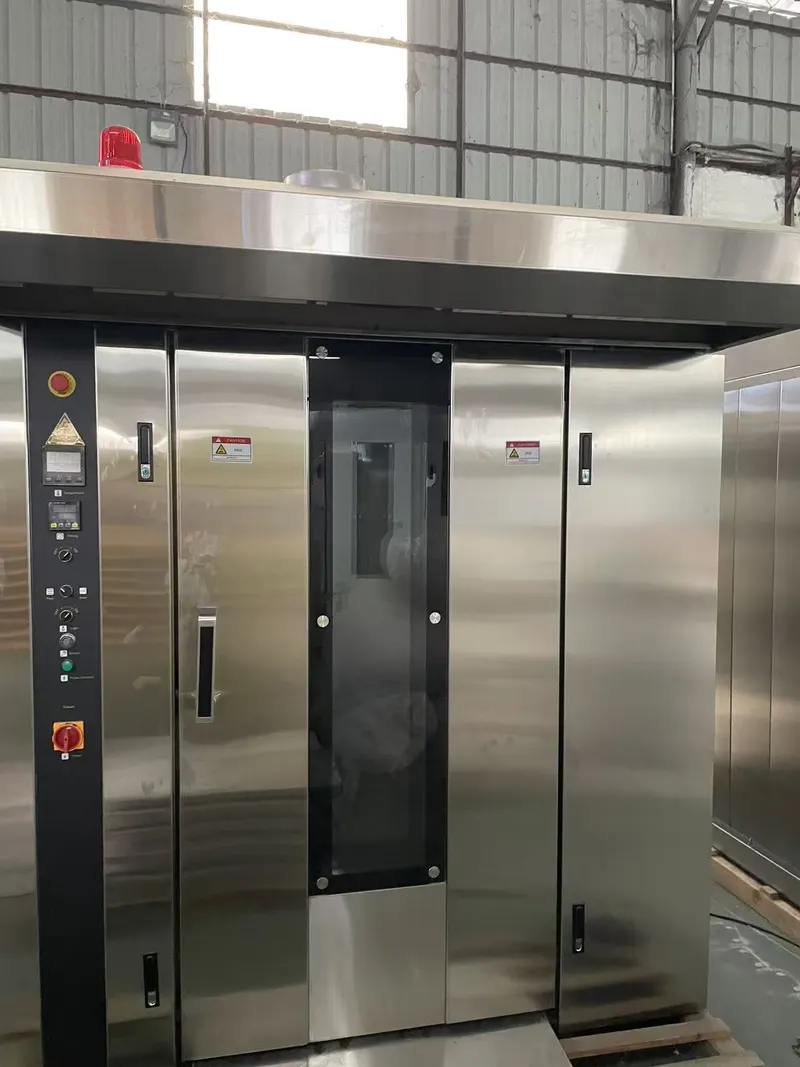
- Rotary rack oven — the workhorse for 500+ pretzels per hour. Racks hold many trays, and the forced air circulation bakes uniformly. HNH's rotary rack ovens from 6 to 28 trays cover bakery-scale pretzel output.
- Tunnel oven — used inside fully automatic production lines for continuous baking of 1,000+ pieces per hour, paired with a conveyor cooling system.
For most new pretzel businesses, a deck oven for retail batches plus a rotary rack oven for peak demand is the practical combination. The HNH electric deck oven offers separate top and bottom heat control, which matters for pretzel browning.
Soft vs. Hard Pretzels: Equipment Differences
| Production Aspect | Soft Pretzels (Fresh) | Hard Pretzels (Packaged Snacks) |
|---|---|---|
| Dough treatment | Fresh dough, twisted, dipped, baked on demand | Extrusion-formed dough, baked, then dried |
| Shaping stage | Twisting machine, semi-auto to full auto | Extrusion dies on a continuous line |
| Alkaline stage | Lye bath or baking-soda dip | Alkaline bath on the conveyor line |
| Oven | Deck or rotary rack oven | Continuous tunnel oven |
| After-baking | Salt sprinkle, serve warm | Drying tunnel, seasoning, packaging |
| Typical line investment | US$15,000-60,000 | US$90,000-300,000 |
Most buyers reading this guide are in the soft pretzel business, so the sections below focus on that path. If you are planning a packaged hard pretzel snack line, budget for the full extrusion + tunnel oven + drying configuration and ask suppliers for references from operating snack factories, not just sales videos.
Deck Oven vs. Rotary Rack Oven vs. Tunnel Oven
Deck Oven (Retail Batches & Craft Quality)
A deck oven bakes pretzels on flat stone or steel decks, typically one or two decks for a bakery counter. It gives operators direct control over top and bottom heat, which is how you achieve the dark bottom crust and light top of a classic soft pretzel. Capacity is limited to roughly 60-150 pretzels per deck per bake, so deck ovens suit bakeries selling pretzels alongside other fresh goods.
Rotary Rack Oven (High Volume, One Operator)
A rotary rack oven holds trays on a rotating rack, with forced hot air circulating for even baking across every tray. It is the right scale for 500-2,000 pretzels per day: load a rack, set the program, and one operator manages the whole bake. HNH rotary rack ovens range from 6-tray to 28-tray models and can be configured with steam injection, which many pretzel bakers use in the first minutes of the bake.
Tunnel Oven (Industrial Continuous Production)
Inside a fully automatic pretzel line, a tunnel oven bakes continuously as shaped and dipped pretzels travel through on a conveyor. Tunnel ovens are justified when output passes roughly 1,000 pieces per hour and the line runs multiple shifts. They are almost always sold as part of a complete line from the supplier, not as a standalone machine.
Anatomy of a Commercial Pretzel Line
A complete soft pretzel line, from dough to finished product, looks like this:
- Mixing — spiral mixer develops the stiff dough in 8-12 minutes per batch.
- Resting — dough rests briefly to relax the gluten, improving shape retention.
- Dividing & rounding — divider-rounder cuts equal portions and rounds them.
- Twisting — twisting machine forms the classic pretzel loop.
- Dipping — lye bath or alkaline dip gives the crust and flavor.
- Salting — coarse salt (or cinnamon sugar, sesame, everything seasoning) is applied.
- Baking — deck or rotary rack oven at 180-220°C with steam.
- Cooling & serving — rack cooling, then serve warm or freeze for later.
Add a blast freezer if you plan to produce shaped, un-baked pretzels ahead of time and bake on demand — a common model for supermarkets and food-service operators that need fresh pretzels at peak hours without a full daytime bake team.
Capacity Guide: How Many Pretzels Per Day Do You Need?
| Operation Size | Daily Output | Recommended Line | Rough Investment |
|---|---|---|---|
| Bakery café add-on | 100-300 | Planetary mixer + manual divider + semi-auto twister + single-deck oven | US$15,000-30,000 |
| Mall kiosk / food court | 300-800 | Spiral mixer + automatic divider-rounder + semi-auto twister + rotary rack oven | US$30,000-60,000 |
| Supermarket bakery dept. | 800-2,000 | Automatic line: twister + lye bath + rack oven, blast freezer for par-baked | US$60,000-120,000 |
| Snack factory (hard pretzels) | 2,000+ | Full automatic extrusion + tunnel oven + drying line | US$90,000-300,000 |
The most common sizing mistake is buying a line matched to weekend peak demand instead of average daily volume, which leaves a large oven sitting idle four days a week. Size for your committed daily volume and plan the peak-day overflow with a par-baked inventory system instead.
2026 Price Guide (FOB China)
These are realistic FOB China price ranges observed in 2026 supplier listings for commercial pretzel equipment. Freight, customs and installation are additional.
| Equipment | Spec | FOB China Price (US$) |
|---|---|---|
| Dough twisting machine | Semi-automatic, 500-2,000 pcs/hr | 750 - 3,000 |
| Divider-rounder | Automatic, 60-150g range | 1,080 - 3,500 |
| Planetary mixer | 20-40L, stainless bowl | 1,200 - 3,800 |
| Spiral mixer | 25-50kg dough capacity | 3,500 - 7,500 |
| Deck oven | Single deck, electric | 2,000 - 4,500 |
| Rotary rack oven | 12-28 tray, gas/electric | 9,000 - 22,000 |
| Semi-auto soft pretzel line | Mixer + divider + twister + oven | 15,000 - 45,000 |
| Automatic production line | Extrusion + tunnel oven + cooling, 100-1,000 kg/hr | 90,000 - 300,000 |
Get two or three itemized quotes before committing. The line price varies dramatically with stainless-steel thickness, PLC and motor brands, and whether the supplier includes the lye bath and salting station. A quote that looks cheap may simply exclude the machines you actually need.
The 6 Costly Mistakes to Avoid
- Under-sizing the oven. Buyers calculate the twisting rate and forget that the oven is the bottleneck. A twister that shapes 1,000 pieces per hour is useless beside a deck oven that bakes 150. Match the bake capacity to the shaping capacity.
- Skipping a food-grade lye bath setup. Some suppliers sell a "pretzel machine" with no dipping station, and operators improvise with food-safe alternatives that produce a pale, off-flavor product. Budget the proper food-grade alkaline bath and its safety documentation from day one.
- Buying a twisting machine on a rate claim. Verify the pieces-per-hour guarantee in writing and ask for a video of the actual model running the dough you plan to use. Machine videos from other models are a red flag.
- Ignoring spare-part and service lead times. A twisting machine that needs a month for spare parts stops your whole line. Confirm which consumables (belts, rollers, dies) are stocked and the lead time for each.
- Buying from a trading company with no factory access. The pretzel equipment market has many resellers. If the supplier cannot arrange a factory visit, video audit or third-party inspection, the "factory price" may be a markup with no after-sales support behind it.
- Failing to control dough temperature. Stiff dough heats up fast in warm climates, which changes the twist and the bake. Budget for a water-cooled mixer or a proofing-room investment — a detail buyers in tropical markets overlook until the first hot season.
Factory vs. Trading Company: Where to Buy
Pretzel equipment is manufactured mainly in Henan, Shandong and Guangdong provinces, and both factories and trading companies sell internationally. The practical differences matter more than the label:
- A factory can show you the production floor, run a factory acceptance test on your machine before shipping, and stock genuine spare parts. Ask for a video call from the workshop and a test-run video with your dough recipe.
- A trading company aggregates machines from several factories and may offer a wider catalogue or easier logistics, but you are buying their sourcing service, not the manufacturer's direct responsibility.
Before you sign, request the factory name, its export record, and third-party inspection options. For quality systems, check whether the factory is ISO 9001 certified and confirm that the machines carry CE or the equivalent certification for your market.
Customer Story: A Mall Kiosk Chain Scales Up
One of our repeat buyers runs soft pretzel kiosks inside shopping malls in the Gulf region, where fresh-baked pretzels are a fast-growing impulse category. He started with a single kiosk in 2023, running a manual divider and two semi-automatic twisting machines behind the counter, baking in a compact deck oven. Output was around 400 pretzels per day and the equipment paid back within six months.
When he expanded to three kiosks in 2024, he came back for a spiral mixer, an automatic divider-rounder, a 12-tray rotary rack oven and a small blast freezer so each kiosk could bake par-shaped pretzels on demand during peak hours. The central kitchen now supplies all three locations, labor per kiosk is down by one shift, and the line handles weekend peaks of 2,500 pretzels without a single oven bottleneck.
His advice to new buyers is direct: "Start with the smallest line that proves the concept, but buy the twisting machine and the oven from the same supplier so the rates match. Mixing brands is where the bottlenecks hide."
Maintenance Tips for 10+ Years of Service
- Twisting machine: wipe the forming rollers after every shift; food-grade flour dust builds up fast and changes the shape consistency. Grease the drive chain weekly.
- Divider-rounder: flush the hopper and pistons daily; calibrate portion weight weekly against a digital scale.
- Lye bath: drain and rinse the tank daily, check solution concentration and food-grade certification of consumables, and keep the handling documentation current for audits.
- Oven: brush the decks or racks after each bake, service thermostats and steam lines quarterly, and replace door seals as soon as heat escapes.
- Spare parts: keep a stock of the rollers, belts, dies and seals that stop production when they fail; order the full list from the supplier at purchase time.
A full preventive maintenance schedule is available in our bakery equipment maintenance guide, which covers all the machines in a typical bakery line.
Frequently Asked Questions
FOB China prices in 2026 range from US$750-3,000 for a manual or semi-automatic dough twisting machine, US$1,080-3,500 for a divider-rounder sized for pretzel dough, US$2,000-4,500 for a single-deck pretzel oven, and US$9,000-22,000 for a 12-tray rotary rack oven. A small semi-automatic soft pretzel line typically lands at US$15,000-45,000, while a full automatic pretzel production line with a continuous oven and conveyor cooling runs from US$90,000 to US$300,000.
A standard pretzel line has five stages: a dough mixer for the stiff pretzel dough, a divider and rounder that portions and shapes dough balls, a twisting machine that forms the classic pretzel loop, a lye bath or alkaline dip station that gives pretzels their signature brown crust and flavor, and an oven for baking. High-volume plants add a conveyor cooling tunnel and a salting or seasoning station after baking.
Soft pretzels are made from fresh dough that is twisted, dipped in a food-grade lye solution, sprinkled with salt and baked — they need a twisting machine, a lye bath and a deck or rotary oven. Hard pretzel snacks are produced on extrusion lines that shape and bake the dough continuously, then pass it through a drying and seasoning stage. Bakeries serving fresh soft pretzels buy twisting machines and ovens; snack factories making packaged hard pretzels invest in full automatic extrusion lines.
A deck oven with a stone or steel floor is the classic choice for soft pretzels because it bakes small batches with direct, even heat from below, which gives a crisp crust. A rotary rack oven suits high-volume production of hundreds of pretzels per hour on racks. For industrial output above 1,000 pieces per hour, a continuous tunnel oven integrated into an automatic line is the standard solution.
Yes. Pretzel dough is a fairly stiff, low-hydration dough (typically 55-62% hydration), which portions and rounds cleanly on a standard divider-rounder. Choose a machine with a higher dividing range (from 60g up) so you can set portions for both small pretzel bites and large 100-150g soft pretzels. Manual dividers work for under 300 pieces per day; automatic units are worth it above that volume.
The Bottom Line
Pretzels are one of the best-margin fresh bakery products you can add in 2026, and the equipment path is straightforward: a mixer, a divider-rounder, a twisting machine, a food-grade lye bath and the right oven. Match the line to your committed daily volume, verify every machine's real production rate, and buy from a supplier that can show you the factory floor. Done right, a pretzel line pays for itself within the first year and gives your menu a signature item customers keep coming back for.
For more buying context, read our baguette moulder buying guide, the planetary mixer selection guide and the complete bakery equipment price guide.
Ready to Set Up Your Pretzel Line?
Send us your daily output target and we will recommend the exact machine configuration with an itemized FOB quote — mixers, divider-rounders, twisting machines, ovens and lye bath stations from our own factory line.
Chat with Us on WhatsAppWhatsApp: +86 137 5500 7928 · Contact page · Factory in Changsha, China
Lucas Yang is the Founder & CEO of HNH Bakery Equipment, a commercial bakery equipment manufacturer in Changsha, China. He has helped 200+ bakeries across Africa, the Middle East, Southeast Asia and the Americas choose and set up production lines since 2015.