
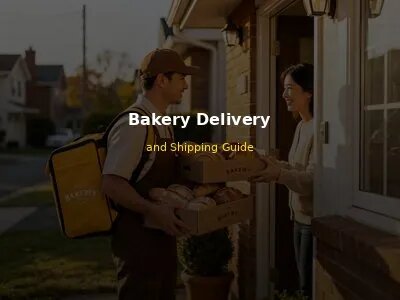
A story from our customer in Portland, USA: "When the pandemic hit in 2020, our bakery's in-store sales dropped 80% overnight. We had to pivot quickly — we started offering delivery. At first, we used Uber Eats and DoorDash, but the 25-30% commissions were killing our margins. We were making sales but losing money. Then we switched to in-house delivery. We hired a part-time driver, bought an insulated delivery bag, and started taking orders through our website. The difference was dramatic — our margins went from 40% to 65% on delivery orders. We also had full control over the delivery experience: our driver wore our uniform, used our branded bags, and greeted customers by name. Customers loved the personal touch. Within 6 months, delivery grew to 40% of our revenue, and we were profitable. We learned that delivery isn't just about getting products to customers — it's an extension of your brand and a real revenue stream when done right. The important was starting with third-party to test demand, then switching to in-house once volume justified it, and investing in proper packaging to ensure products arrived fresh and perfect."
Delivery and shipping have become core revenue streams for modern bakeries. With the rise of online ordering, food delivery platforms, and changing consumer expectations (60%+ of consumers now order food delivery regularly), offering delivery is no longer optional for many bakeries — it's expected.Most bakery owners don't realize how much money they're losing until they look over their equipment. Here's what we've learned from working with bakeries across 27 countries.Most bakery owners don't realize how much money they're losing until they look over their equipment. Here's what we've learned from working with bakeries across 27 countries. Whether you're just starting with delivery or looking to improve an existing delivery operation, this bakery delivery and guide will help you build a profitable, efficient, and customer-pleasing delivery business.
When it comes to bakery delivery, choosing the right equipment is crucial for bakery success. HNH Bakery Equipment provides professional bakery delivery solutions for bakeries worldwide. In this guide, we explore everything you need to know about bakery delivery and how to select the best equipment for your bakery.
1. Why Delivery Matters for Bakeries
Delivery has transformed from a nice-to-have to an a must revenue channel for modern bakeries. Here's why it matters:
1.1 The Business Impact of Delivery
| Benefit | Impact | Quantitative Effect |
|---|---|---|
| Increased revenue | Reach customers who can't or won't visit in-store | 20-50% increase in total revenue (for bakeries with successful delivery) |
| Expanded customer base | Reach customers beyond your local area/foot traffic | Access to thousands of potential customers in your delivery radius |
| Customer convenience | Meet customers where they are (home, office, events) | Higher customer satisfaction and retention |
| Competitive necessity | Customers expect delivery — competitors likely offer it | Not offering delivery = losing customers to competitors who do |
| Weather/disaster resilience | Continue operating when in-store traffic drops (storms, pandemics, emergencies) | More stable revenue during disruptions |
| Catering and large orders | Delivery enables catering (offices, events, parties) — high-margin, large orders | Catering can be 20-40% of revenue for delivery-capable bakeries |
| Subscription revenue | Recurring delivery subscriptions (weekly bread, pastry boxes) | Predictable recurring revenue, customer loyalty |
| Data and insights | Delivery orders provide customer data (preferences, frequency, location) | Better marketing, product development, and decision-making |
1.2 Market Trends
- Online food delivery market: The global online food delivery market is projected to reach $1 trillion+ by 2030, growing at 10-15% annually. Bakery products are one of the fastest-growing categories.
- Consumer behavior: 60%+ of consumers order food delivery at least once per week. 40%+ say they would order from a local bakery if delivery were available. Convenience is the #1 reason for ordering delivery.
- Third-party platforms: Uber Eats, DoorDash, Grubhub, and Deliveroo dominate the delivery market, but their high commissions (15-30%) are pushing more bakeries toward in-house delivery or direct ordering.
- Direct ordering trend: More bakeries are encouraging customers to order directly (via website/phone/app) to avoid platform commissions and own customer data. Direct ordering typically offers higher margins and better customer relationships.
- Subscription models: Bread/pastry subscription services (weekly/biweekly delivery) are growing in popularity, offering predictable recurring revenue and customer loyalty.
- Ghost kitchens / delivery-only: Some bakeries are operating delivery-only models (no storefront) to reduce overhead and focus on delivery efficiency.
2. Delivery Options for Bakeries
Choosing the right delivery model is one of the most worth noting decisions for your bakery delivery operation. Each option has different costs, complexity, and profitability. Here's a complete comparison:
2.1 Delivery Option Comparison
| Option | Cost Structure | Upfront Cost | Control | Best For | Profitability |
|---|---|---|---|---|---|
| Third-Party Platforms (Uber Eats, DoorDash) | 15-30% commission + fees | $0 | Low | Testing demand, low volume | Low-Medium |
| In-House Delivery (own drivers) | Labor + vehicle + packaging | $2K-$10K+ | High | High volume (15+ orders/day) | High |
| Local Courier / Flat-Fee | $3-$8 per delivery | $0-$500 | Medium | Medium volume (10-20/day) | Medium-High |
| Hybrid (in-house + third-party) | Combination | $2K-$10K+ | Medium-High | Growing bakeries | High |
| Subscription / Weekly Delivery | Labor + vehicle (planned routes) | $0-$1K | High | Artisan bread bakeries | High |
| Pickup Only (no delivery) | $0 delivery cost | $0 | N/A | Tiny, high foot traffic | Highest (no delivery cost) |
2.2 Delivery Option Deep Dive
1) Third-Party Delivery Platforms
Platforms like Uber Eats, DoorDash, Grubhub, and Deliveroo handle the entire delivery process: customers order through their app, the platform processes payment, assigns a driver, and delivers. You just prepare the order.
- Pros: No upfront investment, no need to hire drivers or buy vehicles, access to large customer base (millions of users), handles payment and customer service, easy to set up (1-2 weeks), good for testing demand, no driver management headache.
- Cons: High commission fees (15-30% per order — noticeably reduce margins), less control over delivery experience (driver quality, packaging handling, delivery time), customer data belongs to platform (can't market to delivery customers directly), menu prices need to be marked up 15-25% to be profitable, brand exposure is limited (customers see platform brand, not yours), platform can change fees/policies at any time.
- Best for: Tiny bakeries just starting with delivery, testing demand, low delivery volume (under 10 orders/day), bakeries that don't want to manage drivers/vehicles.
- Tips for profitability on platforms: Mark up menu prices 15-25% for delivery (standard practice), offer high-margin items (bread, pastries — avoid low-margin, high-damage items), improve your menu listing (professional photos, clear descriptions, good look overs), encourage customers to order directly (include a flyer/card in the package with your website and a discount for direct orders), and monitor performance (track which platforms drive the most profitable orders).
2) In-House Delivery
You hire your own drivers (part-time or full-time), use your own vehicle, and handle the entire delivery process. Customers order through your website/phone/POS, you prepare and deliver.
- Pros: Higher margins (no 15-30% commission), full control over delivery experience (packaging, timing, driver quality, customer interaction), customer data ownership (can market to delivery customers, build relationships), brand exposure (branded vehicle, driver uniform, packaging — every delivery is a mobile advertisement), flexible delivery options (scheduled delivery, custom orders, catering, large orders that platforms won't handle), and better customer relationships (your driver is your brand ambassador).
- Cons: High upfront investment (vehicle, insurance, equipment), need to hire/manage drivers (recruiting, training, scheduling, turnover), more complex operations (scheduling, routing, dispatch, order management), risk of driver turnover/absences (need backup plan), need sufficient volume to be profitable (15+ orders/day), liability (accidents, injuries during delivery — need proper insurance), and vehicle maintenance/down time.
- Best for: Bakeries with consistent delivery volume (15+ orders/day), bakeries that want full control over customer experience, bakeries doing catering/large orders, bakeries with a strong local brand, bakeries in dense urban areas (short delivery distances, high order density).
- Important success factors: Sufficient volume (15+ orders/day to justify driver cost), efficient routing (use route planning software to minimize drive time), proper packaging (reduce damage/complaints), trained drivers (customer service, safe driving, brand representation), proper insurance (commercial auto insurance, workers comp), and clear delivery policies (delivery radius, fees, minimum order, delivery times).
3) Local Courier / Flat-Fee Delivery
Partner with a local courier service or on-demand delivery company (not the big platforms — e.g., local courier companies, regional delivery services). They handle delivery for a flat fee per delivery (not percentage commission).
- Pros: Lower cost than third-party platforms (flat fee $3-$8 vs 15-30% commission — especially beneficial for large orders), more control than platforms (you set delivery times, packaging requirements), local couriers may provide better, more personalized service, no need to hire your own drivers, and flexible (can scale up/down from demand).
- Cons: Less brand exposure than in-house (courier vehicle/uniform isn't yours), may have limited coverage area or delivery times, less integrated with your ordering system (may need manual dispatch), quality may vary by courier (need to vet partners), and less control over driver/customer interaction.
- Best for: Bakeries with medium volume (10-20 orders/day) that want lower costs than platforms but don't want to manage their own drivers, bakeries in areas with good local courier services, bakeries doing occasional large/catering orders.
4) Hybrid Model
Use both in-house delivery (for your own website/phone orders, catering, large orders) and third-party platforms (for additional reach and volume).
- Pros: Best of both worlds — higher margins on your own orders + access to platform customers. Use third-party for customer acquisition, then convert them to your direct ordering (higher margin). Flexibility to scale up/down from demand. Maximize reach (customers who find you on platforms + customers who order directly).
- Cons: More complex to manage (two systems, two sets of processes, potential for order volume to be unpredictable), need to ensure menu/pricing consistency across platforms, potential for cannibalization (customers who would order directly use platforms instead — reduce by offering direct-order discounts), and more administrative work (reconciling payments, managing multiple dashboards).
- Best for: Growing bakeries that want to maximize reach and profitability, bakeries with capacity to handle both channels, bakeries in competitive markets (need to be where customers are).
5) Subscription / Weekly Delivery
Customers subscribe to weekly/biweekly delivery of bread/pastries. You deliver on a fixed schedule (e.g., every Saturday morning). This is different from on-demand delivery — it's recurring, planned delivery.
- Pros: Predictable revenue and volume (you know exactly how many orders to prepare each week), efficient routes (planned in advance, can improve for minimum drive time), customer loyalty (recurring revenue, high retention), higher margins (no last-minute inefficiencies, planned production), and strong customer relationships (regular interaction).
- Cons: Requires subscription management system (or manual tracking), less flexible for customers (fixed schedule/products), need to build subscriber base first (takes time), may have churn (customers cancel), and limited product variety (subscriptions usually focus on bread/weekly boxes, not custom orders).
- Best for: Artisan bakeries with a loyal customer base, bread-focused bakeries (bread is a recurring purchase), bakeries in residential areas (dense delivery routes), bakeries that want predictable revenue.
- Subscription model examples: Weekly bread box (1-3 loaves + pastry), weekly pastry box (assorted pastries), weekend brunch box (bread + pastries + coffee), custom subscription (customer chooses products each week).
2.3 Recommended Way for Most Bakeries
Phased Way Recommendation
Phase 1 (Start): Pickup + Third-Party Platforms — Set up online ordering for pickup, list on 1-2 platforms to test delivery demand. Mark up menu prices 15-25% for delivery. Low risk, low cost.
Phase 2 (Grow): Add Local Courier / Direct Ordering — Once You've 10+ consistent orders/day, encourage direct ordering (website/phone) with discounts, and consider flat-fee local couriers (lower cost than platforms).
Phase 3 (Scale): In-House Delivery — Once You've 15-20+ orders/day consistently, invest in in-house delivery (hire driver, insulated bags, route software). Highest margins, full control. Continue using platforms for customer acquisition.
Important principle: Match your delivery option to your volume. Don't invest in in-house delivery before volume justifies it. Don't rely solely on platforms (high commissions) once You've volume for in-house.
3. Packaging for Fresh Delivery
Proper packaging is the #1 reason in ensuring products arrive fresh and undamaged. Different products require different packaging. Here's a complete guide:
3.1 Packaging by Product Type
| Product Type | Best Packaging | Why | Cost per Unit |
|---|---|---|---|
| Crusty artisan bread (sourdough, baguette) | Paper bag (kraft or white), optionally in a bread box for premium | Paper allows crust to breathe and stay crispy; plastic makes crust soggy | $0.10-$0.50 |
| Soft sandwich bread/buns/rolls | Plastic bag (polyethylene), tied or sealed | Plastic retains moisture, keeps soft bread tender | $0.05-$0.30 |
| Croissants / laminated pastries | Paper bag or clamshell container, deliver within 1-2 hours | Paper/clamshell protects flakiness; avoid sealed plastic (makes soggy) | $0.20-$0.80 |
| Cakes / decorated pastries | Cake box with insert/board, clamshell for individual pastries | Sturdy box + insert prevents shifting/damage; never stack on top | $0.50-$3.00 |
| Cookies / bars / brownies | Airtight container or sealed bag, can stack | Airtight keeps fresh; durable, stacks well | $0.10-$0.50 |
| Cupcakes / muffins | Cupcake box with inserts, clamshell container | Inserts prevent cupcakes from tipping over; protects frosting | $0.30-$1.50 |
| Pies / tarts | Pie box (sturdy, with window optionally) | Sturdy box prevents crushing; window shows product | $0.50-$2.00 |
| Refrigerated products (cream-filled, cheesecake) | Insulated bag + ice pack, airtight container | Keeps products cool/food-safe; include refrigeration note | $1.00-$3.00 (reusable bag) |
| Mixed orders (multiple products) | Sturdy box with dividers, insulated bag | Dividers separate products; prevents cross-contamination/damage | $0.50-$2.00 |
3.2 Packaging Best Practices
- Use sturdy boxes: Invest in sturdy, corrugated cardboard boxes that won't crush during delivery. Use boxes appropriately sized for the products (too large = products shift and get damaged; too small = products get crushed).
- Use dividers for mixed orders: For multiple items in one box, use cardboard dividers to separate products and prevent them from bumping into each other. This is especially a priority for mixed orders with bread + pastries + cakes.
- Stack carefully: Place heavier, sturdier items (bread loaves) at the bottom, lighter, more delicate items (pastries, cakes) on top. Never stack heavy items on top of delicate pastries or cakes. Use a "this side up" label for cake boxes.
- Use non-slip mats: Place a non-slip mat or rubber shelf liner in the delivery bag/box to prevent products from sliding around during transit. This is a cheap ($5-$10) but effective solution.
- Invest in insulated delivery bags: Insulated thermal bags are necessary for maintaining temperature. Have multiple sizes (small, medium, large). Use them for all deliveries, especially in extreme weather. Cost: $20-$80 each, but they last 1-2 years.
- Use ice packs for refrigerated products: For cream-filled pastries, cheesecakes, or products requiring refrigeration, place ice packs in the bottom of the insulated bag, separated from products by cardboard or paper (direct contact causes condensation). Use gel ice packs (reusable) or frozen water bottles.
- Use heat packs for cold weather: In winter, disposable heat packs or heated bricks can keep bread warm during delivery. Wrap in a towel to prevent direct contact with products.
- Brand your packaging: Use branded packaging (your logo, colors, tagline) — every delivery is a mobile advertisement. Custom printed bags/boxes are affordable when ordered in bulk (500+ units). At minimum, use branded stickers/labels on plain packaging.
- Include care instructions: Add a small card or sticker with care instructions: "Best enjoyed same day. To refresh crusty bread: sprinkle with water and bake at 350F for 5 minutes. Store in paper bag at room temperature for up to 2 days, or freeze for up to 1 month." For refrigerated products: "Keep refrigerated. Consume within 3 days."
- Include marketing materials: Add a business card, menu, flyer, or coupon for next order in every delivery package. This encourages repeat orders and builds customer loyalty. Include your website/social media handles.
- Buy packaging in bulk: Purchase packaging supplies in bulk (500-1000+ units) to reduce per-unit costs by 30-50%. Store in a dry, clean area. Track inventory and reorder before running out.
- Consider eco-friendly packaging: Many customers value sustainability. Consider compostable/recyclable packaging (kraft paper, compostable plastic, recycled cardboard). It may cost 10-20% more but can be a brand differentiator and align with customer values.
4. Delivery Logistics and Operations
Efficient delivery operations are necessary for profitability and customer satisfaction. Here's how to set up and manage your delivery operation:
4.1 Delivery Radius and Zones
- Define your delivery radius: Start with a small radius (3-5 miles) and expand as you gain efficiency and volume. A smaller radius means shorter delivery times, fresher products, lower fuel costs, and more orders per hour. In dense urban areas, 3-5 miles is reasonable. In suburban/rural areas, 5-10 miles may be necessary.
- Set delivery zones: Divide your delivery area into zones with different delivery fees and minimum orders. For example: Zone 1 (0-3 miles): $3 fee, $15 minimum; Zone 2 (3-6 miles): $5 fee, $25 minimum; Zone 3 (6-10 miles): $8 fee, $40 minimum. This ensures longer deliveries are profitable.
- Set delivery hours: Define specific delivery windows (e.g., 9am-12pm, 12pm-3pm, 3pm-6pm) rather than delivering all day. This allows you to batch orders by zone and time, improving efficiency. Communicate delivery hours clearly on your website/menu.
- Set delivery minimums: Require a minimum order value ($15-$30) for delivery to ensure each order is profitable. A $8 bread order with $3 delivery fee and $5 delivery cost loses money. Minimum orders filter out unprofitable small orders.
4.2 Route Optimization
- Use route planning software: Route planning software (Route4Me, OptimoRoute, Routific, Google Maps) improves delivery routes to minimize drive time and fuel costs. These tools calculate the most efficient route for multiple stops, Given traffic, distance, and delivery windows. Cost: $20-$100/month. For small operations, even Google Maps (free) with multiple stops can help.
- Batch orders by zone: Group orders going to the same area/zone and deliver them together. This reduces drive time and increases orders per hour. For example, deliver all Zone 1 orders between 10-11am, all Zone 2 orders between 11am-12pm.
- Schedule deliveries in windows: Offer customers specific delivery windows (e.g., "10am-12pm" or "2pm-4pm") rather than exact times. This gives you flexibility to batch and improve routes while still setting customer expectations. Send a text when the driver is on the way (15-30 minutes before arrival).
- Consider delivery density: Focus marketing and delivery efforts on areas with high order density (many customers in a small area). High density means more orders per hour, lower delivery cost per order, and faster delivery times. You can intentionally build density by targeting specific neighborhoods with marketing.
- Track and improve: Track delivery metrics (average delivery time, orders per hour, fuel cost per delivery, on-time delivery rate) and continuously improve. If a zone has low order density or long drive times, consider increasing the delivery fee or minimum order, or removing it from your delivery area.
4.3 Order Management and Dispatch
- Centralized order system: Use a POS or order management system that consolidates orders from all channels (website, phone, third-party platforms) in one place. This prevents missed orders and makes dispatch easier. Many POS systems (Square, Toast, Lightspeed) have built-in order management for delivery.
- Order ticketing: Print or display order tickets clearly with: order number, customer name, deal with, phone, delivery zone/time, items, special instructions, payment status. This ensures accuracy and makes dispatch efficient.
- Preparation timing: Prepare orders just before dispatch (not too early — products sit and lose freshness; not too late — driver waits). For bread, schedule baking so products are fresh when dispatched. For pastries, prepare to order (if possible) or hold in appropriate conditions.
- Dispatch process: Have a clear dispatch process: order received, ticket printed, order prepared, quality checked, packaged, assigned to driver/route, dispatched, delivered, confirmed. Each step should be tracked in your system.
- Driver communication: Equip drivers with a smartphone with your order management app, route planning app, and customer contact info. Establish clear communication protocols (driver calls/texts customer when on the way, confirms delivery, reports issues immediately).
- Delivery confirmation: Require drivers to confirm delivery (in your app, via text, or by geting customer signature/photo). This provides proof of delivery and resolves disputes. For contactless delivery, take a photo of the package at the door.
4.4 Driver Management
- Hiring: Hire drivers with clean driving records, valid driver's license, auto insurance, and good customer service skills. For in-house delivery, consider part-time drivers (peak hours only) to control costs. Background checks and driving record checks are matters.
- Training: Train drivers on: safe driving, customer service (greeting, professionalism, handling complaints), product handling (proper packaging, temperature control, not stacking delicate items), delivery procedures (route app, confirmation, reporting issues), and brand representation (uniform, friendly, on-time).
- Uniform and branding: Provide drivers with branded uniform (shirt, hat, jacket) and branded delivery bags/vehicle signage. Every delivery is a mobile advertisement — make it professional and on-brand.
- Compensation: Pay drivers a fair wage ($12-$20/hour depending on area) + mileage reimbursement (if using their own vehicle, $0.30-$0.60/mile) + tips. Some bakeries offer delivery fee sharing (driver keeps part of delivery fee) as incentive. Ensure compliance with labor laws (minimum wage, overtime, workers comp).
- Scheduling: Schedule drivers only during peak delivery hours (e.g., 9am-1pm, 4pm-7pm) to control labor costs. Use part-time drivers for peak periods. Cross-train kitchen staff to do deliveries during slow periods (if they have valid licenses and insurance).
- Performance tracking: Track driver performance: on-time delivery rate, customer complaints/compliments, accidents/traffic violations, orders per hour. Provide feedback and recognition. deal with performance issues promptly.
- Backup plan: Have a backup plan for driver absences (cross-train staff, have a backup driver on call, use third-party platform for overflow). Don't let one driver's absence shut down your delivery operation.
5. Delivery Profitability
Delivery can be highly profitable — or a money-loser — depending on how you manage it. Here's a detailed guide to delivery profitability:
5.1 Profitability Calculation Structure
Net Profit per Delivery = (Order Revenue + Delivery Fee) - (Product Cost + Delivery Costs + Packaging + Platform Fees)
Important delivery costs:
- Labor: Driver wages + benefits + taxes. Usually $3-$8 per delivery (depending on orders per hour and wage).
- Vehicle: Fuel + maintenance + insurance + depreciation. Usually $0.30-$0.60 per mile, or $2-$5 per delivery (depending on average distance).
- Packaging: Boxes, bags, inserts, ice packs. Usually $0.50-$3 per delivery (depending on products).
- Platform fees (if using third-party): 15-30% commission + payment processing. Usually $5-$15 per order (depending on order value).
- Technology: Route software, POS, online ordering. Usually $0.50-$2 per delivery (amortized monthly cost / monthly deliveries).
5.2 Profitability Example: In-House Delivery
| Item | Calculation | Amount |
|---|---|---|
| Average order value | Customer pays for products | $35.00 |
| Delivery fee (charged to customer) | Flat fee per delivery | $5.00 |
| Total revenue per order | $35 + $5 | $40.00 |
| Product cost (COGS) | 35% of $35 | $12.25 |
| Gross profit on products | $35 - $12.25 | $22.75 |
| Delivery labor cost | $15/hour / 4 deliveries/hour | $3.75 |
| Vehicle cost | Fuel + maintenance + insurance | $2.50 |
| Packaging cost | Boxes, bags, inserts | $1.50 |
| Technology cost | Route software, POS (amortized) | $0.50 |
| Total delivery costs | $3.75 + $2.50 + $1.50 + $0.50 | $8.25 |
| Net profit per delivery | $22.75 + $5.00 - $8.25 | $19.50 |
| Net margin | $19.50 / $40.00 | 48.8% |
At 25 deliveries/day: 25 x $19.50 = $487.50/day = $12,675/month (26 days). This is a healthy profit.
5.3 Profitability Example: Third-Party Platform
| Item | Calculation | Amount |
|---|---|---|
| Average order value (customer pays) | Customer pays platform | $35.00 |
| Platform commission (25%) | 25% of $35 | $8.75 |
| Payment processing (3%) | 3% of $35 | $1.05 |
| You receive | $35 - $8.75 - $1.05 | $25.20 |
| Product cost (COGS) | 35% of $35 | $12.25 |
| Packaging cost | Platform-ready packaging | $1.50 |
| Net profit per order | $25.20 - $12.25 - $1.50 | $11.45 |
| Net margin (on what you receive) | $11.45 / $25.20 | 45.4% |
Third-party delivery is less profitable than in-house ($11.45 vs $19.50 per order), but you don't have driver/vehicle costs. If you mark up menu prices by 20% for delivery ($42 average order), net profit increases to ~$17/order — closer to in-house profitability.
5.4 Important Profitability Levers
- Volume: More deliveries = lower fixed cost per delivery (driver wage spread over more orders). Aim for 15+ deliveries/day for in-house profitability.
- Order value: Higher average order value = more gross profit per delivery. Increase order value with: minimum orders, upselling (add a pastry/drink), bundles, catering, and higher-margin products.
- Delivery fee: Charge an appropriate delivery fee ($3-$8) to cover driver/vehicle costs. Don't offer free delivery unless order value is high enough ($40+).
- Minimum order: Set a minimum order ($15-$30) to filter out unprofitable small orders.
- Route efficiency: improve routes to increase orders per hour (4-6 deliveries/hour is good). More deliveries per hour = lower labor cost per delivery.
- Delivery radius: Keep radius small (3-8 miles) to reduce drive time and fuel cost per delivery.
- Product mix: Focus on high-margin, delivery-friendly products (bread, pastries, cookies). Avoid low-margin, high-damage products (delicate cakes) unless you charge a premium and have proper packaging.
- Packaging cost: Buy in bulk to reduce per-unit packaging costs. But don't sacrifice quality (cheap packaging = damage = refunds).
- Reduce damage/complaints: Invest in quality packaging and driver training to reduce damage, complaints, and refunds. A 5% refund rate at $35/order = $1.75/delivery — meaningful.
- Direct ordering: Encourage customers to order directly (website/phone) instead of through platforms (saves 15-30% commission). Offer direct-order discounts, include flyers in platform orders, and promote direct ordering on social media.
6. Nationwide Shipping
Plus to local delivery, some bakeries offer nationwide shipping of shelf-stable or carefully packaged products. This opens up a much larger market but requires different logistics.
6.1 Products Suitable for Shipping
| Product | Shelf Life | Shipping Method | Packaging |
|---|---|---|---|
| Artisan bread (sourdough, baguette) | 2-3 days fresh, 1 month frozen | 2-day priority, or frozen with dry ice | Paper bag + sturdy box, optionally vacuum sealed |
| Cookies / biscotti | 1-2 weeks | Standard (3-5 days) or priority | Airtight container/sealed bag + box |
| Brownies / bars | 5-7 days | Priority (2-3 days) | Airtight container + box, ice pack in summer |
| Coffee cake / quick bread | 5-7 days | Priority (2-3 days) | Sealed wrap + cake box + outer box |
| Granola / trail mix | 1-2 months | Standard (3-5 days) | Sealed bag + box |
| Jams / spreads (if you make them) | 6-12 months | Standard (3-5 days) | Jar + bubble wrap + box |
| Frozen bread/dough | 1-3 months frozen | Overnight/2-day with dry ice | Vacuum sealed + insulated box + dry ice |
6.2 Shipping Best Practices
- Choose the right carrier: USPS Priority Mail (2-3 days, cost-effective for small packages), UPS/FedEx (more reliable for time-sensitive, better tracking), or regional carriers. Compare rates for your typical package size/weight/destination.
- Use sturdy outer boxes: Use new, sturdy corrugated boxes (not reused boxes that may be weakened). Double-box fragile items (product box inside a larger box with packing material).
- Use adequate cushioning: Use bubble wrap, packing peanuts, crumpled paper, or air pillows to fill empty space and prevent products from shifting. Products should not move when the box is shaken.
- Seal securely: Use strong packing tape (2-inch wide) to seal all seams. Use the "H" taping method (tape center seam and both edges) for bottom and top.
- Include insulation for perishables: For products needing temperature control, use insulated box liners (foam or reflective) + ice packs (gel packs or dry ice for frozen). Ensure ice packs don't touch products directly (causes condensation/water damage).
- Label clearly: Include: "Perishable — Keep Refrigerated" or "Frozen — Contains Dry Ice" (if applicable), "This Side Up" for cakes, your return deal with, customer deal with clearly printed, and tracking number.
- Include care instructions: Add a card with: "Your bread is best enjoyed fresh. To refresh: sprinkle with water and bake at 350F for 5 minutes. Store in paper bag at room temperature for 2 days, or freeze for up to 1 month." Also include your business card, menu, and a thank-you note.
- Calculate shipping costs accurately: Weigh and measure your typical packages, use carrier rate calculators, and build shipping costs into your product pricing or charge actual shipping. Don't underestimate shipping costs — they can be notable, especially for large/heavy packages.
- Offer free shipping thresholds: Offer free shipping on orders over $50-$75 to encourage larger orders. This increases average order value and makes shipping more cost-effective.
- Track and communicate: Provide tracking numbers to customers immediately. Send shipping confirmation emails. Monitor for delays (weather, holidays) and communicate proactively if there are issues.
- Test your packaging: Before launching nationwide shipping, test your packaging by shipping packages to friends/family in different regions. Have them report on condition upon arrival. Refine packaging from feedback.
- Consider shipping insurance: For high-value packages ($50+), consider purchasing shipping insurance (typically $1-$2 per $100 of value). This protects against lost/damaged packages.
7. Food Safety and Compliance
Delivery introduces additional food safety considerations. Here's what You should know:
7.1 Temperature Control
- Temperature danger zone: 40F-140F (4C-60C) is the "danger zone" where bacteria grow rapidly. Perishable foods should not be in this zone for more than 2 hours (1 hour if temperature is above 90F/32C).
- Hot products: Keep hot products at 140F (60C) or above during delivery (use insulated bags, heat packs). Bread and pastries are typically served at room temperature and are safe if delivered within 2-4 hours.
- Cold/refrigerated products: Keep refrigerated products at 40F (4C) or below during delivery (use insulated bags + ice packs). This includes cream-filled pastries, cheesecakes, custards, and products with dairy/egg fillings.
- Frozen products: Keep frozen products at 0F (-18C) or below (use insulated boxes + dry ice). Include "Contains Dry Ice" label and handling instructions.
- Monitoring: For high-volume operations, use temperature loggers in delivery vehicles to monitor conditions. For small operations, use insulated bags and ice/heat packs and limit delivery time.
7.2 Cross-Contamination Prevention
- Separate allergens: If you make products with common allergens (nuts, dairy, eggs, gluten), ensure proper separation during packaging and delivery. Use separate packaging, clearly label allergen-containing products, and include allergen information on packaging/labels.
- Separate raw and ready-to-eat: If you deliver both raw dough (for customers to bake at home) and ready-to-eat products, package them separately and clearly label raw products with baking instructions and food safety warnings.
- Sanitary packaging: Use food-grade packaging materials. Ensure packaging area is clean and sanitized. Staff should wash hands and wear gloves when packaging food.
- Delivery vehicle cleanliness: Keep delivery vehicles clean and sanitized. Don't transport non-food items (chemicals, cleaning supplies) with food. Clean delivery bags regularly.
7.3 Licensing and Insurance
- Business license: Ensure your bakery has the necessary business licenses and permits for your area. Delivery may require additional permits in some jurisdictions.
- Food service permit: Your bakery should have a valid food service permit and pass health checkions. Delivery operations may be subject to additional health department requirements (temperature control, vehicle sanitation).
- Commercial auto insurance: If using your own vehicle for delivery, ensure You've commercial auto insurance (personal auto insurance may not cover business use). This is important — accidents during delivery can be costly.
- General liability insurance: Ensure You've general liability insurance covering foodborne illness, product liability, and delivery-related incidents.
- Workers' compensation: If You've employees (including delivery drivers), ensure You've workers' compensation insurance as required by law.
- Cottage food laws (if home bakery): If you operate a home bakery, check your local cottage food laws — some jurisdictions restrict or prohibit delivery of home-baked goods. You can need to move to a commercial kitchen to offer delivery.
7.4 Labeling Requirements
- Product labeling: For packaged products (especially for shipping/wholesale), include: product name, ingredients list, allergen statement (contains: wheat, dairy, eggs, nuts), net weight, your bakery name and deal with, and "best by" or "use by" date.
- Nutrition labeling: In some jurisdictions (e.g., US FDA for retail food establishments with 20+ locations), nutrition labeling may be required. For small bakeries, it's generally not required but can be a nice addition for health-conscious customers.
- Country of origin: For shipping across borders (international), include country of origin labeling and check customs requirements (some countries restrict food imports).
8. Customer Experience and Communication
Delivery is an extension of your brand — the customer's delivery experience directly impacts their perception of your bakery and their likelihood to order again.
8.1 Setting Expectations
- Clear delivery information: On your website/menu, clearly state: delivery radius, delivery fees, minimum order, delivery hours/windows, estimated delivery time, areas you don't deliver to, and how to place orders. Customers should know exactly what to expect before ordering.
- Order confirmation: Send an immediate order confirmation (email/SMS) with: order number, items ordered, total amount, delivery deal with, estimated delivery time/window, and a link to track the order (if available).
- Real-time updates: Send updates when: order is being prepared, order is out for delivery (with driver name and estimated arrival), and order is delivered. SMS is more effective than email for real-time updates (open rates 90%+ vs 20-30% for email).
- Delays communication: If a delivery will be late (traffic, weather, kitchen delays), communicate proactively — don't make the customer wonder. Send a text: "Hi [Name], your bakery order is running 15 minutes late Because of [reason]. We apologize for the delay and will be there as soon as possible. Thank you for your patience!" Proactive communication turns a potential complaint into a positive experience.
8.2 Delivery Experience
- Professional drivers: Your delivery driver is the face of your bakery. Ensure drivers are: friendly and professional, well-groomed, wearing branded uniform, arriving on time, handling packages carefully, and greeting customers warmly. A rude or unprofessional driver can ruin an otherwise great product experience.
- Contactless delivery option: Offer contactless delivery (driver leaves package at door, texts customer when delivered) for customers who prefer it. This became standard during the pandemic and many customers still prefer it.
- Personal touches: Add personal touches to deliveries: a handwritten thank-you note (for first-time or large orders), a free sample (small cookie or pastry), a business card with a discount for next order, or branded packaging (stickers, tape, tissue paper). These small touches make customers feel valued and encourage repeat orders.
- Handle issues promptly: If there's a problem with a delivery (wrong order, damaged product, late delivery), deal with it immediately and generously. Offer a refund, replacement, or discount on the next order. A prompt, generous resolution turns an unhappy customer into a loyal one (studies show customers who have a problem resolved quickly are often more loyal than those who never had a problem).
- Follow up: After delivery, send a follow-up text/email: "Hi [Name], we hope you enjoyed your bakery order! If You've any feedback or issues, please reply to this message. Use code THANKYOU10 for 10% off your next order. — [Bakery Name]". This encourages feedback, provides an incentive to reorder, and shows you care.
8.3 look overs and Feedback
- Encourage look overs: Include a request for look overs in your follow-up message: "If you enjoyed your order, we'd love a look over on Google/Yelp/Facebook — it helps us grow!" Include direct links to your look over pages. Positive look overs build trust and attract new customers.
- Respond to all look overs: Respond to every look over — positive (thank them) and negative (apologize, offer to make it right). This shows you care about customer feedback and can turn negative look overs into positive outcomes.
- Collect feedback: Regularly ask customers for feedback (via follow-up messages, surveys, or in-person). Use feedback to improve your delivery operation (packaging, timing, product quality, customer service).
- Track delivery metrics: Track: on-time delivery rate, customer satisfaction (look overs/ratings), complaint rate, refund rate, repeat order rate, and average delivery time. Use these metrics to spot areas for improvement and measure progress.
9. Technology and Tools
The right technology can noticeably improve delivery efficiency, profitability, and customer experience. Here are the important tools:
9.1 a must Tools
| Tool Category | Examples | Cost | Benefit |
|---|---|---|---|
| POS with delivery management | Square, Toast, Lightspeed, Clover | Free-$250/month | Order taking, ticket printing, delivery tracking, reporting |
| Online ordering | Square Online, Toast Online, Shopify, WooCommerce | Free-$300/month | Customer self-ordering, menu display, payment processing |
| Route planning | Route4Me, OptimoRoute, Routific, Google Maps | Free-$100/month | improved routes, reduced drive time/fuel, more deliveries/hour |
| Delivery management | Onfleet, Tookan, Deliverect, Shipday | $30-$200/month | Dispatch, driver tracking, customer notifications, proof of delivery |
| SMS/marketing | Twilio, SimpleTexting, Mailchimp, Klaviyo | Free-$100/month | Order confirmations, delivery updates, marketing campaigns |
| Shipping (nationwide) | ShipStation, Shippo, Pirate Ship, Stamps.com | Free-$50/month | Label printing, rate comparison, tracking, customs |
| Insulated delivery bags | Various brands (Cambro, Rubbermaid, Amazon) | $20-$80 each | Temperature control, product freshness |
| Temperature monitoring | Sensitech, DeltaTrak, ThermoWorks | $50-$200 + $10-$50/month | Food safety compliance, quality assurance |
9.2 Tool Selection Tips
- Start simple: You don't need every tool at once. Start with a POS + online ordering + Google Maps (free route planning) + insulated bags. Add tools as your delivery operation grows and becomes more complex.
- Integration is important: Choose tools that integrate with each other (POS / online ordering / delivery management / accounting). Integration reduces manual data entry, errors, and time. Many POS systems have app marketplaces with pre-built integrations.
- Consider all-in-one solutions: Some POS systems (Square, Toast, Lightspeed) include online ordering, delivery management, customer management, and marketing in one platform. All-in-one solutions are simpler and often cheaper than piecing together multiple tools.
- Test before committing: Most tools offer free trials (14-30 days). Test 2-3 options with your actual operations before committing. Involve your staff in testing — they'll use the tools daily.
- Calculate ROI: For each tool, calculate the expected ROI (time savings, increased efficiency, reduced errors, increased sales). If a tool costs $50/month but saves you 5 hours/week at $15/hour = $300/month value, it's a clear win.
10. Common Mistakes to Avoid
- Offering delivery without proper planning: Don't just start delivering without a plan (delivery radius, fees, minimums, packaging, staffing, insurance). Poorly planned delivery causes losses, complaints, and burnout. Plan carefully before launching.
- Underpricing delivery: Not charging enough (or anything) for delivery is the #1 reason delivery operations lose money. Charge a delivery fee ($3-$8), set a minimum order ($15-$30), and mark up menu prices 10-15% for delivery. Delivery costs real money — make sure customers pay their share.
- Too large a delivery radius: Delivering 15+ miles away is expensive (fuel, driver time, vehicle wear) and causes long delivery times (products lose freshness, customers complain). Keep radius small (3-8 miles) and expand gradually as you gain efficiency.
- Poor packaging: Using flimsy boxes, no insulation, no dividers, or wrong packaging for product type causes damaged products, complaints, refunds, and lost customers. Invest in quality packaging — it's a small cost that prevents big losses.
- Not maintaining product freshness: Preparing orders too early (products sit and lose freshness), delivering in extreme temperatures without insulation, or delivering products that don't travel well (delicate cakes, soft pastries that get soggy) causes poor customer experience. Deliver fresh, use insulation, and choose delivery-friendly products.
- Ignoring customer communication: Not sending order confirmations, not updating customers on delivery status, not communicating delays, or not following up after delivery causes customer anxiety and dissatisfaction. Communicate proactively at every step.
- Untrained or unprofessional drivers: Drivers who are late, rude, unprofessional, or handle packages carelessly ruin the delivery experience. Hire carefully, train thoroughly, and track performance. Your driver is your brand ambassador.
- Not tracking profitability: Not tracking delivery revenue, costs, and profit separately from in-store sales means you don't know if delivery is profitable. Track delivery metrics separately and adjust (fees, minimums, radius, pricing) if it's not profitable.
- Relying solely on third-party platforms: While platforms are great for customer acquisition, relying solely on them means high commissions (15-30%), no customer data ownership, and less control. Use platforms for acquisition, but encourage direct ordering (higher margin, customer relationship).
- Not having a backup plan: If your only driver calls in sick, or your vehicle breaks down, delivery stops. Have backup plans: cross-train kitchen staff, have a backup driver on call, use third-party platforms for overflow, or have a rental vehicle backup.
- Ignoring food safety: Not maintaining proper temperatures, not preventing cross-contamination, or not having proper licensing/insurance can lead to foodborne illness, legal liability, and business closure. Take food safety seriously — it's not optional.
- Not improving routes: Delivering orders one at a time in the order received (rather than batching by zone and improving routes) is inefficient and costly. Use route planning software and batch orders to maximize deliveries per hour.
- Overpromising delivery times: Promising "30-minute delivery" when it actually takes 60-90 minutes causes customer frustration and complaints. Be realistic about delivery times (err on the side of longer) and communicate clearly. It's better to deliver early than late.
- Not learning from mistakes: Every complaint, refund, or late delivery is a learning opportunity. Track issues, spot root causes, and put in place fixes. Continuous improvement is important to a successful delivery operation.
11. put in placeation Roadmap
11.1 Phase 1: Planning and Setup (Weeks 1-2)
| Action | Details |
|---|---|
| study and plan | Define delivery radius, zones, fees, minimums, hours. study competitors' delivery offerings. Calculate expected costs and profitability. |
| Choose delivery model | Decide: third-party, in-house, hybrid, or local courier. Start with third-party + pickup if unsure. |
| Set up online ordering | Set up online ordering via POS (Square Online, Toast) or website. Add delivery menu with prices, fees, minimums. |
| Get packaging supplies | Order packaging: boxes, bags, inserts, insulated bags, ice packs. Buy in bulk. Test packaging with sample deliveries. |
| Get insurance and licenses | Ensure commercial auto insurance (if in-house), general liability, food service permit. Check local regulations. |
| Set up technology | POS with delivery tracking, route planning app (Google Maps or paid), SMS for notifications. Test the full order flow. |
11.2 Phase 2: Soft Launch (Weeks 3-4)
| Action | Details |
|---|---|
| Test with friends/family | Do 10-20 test deliveries to friends/family. Test packaging, timing, route efficiency, customer experience. Get feedback and refine. |
| Train staff/drivers | Train kitchen staff on order prep/packaging. Train drivers on routes, customer service, food safety, technology. |
| Soft launch to limited area | Launch delivery to a small area (closest zone only) with limited hours. Monitor closely, fix issues, gather feedback. |
| Track metrics | Track: orders/day, average order value, delivery time, on-time rate, complaints, refunds, costs, profit per delivery. |
11.3 Phase 3: Full Launch and Growth (Months 2-3)
| Action | Details |
|---|---|
| Expand delivery area | Gradually expand delivery radius and zones as efficiency improves. Add delivery hours/days from demand. |
| Promote delivery | Market delivery on social media, website, in-store, email. Offer launch promotions (free delivery, discount). Encourage look overs. |
| improve operations | Use route planning software, batch orders, improve schedules. Continuously improve packaging, timing, customer experience. |
| Consider in-house delivery | If using third-party and volume reaches 15+/day, judge switching to in-house delivery (higher margins, more control). |
| Add subscription/catering | Once delivery is stable, add subscription options (weekly bread box) and catering delivery (higher-margin, larger orders). |
11.4 Phase 4: Optimization and Scaling (Months 4+)
| Action | Details |
|---|---|
| Advanced analytics | put in place delivery management software (Onfleet, Tookan). Track detailed metrics. Use data for continuous optimization. |
| Nationwide shipping | If local delivery is successful, consider adding nationwide shipping for shelf-stable products (cookies, bread, granola). |
| Multiple drivers/vehicles | As volume grows, add drivers/vehicles. Consider dedicated delivery vehicle with branding. improve schedules for peak periods. |
| Loyalty and retention | put in place delivery loyalty program (free delivery after X orders, points for referrals). Focus on repeat customers (acquisition is costly, retention is profitable). |
| Continuous improvement | Regularly look over metrics, gather customer feedback, test improvements (packaging, routes, fees, menu). Stay current with technology and industry trends. |
Have Questions? We Are Here to Help
Not sure which machine is right for you? Send us a message with your daily production volume, the products you make, and your available space. We will get back to you within 24 hours with a personalized recommendation.
Get Free Equipment Consultation /12. Conclusion: Delivery Is a Growth Engine, Not a Headache
Delivery and shipping have become needed revenue streams for modern bakeries — and when done right, they can be highly profitable, expand your customer base, and strengthen your brand. The important is to way delivery strategically: choose the right delivery model for your volume, invest in proper packaging to ensure freshness, improve logistics for efficiency and profitability, communicate proactively with customers, and continuously track and improve performance.
The most common reason delivery operations fail is poor planning and underpricing — not charging enough for delivery, offering too large a radius, using poor packaging, or not tracking profitability. Avoid these mistakes by: starting small (test demand with third-party platforms), charging appropriate fees ($3-$8) and minimums ($15-$30), keeping your delivery radius manageable (3-8 miles), investing in quality packaging, and tracking delivery profitability separately from in-store sales.
As your delivery volume grows (15+ orders/day), consider switching from third-party platforms to in-house delivery — this gives you higher margins (no 15-30% commission), full control over the customer experience, ownership of customer data, and brand exposure (every delivery is a mobile advertisement). Use a hybrid model (in-house + third-party) to maximize reach while maintaining profitability on direct orders.
keep in mind that delivery is an extension of your brand — the packaging, the driver, the communication, and the product freshness all shape the customer's perception of your bakery. Invest in quality packaging, train professional drivers, communicate proactively at every step (order confirmation, out-for-delivery, delivered, follow-up), and handle issues promptly and generously. A great delivery experience turns one-time customers into loyal, repeat customers who refer their friends.
Technology can noticeably improve delivery efficiency and profitability: POS with delivery management, online ordering, route planning software, delivery management platforms, SMS notifications, and shipping tools. Start simple (POS + Google Maps + insulated bags) and add tools as your operation grows. Integration between tools is important — choose systems that work together to reduce manual work and errors.
Food safety is non-negotiable in delivery: maintain proper temperatures (hot foods hot, cold foods cold), prevent cross-contamination (especially allergens), ensure proper licensing and insurance (commercial auto insurance is important), and comply with labeling requirements. A food safety incident can destroy your business — take it seriously.
The future of bakery delivery is bright: online ordering is growing 10-15% annually, consumer demand for convenience is increasing, and technology is making delivery more efficient and profitable. Bakeries that embrace delivery as a strategic growth engine (rather than a necessary evil) will gain notable competitive advantage. The bakeries that thrive will be those that combine great products with great delivery experiences — fresh products arriving on time, in professional packaging, with friendly service and proactive communication.
Start today: judge your current delivery operation (or plan for launching), spot areas for improvement, put in place changes one at a time, and track results. Whether you're just starting or improving an existing operation, there's always room to improve profitability, efficiency, and customer satisfaction. Delivery is not just about getting products to customers — it's about building relationships, expanding your brand, and growing your business. Done right, it can be one of your most profitable and rewarding revenue streams.
📋 Bakery Equipment Checklist
Download our complete bakery equipment checklist with budget estimates for 5 different bakery types.
Free Bakery Equipment Checklist →📋 Bakery Equipment ROI Calculator
Use our interactive ROI calculator to see how quickly your bakery equipment investment pays off.
Calculate Your Equipment ROI →📋 Bakery Equipment Maintenance Calendar
Get our printable maintenance calendar to keep your bakery equipment running at peak performance.
Printable Maintenance Calendar →📋 Bakery Equipment Energy Cost Calculator
Estimate your bakery equipment energy costs and find ways to reduce your utility bills.
Calculate Energy Costs →Related Articles
Learn More
- 👉 Bakery Equipment Selection Complete Guide: Choose by Output & Product
- 👉 Bakery Equipment Maintenance Schedule: Daily, Weekly, Monthly, Yearly
- 👉 Dough Divider Rounder Troubleshooting: 15 Common Problems & Solutions
- 👉 Small Bakery Equipment ROI & Payback Period Calculator
- 👉 Bakery Equipment Energy Consumption & Energy Saving Guide
- 👉 Bakery Equipment Food Safety & Hygiene Compliance Complete Guide