
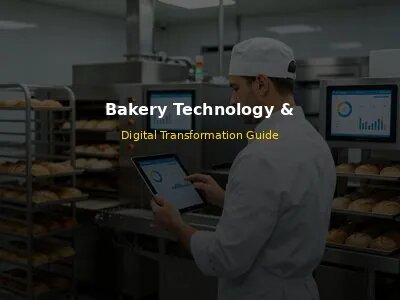
A story from our customer in Melbourne, Australia: "When we opened our bakery in 2018, we ran everything the old-fashioned way: a cash register for sales, a notebook for inventory, a whiteboard for the schedule, and a spreadsheet for recipes. It worked when we were small, but by 2022 we had 3 locations, 25 employees, and $2M in annual revenue - and our systems were falling apart. We had no idea which products were actually profitable (we thought our sourdough was a bestseller, but when we finally tracked it, it was actually losing money because of waste). We were constantly over-ordering or under-ordering ingredients (we once threw away $800 worth of butter because we ordered too much). Our scheduling was a mess - we'd have 5 people scheduled on a slow Tuesday and only 2 on a busy Saturday. We decided to invest in technology: we put in placeed a bakery-specific POS system with inventory management, recipe costing software, employee scheduling software, online ordering, and digital temperature monitoring. It cost us about $15,000 in the first year (hardware + software + training), but the results were Great: food waste dropped by 22% (saving us $18,000/year), online ordering added $60,000/year in new sales, labor costs dropped by 8% (better scheduling), and we finally knew exactly which products were profitable (we discontinued 3 money-losing products and expanded 2 high-margin products). The technology paid for itself in less than 4 months. The lesson: technology is not just for big businesses. For any bakery that wants to grow and stay competitive, the right technology is fundamental - it gives you the data and tools to make better decisions, reduce waste, increase sales, and operate more efficiently. The bakeries that embrace technology will thrive; the ones that resist will struggle."
The bakery industry is undergoing a digital transformation. From point-of-sale systems and online ordering to IoT-enabled equipment and AI-powered demand forecasting, technology is changing how bakeries operate, market, and serve customers. For bakery owners, embracing technology is no longer optional - it is needed for staying competitive, improving efficiency, and meeting changing customer expectations.
However, understanding the world of bakery technology can be overwhelming. There are hundreds of software systems, hardware devices, and technology solutions available, and it can be difficult to know which ones are worth investing in, which ones are right for your bakery, and how to put in place them successfully. Many bakeries invest in technology that doesn't get used, doesn't integrate with other systems, or doesn't deliver the expected return on investment.If you're setting up a new bakery or upgrading your existing line, this is the most important thing to get right. Skip the marketing hype and focus on these practical factors that actually figure out your equipment's performance. Whether You're a small neighborhood bakery or a large wholesale operation, this bakery technology amp guide will help you make informed decisions about technology and build a digital roadmap for your bakery's success.
When it comes to bakery technology, choosing the right equipment is crucial for bakery success. HNH Bakery Equipment provides professional bakery technology solutions for bakeries worldwide. In this guide, we explore everything you need to know about bakery technology and how to select the best equipment for your bakery.
1. Important Technologies for Bakeries
1.1 Point of Sale (POS) System
A POS system is the foundation of bakery technology. Far more than just a cash register, a modern POS system is the central hub for your bakery's operations, connecting sales, inventory, customer data, and reporting.
Important features for bakeries:
- Sales processing: Fast, intuitive checkout with support for cash, card, mobile payments (Apple Pay, Google Pay), and gift cards. Look for a system with a touchscreen interface that is easy for staff to learn and use quickly (matters during busy morning rushes).
- Inventory management: Automatically deduct ingredients from inventory when products are sold (from recipe/ bill of materials). Track ingredient levels, set reorder points, generate purchase orders, and reduce food waste. This is one of the most valuable features for bakeries - it removes the need for manual inventory counts and ensures you always know what You've in stock.
- Recipe and product management: Store all recipes and product information in one place, including ingredients, quantities, costs, allergens, and nutritional information. Scale recipes up or down automatically. Track batch numbers for food safety traceability.
- Sales reporting and analytics: Generate detailed reports on sales by product, by hour, by day, by location, and by employee. spot bestsellers and slow movers, track trends over time, and make data-driven decisions about what to bake and how much. Look for real-time dashboards that You can access from anywhere (phone, tablet, computer).
- Customer management and CRM: Track customer purchase history, preferences, and contact information. Build customer profiles, segment customers for targeted marketing, and spot your most valuable customers.
- Employee management: Track employee sales, manage permissions and access levels, track time and attendance (if integrated with scheduling), and monitor performance.
- Integration capabilities: Look for a POS that integrates with other systems you use or plan to use: accounting software (QuickBooks, Xero), online ordering platforms, email marketing (Mailchimp), loyalty programs, e-commerce websites, and payment processors.
Popular bakery POS systems: Square for Restaurants (good for small bakeries, easy to use, affordable), Toast (popular for food service, good for bakeries with seating), Lightspeed (feature-rich, good for multi-location), Clover (versatile, good app ecosystem), and bakery-specific systems like BakeSmart, Cake & Plate, or Corvus (designed specifically for bakeries with features like batch tracking, pre-order management, and wedding cake management).
Cost: $50-$200/month (SaaS) + $500-$2,000 for hardware (terminal, cash drawer, receipt printer, barcode scanner). Some systems offer free plans with basic features (e.g., Square).
1.2 Online Ordering and Pre-Order System
Online ordering has become core for bakeries, especially in the post-pandemic era. Customers expect to be able to order ahead for pickup, place custom cake orders, and schedule deliveries - all from their phone or computer.
Important features:
- Menu management: Display your full menu with photos, descriptions, prices, and allergen information. Allow customers to customize orders (e.g., choose bread type, add toppings, specify dietary requirements).
- Pre-order and scheduling: Allow customers to place orders in advance for pickup or delivery at a specific date/time. This is especially important for custom cakes, large orders, and holiday orders. Set lead times (e.g., custom cakes require 48 hours notice) and blackout dates (e.g., closed on holidays).
- Custom order forms: For custom cakes and special orders, provide a detailed order form where customers can specify flavor, filling, size, design, decorations, dietary requirements, and special instructions. Include photo upload capability for design references.
- Payment processing: Accept online payments (credit card, PayPal, Apple Pay, Google Pay) at the time of ordering. Require deposits for custom orders (e.g., 50% deposit to confirm the order).
- Order management dashboard: View and manage all incoming orders in one place. Receive notifications (email, SMS, app) when new orders come in. Update order status (received, in progress, ready for pickup, delivered) and notify customers automatically.
- POS integration: Online orders should automatically flow into your POS system, updating inventory and sales reports. This removes the need for manual order entry and reduces errors.
- Customer accounts: Allow customers to create accounts to save their information, view order history, reorder favorites, and track loyalty points.
put in placeation options: Many POS systems include online ordering as an add-on feature (e.g., Square Online, Toast Online Ordering). You can also use a standalone online ordering platform (e.g., ChowNow, OrderUp, Slice) or build online ordering into your website (using WooCommerce, Shopify, or a custom solution). For bakeries, the best option is usually online ordering integrated with your POS, so orders flow directly into your system.
Cost: $0-$100/month + payment processing fees (2-3% per transaction). Some platforms charge a commission per order (e.g., 5-15%) - avoid these if possible, as they eat into your margins.
1.3 Inventory Management and Recipe Costing
For bakeries, inventory management is particularly challenging because products are perishable, recipes have many ingredients, and production is batch-based. Poor inventory management causes food waste, stockouts, inaccurate costing, and lost profits.
Important features:
- Recipe management: Store all recipes with exact ingredient quantities, units of measure, preparation steps, and batch yields. Scale recipes up or down automatically (e.g., scale a recipe for 10 loaves to 50 loaves). Track recipe versions and revisions.
- Ingredient costing: Calculate the exact cost of each recipe from current ingredient prices. Include not just raw ingredients but also packaging, labor, and overhead allocation. Update costs automatically when ingredient prices change. This is needed for accurate pricing - if you don't know your exact cost, You can't set profitable prices.
- Inventory tracking: Track ingredient levels in real-time, automatically deducting ingredients when products are sold or used in production. Set reorder points and receive alerts when inventory is low. Track inventory by location (if multiple storage areas or locations). Support batch/lot tracking for food safety traceability.
- Purchase order management: Generate purchase orders from inventory levels and production needs. Track orders from placement to delivery. Match invoices to purchase orders and deliveries. Manage supplier information and pricing.
- Production planning: From sales forecasts and current inventory, generate production plans (what to bake, how much, when). This helps reduce overproduction (waste) and underproduction (lost sales).
- Waste tracking: Track food waste by type (spoilage, overproduction, customer returns, trim waste) and spot opportunities to reduce waste. Set waste reduction goals and track progress.
- Allergen and nutritional tracking: Track allergens in each recipe and product. Generate nutritional information (calories, fat, protein, carbs, sodium) automatically from ingredient data. This is increasingly a priority for customer information and regulatory compliance.
Popular systems: Many POS systems include basic inventory management (Square, Toast, Lightspeed). For more advanced inventory and recipe costing, consider bakery-specific systems like BakeSmart, Cake & Plate, or Corvus, or general inventory systems like Sortly, Fishbowl, or Cin7 (which integrate with POS and accounting).
Cost: Included with many POS systems, or $30-$200/month for standalone systems.
1.4 Digital Temperature Monitoring and Food Safety
Food safety is non-negotiable for bakeries, and temperature control is one of the most important aspects of food safety. Manual temperature logging (writing down fridge/freezer temperatures on a paper log) is error-prone, time-consuming, and often forgotten. Digital temperature monitoring automates this process and ensures compliance.
Important features:
- Wireless temperature sensors: Small, battery-powered sensors that continuously measure temperature in refrigerators, freezers, proofers, ovens, and dry storage areas. Sensors transmit data wirelessly (via Wi-Fi, Bluetooth, or cellular) to a cloud-based monitoring system.
- Real-time alerts: If the temperature goes above or below the safe range, the system sends instant alerts via email, SMS, or app notification to the manager or owner. This allows you to take action before food spoils - e.g., if a fridge door was left open or a compressor fails, You're alerted immediately rather than discovering spoiled food hours later.
- Automated logging and reporting: Temperature data is automatically logged and stored in the cloud, eliminating the need for manual paper logs. Generate compliance reports for health checkions with one click. Most systems store data for 1-3 years (or longer), meeting regulatory requirements.
- Multiple sensor types: Plus to temperature sensors, some systems offer humidity sensors (a priority for proofers and dry storage), door contact sensors (alert if a fridge/freezer door is left open), and water leak sensors (alert if there is a leak from equipment or plumbing).
- Remote access: Check the temperature of all your equipment from anywhere (phone, tablet, computer) at any time. This gives you peace of mind when You're away from the bakery - You can check that your fridges and freezers are working properly.
- Integration: Some systems integrate with POS or food safety management systems, providing a complete view of your food safety program.
Popular systems: Controlant, Monnit, Sensaphone, TempAlert, SmartSense, and systems from food safety companies like Safefood 360 or SafetyCulture. Many are designed specifically for food service and meet FDA/USDA/EFSA requirements.
Cost: $50-$300 for sensors (one-time) + $20-$100/month for monitoring service (depending on number of sensors and features). The cost is typically justified by preventing just one major food spoilage incident (which can cost hundreds or thousands of dollars in wasted food).
1.5 Social Media and Digital Marketing
For bakeries, social media is one of the most effective and affordable marketing channels. People love looking at photos of fresh bread, pastries, cakes, and cookies - and social media is the perfect platform to showcase your products, engage with customers, and build your brand.
Important platforms for bakeries:
- Instagram: The most important platform for bakeries. Visual-first, perfect for showcasing beautiful food photos and videos. Use features like Instagram Stories (behind-the-scenes, daily specials, polls), Reels (short videos of baking processes, product showcases), and Shopping (tag products in posts and allow customers to buy directly from Instagram). Post high-quality photos daily (or at least 3-5 times per week).
- Facebook: worth noting for local marketing, customer look overs, events, and community building. Create a Facebook Business Page with your menu, hours, location, and contact information. Use Facebook Events to promote special events (holiday pre-orders, baking classes, grand openings). Encourage customers to leave look overs. Use Facebook Ads to target local customers.
- TikTok: Growing rapidly, especially for reaching younger customers (18-35). Short-form video content (15-60 seconds) of baking processes, satisfying ASMR content, product reveals, and behind-the-scenes. TikTok's algorithm can make content go viral quickly, even for small accounts.
- Google Business Profile: a must for local search. Claim and improve your Google Business Profile (formerly Google My Business) with accurate information (name, deal with, phone, hours, menu, photos), respond to look overs, and post updates. This helps your bakery appear in local search results and on Google Maps.
- YouTube: Good for longer-form content (baking tutorials, behind-the-scenes tours, product look overs). Can help build your brand as an expert and drive traffic to your website.
Tools to make social media easier:
- Social media management tools: Buffer, Hootsuite, Later, Planoly, or Sprout Social allow you to schedule posts in advance, manage multiple accounts in one place, track engagement, and look at performance. This saves time (You can batch-create and schedule posts for the week in one sitting) and ensures consistent posting.
- Photo editing apps: Lightroom, Snapseed, or VSCO for editing food photos to look their best. Consistent editing style helps build a recognizable brand aesthetic.
- Design tools: Canva or Adobe Express for creating graphics, promotional images, menus, and social media posts. No design skills needed - use templates and customize with your brand colors and logo.
- User-generated content: Encourage customers to post photos of your products and tag your bakery. Repost customer photos (with permission) - this is authentic, free content that builds community and trust.
Cost: Most social media platforms are free to use. Management tools cost $0-$100/month. Paid social media advertising (Facebook/Instagram ads) can cost $5-$50+/day depending on your budget and goals.
1.6 Website and E-Commerce
Your website is your digital storefront - often the first impression customers have of your bakery. A professional, well-designed website builds credibility, provides core information (menu, hours, location, contact), and enables online ordering and sales.
Important elements of a bakery website:
- Professional design: Clean, modern design that reflects your brand. Use high-quality photos of your products and bakery. Mobile-responsive (most customers will view your site on their phone). Fast loading speed (customers will leave if the site takes more than 3 seconds to load).
- needed information: Menu (with prices, descriptions, and allergen information), hours of operation, location (with map and directions), contact information (phone, email, contact form), and about us (your story, mission, team).
- Online ordering: Integrated online ordering for pickup and/or delivery (as discussed in section 1.2).
- E-commerce (if selling products online): If you sell packaged goods, gift cards, merchandise, or ship products, you need e-commerce functionality. Platforms like Shopify, WooCommerce, or BigCommerce make it easy to set up an online store.
- Blog and content: A blog with recipes, baking tips, behind-the-scenes stories, and industry news helps with SEO (search engine optimization), builds your brand as an expert, and gives customers a reason to visit your site regularly.
- Customer look overs and testimonials: Display customer look overs and testimonials prominently. Social proof builds trust and credibility. Encourage customers to leave look overs on Google, Yelp, and Facebook.
- Newsletter signup: Allow customers to sign up for your email newsletter to receive updates, special offers, and baking tips. Email marketing is one of the most effective ways to retain customers and drive repeat business.
- SEO optimization: improve your site for search engines so customers can find you when they search for "bakery near me" or "custom cakes in [city]". This includes using relevant keywords, improving page titles and meta descriptions, having fast load speed, being mobile-friendly, and having quality content.
put in placeation options:
- Website builders (easiest, most affordable): Wix, Squarespace, or Weebly. Drag-and-drop interface, no coding needed, templates designed for restaurants/bakeries. Good for small bakeries. Cost: $15-$40/month.
- WordPress (more flexible, more work): WordPress with a bakery/restaurant theme and plugins (WooCommerce for e-commerce, WPForms for contact forms, Yoast for SEO). More flexible than website builders but requires more technical knowledge. Cost: $10-$30/month (hosting) + $50-$200 (premium theme/plugins, one-time).
- Shopify (best for e-commerce): If your primary focus is online sales (shipping products, gift cards, merchandise), Shopify is the best platform. It's easy to use, has great e-commerce features, and integrates with POS and online ordering. Cost: $39-$399/month.
- Custom development (most expensive, most flexible): Hire a web developer to build a custom website. This gives you complete control but is expensive ($5,000-$50,000+) and requires ongoing maintenance. Only recommended for large bakeries with specific needs that off-the-shelf solutions can't meet.
Cost: $15-$40/month (website builder) to $5,000-$50,000+ (custom development). For most small to medium bakeries, a website builder or WordPress site is sufficient and cost-effective.
1.7 Employee Scheduling and Time Tracking
For bakeries with more than 3-4 employees, scheduling and time tracking can be a major administrative burden. Manual scheduling (on paper or spreadsheets) is time-consuming, error-prone, and causes overstaffing (wasted labor costs) or understaffing (poor customer service). Employee scheduling software automates this process and saves managers hours per week.
Important features:
- Drag-and-drop scheduling: Create schedules quickly and easily with a visual calendar interface. Assign shifts to employees, set roles and positions, and copy schedules from previous weeks. View schedules by day, week, or month.
- Time and attendance tracking: Employees clock in and out using a mobile app, tablet, or computer. Track actual hours worked, compare to scheduled hours, and spot discrepancies (late arrivals, early departures, overtime). Some systems integrate with biometric time clocks (fingerprint or facial recognition) to prevent "buddy punching."
- Labor cost control: Set labor cost budgets as a percentage of sales and track actual labor costs in real-time. Receive alerts if labor costs exceed the budget. improve scheduling to match staffing levels to expected sales (e.g., more staff during busy morning rush, fewer during slow afternoons).
- Shift swaps and time-off requests: Employees can request shift swaps, time off, and availability changes through the app. Managers can approve or deny requests with one click. This removes the chaos of text messages and sticky notes for schedule changes.
- Automated reminders and notifications: Send automated reminders to employees about upcoming shifts. Notify managers of schedule conflicts, overtime, or unfilled shifts. Send schedule updates to all affected employees automatically.
- Payroll integration: Export time and attendance data directly to payroll software (QuickBooks, ADP, Gusto, Paychex), eliminating manual data entry and reducing payroll errors.
- Reporting and analytics: Generate reports on labor costs, employee hours, overtime, attendance, and scheduling efficiency. spot trends and opportunities to improve labor productivity.
Popular systems: When I Work, Deputy, Homebase, 7shifts (popular for restaurants), Humanity, and POS-integrated scheduling (Toast, Square, Lightspeed all offer scheduling add-ons).
Cost: $0-$50/month (for small teams) to $100-$300/month (for larger teams with advanced features). Some systems offer free plans for up to 5-10 employees.
1.8 Email Marketing and Customer Loyalty
Email marketing is one of the most effective and affordable ways to retain customers, drive repeat business, and increase sales. Unlike social media (where your content may not be seen by all your followers), email goes directly to your customers' inboxes. Studies consistently show that email marketing has a higher ROI than any other marketing channel (typically $36-$42 return for every $1 spent).
Important strategies for bakeries:
- Build your email list: Collect email deal withes from customers through: in-store signups (offer a discount or free item for signing up), online ordering (require email for order confirmation), website newsletter signup, social media promotions, and events. Make it easy and valuable for customers to join your list.
- Welcome email series: When a new customer joins your list, send a series of welcome emails: a thank-you with a welcome offer (e.g., 10% off their next order), an introduction to your bakery and story, a showcase of your most popular products, and an invitation to follow you on social media. This builds a relationship from the start.
- Weekly or monthly newsletter: Send regular emails with: new products, seasonal specials, behind-the-scenes stories, baking tips and recipes, upcoming events, and exclusive offers for subscribers. Keep the content valuable and engaging - don't just send sales pitches. Aim for 80% value/entertainment and 20% promotion.
- Automated campaigns: Set up automated email campaigns triggered by customer behavior: birthday emails (with a special offer), abandoned cart reminders (if they left items in their online cart), re-engagement emails (if they haven't ordered in 30/60/90 days), post-purchase follow-up (thank you + request for look over), and loyalty program updates.
- Segmentation and personalization: Segment your email list from customer behavior and preferences: frequent customers vs. occasional, online vs. in-store, product preferences (bread lovers vs. cake lovers), location, and purchase history. Send targeted, personalized emails to each segment - e.g., send a cake promotion to customers who have ordered cakes before, send a bread subscription offer to frequent bread buyers. Personalized emails have much higher open and click rates than generic mass emails.
- Customer loyalty program: put in place a loyalty program to reward repeat customers and encourage repeat business. Options include: points-based programs (earn points for every dollar spent, redeem for discounts or free products), punch cards (buy 9, get 1 free), tiered programs (silver/gold/platinum with increasing benefits), and subscription programs (weekly bread subscription, monthly pastry box). Loyalty programs increase customer retention, average order value, and lifetime value.
Popular tools: Mailchimp (most popular, easy to use, good for small businesses), Klaviyo (more advanced, great for e-commerce and segmentation), Constant Contact, ConvertKit, and POS-integrated email marketing (Square, Toast, Lightspeed all offer email marketing add-ons). For loyalty programs: Smile.io, Yotpo, LoyaltyLion, or POS-integrated loyalty programs.
Cost: $0-$50/month (for small lists under 1,000 subscribers) to $100-$500+/month (for larger lists with advanced features). Most tools offer free plans for up to 500-1,000 subscribers.
1.9 Automation and Smart Equipment (IoT)
The Internet of Things (IoT) is transforming bakery equipment, making it smarter, more efficient, and more connected. IoT-enabled equipment has sensors and internet connectivity that allow remote monitoring, automated controls, predictive maintenance, and data collection. While still emerging for small bakeries, these technologies are becoming more affordable and accessible.
Important IoT applications for bakeries:
- Smart ovens: Ovens with digital controls, programmable recipes, and IoT connectivity allow: remote monitoring of oven temperature and status, automated baking programs (set temperature, time, steam, and fan speed for each product), predictive maintenance (alert when components need servicing before they fail), energy usage tracking, and software updates. Some smart ovens can even automatically adjust baking parameters from product type and batch size.
- Smart proofers: Proofers with precise temperature and humidity control, programmable proofing profiles, and IoT connectivity allow: remote monitoring of temperature and humidity, automated proofing programs (set temperature, humidity, and time for each dough type), alerts if conditions go out of range, and data logging for quality control. Consistent proofing is important for consistent product quality - smart proofers remove the variability of manual proofing.
- Smart mixers: Mixers with programmable mixing programs, torque monitoring, and IoT connectivity allow: automated mixing programs (set speed, time, and rest periods for each dough type), monitoring of dough development (through torque/temperature sensors), alerts when mixing is complete, and data logging for consistency. Some smart mixers can even automatically adjust mixing time from dough temperature and ambient conditions.
- Energy monitoring: IoT energy monitors track electricity, gas, and water usage for each piece of equipment and the bakery overall. This helps spot energy waste, improve equipment usage (e.g., run energy-intensive equipment during off-peak hours), and reduce utility costs. Some systems can automatically turn off equipment when not in use or adjust settings for energy efficiency.
- Predictive maintenance: IoT sensors on equipment monitor vibration, temperature, noise, and usage patterns to predict when components are likely to fail. This allows you to schedule maintenance before a breakdown occurs, reducing unplanned downtime and costly emergency repairs. For bakeries, where equipment downtime can mean lost production and wasted ingredients, predictive maintenance is particularly valuable.
- Automated production equipment: For high-volume bakeries, automated equipment like automatic dough dividers/rounders, cookie depositors, bread slicers, and packaging machines by a lot increase production capacity and consistency while reducing labor. These machines are increasingly IoT-enabled, with digital controls, recipe storage, and remote monitoring.
Cost: IoT-enabled equipment typically costs 10-30% more than equivalent non-IoT equipment. For small bakeries, the investment may not be justified yet, but as the technology becomes more affordable and standard, it will become increasingly common. For medium to large bakeries, the ROI (through reduced downtime, energy savings, improved consistency, and labor savings) can be notable.
HNH advantage: At HNH Bakery Equipment, our commercial ovens, proofers, and mixers feature digital controls and are available with optional IoT connectivity for remote monitoring and data logging. Contact us to learn more about our smart equipment options.
1.10 Emerging Technologies: AI and Machine Learning
Artificial intelligence (AI) and machine learning are beginning to transform the bakery industry, though most applications are still emerging and primarily accessible to larger operations. Here are Some most promising AI applications for bakeries:
- Demand forecasting: AI algorithms look at historical sales data, weather patterns, local events, holidays, and other factors to predict future demand with high accuracy. This helps bakeries produce the right amount of each product, reducing both overproduction (waste) and underproduction (lost sales). Some POS systems are beginning to incorporate AI-powered demand forecasting.
- Dynamic pricing: AI can automatically adjust prices from demand, time of day, inventory levels, and competitor pricing. For example, discounting products that are approaching their sell-by time to reduce waste, or increasing prices during peak demand. This is more common in retail and e-commerce but is beginning to appear in food service.
- Quality control and checkion: Computer vision (AI-powered image recognition) can automatically check products for quality issues: under-baked or over-baked items, misshapen products, incorrect decoration, or foreign objects. This is used in large industrial bakeries on production lines, but is becoming more affordable for medium operations.
- Personalized marketing: AI can look at customer data to create highly personalized marketing messages and offers. For example, sending a customer a promotion for their favorite product on their birthday, or recommending products from their purchase history. This is already available in advanced email marketing and CRM platforms.
- Recipe optimization: AI can look at recipe data, ingredient costs, and customer feedback to improve recipes for cost, taste, nutrition, or sustainability. For example, suggesting ingredient substitutions that reduce cost without affecting taste, or spoting which recipe variations are most popular with customers.
- Chatbots and customer service: AI-powered chatbots can handle common customer inquiries (hours, location, menu, allergy information, order status) 24/7, freeing up staff for more complex tasks. Many websites and social media platforms now offer easy-to-put in place chatbot tools.
Current state: For most small to medium bakeries, AI is not yet a must or cost-effective. However, it is worth being aware of these developments and watching for AI features being incorporated into the tools you already use (POS, email marketing, inventory management). As AI becomes more affordable and accessible, it will become increasingly valuable for bakeries of all sizes.
2. put in placeation Plan: How to Digitize Your Bakery Successfully
put in placeing technology in your bakery is not just about buying software and hardware - it requires careful planning, change management, and ongoing optimization. Here is a step-by-step plan for successful digital transformation:
2.1 judge Your Current State
Before investing in new technology, take stock of your current systems and processes:
- Map your current processes: Document how you currently handle: sales and payments, inventory management, production planning, scheduling, customer communication, marketing, food safety, and accounting. spot pain points, bottlenecks, and inefficiencies in each area.
- Inventory your current technology: List all the technology you currently use (cash register, spreadsheet, social media accounts, website, etc.). Note what works well, what doesn't, and what is missing.
- spot your biggest pain points: What are the most frustrating, time-consuming, or costly problems in your bakery? Common pain points include: not knowing which products are profitable, high food waste, scheduling headaches, slow checkout lines, no online ordering, manual temperature logs, and lack of customer data. focus on the pain points that cost you the most time or money.
- Set goals and objectives: What do you want to achieve with technology? Examples: reduce food waste by 15%, increase online sales by 25%, reduce scheduling time by 5 hours/week, improve food safety compliance, increase customer retention by 20%. Set specific, measurable, achievable, relevant, and time-bound (SMART) goals.
2.2 focus on and Plan
Don't try to do everything at once. focus on technology investments from:
- ROI (return on investment): Which technology will save or make you the most money in the shortest time? For most bakeries, POS with inventory management and online ordering provide the quickest ROI.
- Pain point severity: Which problems are most urgent or costly? If You're constantly running out of popular products or throwing away spoiled food, inventory management should be a top priority.
- put in placeation complexity: Start with systems that are relatively easy to put in place and have quick wins. Build momentum and confidence before tackling more complex put in placeations (like ERP or full automation).
- Integration: Choose systems that can integrate with each other. A common mistake is buying systems that don't talk to each other, causing siloed data and manual workarounds. Look for systems with open APIs or pre-built integrations.
- Scalability: Choose systems that can grow with your bakery. You don't want to outgrow a system in 1-2 years and have to switch (which is costly and disruptive). Look for systems with tiered pricing and features that can accommodate growth (multiple locations, more users, higher volume).
Recommended put in placeation order for most bakeries:
- Phase 1 (Months 1-3): POS system with inventory management + online ordering + digital temperature monitoring. These are the foundation and provide the quickest ROI.
- Phase 2 (Months 4-6): Website optimization + email marketing + social media management + employee scheduling. These build on the foundation and drive growth.
- Phase 3 (Months 7-12): Recipe costing + customer loyalty program + advanced reporting/analytics + IoT equipment (if justified). These improve operations and customer relationships.
- Phase 4 (Year 2+): ERP/MRP system (if multi-location or high-volume) + automation equipment + AI applications (as they become affordable and proven).
2.3 Select the Right Systems
Once You've focus ond your technology needs, study and select the right systems for your bakery:
- study options: Use look over sites (Capterra, G2, Software Advice), ask other bakery owners for recommendations, attend industry trade shows, and take advantage of free trials and demos. Create a shortlist of 3-5 options for each system.
- judge against your requirements: Create a checklist of must-have features, nice-to-have features, integration requirements, budget constraints, and support expectations. Score each option against your checklist. Don't be swayed by flashy features you don't need - focus on whether the system solves your specific problems.
- Talk to vendors: Schedule demos or calls with the vendors on your shortlist. Ask specific questions about: bakery-specific features, integration capabilities, put in placeation process and timeline, training and support, pricing (including all fees - setup, hardware, transaction fees, add-ons), contract terms (month-to-month vs. annual, cancellation policy), and customer references (ask to speak to other bakery owners using the system).
- Get input from staff: Involve important staff members (especially those who will use the system daily) in the evaluation process. Their input is valuable - they know the day-to-day realities of your bakery and may have insights or concerns you haven't considered. Staff who are involved in the decision are more likely to embrace the new system.
- Try before you buy: Take advantage of free trials (most SaaS systems offer 14-30 day trials). Set up the system with your actual data (products, recipes, inventory) and test it in real conditions if possible. This is the best way to figure out if the system is a good fit for your bakery.
2.4 put in place and Train
Successful put in placeation is just as important as selecting the right system. A poorly put in placeed system (even a great one) will fail to deliver value.
- Plan the put in placeation: Create a detailed put in placeation plan with: timeline (with milestones and deadlines), responsibilities (who does what), data migration plan (what data needs to be moved, how, and by when), training plan, testing plan, and go-live date. Allow enough time - put in placeations almost always take longer than expected. Don't rush the process.
- Clean and migrate data: Before migrating data to the new system, clean it up (as discussed in the FAQ section): update product lists, check ingredient costs, standardize recipe formats, deduplicate customer/supplier lists. This takes time but is fundamental. Garbage in, garbage out.
- Set up and configure: Configure the system to match your bakery's processes: set up products, recipes, prices, taxes, payment methods, user accounts and permissions, integrations with other systems, and custom settings. Test everything thoroughly before going live.
- Train staff thoroughly: Invest in proper training (as discussed in the FAQ section). This includes: initial training for all users (at least 2-4 hours per system, ideally hands-on), written documentation and quick-reference guides, ongoing refresher training, a 'super user' or 'champion' on staff, and access to vendor support. Training is not a one-time event - it is ongoing.
- Run in parallel (if possible): If You're replacing an existing system (e.g., old cash register with new POS), run both systems in parallel for a short period (1-2 weeks) to ensure the new system is working correctly and to catch any issues before fully switching over. This reduces the risk of going live with a system that isn't ready.
- Go live with support: On go-live day, have extra support available: the vendor's put in placeation team, a knowledgeable staff member, or a consultant. Be prepared for some chaos and slower operations as staff adjust. Have a backup plan (e.g., manual cash box) in case of technical issues. Celebrate the go-live - admit the effort and build excitement.
- Monitor and adjust: After go-live, closely monitor the system for the first few weeks. Gather feedback from staff, spot issues or pain points, and make adjustments. Don't expect everything to be perfect on day one - it takes time to improve the system and for staff to become proficient.
2.5 Measure ROI and Continuously Improve
Technology is an investment, and You should measure its return:
- Track important metrics: Before put in placeing new technology, establish baseline metrics for: food waste percentage, labor cost percentage, sales (total and by channel), customer retention rate, average transaction value, inventory accuracy, and time spent on administrative tasks. After put in placeation, track the same metrics and compare.
- Calculate ROI: ROI = (Benefits - Costs) / Costs x 100%. Benefits include: reduced food waste, reduced labor costs, increased sales (from online ordering, marketing, better inventory), reduced errors and rework, and time savings (which can be quantified as labor cost). Costs include: software subscriptions, hardware, put in placeation/training, and ongoing support. Most bakery technology investments have an ROI of 6-18 months.
- look over regularly: look over your technology stack at least quarterly (for the first year) and annually (thereafter). Ask: Are we using all the features we pay for? Are the systems delivering the expected benefits? Are there new features or integrations we should take advantage of? Are there pain points that remain unsolved? Are there new technologies that could provide additional value?
- Continuously improve: Technology is not a set-it-and-forget-it investment. Continuously improve your systems: refine settings and configurations, train staff on advanced features, integrate systems more deeply, update processes to take advantage of new capabilities, and stay informed about new features and technologies. The bakeries that get the most value from technology are those that continuously improve and improve.
3. Cost Analysis: How Much Does Bakery Technology Cost?
As detailed in the FAQ section, the cost of digitizing a bakery varies widely from size and scope. Here is a summary:
| Level | Best For | Monthly Cost | One-Time Cost | Important Systems |
|---|---|---|---|---|
| Basic | Small bakery (1-2 locations, <10 employees) | $70-$260/month | $500-$2,000 | POS, online ordering, temp monitoring, social media, basic website |
| Intermediate | Medium bakery (1-3 locations, 10-30 employees) | $300-$800/month | $2,000-$10,000 | Everything in Basic + recipe costing, scheduling, accounting, email marketing, loyalty, pro website, digital menu boards |
| Advanced | Large bakery/wholesale (3+ locations, 30+ employees) | $800-$3,000+/month | $10,000-$100,000+ | Everything in Intermediate + ERP/MRP, WMS, CRM, BI analytics, IoT equipment, automation |
Important cost principles:
- SaaS vs. one-time: SaaS (monthly subscription) lowers upfront cost but adds ongoing expense. One-time purchase has higher upfront cost but lower ongoing expense. For small bakeries, SaaS is usually more flexible and affordable.
- Don't forget hardware: Budget for POS terminals, cash drawers, receipt printers, barcode scanners, temperature sensors, digital menu boards, and network equipment.
- put in placeation and training: Budget time and possibly money for put in placeation and training. Some systems require professional put in placeation ($500-$5,000+).
- Integration costs: Choose systems with pre-built integrations to minimize custom integration costs.
- Payment processing fees: Budget 2-3% per transaction for credit/debit card processing.
- ROI perspective: Most bakery technology investments pay for themselves within 6-18 months through reduced waste, increased sales, reduced labor, and better decision-making.
4. Common Mistakes to Avoid
As detailed in the FAQ section, the most common mistakes bakeries make when adopting technology include:
- Trying to do too much too fast: put in place one system at a time, get comfortable, then add the next. Don't try to digitize everything at once.
- Not involving staff: Involve important staff in evaluation, selection, and put in placeation. Staff who feel ownership will embrace the technology.
- Choosing the cheapest option: judge from total cost of ownership over 3-5 years, not just upfront cost. A cheap system that doesn't work is more expensive Over time.
- Not investing in training: Technology is only as good as the people using it. Invest in thorough, ongoing training.
- Not cleaning up data: Clean up your data before migrating to a new system. Garbage in, garbage out.
- No backup/disaster recovery plan: Ensure data is backed up, have contingency plans for outages, and keep important information accessible without the system.
- Ignoring cybersecurity: Use strong passwords, enable 2FA, keep software updated, secure your Wi-Fi, and train staff on cybersecurity basics.
- Not measuring ROI: Set goals, track metrics, calculate ROI, and continuously improve. Don't keep paying for systems you don't use or that don't deliver value.
5. The Future of Bakery Technology
The bakery industry is in the early stages of a digital transformation, and the pace of change is accelerating. Here are some trends to watch:
- Cloud-based everything: Increasingly bakery systems are moving to the cloud, allowing access from anywhere, automatic updates, and lower IT costs. On-premise systems are becoming rare.
- AI and machine learning: AI will become increasingly embedded in bakery systems: demand forecasting, dynamic pricing, quality control, personalized marketing, and recipe optimization. As AI becomes more affordable and accessible, it will become standard even for small bakeries.
- IoT and smart equipment: More bakery equipment will become IoT-enabled, with remote monitoring, predictive maintenance, energy optimization, and automated controls. The cost of IoT sensors and connectivity continues to drop, making it accessible to smaller operations.
- Automation and robotics: For high-volume bakeries, automation will continue to advance: robotic dough handling, automated decorating, automated packaging, and even robotic customer service. For small bakeries, collaborative robots (cobots) may become affordable for repetitive tasks.
- Omnichannel customer experience: Customers will expect a smooth experience across in-store, online, mobile, social media, and delivery. Bakeries that integrate all channels and provide a consistent, personalized experience will have a competitive advantage.
- Data-driven decision making: As bakeries collect more data (sales, inventory, customer, production, equipment), the ability to look at and act on that data will become a important competitive differentiator. Business intelligence and analytics tools will become standard for bakeries of all sizes.
- Sustainability technology: Technology will play an increasing role in sustainability: energy monitoring and optimization, waste reduction through better demand forecasting, supply chain traceability, and carbon footprint tracking. Customers and regulators are increasingly demanding sustainability, and technology will help bakeries meet these demands.
- Contactless and mobile: Contactless payments, mobile ordering, digital menus, and QR code ordering will become standard. Customers increasingly expect to be able to interact with businesses through their phones, and bakeries that don't offer these options will fall behind.
Important Takeaway
Technology is not a silver bullet - it won't fix a poorly managed bakery or compensate for bad products. But for a well-run bakery with good products and good service, the right technology can be transformative: it reduces waste, increases sales, improves efficiency, improves the customer experience, and gives you the data to make better decisions. The bakeries that embrace technology strategically (starting with the highest-ROI investments, put in placeing carefully, training staff thoroughly, and continuously improving) will thrive in the digital age. The bakeries that resist technology will find it increasingly difficult to compete. Start small, start smart, and start today.
6. How HNH Bakery Equipment Can Help
At HNH Bakery Equipment, we are committed to helping bakeries succeed in the digital age. While we are primarily a bakery equipment manufacturer, We understand equipment and technology go hand in hand, and we can support your digital transformation in several ways:
- Smart equipment options: Our commercial ovens, proofers, mixers, and other equipment feature digital controls and are available with optional IoT connectivity for remote monitoring, data logging, and predictive maintenance. We can help you choose equipment with the right level of technology for your bakery's needs and budget.
- Equipment integration: We can advise on how to integrate our equipment with your other technology systems (POS, inventory management, energy monitoring, production planning). Our equipment is designed with standard interfaces and connectivity options to help integration.
- Production planning advice: From our experience working with hundreds of bakeries, we can advise on production planning, workflow optimization, and equipment selection that supports efficient, data-driven operations. We can help you design a bakery layout and equipment configuration that maximizes efficiency and supports your technology systems.
- Technology recommendations: While we don't sell software or POS systems, we have extensive knowledge of the bakery technology market and can provide recommendations and referrals for POS systems, inventory management, online ordering, and other technology solutions. We work with many bakeries and have seen what works and what doesn't.
- Training and support: We provide detailed operation manuals, training videos, and technical support for our equipment. Our team can help your staff get the most out of your equipment's digital features and controls.
- Future-proofing: We design our equipment with upgradability in mind. As technology evolves, our equipment can often be upgraded with new digital controls, connectivity modules, or software updates, extending the life of your investment and protecting you from obsolescence.
Let Us Help You Grow Your Bakery
Whether You're just starting out or looking to upgrade your existing line, we have the equipment and the expertise to help you succeed. Contact us for a free quote today.
Request Free Consultation7. Final Checklist: Technology put in placeation Readiness
- judge current state: Have I mapped my current processes, identified pain points, and set clear goals?
- focus on: Have I focus ond technology investments from ROI, pain point severity, and put in placeation complexity? Am I starting with the highest-ROI systems?
- Budget: Have I budgeted for software, hardware, put in placeation, training, and ongoing support? Have I considered total cost of ownership over 3-5 years?
- Select systems: Have I studyed options, judged against my requirements, talked to vendors, involved staff, and tried before buying? Have I chosen systems that integrate with each other and can scale with my bakery?
- Clean data: Have I cleaned up my data (products, recipes, ingredients, customers, suppliers) before migrating to the new system?
- Plan put in placeation: Do I have a detailed put in placeation plan with timeline, responsibilities, training plan, testing plan, and go-live date? Have I allocated enough time?
- Train staff: Have I invested in thorough, ongoing training for all users? Do I have written documentation, quick-reference guides, and a 'super user' on staff?
- Backup plan: Do I have a backup and disaster recovery plan? Do I have contingency plans for system outages?
- Cybersecurity: Am I using strong passwords, 2FA, secure Wi-Fi, and keeping software updated? Have I trained staff on cybersecurity basics?
- Measure ROI: Have I established baseline metrics and do I track progress? Do I look over my technology stack regularly and continuously improve?
- Start small, start smart: Am I put in placeing one system at a time, getting comfortable, then adding the next? Am I celebrating quick wins and building momentum?
8. Conclusion
The bakery industry is undergoing a digital transformation, and technology is no longer optional for bakeries that want to grow and stay competitive. From POS systems and online ordering to IoT-enabled equipment and AI-powered forecasting, technology offers powerful tools to improve efficiency, reduce waste, increase sales, improve the customer experience, and make better, data-driven decisions.
However, technology is not a magic solution. Success requires: careful judgement of your needs and pain points, prioritization of investments from ROI, selection of systems that integrate and scale, thorough put in placeation with clean data, investment in staff training, and continuous measurement and optimization. The bakeries that way technology strategically (not as a fad or a quick fix, but as a long-term investment in their business) will reap the greatest rewards.
As our customer in Melbourne discovered, the right technology can pay for itself in months - through reduced food waste, increased sales, lower labor costs, and better decision-making. For any bakery that wants to grow, improve, and thrive in the digital age, embracing technology is a must. The bakeries that resist will find it increasingly difficult to compete with more efficient, data-savvy competitors.
The important is to start small, start smart, and start today. You don't need to put in place everything at once - start with the system that solves your biggest pain point or provides the quickest ROI (usually POS with inventory management or online ordering). Get it right, train your staff, measure the results, then add the next system. Over time, You'll build a fully digital, data-driven bakery that is more efficient, more profitable, and more competitive.
At HNH Bakery Equipment, we are committed to helping bakeries succeed in the digital age. Our equipment features digital controls and optional IoT connectivity, and we can advise on technology integration and put in placeation. Contact us for a free consultation - we would love to help you on your digital transformation journey.
The future of baking is digital - and the future is now. Don't get left behind.
📋 Bakery Equipment Checklist
Download our complete bakery equipment checklist with budget estimates for 5 different bakery types.
Free Bakery Equipment Checklist →📋 Bakery Equipment ROI Calculator
Use our interactive ROI calculator to see how quickly your bakery equipment investment pays off.
Calculate Your Equipment ROI →📋 Bakery Equipment Maintenance Calendar
Get our printable maintenance calendar to keep your bakery equipment running at peak performance.
Printable Maintenance Calendar →📋 Bakery Equipment Energy Cost Calculator
Estimate your bakery equipment energy costs and find ways to reduce your utility bills.
Calculate Energy Costs →Related Articles
Learn More
- 👉 Bakery Equipment Selection Complete Guide: Choose by Output & Product
- 👉 Bakery Equipment Maintenance Schedule: Daily, Weekly, Monthly, Yearly
- 👉 Dough Divider Rounder Troubleshooting: 15 Common Problems & Solutions
- 👉 Small Bakery Equipment ROI & Payback Period Calculator
- 👉 Bakery Equipment Energy Consumption & Energy Saving Guide
- 👉 Bakery Equipment Food Safety & Hygiene Compliance Complete Guide