
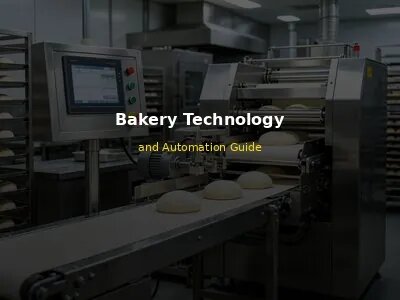
A story from our customer in Toronto, Canada: "When we started our bakery 8 years ago, everything was done by hand — hand mixing, hand dividing, hand rounding, hand shaping. We had 4 bakers working 12-hour days, and we could barely keep up with demand. Quality was inconsistent — some days our bread was perfect, other days it was too dense or misshapen. We were exhausted, our staff was burnt out, and we couldn't grow because we couldn't produce enough. Then we started investing in automation. First, we bought a spiral mixer (cut our mixing time by 70%). Then a dough divider rounder (replaced 2 bakers' hand work). Then a dough sheeter and moulder. Within 2 years, we went from 4 bakers to 2, increased production by 150%, and our quality became consistently Great. We also added a POS system with inventory tracking, online ordering, and a loyalty program. The combination of equipment automation and digital tools transformed our business — we went from struggling to profitable, from burnt out to sustainable, from stuck to growing. The ROI on our automation investments was 6-12 months each. We wish we'd done it sooner. Technology and automation aren't about replacing the art of baking — they're about freeing bakers to focus on what they do best: creating Great products, innovating, and ensuring quality."
Technology and automation are transforming the bakery industry — and for good reason. Modern bakeries face increasing pressure: rising labor costs, labor shortages, growing demand for consistent quality, tighter margins, and competition from large industrial bakeries and grocery store bakeries. Technology and automation help bakeries meet these challenges by increasing efficiency, reducing labor costs, improving consistency, enabling growth, and providing data-driven insights.
But technology and automation can be overwhelming — there are dozens of equipment options, software systems, and digital tools to choose from, and making the wrong investments can be costly.After a decade in the bakery equipment industry, we've seen it all. The bakeries that thrive aren't the ones with the fanciest machines — they're the ones that understand their production needs and choose So. Whether you're a small artisanal bakery or a large commercial operation, this bakery technology amp guide will help you make informed decisions about modernizing your bakery with technology and automation.
When it comes to bakery technology, choosing the right equipment is crucial for bakery success. HNH Bakery Equipment provides professional bakery technology solutions for bakeries worldwide. In this guide, we explore everything you need to know about bakery technology and how to select the best equipment for your bakery.
1. Why Technology and Automation Matter for Bakeries
The bakery industry is undergoing a technology revolution. Here's why technology and automation matter more than ever:
1.1 The Business Case for Automation
| Benefit | Impact | Quantitative Effect |
|---|---|---|
| Labor cost reduction | Automate repetitive tasks, reduce headcount or reallocate to higher-value work | 20-50% reduction in labor costs for automated tasks |
| Increased production output | Produce more in less time with consistent speed | 50-200% increase in production capacity |
| Improved consistency | Same weight, shape, bake every time — no human variation | 95%+ consistency rate vs 70-85% for hand production |
| Reduced waste | Precise portioning, better forecasting, less human error | 30-60% reduction in production waste |
| Faster ROI | Equipment pays for itself through labor savings and increased output | Typical ROI: 6-18 months for most automated equipment |
| Scalability | Grow production without proportionally increasing labor | Enable 2-5x growth with same or fewer staff |
| Employee retention | Reduce physically demanding, repetitive tasks; reduce burnout and injury | 20-40% reduction in employee turnover |
| Data-driven decisions | Digital tools provide insights into sales, inventory, customers, operations | 5-15% improvement in profitability through optimization |
| Competitive advantage | Modern, efficient operations outperform traditional, labor-intensive bakeries | Market share growth in local/wholesale markets |
| Food safety and compliance | Automated tracking, temperature monitoring, traceability | Reduced risk of recalls, easier compliance with food safety regulations |
1.2 Industry Trends Driving Automation
- Rising labor costs: Minimum wages are increasing globally, and bakery labor costs (including benefits, taxes, training) continue to rise. Automation becomes more cost-effective every year as labor costs increase.
- Labor shortages: Many regions face shortages of skilled bakers and food service workers. Automation reduces dependence on skilled labor — automated equipment is easier to operate, requiring less training and skill.
- Growing demand for consistency: Wholesale customers (cafes, restaurants, grocery stores) demand consistent product quality every time. Automation ensures consistency that hand production cannot match.
- Increased competition: Bakeries face competition from large industrial bakeries, grocery store bakeries, and online food delivery. Technology and automation help small/medium bakeries compete on efficiency, quality, and cost.
- Consumer expectations: Consumers expect online ordering, delivery, loyalty programs, personalized marketing, and transparent ingredient sourcing. Digital tools enable bakeries to meet these expectations.
- Food safety regulations: Increasingly strict food safety regulations (HACCP, FSMA, local health codes) require detailed record-keeping, temperature monitoring, and traceability. Digital tools automate these requirements.
- Technology cost reduction: Automation technology is becoming more affordable and accessible — even small bakeries can now invest in automated equipment that was once only feasible for large operations.
1.3 Automation vs. Artisanal: Finding the Balance
One common concern among bakery owners is: Will automation compromise the artisanal quality and handcrafted character of my products? The answer is: not necessarily — it depends on how you put in place automation.
- Partial automation is the important: Most successful modern bakeries use a hybrid way — automate the repetitive, physically demanding, consistency-important tasks (mixing, dividing, rounding, sheeting, moulding), but keep the artistic, skill-intensive, value-added tasks (shaping specialty products, decorating, scoring, final quality checkion) done by hand. This gives you the efficiency of automation while preserving the artisanal quality of handcraft.
- Automation improves consistency, not replaces quality: A good divider rounder produces perfectly uniform dough balls every time — this is actually better quality than hand dividing (which has natural variation). Your skilled bakers can then focus on the artistic shaping that makes your products unique, rather than spending hours on repetitive dividing.
- Communicate your way: Be transparent with customers about your process. You can say: "We use modern equipment to ensure consistent quality and efficiency, but every loaf is still hand-shaped and scored by our skilled bakers." This framing preserves your artisanal brand while explaining your use of technology.
- Automation frees bakers to be more creative: When bakers aren't exhausted from 8 hours of repetitive hand dividing, they have more energy and time for creativity, innovation, and quality control. Automation can actually improve the artistic quality of your products by freeing your team from drudgery.
2. Automated Bakery Equipment
Automated bakery equipment is the foundation of bakery automation. Here's a complete overview of the important equipment types, their benefits, costs, and ROI:
2.1 Equipment Overview and Prioritization
| Equipment | Function | Cost Range | Typical ROI | Priority for Most Bakeries |
|---|---|---|---|---|
| Spiral Mixer | Automated dough mixing (kneading) | $3,000-$15,000 | 6-12 months | needed (first investment) |
| Dough Divider Rounder | Automated dough dividing + rounding | $8,000-$30,000 | 6-12 months | HIGH (second investment) |
| Dough Sheeter | Automated dough rolling/sheeting | $3,000-$12,000 | 6-12 months | HIGH (for laminated dough/pastries) |
| Dough Moulder (Toast/Baguette) | Automated dough shaping/moulding | $5,000-$20,000 | 8-14 months | MEDIUM (for high-volume bread) |
| Proofing Cabinet (Proofer) | Controlled temperature/humidity for dough proofing | $2,000-$10,000 | 6-12 months | HIGH (consistency + efficiency) |
| Rotary Oven / Rack Oven | Automated baking with rotating racks | $10,000-$40,000 | 8-18 months | MEDIUM-HIGH (for high-volume baking) |
| Convection Oven | Fan-forced heat for even baking | $2,000-$8,000 | 6-12 months | HIGH (versatile, efficient) |
| Deck Oven | Stone hearth baking for artisan bread | $5,000-$25,000 | 12-24 months | MEDIUM (for artisan bread) |
| Cooling Rack / Cooling Tower | Automated product cooling | $1,000-$8,000 | 12-18 months | LOW-MEDIUM (for high-volume) |
| Bread Slicer | Automated bread slicing | $2,000-$8,000 | 6-12 months | MEDIUM (if selling sliced bread) |
| Packaging Machine | Automated product packaging/bagging | $5,000-$25,000 | 12-24 months | LOW (for wholesale/high-volume) |
| Depositor (Cake/Batter) | Automated batter/cake depositing | $5,000-$20,000 | 12-18 months | LOW (for cake/high-volume pastry) |
2.2 Important Equipment Deep Dive
Spiral Mixer (a must First Investment)
A spiral mixer is the most matters piece of automated equipment for any bakery. It automates the dough mixing/kneading process — the most physically demanding and time-consuming task in bread production.
- How it works: A spiral-shaped mixing hook rotates while the bowl also rotates, creating a highly efficient kneading action that develops gluten quickly and gently. Spiral mixers are designed specifically for bread dough (unlike planetary mixers, which are more versatile but less efficient for bread).
- Benefits: 70-80% reduction in mixing time (from 20-30 minutes hand kneading to 5-10 minutes machine), consistent dough development every time, reduced physical labor (no more hand kneading), ability to mix large batches (20-200+ kg), lower dough temperature (spiral mixers generate less heat, a priority for fermentation control), and versatility (can mix all types of bread dough, from soft sandwich bread to stiff artisan dough).
- What to look for: Capacity (choose from your largest batch — typically 20-50 kg for small bakeries, 50-120 kg for medium), bowl type (fixed bowl, removable bowl, or self-tipping — removable/self-tipping is easier for large batches), speed settings (2-speed is standard, variable speed is better for different dough types), timer (programmable timer for consistent mixing), motor power (HP/kW — ensure adequate power for your dough types), and safety features (emergency stop, bowl guard, overload protection).
- Cost and ROI: $3,000-$15,000 depending on capacity and features. ROI is typically 6-12 months through labor savings (replaces 1-2 hours of hand kneading per batch) and increased output. A 40 kg spiral mixer for $8,000, saving 2 hours/day of labor at $16/hour = $32/day = $8,320/year — pays for itself in under 12 months.
Dough Divider Rounder (High Priority Second Investment)
A dough divider rounder automates the two most repetitive tasks in bread production: dividing bulk dough into equal portions and rounding those portions into smooth dough balls. This is the equipment with the fastest ROI for most bakeries.
- How it works: Bulk dough is placed in the machine's hopper, then divided into equal-weight portions by a piston or vacuum system, then rounded into smooth balls by a rotating cone or drum. The entire process takes seconds — compared to minutes of hand dividing and rounding per portion.
- Types:
- Hydraulic divider rounder: Uses hydraulic pressure to divide and round. High capacity (1,000-4,000 pieces/hour), precise weight (±1-2%), suitable for medium-large bakeries. Cost: $12,000-$30,000.
- Automatic divider rounder (fully automatic): Continuous operation with conveyor feeding. Quite high capacity (2,000-6,000 pieces/hour), suitable for large/wholesale bakeries. Cost: $15,000-$40,000.
- Semi-automatic divider rounder: Operator feeds dough manually, machine divides and rounds. Medium capacity (500-2,000 pieces/hour), more affordable. Cost: $8,000-$18,000.
- Manual divider (hand press): Simple hand-operated divider (no rounding). Low capacity (100-300 pieces/hour), quite affordable. Cost: $500-$2,000. Good for tiny bakeries as a starting point.
- Benefits: 80-90% reduction in dividing/rounding time, consistent portion weight (±1-2% vs ±5-10% for hand), consistent rounding (smooth, uniform dough balls for better proofing and baking), reduced physical labor (dividing/rounding is physically demanding and causes repetitive strain injury), and ability to produce much higher volumes.
- What to look for: Capacity (pieces/hour — match to your production volume), weight range (minimum/maximum dough piece weight — typically 30g-1,000g), weight accuracy (±1-2% is good), dough type compatibility (some machines work better for soft vs stiff dough), ease of cleaning (removable parts, stainless steel construction), safety features, and after-sales support (spare parts, service).
- Cost and ROI: $8,000-$30,000 depending on type and capacity. ROI is typically 6-12 months. Example: A hydraulic divider rounder for $18,000, replacing 1 full-time baker ($35,000/year) for dividing/rounding tasks — pays for itself in 6 months. Even if you don't reduce headcount, the increased output and consistency generate additional revenue that pays for the machine quickly.
Dough Sheeter (High Priority for Pastries/Laminated Dough)
A dough sheeter automates the process of rolling dough to a uniform thickness — fundamental for croissants, Danish pastries, puff pastry, pie crusts, pizza dough, and other laminated or sheeted products.
- How it works: Dough is passed through two adjustable rollers that compress it to a precise, uniform thickness. The rollers can be adjusted for different thicknesses (typically 1mm-50mm). Some sheeters have a conveyor belt that automatically feeds dough through; others are manual (operator feeds dough by hand).
- Types:
- Tabletop sheeter: Compact, sits on a counter/table. Lower capacity (10-30 kg/hour), affordable. Good for small bakeries/cafes. Cost: $1,500-$5,000.
- Floor-standing sheeter (vertical): Larger, free-standing. Medium capacity (30-100 kg/hour). Good for medium bakeries. Cost: $3,000-$10,000.
- Automatic sheeter (with conveyor): Fully automatic with conveyor feeding and collection. High capacity (100-300 kg/hour). Good for large/wholesale bakeries. Cost: $8,000-$20,000.
- Benefits: 70-80% reduction in sheeting time (hand rolling with a rolling pin takes 5-10 minutes per batch; sheeter takes 30 seconds), uniform thickness every time (important for laminated dough — even layers = even rise = perfect croissants), reduced physical labor (rolling dough is physically demanding), consistent product quality, and ability to produce much higher volumes of laminated products.
- What to look for: Roller width (narrow 30cm for small, wide 50-70cm for high volume), thickness range and adjustment (1mm-50mm, easy adjustment), roller material (stainless steel or food-grade plastic), conveyor length (longer = easier for large dough sheets), speed settings, ease of cleaning, safety features (finger guards, emergency stop), and footprint (ensure it fits in your space).
- Cost and ROI: $1,500-$20,000 depending on type and capacity. ROI is typically 6-12 months for bakeries that produce large volumes of laminated/sheeted products. If you make 50+ croissants or sheeted products per day, a sheeter pays for itself quickly through labor savings and improved consistency.
Proofing Cabinet / Proofer (High Priority for Consistency)
A proofing cabinet (also called a proofer or dough retarder) provides controlled temperature and humidity for dough proofing — the important final rise before baking. Consistent proofing is a must for consistent product quality.
- How it works: An insulated cabinet with heating elements and a humidifier (water pan or steam generator) maintains precise temperature (typically 25-40°C / 77-104°F) and humidity (typically 70-90% RH) for optimal dough proofing. Some proofers also have a refrigeration function (retarder proofer) for cold fermentation — dough can be proofed slowly overnight for better flavor development.
- Benefits: Consistent proofing every time (temperature and humidity controlled — no more guessing when dough is ready), faster proofing (optimal conditions speed up fermentation), better product quality (consistent rise = consistent bake = consistent texture), ability to schedule production (retarder proofer allows overnight cold proofing — dough is ready when you arrive in the morning), reduced waste (no more over-proofed or under-proofed dough), and ability to proof multiple products at different conditions (some proofers have multiple zones).
- What to look for: Capacity (number of racks/trays — typically 8-40 trays), temperature range (ambient to 45°C, or refrigerated 0-45°C for retarder), humidity control (70-95% RH, adjustable), heating system (electric or gas), insulation quality (thick insulation = stable conditions and energy efficiency), digital controls (programmable temperature/humidity, timer), door type (single door, double door, pass-through), and construction (stainless steel interior/exterior for durability and easy cleaning).
- Cost and ROI: $2,000-$10,000 depending on capacity and features (retarder proofers are more expensive). ROI is typically 6-12 months through reduced waste (fewer over/under-proofed products), improved consistency (better customer satisfaction and repeat business), and scheduling efficiency (overnight proofing = more productive mornings). A proofer is one of the highest-ROI investments for consistency-focused bakeries.
Rotary Oven / Rack Oven (Medium-High Priority for High Volume)
A rotary oven (also called a rack oven) is a large-capacity oven that bakes products on rotating racks — ideal for high-volume bakeries producing bread, pastries, and cookies in large batches.
- How it works: A rack (or multiple racks) of product is rolled into the oven chamber. The rack rotates slowly during baking, ensuring even heat distribution around all products. Heat is typically provided by gas burners or electric elements with forced convection (fan-forced air). Steam injection is available on some models for artisan bread (creates a crispy, shiny crust).
- Benefits: Quite high capacity (bake 1-4 racks at once = 100-400+ loaves per batch), even baking (rotating rack ensures uniform heat — no hot spots), energy efficiency (baking large batches at once is more efficient than multiple small batches), reduced labor (load the rack, set the program, walk away — no manual monitoring needed), programmable baking cycles (save recipes for different products, consistent bake every time), and versatility (can bake bread, pastries, cookies, cakes — anything that fits on a rack).
- What to look for: Capacity (single rack, double rack, or multi-rack), heat source (gas or electric — gas is usually cheaper to operate, electric is more precise), steam injection (needed for artisan bread — creates crispy crust), temperature range (up to 250-300°C / 480-570°F), programmable controls (recipe storage, multi-stage baking programs, timer), rack compatibility (ensure it fits your existing racks/trays), energy efficiency (insulation, heat recovery), safety features (door interlock, emergency stop, temperature limiters), and installation requirements (ventilation, gas line, electrical capacity, floor space).
- Cost and ROI: $10,000-$40,000 depending on capacity and features. ROI is typically 8-18 months through increased production capacity (bake more in less time), labor savings (one operator can manage multiple ovens), energy efficiency (large batch baking is more efficient), and consistency (programmable cycles = consistent bake). A rotary oven is a notable investment but is needed for bakeries producing 500+ loaves/day or growing wholesale operations.
2.3 Equipment Investment Prioritization Structure
With so many equipment options, how do you focus on investments? Use this structure:
- Start with the highest-ROI, lowest-risk investments: Spiral mixer and dough divider rounder have the fastest ROI (6-12 months) and the broadest impact (reduce labor, increase output, improve consistency). Start here.
- Automate the most painful tasks first: Which tasks cause the most employee fatigue, injury, or burnout? Which tasks take the most labor hours? Which tasks have the most quality inconsistency? Automate these first. For most bakeries, this is mixing, dividing, and rounding.
- Match capacity to your production volume: Don't over-buy (pay for capacity you don't need) or under-buy (outgrow the equipment in 6 months). Choose equipment that handles your current volume with 30-50% headroom for growth.
- Consider total cost of ownership: Don't just look at purchase price — consider operating costs (energy, maintenance, spare parts), labor savings, increased revenue, and equipment lifespan (10-20+ years for good equipment). A more expensive machine that lasts 20 years and saves more labor may be a better investment than a cheap machine that lasts 5 years.
- Phase your investments: Don't buy everything at once. Start with 1-2 machines, see the ROI, then reinvest the savings into the next machine. Phased investment reduces financial risk and allows you to learn as you go.
- Consider used/refurbished equipment: Good used/refurbished equipment can save 30-50% vs new. Look for reputable dealers, check equipment before buying, and ensure spare parts are available. Used spiral mixers, dividers, and ovens are commonly available and can be Great values.
- Financing options: Many equipment suppliers offer financing/leasing (monthly payments over 3-5 years). If the monthly labor savings exceed the monthly financing payment, the equipment is cash-flow positive from day one. Government grants/loans for small business equipment investment may also be available in your region.
3. Digital Tools for Bakeries
Beyond equipment automation, digital tools are transforming how bakeries operate. From POS systems to inventory management to online ordering, digital tools improve efficiency, reduce errors, provide data insights, and improve the customer experience.
3.1 Digital Tools Overview
| Tool Category | Function | Important Features | Cost Range (monthly) |
|---|---|---|---|
| POS (Point of Sale) | Sales transactions, payment processing | Sales tracking, menu management, inventory, reporting, employee management | Free-$250 |
| Inventory Management | Track ingredients, stock, waste, purchasing | Recipe costing, ingredient tracking, low-stock alerts, purchase orders, supplier management | $50-$300 |
| Online Ordering | Customer orders via website/app | Menu display, pre-ordering, scheduled pickup, delivery, payment processing | Free-$200 (or commission per order) |
| CRM / Loyalty | Customer relationships, retention, rewards | Customer profiles, purchase history, loyalty points, rewards, gift cards, marketing campaigns | Free-$150 |
| Scheduling / Labor | Employee scheduling, time tracking | Schedule creation, time clocks, labor cost tracking, shift swapping, PTO management | $20-$150 |
| Accounting | Financial management, bookkeeping | Invoicing, expense tracking, financial reports, tax preparation, payroll integration | $15-$80 |
| Website / E-commerce | Online presence, online sales | Website builder, online store, SEO, blogging, analytics | Free-$300 |
| Email / SMS Marketing | Customer communication, promotions | Email campaigns, SMS campaigns, automation, segmentation, templates, analytics | Free-$100 |
| Food Safety / HACCP | Food safety compliance, tracking | Temperature logs, sanitation schedules, allergen management, traceability, digital checklists | $30-$200 |
| Analytics / BI | Data analysis, reporting, dashboards | Custom reports, dashboards, data visualization, forecasting, benchmarking | Free-$500 |
3.2 Important Digital Tools Deep Dive
POS System (Foundation of Digital Operations)
A POS (Point of Sale) system is the central hub of your bakery's digital operations — it handles sales transactions, payment processing, and provides the data foundation for inventory, customer, and reporting tools.
- Important features for bakeries: Menu management (products, modifiers, variants, batch pricing, seasonal menus), inventory management (ingredient-level tracking, recipe costing, low-stock alerts), customer directory (profiles, purchase history, CRM), loyalty program (points, rewards, tiers), gift cards, reporting and analytics (sales by product/day/hour, inventory reports, labor reports), employee management (timecards, permissions, commissions), online ordering integration, kitchen display system (KDS), multi-location support, and integrations with accounting, scheduling, marketing tools.
- Top POS systems for bakeries:
- Square for Restaurants: Best for small/medium retail bakeries. Free plan (2.6% + $10¢ per transaction), easy to use, good features. Plus plan $60/month for advanced features.
- Toast POS: Best for bakery-cafes with seating. Restaurant-specific features (table management, KDS, online ordering). $0-$165/month + hardware.
- Lightspeed Restaurant: Best for medium/large multi-location bakeries. Powerful inventory management (best in class), wholesale features. $89-$249/month per location.
- Clover: Best for small bakeries wanting all-in-one. Large app marketplace, multiple hardware options. $14.95-$94.85/month + hardware.
- Shopify POS: Best for online-first bakeries. top-quality e-commerce, unified online/offline. $39-$399/month.
- What to look for: Inventory management with recipe costing (important for bakeries — most generic POS fall short here), ease of use (your staff will use it daily), hardware compatibility (receipt printer, barcode scanner, scales for weighed items), online ordering integration, reporting and analytics, customer/loyalty features, integrations with your other tools (accounting, scheduling, marketing), pricing (monthly fees + transaction fees + hardware), and customer support (24/7 is ideal for bakeries operating early mornings).
- Cost and ROI: $0-$250/month + transaction fees (2.3%-2.9% + $0.10-$0.30 per transaction) + hardware ($0-$2,000). ROI is typically 3-6 months through reduced errors (automated tracking vs manual), time savings (faster checkout, automated reporting), improved inventory management (reduced waste, fewer stockouts), and increased sales (loyalty programs, online ordering, data-driven menu optimization).
Inventory Management Software (Important for Profitability)
Inventory management is one of the most important — and most often neglected — areas of bakery operations. Good inventory management directly impacts profitability by reducing waste, preventing stockouts, improving purchasing, and ensuring accurate product costing.
- Important features for bakeries: Ingredient-level tracking (track flour, butter, yeast, etc. in real-time), recipe/ bill of materials (BOM) management (define recipes with exact ingredient quantities, auto-deduct ingredients when products are sold), recipe costing (calculate exact cost of each product, track cost changes as ingredient prices change), low-stock alerts (automated alerts when ingredients fall below par levels), purchase order management (create and send POs to suppliers, track deliveries), supplier management (supplier contact info, pricing, lead times, performance), waste/spoilage tracking (record waste by ingredient/product, look at waste patterns), batch/lot tracking (trace ingredients from supplier to finished product for food safety), inventory counting (physical count reconciliation, variance tracking), and inventory valuation (FIFO, average cost for financial reporting).
- Top inventory tools for bakeries:
- Built into POS: Square, Lightspeed, Toast all have inventory modules. Lightspeed has the most powerful inventory for bakeries. Good for small/medium bakeries that want an all-in-one system.
- dedicated inventory software: Upserve, MarketMan, PeachWorks, Craftable. These offer more advanced inventory features (recipe costing, waste tracking, supplier management, analytics) than POS-built inventory. Good for medium/large bakeries with complex inventory needs. $50-$300/month.
- Spreadsheet (for tiny bakeries): Excel/Google Sheets inventory template. Free but time-consuming and error-prone. Only suitable for tiny bakeries with simple inventory.
- Benefits: Reduced waste (30-60% reduction through better forecasting and tracking), fewer stockouts (never run out of important ingredients mid-shift), accurate product costing (know exactly what each product costs to make — important for pricing decisions), improved purchasing (buy the right amount at the right time, reduce overstocking of perishable ingredients), time savings (automated tracking vs manual counting), reduced theft/shrinkage (visibility into inventory usage), and food safety compliance (batch tracking for recalls).
- put in placeation tips: Start with accurate recipe costing (enter all recipes with exact ingredient quantities — this is the foundation), set par levels for important ingredients (minimum stock to maintain), conduct regular physical counts (weekly for important ingredients, monthly for full inventory), train staff on proper usage (record waste, log ingredients correctly), and look over inventory reports weekly (spot waste patterns, adjust purchasing).
Online Ordering (fundamental for Modern Bakeries)
Online ordering has become necessary for modern bakeries — customers expect the convenience of ordering ahead for pickup or delivery. Online ordering increases sales, improves customer satisfaction, and reduces order errors.
- Important features: Menu display (products, descriptions, prices, photos, modifiers/variants), pre-ordering (order ahead for future pickup/delivery), scheduled pickup (choose pickup date/time), delivery management (in-house delivery or third-party delivery integration), payment processing (credit card, digital wallet, gift card), order notifications (SMS/email confirmations, status updates), customer accounts (save orders, payment methods, deal withes), promo code support (discounts, free items, free delivery), reporting (online sales, popular items, customer data), and integration with POS/inventory (auto-sync menu, inventory, orders).
- Options:
- POS-built online ordering: Square Online, Toast Online Ordering, Lightspeed eCom. Integrated with your POS (menu, inventory, orders auto-sync). Low or no monthly fee, transaction fees apply. Best for most bakeries.
- Website builder with e-commerce: Shopify, WooCommerce, Squarespace, Wix. More customizable, better for bakeries with strong online presence. Monthly fees $20-$300 + transaction fees.
- Third-party delivery platforms: Uber Eats, DoorDash, Grubhub, Deliveroo. Large customer base, but high commission fees (15-30% per order). Good for reaching new customers, but should be complemented by your own direct online ordering (lower fees, customer data ownership).
- Custom online ordering: Built from scratch or with a developer. Maximum customization but expensive and time-consuming. Only for large bakeries with specific needs.
- Benefits: Increased sales (online ordering typically increases sales 10-30% by making ordering more convenient), larger average order value (customers spend more online than in-person — more time to browse, add-on suggestions), reduced order errors (digital orders are clear and accurate vs phone orders), improved customer satisfaction (convenience, no waiting in line, ability to pre-order), access to customer data (purchase history, preferences for marketing), and extended reach (customers who can't visit in person can still order).
- Best practices: Make online ordering prominent on your website and social media (clear "Order Online" buttons), offer pre-ordering for future pickup (especially popular for holidays, weekends, custom orders), ensure menu is accurate and up-to-date (sync with POS), provide clear pickup/delivery instructions, send order confirmations and status updates (SMS/email), offer promotions for online orders (e.g., "10% off your first online order"), and collect customer feedback on the online ordering experience.
CRM and Loyalty Program (Drive Repeat Business)
Customer Relationship Management (CRM) and loyalty programs are powerful tools for increasing customer retention, repeat business, and customer lifetime value. Acquiring a new customer costs 5-25x more than retaining an existing one — so investing in retention is highly profitable.
- Important features: Customer profiles (contact info, purchase history, preferences, notes), customer segmentation (group customers by frequency, spend, preferences, demographics), loyalty program (points per purchase, rewards tiers, free items/discounts), gift cards (digital and physical), referral program (reward customers for referring friends), email/SMS marketing (campaigns, automation, personalized offers), customer feedback (surveys, look overs, complaints tracking), and reporting/analytics (retention rate, churn rate, customer lifetime value, loyalty program performance).
- Options:
- POS-built CRM/loyalty: Square (free customer directory + loyalty $45/month), Toast (built-in CRM + loyalty add-on), Lightspeed (built-in CRM). Integrated with POS (customer data auto-syncs). Best for most bakeries.
- Dedicated loyalty platforms: Yotpo, Smile.io, LoyaltyLion, Kangaroo. More advanced loyalty features, better customization. $50-$300/month. Good for bakeries with strong online presence.
- Email marketing platforms with CRM: Mailchimp, Klaviyo, Constant Contact. Strong email marketing + basic CRM. $0-$100/month. Good for email-focused marketing.
- Simple punch card (for tiny bakeries): Physical or digital punch card (buy 10, get 1 free). Simple, low-cost, but limited features and no customer data. Good starting point for tiny bakeries.
- Benefits: Increased customer retention (loyalty programs typically increase retention 10-20%), higher average spend (loyalty members spend 10-20% more than non-members), more frequent visits (points/rewards incentivize return visits), valuable customer data (purchase history, preferences for personalized marketing), word-of-mouth referrals (referral programs turn customers into advocates), and increased customer lifetime value (retained customers spend more over time).
- Best practices: Keep the loyalty program simple (easy to understand, easy to earn/redeem — "earn 1 point per $1, 100 points = $10 off" is simple and effective), offer a welcome bonus (instant reward for signing up — encourages enrollment), make enrollment easy (at POS, online, via QR code — no lengthy forms), personalize offers (use purchase history to send relevant offers — e.g., "We noticed you love our croissants — here's 20% off your next croissant purchase"), communicate regularly (email/SMS updates on new products, specials, rewards), and track performance (retention rate, loyalty member vs non-member spend, redemption rate).
4. Data and Analytics for Bakeries
Data and analytics are the "smart" in smart bakery technology. By collecting, analyzing, and acting on data, bakeries can make informed decisions that improve profitability, efficiency, and customer satisfaction. Here's how to use data and analytics in your bakery:
4.1 Important Metrics to Track
| Category | Important Metrics | Target (Retail Bakery) |
|---|---|---|
| Sales | Total sales, sales by product/category/day/hour, average transaction value, items per transaction, same-store growth | Track trends, aim for 5-10% annual growth |
| Inventory | COGS as % of sales, inventory turnover, waste/spoilage %, stockout rate, recipe cost accuracy | COGS 25-35%, waste under 3-5% |
| Labor | Labor cost as % of sales, sales per labor hour, overtime %, turnover rate | Labor 25-35%, turnover under 30%/year |
| Customer | Retention rate, repeat customer rate, customer lifetime value (CLV), customer acquisition cost (CAC), NPS | Retention 60-80%+, CLV:CAC ratio 3:1+ |
| Profitability | Gross margin, net profit margin, break-even point, contribution margin per product | Gross margin 65-75%, net margin 5-15% |
| Operational | Production yield, equipment uptime, energy usage, quality control pass rate | Yield 95%+, uptime 98%+ |
4.2 How to Use Data to Improve Your Bakery
- improve your menu and product mix: look at sales by product to spot best sellers and underperformers. Calculate contribution margin (price - variable cost) for each product. Focus on high-margin, high-volume products (your "stars"). Consider discontinuing or re-pricing low-margin, low-volume products (your "dogs"). Use menu engineering to place high-margin products prominently.
- Reduce waste and improve inventory: Track waste by product/ingredient to spot problem areas. look at sales patterns to improve production forecasting (bake the right amount at the right time). Set par levels for important ingredients. Use FIFO inventory rotation. look at supplier performance and negotiate better terms.
- improve labor scheduling: look at sales by hour/day to schedule labor when you need it (avoid over-staffing during slow times, under-staffing during peaks). Track sales per labor hour to set productivity targets. Cross-train employees for flexibility. Use scheduling software to improve schedules from forecasted sales.
- Improve customer retention: look at customer purchase history to spot your best customers. Create targeted promotions for different segments (new, lapsed, VIP). put in place a loyalty program. look at feedback/complaints to fix pain points. Personalize marketing using customer data.
- improve pricing: Regularly look over and adjust prices from ingredient costs, competition, and customer willingness to pay. Use promotional pricing strategically. look at the impact of price changes on sales volume and margin.
- Improve operational efficiency: Track equipment uptime/downtime to schedule preventive maintenance. look at production yield to spot waste/inefficiency. Track energy usage to spot savings opportunities. Use quality control data to fix recurring issues.
- Forecast and plan: Use historical sales data to forecast future sales (daily, weekly, seasonal). Use forecasts to plan production, labor, inventory, and marketing. look at seasonal trends to prepare for peak seasons. Use financial data to create budgets and track actual vs budget.
4.3 put in placeing Data-Driven Decision Making
- Start simple: You don't need fancy tools — your POS already provides valuable data. Start by look overing POS reports weekly.
- Focus on 5-10 important metrics: Don't try to track 50 metrics — focus on the ones that matter most (total sales, COGS%, labor%, gross margin, customer retention, waste%).
- Create a weekly dashboard: Compile important metrics into a simple weekly dashboard. look over every Monday morning to spot trends, issues, opportunities.
- Set targets: Set realistic targets for important metrics. Track progress toward targets.
- Act on insights: Data is only valuable if you act on it. When you spot an issue or opportunity, take action.
- Combine quantitative + qualitative data: Numbers tell you what happened; customer feedback and employee input tell you why. Combine both for the full picture.
5. IoT and Smart Bakery Technology
The Internet of Things (IoT) and smart technology are bringing a new level of automation, monitoring, and optimization to bakeries. Here's what's available and how it can benefit your bakery:
5.1 IoT Applications in Bakeries
| Application | Technology | Benefits | Maturity |
|---|---|---|---|
| Temperature monitoring | Wireless temperature sensors in ovens, proofers, coolers, freezers | Food safety compliance, reduced spoilage, alerts for temperature excursions, automated logging | Mature (widely available) |
| Equipment monitoring | Sensors on equipment for vibration, temperature, energy usage, runtime | Predictive maintenance (fix before breakdown), reduced downtime, energy optimization, equipment use tracking | Growing (more common in large bakeries) |
| Energy management | Smart meters, energy monitoring sensors, automated HVAC/lighting controls | Reduced energy costs (10-30%), carbon footprint reduction, peak demand management | Mature (available for all sizes) |
| Inventory tracking | RFID tags, smart shelves, weight sensors on ingredient bins | Real-time inventory visibility, automated stock alerts, reduced manual counting, theft prevention | Growing (more common in large operations) |
| Production monitoring | Sensors on production lines for output count, speed, quality (vision systems) | Real-time production visibility, quality control automation, OEE (Overall Equipment Effectiveness) tracking, bottleneck identification | Emerging (mostly in large industrial bakeries) |
| Customer analytics | Wi-Fi tracking, people counters, facial recognition (privacy-compliant), POS data integration | Customer flow analysis, dwell time, conversion rate, staffing optimization, merchandising effectiveness | Growing (retail analytics becoming more accessible) |
| Smart ovens | Ovens with Wi-Fi, app control, recipe storage, remote monitoring, automatic baking cycles | Consistent baking, remote monitoring/control, recipe management, energy optimization, alerts when bake is complete | Mature (available from many manufacturers) |
| Automated ordering | AI-powered inventory systems that automatically generate purchase orders when stock is low | Reduced stockouts, improved inventory levels, time savings, reduced human error | Emerging (available in advanced inventory software) |
5.2 Smart Ovens and Connected Equipment
Smart ovens and connected equipment are among the most practical IoT applications for bakeries. Here's what they offer:
- Remote monitoring and control: Monitor oven temperature, humidity, and bake progress from your smartphone or computer. Adjust settings remotely. Receive alerts when a bake cycle is complete or if there's a temperature issue. This is especially valuable for bakeries with multiple locations or for owners who want to monitor operations remotely.
- Recipe storage and management: Store multiple baking recipes (temperature, time, steam, fan speed) in the oven's memory. Select a recipe with one touch — no manual setting required. This ensures consistent baking every time, even when different operators use the oven. Recipes can be updated and shared across multiple ovens/locations.
- Automatic baking cycles: Multi-stage baking programs (e.g., pre-heat, steam, bake, cool down) run automatically. The oven adjusts temperature, steam, and fan speed at each stage. This reduces operator error and ensures consistent results.
- Energy optimization: Smart ovens can improve energy usage by pre-heating only when needed, using residual heat, and adjusting power from load. Some ovens have energy-saving modes and provide energy usage reports.
- Maintenance alerts: The oven monitors its own performance and alerts you when maintenance is needed (e.g., calibration, filter cleaning, part replacement). This prevents unexpected breakdowns and extends equipment life.
- Data and reporting: Track bake history (what was baked, when, for how long, at what temperature), energy usage, and equipment use. Use this data to improve production scheduling, energy usage, and maintenance.
- Cost consideration: Smart/connected ovens cost 10-30% more than basic ovens. For small bakeries, the extra cost may not be justified unless you value remote monitoring or have multiple locations. For medium/large bakeries, the consistency, efficiency, and labor savings often justify the premium.
5.3 Temperature Monitoring and Food Safety
Wireless temperature monitoring is one of the most practical and affordable IoT applications for bakeries — and it's important for food safety.
- How it works: Wireless temperature sensors (small, battery-powered) are placed in ovens, proofers, coolers, freezers, and food storage areas. They continuously measure temperature and transmit data to a cloud platform via Wi-Fi or Bluetooth. You can view real-time temperatures on your smartphone/computer and receive alerts (SMS/email/app notification) if temperatures go outside safe ranges.
- Benefits: Food safety compliance (automated temperature logging replaces manual logs — more accurate, less labor), reduced spoilage (alerts for cooler/freezer failures before products spoil — can save thousands in lost inventory), peace of mind (monitor temperatures remotely, even when you're not at the bakery), time savings (no manual temperature checking/logging — 2-4 times/day per location), and improved quality (consistent temperature in proofers/ovens = consistent product quality).
- Cost: $50-$200 per sensor + $10-$50/month for cloud platform (depending on number of sensors and features). A typical small bakery might need 4-8 sensors (2 coolers, 1 freezer, 1 proofer, 1-2 ovens, 1 ambient) = $400-$1,600 hardware + $20-$50/month. ROI is typically 3-6 months through labor savings (no manual logging) and reduced spoilage (early detection of equipment failures).
- Top providers: Sensitech, DeltaTrak, ThermoWorks (with cloud logging), Controlant, Monnit, AcuRite (with smart hub), and many POS/inventory systems are adding temperature monitoring features.
6. Automation ROI and Cost-Benefit Analysis
One of the most a priority questions bakery owners ask is: "Is automation worth the investment?" Here's a detailed structure for calculating ROI and making informed investment decisions:
6.1 ROI Calculation Structure
ROI = (Annual Net Savings / Total Investment Cost) × 100%
Payback Period = Total Investment Cost / Annual Net Savings (in years)
Annual Net Savings = Labor Savings + Increased Revenue + Waste Reduction + Energy Savings - Additional Operating Costs (maintenance, energy, financing)
6.2 Detailed ROI Example: Dough Divider Rounder
| Item | Calculation | Amount |
|---|---|---|
| Equipment cost | Purchase price + installation + training | $18,000 |
| Annual labor savings | 1 baker × $16/hour × 8 hours/day × 6 days/week × 52 weeks | $39,936/year |
| Annual increased revenue | 30% production increase × $200,000 annual bread revenue × 50% margin | $30,000/year |
| Annual waste reduction | 40% reduction in $8,000 annual production waste | $3,200/year |
| Annual additional costs | Maintenance ($500) + energy ($300) + financing interest ($600) | $1,400/year |
| Annual net savings | $39,936 + $30,000 + $3,200 - $1,400 | $71,736/year |
| ROI (first year) | ($71,736 / $18,000) × 100% | 398% |
| Payback period | $18,000 / $71,736 | 3.0 months |
Note: This is an optimistic example for a growing bakery. Even if you're more conservative (e.g., only count labor savings, not increased revenue), the ROI is still strong: $39,936 / $18,000 = 222% ROI, 5.4 month payback. The important point is that automation typically pays for itself quickly — often within 6-18 months — and then generates pure savings/profit for the remaining 10-20+ year equipment lifespan.
6.3 Typical ROI by Equipment Type
| Equipment | Typical Cost | Typical Payback Period | Important Savings Driver |
|---|---|---|---|
| Spiral Mixer | $3,000-$15,000 | 6-12 months | Labor savings (mixing time -70%) |
| Dough Divider Rounder | $8,000-$30,000 | 6-12 months | Labor savings + increased output |
| Dough Sheeter | $1,500-$20,000 | 6-12 months | Labor savings + consistency |
| Proofing Cabinet | $2,000-$10,000 | 6-12 months | Waste reduction + consistency |
| Convection Oven | $2,000-$8,000 | 6-12 months | Energy efficiency + speed |
| Dough Moulder | $5,000-$20,000 | 8-14 months | Labor savings + consistency |
| Rotary/Rack Oven | $10,000-$40,000 | 8-18 months | Increased output + labor savings |
| Bread Slicer | $2,000-$8,000 | 6-12 months | Labor savings + speed |
| Deck Oven | $5,000-$25,000 | 12-24 months | Quality improvement (slower ROI) |
| Cooling Tower | $1,000-$8,000 | 12-18 months | Labor savings (for high volume) |
| Packaging Machine | $5,000-$25,000 | 12-24 months | Labor savings (for wholesale/high volume) |
6.4 Financing Options
Many bakery owners don't have the capital to purchase equipment outright. Here are financing options:
- Equipment financing/leasing: Many equipment suppliers and third-party lenders offer equipment financing (loan to purchase) or leasing (rent to own). Monthly payments over 3-5 years. If monthly labor savings exceed monthly financing payment, the equipment is cash-flow positive from day one. Interest rates typically 6-15% depending on credit.
- SBA loans (US): Small Business Administration loans offer low interest rates (6-10%) and long terms (10-25 years) for equipment purchases. Good for established businesses with good credit.
- Bank loans/lines of credit: Traditional bank term loans or business lines of credit. Interest rates 5-12%. Good for established businesses with strong credit and collateral.
- Government grants: Some regions offer government grants or low-interest loans for small business investment, energy efficiency upgrades, or job creation. Check local/regional economic development agencies.
- Supplier financing: Some equipment suppliers offer 0% or low-interest financing for 6-12 months as a sales incentive. Good for short-term financing.
- Used equipment: Buying used/refurbished equipment can save 30-50% vs new. Many used equipment dealers offer financing as well. Good for budget-conscious bakeries.
- Reinvest profits: The most financially conservative way — start with one machine, use the savings to purchase the next machine, and so on. Phased investment reduces financial risk.
7. put in placeation Roadmap
put in placeing technology and automation in your bakery doesn't have to be overwhelming. Here's a phased put in placeation roadmap:
7.1 Phase 1: Foundation (Months 1-3)
| Action | Details | Investment |
|---|---|---|
| judge current operations | Map your production process, spot bottlenecks, pain points, and highest-labor tasks. Track current labor hours by task. Calculate current waste, COGS, labor %. | Time (no cost) |
| Set goals and priorities | Define what you want to achieve (reduce labor by X%, increase output by Y%, improve consistency). focus on investments by ROI and impact. | Time (no cost) |
| put in place POS system | Choose and put in place a POS system (if not already using one). Set up menu, inventory (recipes), customer directory, basic reporting. Train staff. | $0-$2,000 hardware + $0-$100/month |
| Invest in spiral mixer | If still hand mixing or using a planetary mixer for bread, invest in a spiral mixer. This is the highest-ROI first equipment investment. | $3,000-$15,000 |
| Start tracking important metrics | Begin tracking 5-10 important metrics (sales, COGS%, labor%, waste%, customer retention). Create a simple weekly dashboard. | Time (no cost, POS provides data) |
7.2 Phase 2: Core Automation (Months 4-9)
| Action | Details | Investment |
|---|---|---|
| Invest in dough divider rounder | Automate dividing and rounding — the second highest-ROI equipment investment. Choose capacity from your production volume with 30-50% growth headroom. | $8,000-$30,000 |
| Invest in proofing cabinet | Add a controlled proofer for consistent proofing. Consider a retarder proofer for overnight cold fermentation (scheduling flexibility + better flavor). | $2,000-$10,000 |
| put in place inventory management | Set up full recipe costing in POS or dedicated inventory software. Enter all recipes with exact ingredient quantities. Set par levels. Start tracking waste. Conduct regular physical counts. | $0-$300/month (if dedicated software) |
| Launch online ordering | Set up online ordering (via POS-built or website). Add online ordering buttons to website and social media. Promote to customers. Start with pickup, add delivery if feasible. | $0-$200/month (or commission per order) |
| put in place loyalty program | Launch a simple loyalty program (points-based). Enroll customers at POS and online. Promote the program. Track enrollment and redemption. | $0-$150/month |
7.3 Phase 3: Advanced Automation (Months 10-18)
| Action | Details | Investment |
|---|---|---|
| Invest in dough sheeter (if applicable) | If you produce real laminated/sheeted products (croissants, Danish, puff pastry), add a dough sheeter. | $1,500-$20,000 |
| Invest in dough moulder (if applicable) | If you produce high-volume bread (toast, baguettes), add a dough moulder for automated shaping. | $5,000-$20,000 |
| Upgrade oven (if needed) | If production volume outgrows current oven, invest in a rotary/rack oven or additional convection/deck oven. Consider smart/connected oven for consistency and remote monitoring. | $5,000-$40,000 |
| put in place scheduling software | Add labor scheduling software to improve schedules from forecasted sales. Track labor costs in real-time. Reduce overtime and over-staffing. | $20-$150/month |
| put in place email/SMS marketing | Add email/SMS marketing platform. Build customer lists. Send regular campaigns (new products, specials, events). Automate birthday/welcome campaigns. Track campaign performance. | $0-$100/month |
| Add temperature monitoring | Install wireless temperature sensors in coolers, freezers, proofers. Set up alerts. Automate temperature logging for food safety compliance. | $400-$1,600 hardware + $20-$50/month |
7.4 Phase 4: Optimization and Growth (Months 19+)
| Action | Details | Investment |
|---|---|---|
| Advanced data analytics | put in place advanced analytics/BI tools. Create custom dashboards. Use data for forecasting, menu engineering, labor optimization, customer segmentation. Make data-driven decisions a core competency. | $0-$500/month |
| Additional automation as needed | Add bread slicer, packaging machine, cooling tower, depositor, or other equipment from production needs and ROI analysis. | Varies |
| Multi-location systems | If expanding to multiple locations, put in place multi-location POS/inventory/management systems. Standardize processes across locations. Centralize reporting. | Varies |
| Energy management | put in place smart energy monitoring and management. spot energy waste. Upgrade to energy-efficient equipment. Reduce energy costs 10-30%. | $500-$5,000 + savings |
| Continuous improvement | Establish a culture of continuous improvement. Regularly look over metrics, spot opportunities, test improvements, measure results. Stay current with new technology and industry trends. | Ongoing time investment |
8. Common Mistakes to Avoid
- Over-automating too soon: Don't buy a fully automated production line when you're only producing 100 loaves/day. Start with the highest-ROI tasks (mixing, dividing) and phase additional automation as volume grows. Over-buying equipment you don't need ties up capital and takes up valuable space.
- Under-sizing equipment: On the other hand, don't buy equipment that's too small for your current or near-future production needs. If you buy a divider that handles 500 pieces/hour but you're already at 800 pieces/hour, you'll need to replace it within a year — wasting money. Choose equipment with 30-50% capacity headroom for growth.
- Ignoring training and change management: New equipment and systems require training. If you don't train your staff properly, equipment won't be used correctly (reducing ROI), and employees may resist the change. Invest in training (supplier-provided, hands-on practice, documentation) and involve employees in the transition. Communicate the benefits (less physical labor, more consistent quality, better working conditions) to gain buy-in.
- Not calculating ROI before purchasing: Don't buy equipment on impulse or because it's "the latest thing." Calculate the expected ROI (labor savings, increased revenue, waste reduction) before purchasing. If the payback period is more than 24-36 months, reconsider whether the investment is justified for your current situation.
- Neglecting maintenance: Automated equipment requires regular maintenance (cleaning, lubrication, calibration, part replacement). Neglecting maintenance causes breakdowns, inconsistent quality, shortened equipment life, and costly repairs. Create a maintenance schedule (daily, weekly, monthly, annual), train staff on daily maintenance, and budget for ongoing maintenance costs (typically 2-5% of equipment cost per year).
- Not integrating systems: If your POS, inventory, online ordering, loyalty, and accounting systems don't integrate (talk to each other), you'll have duplicate data entry, errors, and inefficiency. Choose systems that integrate well (or use an all-in-one platform). Integration is important to getting the full value from digital tools.
- Ignoring data and analytics: Investing in POS and inventory systems but not look overing the reports is like buying a car but never looking at the dashboard. look over important metrics weekly. Use data to make decisions. The value of digital tools is in the insights they provide — not just in automating transactions.
- Choosing the wrong POS: A POS is a long-term investment (5-10+ years). Choosing the wrong one (poor inventory management, bad support, high fees, lack of integrations) is costly to fix. Take time to study, test (free trials), and choose a POS that meets your bakery's specific needs (especially inventory/recipe costing). Involve your staff in the decision — they'll use it daily.
- Not Given used/refurbished equipment: New equipment is nice, but good used/refurbished equipment can save 30-50% and work just as well. Many used equipment dealers offer warranties and service. For budget-conscious bakeries, used equipment can be a smart way to get started with automation at a lower cost.
- Trying to do everything at once: put in placeing multiple new systems and equipment simultaneously is overwhelming and increases the risk of failure. Phase your put in placeation — start with the most impactful, get it working well, then move to the next. Phased put in placeation reduces risk, allows learning, and builds momentum.
- Not planning for installation downtime: Installing new equipment (especially ovens, large mixers) may require electrical, plumbing, or ventilation work — and downtime. Plan installation for your slowest days/hours. Have a backup plan for production during installation. Budget for installation costs (often 10-20% of equipment cost).
- Ignoring food safety and compliance: New equipment and processes may affect food safety (e.g., temperature control, cross-contamination, cleaning). Ensure new equipment meets food safety standards. Update HACCP/food safety plans as needed. Train staff on new food safety procedures.
9. Future Trends in Bakery Technology
The bakery technology market is evolving rapidly. Here are important trends to watch:
9.1 Artificial Intelligence and Machine Learning
- AI-powered demand forecasting: AI algorithms look at historical sales, weather, local events, seasonality, and other factors to predict demand with high accuracy. This helps bakeries produce the right amount (reducing waste and stockouts). Already available in advanced inventory/POS systems; becoming more accessible.
- AI quality control: Computer vision systems automatically check products for quality (size, shape, color, defects) and reject non-conforming products. Currently used in large industrial bakeries; becoming more affordable for medium bakeries.
- AI recipe optimization: AI algorithms look at recipes, ingredients, and customer feedback to improve recipes for taste, cost, nutrition, or consistency. Emerging technology.
- AI customer service: Chatbots and AI assistants handle customer inquiries, take orders, and provide recommendations 24/7. Already available via website/messaging platforms.
9.2 Robotics and Automation
- Collaborative robots (cobots): Safe, affordable robotic arms that work alongside humans. Can handle tasks like packaging, palletizing, product placement, and even decorating. Currently used in large bakeries; becoming more affordable and accessible for medium bakeries.
- Fully automated production lines: End-to-end automated production from raw ingredients to packaged products. Currently used in large industrial bakeries; technology is improving and costs are decreasing.
- Automated delivery: Autonomous delivery vehicles and drones for local delivery. Currently in early stages (pilot programs in some cities); may become more common in 3-5 years.
9.3 Sustainability and Green Technology
- Energy-efficient equipment: New ovens, mixers, and refrigeration systems are noticeably more energy-efficient than older models. Heat recovery systems capture waste heat from ovens for space heating or water heating. Solar panels for bakery operations. LED lighting. Smart HVAC controls.
- Waste reduction technology: AI-powered demand forecasting reduces overproduction. Anaerobic digestion converts food waste to energy. Composting systems. Upcycled ingredients (using byproducts like spent grain in new products).
- Water conservation: Water-efficient cleaning systems, rainwater harvesting, water recycling. a priority in water-scarce regions.
- Plant-based and alternative ingredients: Technology for producing plant-based bakery products (vegan, gluten-free, low-carb) is advancing. New ingredients (cultured butter, lab-grown yeast, alternative flours) are emerging.
9.4 Digital Customer Experience
- Omnichannel ordering: smooth ordering across website, app, social media, voice assistants, in-store kiosks. Customers can start an order on one channel and complete it on another.
- Personalization: AI-powered personalization — product recommendations from purchase history, personalized offers, dynamic menus from customer preferences. Already available on advanced e-commerce platforms.
- Subscription models: Bread/pastry subscription services (weekly/monthly delivery or pickup). Recurring revenue, customer loyalty, predictable demand. Growing trend among artisan bakeries.
- Virtual and augmented reality: VR/AR for bakery tours, product visualization (see what a custom cake looks like before ordering), virtual baking classes. Emerging technology; more common in 3-5 years.
9.5 Blockchain and Traceability
- Food traceability: Blockchain technology enables end-to-end traceability of ingredients from farm to bakery to customer. Quick recalls, transparency, food safety. Currently used by large food companies; becoming more accessible.
- Supply chain transparency: Customers can scan a QR code to see where ingredients come from, who produced them, and the journey to their bakery. Builds trust and supports premium pricing.
Let Us Help You Grow Your Bakery
Every bakery is different. Let us help you find the equipment that fits your volume, your menu, and your budget. Contact us today for a free consultation and quote.
Get Free Automation Consultation →10. Conclusion: Embrace Technology, Preserve Craft
Technology and automation are transforming the bakery industry — and the bakeries that embrace these tools are gaining real competitive advantages: lower labor costs, higher production output, consistent product quality, reduced waste, data-driven decision making, improved customer experience, and scalable growth. The ROI on most automation investments is compelling — typically 6-18 months payback, followed by years of pure savings and profit.
But technology and automation don't mean replacing the art of baking. The most successful modern bakeries use a hybrid way: automate the repetitive, physically demanding, consistency-important tasks (mixing, dividing, rounding, sheeting, moulding, proofing, baking), while preserving the artistic, skill-intensive, value-added tasks (shaping specialty products, decorating, scoring, final quality checkion, customer interaction) for skilled human bakers. This way gives you the efficiency of automation while preserving the artisanal quality and handcrafted character that makes your bakery unique.
The important to successful put in placeation is phasing: start with the highest-ROI, lowest-risk investments (spiral mixer, POS system), see the results, then reinvest savings into the next priority (divider rounder, inventory management, online ordering, proofer), and continue building from there. Don't try to do everything at once — phased put in placeation reduces financial risk, allows learning, and builds momentum. And don't forget training and change management — new equipment and systems only deliver value if your staff knows how to use them effectively and is bought into the change.
Digital tools (POS, inventory management, online ordering, CRM/loyalty, scheduling, accounting, analytics) are just as worth noting as equipment automation. These tools provide the data and insights that enable continuous improvement: improve your menu and pricing, reduce waste, schedule labor efficiently, retain customers, increase profitability, and make informed decisions. The bakeries that thrive Later will be the ones that use data to make smarter decisions every day.
The bakery industry is at an inflection point: labor costs are rising, labor shortages are persistent, competition is increasing, and customer expectations are evolving. Technology and automation are no longer luxuries for large industrial bakeries — they're needed tools for bakeries of all sizes that want to remain competitive, profitable, and sustainable. The good news is that technology is becoming more affordable, accessible, and user-friendly every year — even small bakeries can now invest in automation that was once only feasible for large operations.
Start today: judge your current operations, spot your biggest pain points and highest-labor tasks, calculate the ROI on your first automation investment, and take the first step. Whether it's a spiral mixer, a POS system, or a dough divider rounder, every automation investment you make will pay dividends for years to come. Embrace technology, preserve craft, and build a more efficient, profitable, and sustainable bakery for the future. The bakeries that thrive in the coming decade will be the ones that combine the best of traditional baking craft with the best of modern technology and automation — and there's no better time to start than now.
📋 Bakery Equipment Checklist
Download our complete bakery equipment checklist with budget estimates for 5 different bakery types.
Free Bakery Equipment Checklist →📋 Bakery Equipment ROI Calculator
Use our interactive ROI calculator to see how quickly your bakery equipment investment pays off.
Calculate Your Equipment ROI →📋 Bakery Equipment Maintenance Calendar
Get our printable maintenance calendar to keep your bakery equipment running at peak performance.
Printable Maintenance Calendar →📋 Bakery Equipment Energy Cost Calculator
Estimate your bakery equipment energy costs and find ways to reduce your utility bills.
Calculate Energy Costs →Related Articles
Real Customer Case: Bakery in Sri Lanka
Background: A frozen food manufacturer in Sri Lanka expanded into bakery production in 2022, starting with a small test bakery.
Challenge: Initially using 5 workers for hand-dividing dough, producing only 800 pieces per day with inconsistent quality (±10g weight variation).
Solution: Installed HNH automatic conical dough divider rounder, spiral mixer, deck oven, and proofing cabinet.
Results after 6 months:
- Production increased from 800 to 2,500 pieces per day (+212%)
- Labor reduced from 5 workers to 2 workers (-60%)
- Weight accuracy improved from ±10g to ±2g
- Customer complaints about inconsistent sizes dropped to zero
- ROI achieved in approximately 8 months
- Customer expanded to a second location within 1 year
"The dough divider rounder alone saved us 3 workers and paid for itself in months. We're now planning our third bakery location." — Bakery Owner, Sri Lanka
Learn More
- 👉 Bakery Equipment Selection Complete Guide: Choose by Output & Product
- 👉 Bakery Equipment Maintenance Schedule: Daily, Weekly, Monthly, Yearly
- 👉 Dough Divider Rounder Troubleshooting: 15 Common Problems & Solutions
- 👉 Small Bakery Equipment ROI & Payback Period Calculator
- 👉 Bakery Equipment Energy Consumption & Energy Saving Guide
- 👉 Bakery Equipment Food Safety & Hygiene Compliance Complete Guide