
A story from our customer in Johannesburg, South Africa: "We had a food safety checkion and got cited for 8 violations — no temperature logs, no cleaning schedule, staff not wearing hairnets, improper storage. We were given 30 days to fix everything or face fines. I spent the next 2 weeks put in placeing a complete food safety system: printed cleaning schedules, temperature logs, staff training, color-coded equipment, proper storage. When the checkor came back, she said it was one of the most improved bakeries she'd ever seen. The funny thing is, put in placeing all of this cost less than $200 — it was mostly about systems and training, not expensive equipment. Now we pass every checkion with zero violations."
Food safety is the most a priority responsibility of any bakery. A single food safety incident — a customer getting sick, a pest infestation, a failed checkion — can destroy your reputation, result in costly fines, and even put you out of business. Yet many bakery owners treat food safety as an afterthought, something to worry about only when an checkor shows up.
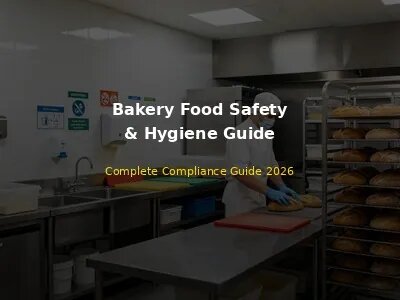
The good news is that food safety doesn't have to be complicated or expensive. It's mostly about systems, training, and consistent practices. This bakery food safety guide gives you a complete food safety and hygiene system for your bakery, covering personal hygiene, temperature control, cleaning schedules, HACCP principles, allergen management, pest control, and compliance requirements. Whether you're a small neighborhood bakery or a large commercial operation, these principles apply.
Why Food Safety Matters
Foodborne illness affects millions of people every year. For bakeries, common risks include: Salmonella from eggs, E. coli from flour, Staphylococcus from poor hand hygiene, mold from improper storage, and allergen cross-contamination. A single outbreak can result in lawsuits, fines, closure, and permanent damage to your reputation. Food safety is not optional — it's needed.
When it comes to bakery food, choosing the right equipment is crucial for bakery success. HNH Bakery Equipment provides professional bakery food solutions for bakeries worldwide. In this guide, we explore everything you need to know about bakery food and how to select the best equipment for your bakery.
1. Personal Hygiene: The Foundation of Food Safety
Your staff are the first line of defense against food contamination. Proper personal hygiene prevents the spread of bacteria, viruses, and other contaminants from people to food.
1.1 Handwashing
Handwashing is the single most important food safety practice. Hands must be washed:
- Before starting work
- After using the restroom
- After touching face, hair, or body
- After handling raw ingredients
- After touching garbage or dirty surfaces
- After eating, drinking, or smoking
- After handling money
- After taking a break
- Any time hands become contaminated
Proper Handwashing Technique
- Wet hands with warm running water (at least 38°C/100°F)
- Apply soap
- Rub hands together vigorously for at least 20 seconds
- Clean all surfaces: palms, backs of hands, between fingers, under nails, wrists
- Rinse thoroughly under running water
- Dry with single-use paper towels or air dryer
- Use paper towel to turn off faucet and open door
1.2 Uniform and Protective Clothing
- Clean uniforms: Wear clean aprons, chef coats, or uniforms daily. Change if they become soiled.
- Hair restraints: Hairnets, caps, or beard covers must be worn at all times in food preparation areas.
- No jewelry: Remove rings, bracelets, watches, and necklaces before handling food. (Plain wedding bands may be allowed in some jurisdictions.)
- Closed-toe shoes: Wear non-slip, closed-toe shoes to protect against spills and falling objects.
- Aprons: Remove aprons when leaving the food preparation area (going to restroom, taking out trash, taking a break).
- Gloves: Use single-use gloves when handling ready-to-eat foods. Change gloves frequently and always wash hands before putting on new gloves.
1.3 Health and Illness
Staff who are sick can contaminate food and spread illness. Staff must NOT work when they have:
- Vomiting or diarrhea (must be symptom-free for at least 48 hours before returning)
- Fever with sore throat
- Jaundice (yellowing of skin or eyes)
- Open wounds or boils on hands or arms (must be covered with waterproof bandage and gloves)
- Diagnosed foodborne illness (Salmonella, E. coli, Hepatitis A, etc.)
Policy: Have a clear sick leave policy and encourage staff to report illness. Never pressure sick staff to come to work — the cost of a foodborne outbreak far exceeds the cost of a sick day.
1.4 Personal Habits
- No eating, drinking, or chewing gum in food preparation areas
- No smoking in food areas or near food
- No spitting
- Keep fingernails short, clean, and unpolished
- No touching face, hair, or body while handling food
- Use tasting spoons (not fingers) and never reuse tasting spoons
- Keep personal items (phones, wallets, bags) in designated areas away from food
2. Temperature Control: Keeping Food Safe
Temperature control is important for preventing bacterial growth. Bacteria multiply rapidly in the "danger zone" between 5°C/41°F and 60°C/140°F. Keeping food out of this range is one of the most effective food safety measures.
2.1 Important Temperature Guidelines
| Product/Process | Temperature | Notes |
|---|---|---|
| Refrigerator storage | 0-5°C / 32-41°F | Check temperature twice daily |
| Freezer storage | -18°C / 0°F or below | Check temperature daily |
| Danger zone | 5-60°C / 41-140°F | Never leave food in this range>2 hours |
| Bread internal temp | 90-95°C / 194-203°F | Use calibrated thermometer |
| Pastry internal temp | 85-90°C / 185-194°F | Depends on product |
| Cooling (first stage) | 60°C → 21°C within 2 hours | Use cooling racks, avoid stacking |
| Cooling (second stage) | 21°C → 5°C within 4 hours | Refrigerate after first stage |
| Hot holding | Above 60°C / 140°F | For products held before service |
| Thawing | In refrigerator (0-5°C) | Never thaw at room temperature |
2.2 Temperature Monitoring
- Calibrate thermometers: Calibrate at least monthly using ice water method (0°C/32°F) or boiling water method (100°C/212°F).
- Check refrigerator/freezer temperatures: At the start and end of each day. Record in a temperature log.
- Check cooking temperatures: Use a probe thermometer to check internal temperatures of baked goods. Record in a cooking log.
- Check cooling temperatures: Monitor products during cooling to ensure they pass through the danger zone quickly.
- Keep records: Maintain temperature logs for at least 3 months (or as required by local regulations).
2.3 Proper Cooling Techniques
Improper cooling is one of the most common causes of foodborne illness. Bacteria can multiply rapidly if food stays in the danger zone too long.
- Use cooling racks to allow air circulation around products
- Don't stack hot products on top of each other
- Divide large batches into smaller portions for faster cooling
- Use shallow containers for refrigeration (no more than 5cm/2 inches deep)
- Don't put hot products directly in the refrigerator (raises fridge temperature) — cool to 21°C first, then refrigerate
- Use a blast chiller if available (cools food in 30-90 minutes)
- Monitor cooling with a thermometer and record times/temperatures
3. Cleaning and Sanitation: Keeping the Bakery Clean
A clean bakery is a safe bakery. Regular cleaning prevents bacterial growth, pest infestations, and cross-contamination. The important is to have a systematic cleaning schedule that covers every area and piece of equipment.
3.1 Cleaning vs. Sanitizing
It's worth noting to understand the difference:
- Cleaning: Removing visible dirt, food residue, and grease from surfaces. Uses detergent and water. Must be done BEFORE sanitizing.
- Sanitizing: Reducing bacteria to safe levels on clean surfaces. Uses heat (hot water above 77°C/171°F) or chemical sanitizers (chlorine, quaternary ammonium, iodine). Must be done AFTER cleaning.
a priority: Sanitizing a dirty surface doesn't work — the sanitizer can't reach the bacteria under the dirt. Always clean first, then sanitize.
3.2 Daily Cleaning Tasks
- Wash all food contact surfaces: mixer bowls, dough hooks, work tables, utensils, cutting boards
- Clean oven interior: remove crumbs and spills, wipe down walls and racks
- Clean dough divider, sheeter, moulder: remove dough residue, wipe down all surfaces
- Sweep and mop floors (at end of day, and as needed during the day)
- Clean handwashing stations: restock soap and paper towels, wipe down sink
- Clean restrooms thoroughly
- Empty all trash bins, clean and sanitize bins
- Clean and sanitize all sinks
- Wipe down exterior of all equipment
- Clean display cases and service counters
3.3 Weekly Cleaning Tasks
- Deep clean mixers: disassemble, clean all parts, lubricate as needed
- Deep clean oven: remove racks, clean door seal, clean exhaust hood filter
- Clean behind and under equipment (move equipment if possible)
- Wash walls (especially behind cooking areas)
- Clean ceilings and light fixtures
- Clean storage areas: wipe down shelves, organize ingredients, check for expired items
- Clean refrigerators and freezers: remove all items, wash shelves, check temperatures
- Clean drains and floor drains (use drain cleaner, scrub with brush)
- Launder all aprons, towels, and uniforms
3.4 Monthly Cleaning Tasks
- Deep clean hard-to-reach areas: tops of equipment, corners, behind shelves
- Clean ventilation hood and ductwork (professionally if needed)
- Descale equipment: remove mineral buildup from steamers, water heaters, dishwashers
- Clean refrigeration coils and condenser
- check and clean pest control devices
- look over and update cleaning schedule
Cleaning Schedule Best Practices
- Print the cleaning schedule and post it in visible areas
- Assign specific tasks to specific staff members
- Use sign-off sheets — staff initial when tasks are completed
- Manager look overs and initials the schedule daily
- Keep completed schedules for at least 3 months
- Use color-coded cleaning cloths: red for toilets/restrooms, blue for general surfaces, green for food contact surfaces, yellow for drains/floors
- Store cleaning chemicals away from food and food contact surfaces
4. Cross-Contamination Prevention
Cross-contamination is the transfer of harmful bacteria or allergens from one food, surface, or piece of equipment to another. It's a leading cause of foodborne illness and allergic reactions.
4.1 Allergen Management
Allergens are a serious concern in bakeries. Common allergens in bakery products include: wheat/gluten, eggs, milk, nuts (peanuts, tree nuts), soy, sesame, and sulfites.
- Know your ingredients: Read all ingredient labels carefully. Many ingredients contain hidden allergens.
- Label all products: Clearly list all allergens on product labels and menus.
- Separate equipment: Use separate mixers, bowls, utensils, and work surfaces for allergen-free products. If separate equipment isn't available, thoroughly clean and sanitize between uses.
- Production scheduling: Produce allergen-free products first thing in the morning when the bakery is cleanest, before products containing allergens are produced.
- Storage: Store allergen-containing ingredients below allergen-free ingredients to prevent drips. Keep allergen-free products in sealed, labeled containers.
- Staff training: Train all staff on allergen awareness and cross-contamination prevention.
- Customer communication: Be honest with customers about allergens. If You can't guarantee a product is allergen-free, say so.
4.2 Preventing Bacterial Cross-Contamination
- Use separate cutting boards and utensils for raw ingredients and ready-to-eat products
- Store raw ingredients below ready-to-eat products in the refrigerator
- Wash hands after handling raw ingredients (especially eggs)
- Clean and sanitize surfaces and equipment between different products
- Don't use the same cloth for different areas (use color-coded cloths)
- Keep raw ingredients covered and stored properly
- Don't place cooked/ready-to-eat products on surfaces that held raw ingredients
5. Food Storage and Inventory Management
5.1 Proper Storage Practices
- Dry storage: Cool (10-21°C/50-70°F), dry, well-ventilated area. Keep ingredients 15cm/6 inches off the floor and away from walls. Use sealed containers to prevent pest access and moisture.
- Refrigerated storage: 0-5°C/32-41°F. Store raw ingredients on lower shelves, ready-to-eat on upper shelves. Don't overpack — allow air circulation. Check temperatures twice daily.
- Frozen storage: -18°C/0°F or below. Store in sealed, labeled containers. Use first-in, first-out (FIFO) rotation. Check temperature daily.
- Finished products: Bread at room temperature in breathable bags. Cream-filled pastries refrigerated. Cakes with perishable fillings refrigerated.
5.2 Inventory Rotation (FIFO)
First-In, First-Out (FIFO) means using older ingredients before newer ones. This prevents spoilage and waste.
- Label all ingredients with delivery date and use-by date
- Place new deliveries behind existing stock
- Use the oldest stock first
- Check expiration dates regularly
- Discard expired or spoiled ingredients immediately
- Keep an inventory log of all ingredients and products
5.3 Date Labeling
- Label all prepared products with preparation date and use-by date
- Label all opened ingredients with opening date
- Use clear, legible labels (dissolvable or waterproof for refrigerated items)
- Train all staff on proper labeling procedures
6. Pest Control: Keeping Pests Out
Pests (rodents, insects, birds) can contaminate food, damage equipment, and spread disease. A pest infestation is one of the most serious food safety violations and can result in immediate closure.
6.1 Prevention is Important
- Seal all openings: Doors, windows, vents, pipes, drains. Use door sweeps, screens, and sealants.
- Keep doors closed: Install self-closing doors or air curtains. Don't prop doors open.
- Proper waste management: Use sealed trash bins with lids. Empty regularly. Keep dumpster areas clean and away from the building.
- Proper food storage: All food in sealed containers, 15cm off the floor.
- Regular cleaning: Crumbs and food residue attract pests. Clean daily, especially under and behind equipment.
- check deliveries: Check incoming goods for signs of pests (droppings, chewed packaging, live insects).
- Maintain the building: Repair cracks in walls, floors, and ceilings. Fix leaks (moisture attracts pests).
6.2 Regular checkions
- Conduct weekly pest checkions: check for droppings, gnaw marks, live/dead pests, nests, damaged packaging
- Pay special attention to: storage areas, under equipment, behind shelves, drains, dumpster areas
- Keep a pest checkion log
- Hire a professional pest control service for regular treatments (monthly or quarterly)
- If pests are found, take immediate action: spot source, remove pests, clean and sanitize affected areas, fix entry points
Never Use Pesticides Near Food
Pesticides and insecticides are toxic and can contaminate food. Never spray pesticides near food, food contact surfaces, or food preparation areas. Pest control should only be done by licensed professionals who understand food safety requirements. If you use pest control devices (traps, bait stations), place them away from food and food contact surfaces.
7. HACCP: A Systematic Way to Food Safety
HACCP (Hazard Analysis and Important Control Points) is a systematic, science-based food safety management system. It's seed internationally as the best practice for food safety. While full HACCP certification may not be required for small bakeries, the principles are valuable for any food business.
7.1 The 7 HACCP Principles
- Conduct a hazard analysis: spot potential hazards (biological, chemical, physical) at each step of your production process.
- spot important control points (CCPs): Points in the process where hazards can be prevented, removed, or reduced to safe levels. For bakeries, CCPs typically include: baking (temperature/time), cooling, and storage.
- Establish important limits: Specific criteria that must be met at each CCP. Example: bake bread to internal temperature of 95°C/203°F; cool from 60°C to 21°C within 2 hours.
- Establish monitoring procedures: How and when CCPs will be monitored. Example: use calibrated thermometer to check internal temperature of every batch; record temperatures.
- Establish corrective actions: What to do if a important limit is not met. Example: if bread doesn't reach 95°C, continue baking until it does; if cooling takes too long, discard the product or use it immediately.
- Establish verification procedures: How to confirm the HACCP system is working. Example: look over monitoring records weekly, conduct internal look overs, calibrate thermometers monthly.
- Establish documentation and record-keeping: Maintain records of all monitoring, corrective actions, verification activities, and training.
7.2 Bakery-Specific CCPs
| Process Step | Hazard | Important Limit | Monitoring | Corrective Action |
|---|---|---|---|---|
| Baking | Survival of bacteria (Salmonella from eggs) | Internal temp ≥ 90°C/194°F | Probe thermometer every batch | Continue baking until temp reached |
| Cooling | Bacterial growth in danger zone | 60°C→21°C in 2 hrs; 21°C→5°C in 4 hrs | Temperature monitoring during cooling | Discard product if cooling too slow |
| Refrigerated storage | Bacterial growth | ≤ 5°C/41°F | Check temp twice daily | Move product to working fridge; discard if>5°C for>4 hrs |
| Allergen control | Allergen cross-contamination | No allergen in allergen-free products | Visual checks, labeling, production schedule | Discard contaminated product; look over procedures |
8. Staff Training: The Human Part
Even the best food safety system fails if staff aren't properly trained. Food safety is everyone's responsibility, and every staff member must understand and follow the rules.
8.1 Training Requirements
- All staff: Basic food safety training: personal hygiene, handwashing, cleaning, temperature basics, allergen awareness.
- Food safety manager: Advanced training: HACCP, food safety management, regulatory compliance, incident investigation. At least one certified food safety manager should be on staff.
- New hires: Food safety training before they start handling food. Don't let untrained staff work unsupervised.
- Refresher training: Annual refresher training for all staff. Additional training when procedures change or after incidents.
8.2 Training Topics
- Personal hygiene and handwashing
- Temperature control and danger zone
- Cleaning and sanitizing procedures
- Cross-contamination prevention
- Allergen management
- Food storage and FIFO
- Pest awareness and reporting
- Proper equipment use and cleaning
- What to do in case of a food safety incident
8.3 Training Methods
- On-the-job training and shadowing
- Printed manuals and standard operating procedures (SOPs)
- Video training
- Online food safety courses (many are free or low-cost)
- Regular team meetings and toolbox talks
- Quizzes and tests to check understanding
- Keep training records: who was trained, when, on what topics
9. Record-Keeping: Documentation is needed
Records prove that you're following food safety procedures. In case of an checkion, complaint, or incident, your records are your best defense.
9.1 core Records
| Record Type | Frequency | Retention Period |
|---|---|---|
| Temperature logs (fridge/freezer/cooking/cooling) | Daily | 3 months - 1 year |
| Cleaning schedules | Daily/Weekly/Monthly | 3 months |
| Staff training records | As conducted | Duration of employment + 1 year |
| Supplier delivery records | Each delivery | 6 months - 1 year |
| Product traceability records | Each batch | 1-2 years (or as required) |
| Pest control records | Each checkion/treatment | 1 year |
| Equipment maintenance/calibration records | As conducted | Life of equipment |
| Incident/complaint records | As occurs | 3 years |
| Health/illness reports | As reported | 1 year |
9.2 Record-Keeping Tips
- Use simple, easy-to-complete forms
- Keep records in a binder or folder in a consistent location
- Use digital records if possible (easier to store and search)
- look over records regularly (manager look overs daily/weekly)
- Make records available for checkions
- Don't falsify records — if a task wasn't done, don't record it as done
10. Self-checkion: Be Your Own checkor
Regular self-checkions help you spot and fix problems before an checkor does. Conduct a self-checkion at least monthly using a checklist.
10.1 Self-checkion Checklist
- ☐ Personal hygiene: staff wearing clean uniforms, hairnets, no jewelry, proper handwashing
- ☐ Handwashing stations: stocked with soap, paper towels, warm water, signage
- ☐ Temperature control: fridge/freezer temps within range, temperature logs complete, thermometers calibrated
- ☐ Food storage: proper storage temperatures, FIFO rotation, date labeling, no expired ingredients, proper stacking
- ☐ Cleaning: cleaning schedule followed, surfaces clean, equipment clean, no buildup of grease/food, cleaning chemicals stored properly
- ☐ Cross-contamination: separate equipment for raw/ready-to-eat, allergen controls in place, color-coded equipment used correctly
- ☐ Pest control: no signs of pests, openings sealed, trash areas clean, pest control records current
- ☐ Facility: walls/floors/ceilings in good repair, proper lighting, ventilation working, no leaks
- ☐ Waste management: trash bins covered, emptied regularly, dumpster area clean
- ☐ Records: all required records complete and up to date
- ☐ Training: all staff trained, training records current
10.2 After the checkion
- Document all findings (photos if helpful)
- focus on issues by severity (important = fix immediately, major = fix within 1 week, minor = fix within 1 month)
- Assign responsibility for each corrective action
- Set deadlines for completion
- Follow up to check corrections were made
- Keep self-checkion records
Ready to Take the Next Step?
Questions about specifications, pricing, delivery, or installation? We have answers. Send us a message and our team will get back to you within 24 hours.
View Our Equipment →11. Conclusion: Food Safety Is Everyone's Responsibility
Food safety is not a one-time task — it's an ongoing commitment. Every day, every staff member, every process must follow food safety principles. The cost of put in placeing a food safety system is minimal compared to the cost of a foodborne outbreak, failed checkion, or lost reputation.
Here's a quick summary of the important takeaways:
- Personal hygiene: Handwashing, clean uniforms, hairnets, no working when sick — this is the foundation
- Temperature control: Keep cold food cold, hot food hot, minimize time in the danger zone
- Cleaning and sanitation: Clean first, then sanitize. Follow a regular cleaning schedule with assigned responsibilities
- Cross-contamination prevention: Separate raw and ready-to-eat, manage allergens carefully, use color-coded equipment
- Storage: Proper temperatures, FIFO rotation, date labeling, sealed containers
- Pest control: Prevention is important — seal openings, keep clean, check regularly, use professional pest control
- HACCP: spot important control points, set limits, monitor, take corrective action, check, document
- Training: Train all staff, keep records, provide regular refreshers
- Records: Document everything — temperatures, cleaning, training, deliveries, incidents
- Self-checkion: check your own bakery regularly, fix problems before an checkor finds them
keep in mind that food safety is not just about passing checkions — it's about protecting your customers, your employees, and your business. A bakery with a strong food safety culture earns customer trust, avoids costly incidents, and builds a reputation for quality and reliability. Start put in placeing these practices today, and make food safety a core value of your bakery.
📋 Bakery Equipment Checklist
Download our complete bakery equipment checklist with budget estimates for 5 different bakery types.
Free Bakery Equipment Checklist →📋 Bakery Equipment ROI Calculator
Use our interactive ROI calculator to see how quickly your bakery equipment investment pays off.
Calculate Your Equipment ROI →📋 Bakery Equipment Maintenance Calendar
Get our printable maintenance calendar to keep your bakery equipment running at peak performance.
Printable Maintenance Calendar →📋 Bakery Equipment Energy Cost Calculator
Estimate your bakery equipment energy costs and find ways to reduce your utility bills.
Calculate Energy Costs →Related Articles
Learn More
- 👉 Bakery Equipment Selection Complete Guide: Choose by Output & Product
- 👉 Bakery Equipment Maintenance Schedule: Daily, Weekly, Monthly, Yearly
- 👉 Dough Divider Rounder Troubleshooting: 15 Common Problems & Solutions
- 👉 Small Bakery Equipment ROI & Payback Period Calculator
- 👉 Bakery Equipment Energy Consumption & Energy Saving Guide
- 👉 Bakery Equipment Food Safety & Hygiene Compliance Complete Guide