
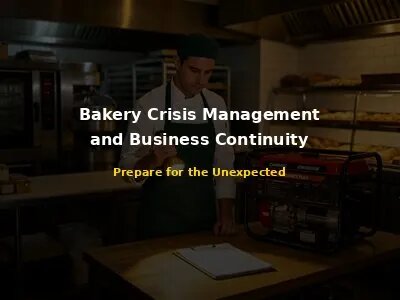
A story from our customer in Miami, Florida: "It was 3 AM on a Saturday in August when my phone started blowing up. My night baker was calling - the power had gone out. Hurricane Ian was hitting Florida, and our grid was down. I jumped out of bed and raced to the bakery. When I arrived, the ovens were off, the mixers were silent, and the refrigerators were already warming up. I had 200 pounds of butter, 50 dozen eggs, and thousands of dollars of dough rising in the proofer. I had a choice: panic or act. Thankfully, I had prepared. I had a backup generator (a 7500-watt portable generator I'd bought after the last hurricane), 20 gallons of gas stored safely, coolers and ice packs, and a written emergency plan. I fired up the generator, plugged in the refrigerators and freezers, and saved most of my perishable inventory. The proofer dough was a loss - it had over-proofed during the outage. But I saved the ingredients, and when power came back 36 hours later, I was able to resume baking almost immediately. My competitors weren't so lucky. Two nearby bakeries lost everything in their refrigerators and freezers - thousands of dollars in ingredients and finished products. One was closed for a week because they didn't have a generator and their insurance didn't cover food spoilage. The difference between my bakery and theirs? Preparation. I had spent $1,200 on a generator and gas cans, $200 on coolers and ice packs, and 10 hours writing an emergency plan. That $1,400 and 10 hours saved me $15,000+ in lost inventory and revenue. Since then, I've expanded my crisis preparedness: I have business interruption insurance, equipment breakdown insurance, a full crisis management plan, backup suppliers for important ingredients, cross-trained employees, and 3 months of operating expenses in cash reserves. I've been through hurricanes, equipment failures, a refrigerator breakdown that cost $3,000 in spoiled inventory, a important employee quitting suddenly, and a negative viral look over. Each time, my preparation helped me survive and recover faster. My advice to every bakery owner: don't wait for a crisis to prepare. Buy the generator. Write the plan. Get the insurance. Build the cash reserve. Cross-train your employees. Have backup suppliers. When a crisis hits (and it will), you'll be grateful you prepared. The cost of preparation is tiny compared to the cost of being unprepared."
Crisis is inevitable in the bakery business. Whether it's a power outage, equipment failure, food safety incident, natural disaster, staffing crisis, or economic downturn, every bakery will face a crisis at some point. The difference between bakeries that survive crises and those that fail is preparation. As our Miami customer learned, a relatively small investment in preparation can save thousands of dollars and potentially save your business.After a decade in the bakery equipment industry, we've seen it all. The bakeries that thrive aren't the ones with the fanciest machines — they're the ones that understand their production needs and choose So. Whether you're a small home bakery or a multi-location operation, this bakery crisis management guide will help you prepare for the unexpected and ensure your bakery survives whatever comes its way.
When it comes to bakery crisis, choosing the right equipment is crucial for bakery success. HNH Bakery Equipment provides professional bakery crisis solutions for bakeries worldwide. In this guide, we explore everything you need to know about bakery crisis and how to select the best equipment for your bakery.
1. Common Crises Bakeries Face
Understanding the potential crises your bakery may face is the first step in preparation. Here are the most common crises, ranked by likelihood and impact:
| Crisis Type | Likelihood | Impact | Typical Cost |
|---|---|---|---|
| Equipment Failure (oven, mixer, refrigeration) | Quite High | High | $500-$10,000+ |
| Power Outage | High | High | $1,000-$20,000+ |
| Staffing Crisis (important employee departure, shortage) | High | High | $1,000-$10,000+ |
| Food Safety Incident (illness, violation, recall) | Medium | Quite High | $5,000-$100,000+ |
| Supply Chain Disruption (ingredient shortage, price spike) | High | Medium | $500-$5,000+ |
| Water/Plumbing Issue | Medium | Medium | $500-$10,000+ |
| Pest Infestation | Medium | Medium | $500-$5,000+ |
| Negative look over/PR Crisis | Medium | High | $1,000-$50,000+ (reputational) |
| Economic Downturn/Recession | Cyclical | High | $5,000-$50,000+ (revenue loss) |
| Lease/Landlord Issue | Medium | Medium | $5,000-$50,000+ (relocation) |
| Fire | Low | Catastrophic | $50,000-$500,000+ |
| Natural Disaster (hurricane, flood, earthquake) | Location-Dependent | Catastrophic | $50,000-$500,000+ |
| Cyberattack/Data Breach | Increasing | Medium-High | $5,000-$50,000+ |
| Owner Death/Disability | Low | Catastrophic | Business failure potential |
| Lawsuit (customer, employee) | Low-Medium | High | $10,000-$100,000+ |
1.1 Equipment Failure
Equipment failure is the most common crisis bakeries face. Your oven, mixer, and refrigeration are the heart of your operation - if any of them fail, production stops. Important types:
- Oven breakdown: Heating part failure, control board malfunction, gas valve issues, uneven heating. Impact: can't bake, lost dough, missed orders. Repair cost: $500-$5,000+. Replacement: $5,000-$20,000+.
- Mixer breakdown: Motor burnout, gearbox failure, electrical problems. Impact: can't mix dough. Repair: $300-$3,000. Replacement: $2,000-$10,000+.
- Refrigeration failure: Compressor failure, refrigerant leak, thermostat malfunction. Impact: food spoilage ($500-$5,000+), health code violations. Repair: $300-$2,000. Replacement: $2,000-$8,000+.
- Specialized equipment: Dough sheeter, divider/rounder, proofer, slicer. These may have long lead times for parts/replacement.
- POS system failure: Software crash, hardware failure, internet outage. Impact: can't process transactions, lost sales.
1.2 Power Outage
Power outages are common and can be devastating for bakeries. Without power, ovens don't bake, mixers don't mix, and refrigeration doesn't cool. Important concerns:
- Food spoilage: Refrigerated items must be discarded after 4 hours above 41°F. Frozen items may survive 24-48 hours in a closed freezer.
- Lost production: Dough in progress may be ruined (over-proofing, inability to bake).
- Lost sales: Can't operate without power (unless You've backup generation).
- Equipment damage: Power surges when power returns can damage sensitive equipment (use surge protectors, turn off equipment during outage).
1.3 Food Safety Incident
Food safety incidents are among the most dangerous crises for a bakery. A single foodborne illness outbreak can destroy your reputation and potentially your business. Important types:
- Foodborne illness outbreak: Customers get sick (Salmonella, E. coli, Norovirus, Listeria). Impact: health department investigation, potential closure, lawsuits, Large reputational damage.
- Allergen incident: Customer has allergic reaction Because of cross-contamination or mislabeling. Impact: potential lawsuit, health department involvement, reputational damage.
- Health department violation: Routine checkion finds serious violations. Impact: fines, mandatory closure, public posting, reputational damage.
- Product recall: Discover a product is unsafe or mislabeled. Impact: lost inventory, notification costs, reputational damage.
1.4 Natural Disasters
Depending on your location, natural disasters can be a large risk:
- Hurricanes/tornadoes: Wind damage, flooding, power outage, business interruption for weeks to months.
- Floods: Water damage to building/equipment/inventory, mold, potential total loss. Standard property insurance usually doesn't cover flood - need separate flood insurance.
- Earthquakes: Structural damage, equipment damage, gas/electrical issues, business interruption.
- Wildfires: Smoke contamination, evacuation, property damage, smoke damage to inventory.
- Extreme heat/cold: HVAC failure, equipment strain, uncomfortable conditions, higher utility costs, frozen pipes in cold.
1.5 Staffing Crisis
- Important employee departure: Head baker, GM, or important employee quits suddenly. Impact: lost knowledge, reduced capacity, quality drops during transition.
- Staff shortage: Multiple call-outs or resignations leave you short-staffed. Impact: reduced hours, longer wait times, customer dissatisfaction, owner burnout.
- Workplace injury: Employee injured on the job (burn, cut, slip, machine injury). Impact: workers' comp claim, lost productivity, potential OSHA investigation, increased insurance premiums.
- Labor dispute: Union organizing, wage disputes, employee complaints to labor department. Impact: legal costs, fines, operational disruption.
2. Creating a Crisis Management Plan
A crisis management plan is a written document that outlines how your bakery will respond to various crises. Here is how to create one:
2.1 Step 1: spot and focus on Potential Crises
Brainstorm all potential crises using the list above as a starting point. Customize for your specific situation:
- Location: Flood zone? Hurricane zone? Earthquake zone? Wildfire area? Extreme weather?
- Building: Age? Condition? Own or rent? Roof, HVAC, plumbing, electrical condition?
- Equipment: Age? Maintenance history? Backup equipment? Repair lead times?
- Staffing: Number of employees? Dependence on important employees? Turnover rate?
- Suppliers: Dependence on single suppliers? Backup suppliers? Order lead times?
- Financial: Cash reserves? Monthly fixed costs? How long could you survive with no revenue?
Rank each crisis by likelihood and impact. Focus planning on high-likelihood/high-impact crises. Plan for low-likelihood/catastrophic events through insurance.
2.2 Step 2: Form a Crisis Team
Assign roles and responsibilities:
| Role | Responsibilities | Who |
|---|---|---|
| Crisis Manager/Leader | Final decisions, coordinates response, stakeholder communication | Owner/GM |
| Operations Lead | Equipment, production, facilities, suppliers | Head baker/Kitchen manager |
| Communications Lead | Internal (employees) and external (customers, media) communication | Owner/Marketing manager |
| Finance Lead | Insurance claims, cash flow, cost tracking, emergency funding | Owner/Accountant |
| Safety/Food Safety Lead | Health department, foodborne illness, injuries, sanitation | Head baker/ServSafe certified |
| IT/Technology Lead | POS, website, data, cyberattacks, backup systems | Tech-savvy employee/consultant |
For small bakeries, one person may fill multiple roles. Include backup people. Ensure everyone knows their role and has contact information.
2.3 Step 3: Create Response Procedures
For each identified crisis, create step-by-step response procedures covering:
- Immediate actions (0-30 minutes): Ensure safety, stop crisis from worsening, judge situation
- Short-term actions (24 hours): Stabilize situation, communicate with stakeholders, begin recovery
- Medium-term actions (1 week): Restore operations, deal with root causes, manage ongoing communication
- Long-term actions (1 month+): Full recovery, prevent recurrence, learn from crisis
- Who is responsible: Assign each action to a specific role
- Important contacts: Phone numbers for emergency services, repair companies, suppliers, insurance, etc.
- Decision points: At what point do you make certain decisions (close, discard inventory, call insurance, issue statement)?
2.4 Step 4: Create a Communication Plan
Communication is important during a crisis. Poor communication can make a bad situation worse:
- Internal communication: How to notify employees (phone tree, group chat, email), what to tell them, how to keep them updated
- Customer communication: Social media, website, email newsletter, sign on door, local news. What to say, how to handle complaints
- Media communication: Designated spokesperson only, important messages, what NOT to say, handling difficult questions
- Stakeholder communication: Landlord, suppliers, insurance, health department, bank, attorney, accountant
- Communication templates: Pre-written templates for common situations (temporary closure, equipment failure, food safety issue)
Communication Principles
- Be fast: Communicate quickly, even without all answers
- Be honest: Don't lie or cover up. admit, take responsibility, explain what you're doing
- Be consistent: Everyone delivers the same message. One spokesperson
- Be empathetic: admit impact on customers/employees, show you care
- Be visible: Don't hide. Be present and accessible
- Don't speculate: Stick to known facts. Don't guess at causes or make promises You can't keep
2.5 Step 5: Create a Business Continuity Plan
Ensure You can continue operating (or resume quickly) during and after a crisis:
- Important functions: What are the absolute importants? (baking, serving customers, processing payments, maintaining refrigeration)
- Recovery time objectives: How quickly must each function be restored? (refrigeration within 4 hours, baking within 24 hours, full operations within 1 week)
- Backup systems: Generator, backup oven/mixer, backup suppliers, backup payment processing, backup data storage, alternate location
- Alternate procedures: Limited menu, cash-only, reduced hours, delivery-only, pop-up at another location
- Financial reserves: How much cash to survive 1 week? 1 month? 3 months? with no/reduced revenue
2.6 Step 6: Create Emergency Contacts List
Compile all a priority phone numbers in one place (printed and digital):
- Emergency services: 911, non-emergency police, fire, poison control, hospital
- Utilities: Electric, gas, water, internet/phone
- Repair services: HVAC, refrigeration, oven/mixer repair, plumber, electrician, locksmith, generator rental
- Equipment suppliers: Quick replacement/ rental sources
- Important suppliers: Main and backup ingredient suppliers
- Insurance: Agent, claims phone, policy numbers
- Professional advisors: Attorney, accountant, business consultant
- Health department: Local contact
- Landlord/property manager
- Important employees: All phone numbers, emergency contacts
- Bank: Business contact, loan officer
look over quarterly. Store copies in multiple locations (bakery, owner's home, cloud, with important employee).
2.7 Step 7: Prepare Emergency Supplies
- First aid kit (well-stocked, accessible)
- Fire extinguisher (Class K for kitchen, checked annually)
- Flashlights and batteries
- Battery-powered radio
- Emergency contact list (printed)
- Backup cash (small bills for making change)
- Manual credit card imprinter (for when POS/electronics down)
- Paper order pads and pens
- Coolers and ice packs (for food during power outage)
- Backup generator (if feasible - 5000+ watts for important loads)
- Water storage (1 gallon/person/day for 3 days)
- Non-perishable food for employees
- Blankets
- Tool kit
- Tarps/plastic sheeting (for water damage)
3. Insurance: Your Financial Safety Net
Insurance is important for protecting your bakery from catastrophic losses. Here are the necessary coverages:
| Insurance Type | What It Covers | Annual Cost (Est.) | necessary? |
|---|---|---|---|
| General Liability | Customer injuries, property damage, advertising injury | $400-$1,500 | Yes |
| Property | Building/equipment/inventory damage from fire, storm, theft, vandalism | $1,000-$5,000 | Yes |
| Business Interruption | Lost revenue + ongoing expenses if closed Because of covered property damage | $500-$2,000 | Yes (Important) |
| Product Liability | Claims from foodborne illness or product injuries | $400-$1,500 | Yes |
| Workers' Comp | Employee injuries (required in most states) | $800-$3,000 | Yes (if employees) |
| Equipment Breakdown | Repair/replacement of broken equipment + resulting food spoilage/business interruption | $300-$1,000 | Highly Recommended |
| Commercial Auto | Delivery vehicles | $800-$2,500/vehicle | If delivery vehicles |
| Cyber Liability | Data breaches, POS hacks, ransomware | $400-$1,500 | Recommended |
| EPLI | Employee lawsuits (wrongful termination, discrimination, harassment) | $500-$2,000 | Recommended (5+ employees) |
| Flood | Flood damage (standard property usually excludes flood) | $500-$3,000 | If in flood zone |
| Earthquake | Earthquake damage (usually separate policy) | $500-$3,000 | If in earthquake zone |
Important Insurance Tips
- Business interruption insurance is Important: It covers your lost revenue and ongoing expenses (rent, payroll, utilities) if You've to close Because of a covered event (fire, storm, etc.). Many bakeries that survive a fire do so because of business interruption coverage. Make sure it covers 6-12 months of lost revenue.
- Equipment breakdown coverage: Standard property insurance usually doesn't cover mechanical/electrical breakdown of equipment. Equipment breakdown coverage covers repair/replacement AND resulting food spoilage and business interruption. For bakeries, this is core.
- look over coverage annually: As your business grows, your coverage needs change. look over with your agent every year.
- Know your exclusions: Read your policy carefully. Know what's NOT covered (flood, earthquake, normal wear and tear, employee dishonesty, intentional acts, war, nuclear hazard).
- Document everything: Keep photos/video of your equipment, inventory, and facility. Keep receipts. This makes claims much easier.
- Report claims promptly: Notify your insurance agent immediately after a crisis. Document damage with photos/video before cleaning up.
4. Crisis-Specific Response Procedures
4.1 Power Outage Response
- Immediate (0-30 min): Check if outage is building-specific or neighborhood-wide. Call utility company. Turn off ovens, mixers, and equipment (prevent surge damage). Keep refrigerator/freezer doors CLOSED. judge expected duration. If>2 hours, move perishables to coolers with ice.
- Short-term (24 hours): If outage>4 hours, discard potentially hazardous foods above 41°F (per food safety guidelines). Start backup generator for important loads (refrigeration, POS, lights). Communicate with customers (social media, sign on door). Contact suppliers to delay deliveries. Notify employees of schedule changes. Contact insurance if meaningful food loss.
- Medium-term (1 week): Once power restored, check all food for safety (discard anything questionable). Check equipment for damage. Restock ingredients. Resume normal operations. look over and update procedures.
- Long-term: Consider investing in backup generator. look over insurance coverage for food spoilage/business interruption. Update crisis plan.
4.2 Equipment Failure Response
- Immediate: Stop using the equipment. judge the issue (can it be repaired quickly? Do You've backup?). If oven/mixer down, adjust production schedule (use backup equipment if available, focus on needed products). If refrigeration down, move food to backup refrigeration or coolers with ice. Contact repair service.
- Short-term: Get repair estimate and timeline. If repair will take>24-48 hours, arrange rental equipment (many suppliers offer short-term rentals). Adjust menu (temporarily discontinue products that require broken equipment). Communicate with customers about limited menu. Contact insurance if equipment breakdown coverage applies.
- Medium-term: Equipment repaired or replaced. Resume full production. look over maintenance schedule (preventive maintenance reduces breakdowns). Consider purchasing backup equipment for important items (especially if you've had multiple failures).
- Long-term: put in place preventive maintenance program for all equipment. Create equipment maintenance log. Budget for equipment replacement (set aside monthly reserve). Consider extended warranties for expensive equipment.
4.3 Food Safety Incident Response
- Immediate: If customer reports illness: take the report seriously, get details (what they ate, when, symptoms). Do NOT admit liability or make promises. If health department contacts you: cooperate fully, provide requested information. If you discover unsafe product: immediately remove from sale, segregate, figure out scope (batch numbers, distribution). If allergen issue: spot affected products, remove from sale, notify customers who purchased.
- Short-term: Contact your attorney and insurance agent (product liability coverage). Conduct internal investigation (look over production records, temperature logs, ingredient sources, employee practices). put in place corrective actions (retrain staff, revise procedures, increase monitoring). Communicate with customers (if public health risk, issue recall/advisory per health department guidance). Cooperate with health department investigation.
- Medium-term: Complete corrective actions. improve food safety protocols (more frequent temperature checks, stricter allergen controls, additional training). Consider third-party food safety look over. Communicate recovery to customers (show improvements, rebuild trust).
- Long-term: look over and update food safety plan. put in place HACCP (Hazard Analysis and Important Control Points) if not already. Conduct regular food safety training (monthly refreshers). Consider ServSafe certification for all managers. look over insurance coverage (product liability limits).
Food Safety Crisis: What NOT to Do
- Don't ignore customer complaints of illness - take them seriously and look into
- Don't admit liability or say "it's our fault" - let the investigation figure out cause
- Don't make promises about compensation - let insurance/attorney handle
- Don't destroy records or evidence - preserve everything for investigation
- Don't go silent - communicate with customers (even if just "we're investigating")
- Don't blame employees publicly - handle internally, take responsibility as owner
- Don't delay contacting your attorney and insurance - the earlier, the better
4.4 Fire Response
- Immediate: Evacuate everyone immediately. Call 911. Use fire extinguisher ONLY if safe (small fire, you've been trained, exit is clear, fire department is called). Never fight a large or spreading fire. Account for all employees. Do NOT re-enter for equipment/inventory.
- Short-term: Once fire department clears, judge damage (do NOT enter until cleared). Document everything with photos/video. Contact insurance agent immediately. Contact landlord (if renting). Arrange emergency board-up/security if needed. Notify employees, customers, suppliers. Contact disaster restoration company (for cleanup/smoke damage). If kitchen is usable, may resume limited operations.
- Medium-term: Work with insurance adjuster on claim. Begin cleanup and restoration (professional fire/smoke/water damage restoration). figure out if equipment is repairable or needs replacement. Arrange rental equipment if needed. Communicate recovery timeline to customers. Consider pop-up or alternate location if closure will be extended.
- Long-term: Complete rebuild/restoration. Replace damaged equipment. Reopen (grand re-opening event). look over fire safety (clean hood more frequently, update fire extinguishers, install fire suppression system if not present, look over kitchen safety protocols). Update insurance coverage from rebuild costs. Update crisis plan from lessons learned.
4.5 Negative look over/PR Crisis Response
- Immediate: Monitor social media/look over sites (set up Google Alerts for your bakery name). If negative post/look over appears: judge severity (isolated complaint vs. viral backlash). Do NOT respond impulsively or emotionally. Do NOT delete negative look overs (unless violates platform policies) - it looks like censorship. Do NOT argue with customer publicly.
- Short-term: Respond promptly and professionally (within 24 hours). admit the customer's experience, apologize (if appropriate), explain what you're doing to fix it, offer to make it right (refund, replacement, discount). Move conversation offline (ask them to call/email/visit to discuss). If viral crisis: issue a public statement (honest, empathetic, take responsibility, explain corrective actions). Designate one spokesperson. Monitor and respond to all comments/replies.
- Medium-term: put in place corrective actions (fix the underlying issue). Follow up with the customer (make sure they're satisfied). Share improvements publicly (show you listened and changed). Encourage satisfied customers to leave positive look overs (to balance negatives). Monitor sentiment (is the crisis fading?).
- Long-term: look over customer feedback systems (how you collect/respond to feedback). put in place proactive customer service (deal with issues before they become look overs). Build a base of loyal customers who will defend you during crises. look over social media policy (what employees can post). Update crisis communication plan.
5. Post-Crisis Recovery
After the immediate crisis is stabilized, focus on recovery:
5.1 Financial Recovery
- File insurance claims promptly (document everything, keep receipts)
- Track all crisis-related expenses (repairs, lost inventory, cleanup, temporary measures)
- look over cash flow and adjust budget (reduce non-a must spending if needed)
- Communicate with bank/lenders if you need temporary relief or additional financing
- look over insurance coverage and increase limits if needed
- Build or replenish emergency cash reserve (target: 3-6 months of operating expenses)
5.2 Operational Recovery
- Restore full operations as quickly as safely possible
- deal with root causes (fix the underlying issue that caused the crisis)
- put in place preventive measures (preventive maintenance, backup systems, additional training)
- look over and update all procedures from lessons learned
- Conduct staff training on new procedures
- Test backup systems (generator, backup equipment, alternate suppliers)
5.3 Customer Recovery
- Communicate your return to normal operations (social media, email, website, local press)
- Consider a "welcome back" promotion or event to bring customers back
- deal with any customer concerns directly and promptly
- Show improvements you've made (show you learned from the crisis)
- Encourage positive look overs from satisfied customers
- Be patient - trust takes time to rebuild, especially after food safety or PR crises
5.4 Team Recovery
- admit the team's efforts during the crisis (see hard work)
- deal with any employee concerns or stress (crises are stressful for everyone)
- Conduct a post-crisis debrief (what went well, what didn't, what to improve)
- Update training from lessons learned
- Cross-train employees to reduce dependence on important individuals
- Maintain morale (crises can be demoralizing - celebrate recovery milestones)
5.5 Learning and Improvement
- Conduct a formal post-crisis look over (within 2-4 weeks after recovery)
- Document lessons learned (what happened, what worked, what didn't, what to change)
- Update crisis management plan from lessons learned
- Share lessons with team (so everyone learns)
- Set goals for improvement (e.g., "purchase backup generator within 3 months," "cross-train 2 employees on oven operation within 1 month")
- Schedule follow-up to ensure improvements are put in placeed
6. Common Crisis Management Mistakes to Avoid
- No crisis plan: The #1 mistake. Trying to figure out what to do during a crisis is too late - you need a plan in advance. Even a simple 5-page plan is better than none.
- No insurance or inadequate insurance: Many bakeries are underinsured, especially for business interruption and equipment breakdown. A single fire or major equipment failure can put you out of business without adequate insurance.
- No cash reserves: Living paycheck to paycheck (or revenue check to revenue check) leaves no buffer for crises. Aim for 3-6 months of operating expenses in reserve.
- Delayed response: Waiting to see if a problem resolves itself, or hoping it's not as bad as it seems. Crises usually get worse, not better, if ignored. Act quickly and decisively.
- Poor communication: Going silent during a crisis, or communicating inconsistently. Customers and employees fill information vacuums with speculation (usually negative). Communicate early, honestly, and consistently.
- Denial or cover-up: Pretending a crisis isn't happening, or trying to hide it. This almost always makes things worse when (not if) it comes out. Be transparent and take responsibility.
- Emotional/impulsive decisions: Making decisions out of fear, anger, or panic. Take a breath, judge the situation, consult your plan and advisors, then make rational decisions.
- Neglecting the original business during crisis: When dealing with a crisis at one location or one part, don't neglect the rest of your business. Delegate crisis management so You can keep normal operations running.
- No backup systems: No backup generator, no backup equipment, no backup suppliers, no backup payment processing. When your primary system fails, you're stuck. Invest in backups for important systems.
- Not training employees: Only the owner knows the crisis plan. If the owner is unavailable during a crisis, employees don't know what to do. Train all employees on basic crisis procedures (fire evacuation, power outage, food safety).
- Not learning from crises: After recovering from a crisis, going back to business as usual without look overing what happened or making changes. Every crisis is a learning opportunity - conduct a post-crisis look over and update your plan.
- Over-reliance on important employees: If only one person knows how to operate the oven, manage the books, or handle a particular task, you're vulnerable if that person leaves. Cross-train employees and document all procedures.
- Ignoring near-misses: A power outage that only lasted 30 minutes, an equipment issue that was quickly fixed, a customer complaint that was resolved. These are warnings. Use them as opportunities to test and improve your crisis plan before a real crisis hits.
- Not having a succession plan: What happens if you (the owner) become unable to work? Without a succession plan, your business may fail. Designate a successor, create a important person manual, consider important person insurance.
7. 30-Day Crisis Preparation Plan
Week 1: judgement and Planning
- Day 1: spot all potential crises your bakery could face (use the list in this bakery crisis management guide as a starting point). Rank by likelihood and impact.
- Day 2: judge your current preparedness: Do You've a crisis plan? Emergency supplies? Backup systems? Insurance? Cash reserves? Trained employees?
- Day 3: look over your insurance coverage with your agent. spot gaps (especially business interruption, equipment breakdown, product liability). Get quotes for additional coverage.
- Day 4: judge your financial reserves. Calculate monthly fixed costs. figure out how long You might survive with no revenue. Set a goal for 3-6 months reserves.
- Day 5: spot important systems and single points of failure: What equipment is a must? What suppliers are important? What employees are important? What technology is core?
- Day 6: Form your crisis team. Assign roles (crisis leader, operations, communications, finance, safety, IT). spot backups for each role.
- Day 7: Create an outline for your crisis management plan. figure out structure, sections, and format. Set a deadline for completion.
Week 2: Creating the Plan
- Day 8: Write response procedures for the top 3 most likely/high-impact crises (e.g., power outage, equipment failure, food safety incident).
- Day 9: Write response procedures for the next 3 crises (e.g., staffing crisis, supply chain disruption, water/plumbing issue).
- Day 10: Write response procedures for catastrophic events (fire, natural disaster, owner disability). Focus on insurance and basic preparedness.
- Day 11: Create communication plan: internal (employees), external (customers), media, stakeholders. Create communication templates for common situations.
- Day 12: Create business continuity plan: important functions, recovery time objectives, backup systems, alternate procedures, financial reserves.
- Day 13: Compile emergency contacts list: all phone numbers, organized by category. check numbers are current.
- Day 14: look over and refine the full plan. Check for completeness, clarity, and accuracy. Have your attorney/accountant look over relevant sections.
Week 3: Preparation and Supplies
- Day 15: Purchase emergency supplies: first aid kit, fire extinguisher (if not current), flashlights, batteries, radio, coolers, ice packs, manual credit card imprinter, paper order pads, backup cash.
- Day 16: judge backup power options: generator (size, type, cost), UPS for POS/electronics. Purchase if feasible. Test generator if You've one.
- Day 17: spot and contact backup suppliers for important ingredients (flour, butter, yeast, eggs, sugar). Establish accounts if needed.
- Day 18: Cross-train employees: spot important tasks and train at least 2 people on each. Document training.
- Day 19: Back up data: POS data, financial records, customer lists, recipes, photos of equipment/inventory. Store backups offsite (cloud + external drive at owner's home).
- Day 20: Document equipment: photos, serial numbers, purchase dates, warranties, maintenance records. Store with insurance documents.
- Day 21: Post important information in bakery: emergency contacts, evacuation routes, fire extinguisher locations, first aid kit location, basic procedures (power outage, fire, food safety).
Week 4: Training, Testing, and Finalization
- Day 22: Print and bind the crisis management plan. Store copies in multiple locations (bakery, owner's home, cloud, with important employee).
- Day 23: Conduct crisis management training with all employees: walk through the plan, roles, procedures. Answer questions. Distribute summary to each employee.
- Day 24: Conduct a fire drill: practice evacuation, assembly point, accounting for employees. Time it. spot improvements.
- Day 25: Conduct a power outage simulation (or tabletop exercise): walk through what everyone would do, test backup systems (generator, coolers), spot gaps.
- Day 26: Conduct a food safety tabletop exercise: walk through a simulated foodborne illness complaint, practice response procedures and communication.
- Day 27: look over all test/drill results. Update the crisis plan from lessons learned. Fix any gaps identified.
- Day 28: Finalize insurance changes (add coverage if needed). Confirm all policies are active and coverage is adequate.
- Day 29: Set up ongoing maintenance schedule: quarterly plan look over, annual training, monthly emergency supply check, semi-annual equipment maintenance, annual insurance look over.
- Day 30: Celebrate! You've completed your crisis management preparation. You're now far better prepared than 90% of small businesses. Share the plan with your team and commit to ongoing look over and improvement.
8. Conclusion
Crisis is inevitable in the bakery business. Whether it's a power outage, equipment failure, food safety incident, natural disaster, staffing crisis, or economic downturn, every bakery will face a crisis at some point. The question is not whether a crisis will happen, but how prepared You're when it does.
As our Miami customer learned, preparation is the difference between surviving a crisis and failing because of one. A $1,200 generator, 10 hours of planning, and adequate insurance can save you $15,000+ in losses and potentially save your business. The cost of preparation is tiny compared to the cost of being unprepared.
Create a crisis management plan. Get adequate insurance (especially business interruption and equipment breakdown). Build cash reserves. Invest in backup systems. Cross-train your employees. Have backup suppliers. Prepare emergency supplies. Train your team. Test your plan. And after every crisis or near-miss, learn and improve.
You can't prevent every crisis, but You can prepare for them. And preparation is what separates bakeries that thrive through adversity from those that don't survive. Start preparing today - your future self will thank you when the next crisis hits.
Get Your Questions Answered Today
Ready to upgrade your bakery? Get in touch with our team for a free consultation. We will judge your needs and recommend the best equipment for your operation and budget.
View Our Bakery Equipment📋 Bakery Equipment Checklist
Download our complete bakery equipment checklist with budget estimates for 5 different bakery types.
Free Bakery Equipment Checklist →📋 Bakery Equipment ROI Calculator
Use our interactive ROI calculator to see how quickly your bakery equipment investment pays off.
Calculate Your Equipment ROI →📋 Bakery Equipment Maintenance Calendar
Get our printable maintenance calendar to keep your bakery equipment running at peak performance.
Printable Maintenance Calendar →📋 Bakery Equipment Energy Cost Calculator
Estimate your bakery equipment energy costs and find ways to reduce your utility bills.
Calculate Energy Costs →Related Articles
Learn More
- 👉 Bakery Equipment Selection Complete Guide: Choose by Output & Product
- 👉 Bakery Equipment Maintenance Schedule: Daily, Weekly, Monthly, Yearly
- 👉 Dough Divider Rounder Troubleshooting: 15 Common Problems & Solutions
- 👉 Small Bakery Equipment ROI & Payback Period Calculator
- 👉 Bakery Equipment Energy Consumption & Energy Saving Guide
- 👉 Bakery Equipment Food Safety & Hygiene Compliance Complete Guide