Related Articles
Related Products
Ready to Upgrade Your Bakery?
Get a free quote on commercial bakery equipment from HNH.
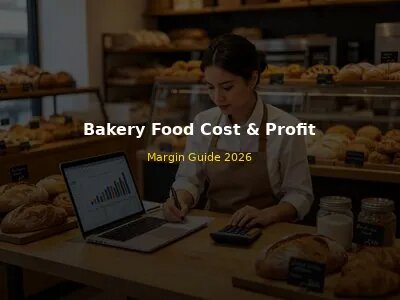
What separates a profitable bakery from one that barely breaks even? More often than not, it comes down to the equipment choices you make — and how well those choices match your production needs.
Bakery food cost control and waste reduction guide: How to reduce food costs and waste to increase profit margins. (1) Why food cost control matters—Food cost (ingredients + packaging) is 30-40% of bakery sales (largest variable cost); reducing food cost 5% can double net profit (if margin 10%, food cost reduction 5% = margin 15%); waste = lost profit (average bakery wastes 5-15% of ingredients—directly reduces profit); proper portioning = consistent product + consistent cost; food cost control is easiest way to increase profit (no need to increase sales—just reduce waste/overuse). (2) Recipe costing—Standardized recipes: Exact measurements (weights, not volumes—more accurate), procedures, times, yields; every product has written recipe; all staff follow same recipe; no guessing ("a little of this, a little of that" = inconsistent cost/quality). Cost per recipe: Calculate exact cost: list every ingredient (including small amounts—salt, yeast, spices), cost per unit (price per oz/lb/kg from supplier), quantity used in recipe, multiply = cost per ingredient; sum all = total recipe cost; add packaging cost (boxes, bags, labels, inserts); divide by yield (number of items) = cost per item; include overhead allocation (labor, utilities, rent—for full cost, but food cost usually just ingredients+packaging). Update recipe costs: Quarterly (ingredient prices change), when supplier changes, when recipe changes; keep recipe cost sheet (digital or physical) for every product; use to set prices (price = cost / (1 - target margin%)). (3) Portion control—Weigh everything: Use digital scale for all ingredients (no volume measurements for important ingredients—flour, sugar, butter, yeast); portion dough by weight (not size/visual—consistent weight = consistent bake time, cost, product); use scoops for fillings/toppings (standardized portion size); measure liquids with measuring cups/pitchers (for water, milk, oil). Tools: Digital scale (0.1g accuracy for small ingredients, 1g for larger—calibrate monthly), portion scoops (various sizes, color-coded), measuring cups/spoons, dough divider (for high volume—consistent weights, saves time), batch tickets (recipe + portion size posted at workstation). Training: Train all staff on portion control (show exact weights, show, supervise); post portion guides at each workstation ("bread dough: 500g each", "cookie dough: 30g each"); check regularly (weigh random portions, correct if off); portion control = everyone, every time, no exceptions. (4) Waste reduction—Track waste: Waste log (date, item, amount, reason, cost); look over weekly; spot top 3 waste causes; set reduction targets; celebrate improvements; target waste <3% of ingredient cost. Common waste causes and fixes: Overproduction (bake more than sells—#1 waste): Fix: bake to demand (use sales history, par-bake/freeze, smaller batches more frequently), track what sells vs what doesn't, discontinue slow sellers, use day-old for croutons/breadcrumbs/bread pudding/employee meals/discount. Improper storage: Fix: FIFO (first in, first out—use oldest ingredients first), proper containers (airtight for flour/sugar, sealed for dairy, correct temp), label everything (contents, date opened, use-by date), correct storage temp (fridge 37-40°F, freezer 0°F, dry storage 50-70°F <60% humidity), don't overbuy (ties up cash, increases spoilage). Mistakes/errors: Fix: training (proper procedures, SOPs), checklists (no missed steps), supervision (catch mistakes early), quality control (sample each batch), don't rush (rushing = mistakes). Spills/accidents: Fix: proper containers (no overfilling), clean as you go (spills immediately), safe transport (use carts, don't carry too much), proper storage (secure containers, no stacking too high). Trim/peel waste: Fix: use trim for other products (bread crusts → croutons, vegetable trim → soup/stock if applicable), improve cutting (minimize trim), compost (if can't use, compost instead of landfill—some areas have composting programs). (5) Inventory management—FIFO: First in, first out—use oldest ingredients before newer; rotate stock when receiving (new behind old); label with receive date; check dates regularly; reduces expired ingredient waste. Proper storage: Dry storage (flour, sugar, grains): cool (50-70°F), dry (<60% humidity), dark, well-ventilated, 6" off floor, 2" from walls, in airtight containers (prevents pests, moisture, oxidation); Refrigerated (dairy, eggs, yeast, fillings): 37-40°F, raw below ready-to-eat, covered/wrapped, labeled with date; Frozen (butter, dough, fruit): 0°F or below, wrapped well (prevents freezer burn), labeled with date, FIFO. Inventory tracking: Count inventory weekly (or monthly for small bakery), compare to usage (spot waste, theft, over-ordering), use inventory software (or spreadsheet), set par levels (minimum stock to keep on hand), reorder from usage (not guesswork), don't overstock (ties up cash, increases waste). Receiving procedures: check deliveries (quality, quantity, temperature—reject if wrong/damaged/warm), check dates (don't accept near-expiry), rotate stock (FIFO), record receiving (update inventory), check against invoice (pay only for what you receive). (6) Purchasing—Compare suppliers: Get 3+ quotes for major ingredients (flour, sugar, butter, eggs), compare price per unit (not just total price), consider quality (cheaper may be lower quality = more waste), consider delivery (free delivery vs pickup cost), consider payment terms (net 30 vs COD), negotiate volume discounts (buy more = lower price, if storage allows). Bulk buying: Buy non-perishables in bulk (flour, sugar, salt—50lb bags = 20-30% cheaper than small bags), buy perishables in appropriate quantities (don't overbuy dairy/eggs—spoilage risk), join buying co-ops (group purchasing = lower prices), consider warehouse clubs (Costco, Restaurant Depot—good for small bakeries). Seasonal buying: Buy seasonal ingredients when cheap/abundant (fruit, dairy sometimes), preserve for later (freeze, can, dry), plan menu around seasonal ingredients (lower cost, better quality), lock in prices for seasonal staples (contract pricing with supplier). (7) Menu engineering—look at menu: Calculate food cost % for each item (cost / price × 100), categorize: Stars (high profit, high popularity—promote, keep), Plowhorses (low profit, high popularity—raise price or reduce cost, keep), Puzzles (high profit, low popularity—promote, reposition, maybe keep), Dogs (low profit, low popularity—discontinue or redesign). Focus on high-margin items: Promote Stars (menu placement, specials, staff recommendations), bundle high-margin items (combo meals, packages), reduce low-margin items (discontinue Dogs, raise prices on Plowhorses), improve recipes (reduce cost without reducing quality—substitute expensive ingredients if possible, adjust portions). (8) Common food cost mistakes—[ ] No recipe costing (don't know cost per item—can't price for profit) [ ] No portion control (inconsistent portions = inconsistent cost, product—weigh everything) [ ] No waste tracking (can't reduce what you don't measure—track daily, look over weekly) [ ] Overproduction (baking more than sells—#1 waste—bake to demand, par-bake/freeze) [ ] No FIFO (using new before old = expired ingredients waste—rotate stock) [ ] Improper storage (spoilage, pests, moisture—proper containers, temp, location) [ ] Overbuying inventory (ties up cash, increases waste—buy from usage, par levels) [ ] Not comparing suppliers (paying too much—get 3+ quotes quarterly, negotiate) [ ] No menu engineering (keeping low-margin items—look at, improve, discontinue dogs) [ ] Ignoring small waste ("it's just a little" adds up—every ounce counts, track everything) [ ] No training (staff don't know proper procedures—train, post guides, supervise) [ ] Not updating recipe costs (ingredient prices change—update quarterly, adjust prices So) (9) Food cost FAQ—Q: What should my food cost percentage be? A: Food cost (ingredients + packaging) should be 30-40% of sales for bakery. If >40%: look into—waste, over-portioning, high ingredient costs, underpricing, theft. If <25%: may be under-portioning (poor value) or using low-quality ingredients (customer dissatisfaction). Track monthly, compare to budget and industry benchmarks, look into variances >5%. Q: How do I calculate food cost percentage? A: Food cost % = (Beginning inventory + Purchases - Ending inventory) / Food sales × 100. Example: Beginning inventory $2,000 + Purchases $3,000 - Ending inventory $1,500 = $3,500 food used. Food sales $10,000. Food cost % = $3,500 / $10,000 × 100 = 35%. Calculate monthly (or weekly for tight control). This includes waste, over-portioning, theft—actual cost, not just recipe cost. Q: How much waste is normal for a bakery? A: 2-5% of ingredient cost is well-managed; 5-10% is average (room for improvement); >10% is poor (large profit loss). Track waste daily/weekly, spot causes, set reduction targets. Most bakeries can reduce waste 30-50% with proper systems (portion control, bake-to-demand, FIFO, storage). Q: Should I buy ingredients in bulk? A: Yes for non-perishables (flour, sugar, salt, grains—50lb bags save 20-30%, store properly in airtight containers, cool/dry place). For perishables (dairy, eggs, fresh fruit): buy from usage, don't overbuy (spoilage risk), but can buy larger quantities if you use quickly and have storage. Consider: storage space, cash flow (bulk = more upfront cost), shelf life, actual usage rate. Calculate: savings per unit vs storage cost/cash tie-up/waste risk. Q: How do I handle day-old bread/pastries? A: Options: 1. Use in other products (bread → croutons, breadcrumbs, bread pudding, stuffing, French toast; pastries → bread pudding, trifle). 2. Discount (day-old rack at 30-50% off—attracts price-sensitive customers, recovers some cost). 3. Donate (food banks, shelters—tax deduction, good will, check local laws for liability protection—Good Samaritan laws in many areas). 4. Employee meals (feed staff—reduces labor cost indirectly, boosts morale). 5. Compost (if can't use/donate—better than landfill, some areas have commercial composting). 6. Feed animals (farm animals—check local regulations, only if safe). Never throw away if can be used—every item wasted is lost profit. Summary: bakery food cost control = recipe costing (standardized recipes, exact cost per item, update quarterly), portion control (weigh everything, tools, training, posted guides), waste reduction (track waste, common causes and fixes, target <3%), inventory management (FIFO, proper storage, tracking, receiving procedures), purchasing (compare suppliers, bulk buying, seasonal buying), menu engineering (look at items, focus on high-margin, discontinue low-margin), avoid common mistakes, FAQ. Food cost is largest variable cost—reducing 5% can double net profit. Track everything, portion precisely, reduce waste, buy smart, price for profit.
Published: September 8, 2026 | Reading time: 15 minutes
"A bakery owner in Chicago was working 80 hours a week and barely breaking even. She thought the problem was low sales, so she spent thousands on marketing. When we finally sat down and calculated her food costs, we discovered she was running at 42% food cost — nearly 10 points above industry average. She was importantly giving away 10% of every sale. Within 3 months of put in placeing portion control, menu engineering, and waste reduction, she brought food cost down to 29% and started making real profits. She didn't need more customers — she needed to keep more of the money she was already making. Food cost control is the #1 lever for bakery profitability."
— HNH Bakery Equipment, Helping Bakeries Maximize Profits Since 2019
After working with over 200 bakery owners on their financials, I can tell you that food cost and profit margin are the two most worth noting numbers in your bakery. Yet most bakery owners don't track them regularly, or don't know how to calculate them correctly.
Here's why these numbers matter so much:
Food cost percentage tells you what portion of your revenue goes to paying for ingredients. It's the single most a priority metric for bakery cost control.
Food Cost Percentage = (Cost of Goods Sold / Total Food Sales) x 100
COGS = Beginning Inventory + Purchases - Ending Inventory
This is your total revenue from food and beverage sales during the same period. Exclude non-food sales (merchandise, classes, etc.) for an accurate food cost calculation.
Divide COGS by total food sales and multiply by 100.
| Item | Amount |
|---|---|
| Beginning Inventory (Monday) | $2,500 |
| + Purchases during the week | $1,800 |
| - Ending Inventory (Sunday) | $2,200 |
| = Cost of Goods Sold (COGS) | $2,100 |
| Total Food Sales | $7,500 |
| Food Cost Percentage | 28% ($2,100 / $7,500 x 100) |
Plus to overall food cost, You should calculate the food cost for each individual menu item. This helps with pricing and menu engineering.
Example: Butter Croissant
| Ingredient | Amount | Cost |
|---|---|---|
| Bread flour | 250g | $0.15 |
| European butter | 150g | $1.20 |
| Whole milk | 100ml | $0.10 |
| Sugar | 30g | $0.03 |
| Yeast | 5g | $0.05 |
| Salt | 5g | $0.01 |
| Total Cost (per croissant) | $1.54 | |
| Menu Price | $4.50 | |
| Food Cost % | 34.2% |
Here are the industry benchmarks for bakery food costs and profit margins. Use these as a reference point, but keep in mind that your specific numbers will depend on your product mix, location, and business model.
| Product Category | Typical Food Cost % | Target Food Cost % | Notes |
|---|---|---|---|
| Artisan Bread / Sourdough | 20-28% | 22-25% | Flour is inexpensive, but labor is high |
| Croissants / Laminated Pastries | 28-38% | 30-33% | Butter is expensive; quality matters |
| Cakes / Custom Orders | 25-35% | 25-30% | Decoration labor is meaningful |
| Cookies / Simple Baked Goods | 18-25% | 18-22% | High volume, low cost per unit |
| Coffee / Beverages | 15-25% | 15-20% | Highest margin items; pair with pastries |
| Overall Bakery Average | 28-35% | 28-30% | Above 35% = problem; below 25% = check quality |
| Expense Category | % of Revenue | Notes |
|---|---|---|
| Food Costs (COGS) | 28-32% | Ingredients, packaging for food |
| Labor Costs | 25-35% | Wages, benefits, payroll taxes (often #1 expense) |
| Rent | 5-10% | Lease, property taxes, insurance |
| Utilities | 2-5% | Electricity, gas, water, internet, phone |
| Equipment & Maintenance | 2-3% | Repairs, maintenance, depreciation |
| Marketing | 2-5% | Advertising, social media, promotions |
| Other Supplies | 2-3% | Cleaning, office supplies, misc |
| Net Profit Margin | 5-15% | Well-run bakeries: 15-20% |
The goal is never to cut corners on quality — your customers can taste the difference. Instead, focus on eliminating waste, improving efficiency, and making smarter purchasing decisions. Here are 10 proven strategies:
Inconsistent portioning is one of the biggest hidden costs in bakeries. If your croissants vary from 80g to 110g, you're importantly giving away product on the larger ones.
Most bakeries throw away 5-10% of their production. That's pure profit going in the trash.
Menu engineering look ats each menu item by profitability and popularity, then categorizes them into four groups:
While equipment is an upfront cost, the right equipment can noticeably reduce labor costs and improve product consistency, which directly impacts your bottom line.
Design your menu so ingredients are used across multiple products. This reduces waste from specialized ingredients that only get used occasionally.
At HNH Bakery Equipment, we help bakeries maximize profits with efficient, high-quality production equipment. Our dough dividers, sheeters, mixers, and ovens reduce labor costs, improve consistency, and minimize waste — directly boosting your bottom line. Get a free consultation to improve your production line and increase your profit margins.
Download our complete bakery equipment checklist with budget estimates for 5 different bakery types.
Free Bakery Equipment Checklist →Use our interactive ROI calculator to see how quickly your bakery equipment investment pays off.
Calculate Your Equipment ROI →Get our printable maintenance calendar to keep your bakery equipment running at peak performance.
Printable Maintenance Calendar →Estimate your bakery equipment energy costs and find ways to reduce your utility bills.
Calculate Energy Costs →How to price your bakery products for maximum profit with proven strategies and formulas.
Complete guide to bakery financial management, cash flow, budgeting, and profitability.
How to manage inventory and control costs in your bakery with practical strategies.
Get a free quote on commercial bakery equipment from HNH.