
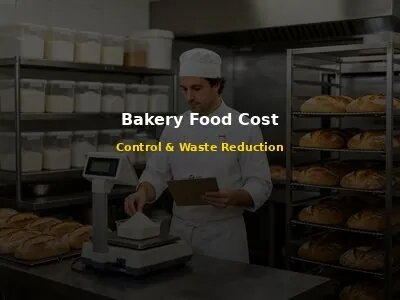
A story from our customer in Vancouver, Canada: "When we opened our artisan bakery in 2020, we were so focused on making great bread that we didn't pay much attention to food costs. We just bought ingredients, baked, and sold. At the end of the first year, we were shocked to find that despite $450,000 in revenue, we barely broke even. Our accountant told us our food cost was 42% - way above the industry average of 28-32%. We were throwing away money literally every day. So in year two, we got serious about food cost control. We put in placeed standardized recipes with weighing (no more 'a handful of this, a splash of that'), bought accurate digital scales, started tracking waste daily, put in placeed FIFO inventory rotation, used day-old bread for bread pudding and croutons, negotiated better prices with our flour and butter suppliers, and trained all our staff on portion control. Within 6 months, our food cost dropped from 42% to 31%. That 11% reduction on $450,000 in revenue meant an extra $49,500 in profit - straight to our bottom line. We used that money to buy a new rack oven and hire an additional baker. The lesson: food cost control is not about being cheap or cutting corners on quality. It is about being smart, efficient, and intentional with every ingredient. Every dollar you save in food cost goes directly to profit. It is the fastest and easiest way to increase profitability without raising prices or selling more."
Food cost is the single largest variable expense for most bakeries, typically accounting for 25-35% of total revenue. For many bakeries, food cost is even higher (40%+), which makes profitability tough or impossible. The good news is that food cost is also one of the most controllable expenses. With the right systems, tools, and training, most bakeries can reduce food cost by 5-15 percentage points, putting thousands (or tens of thousands) of dollars directly back into their bottom line each year.
Waste is a major contributor to high food cost. The average bakery wastes 5-10% of its production - that means for every $100 in ingredients you buy, $5-$10 goes in the trash. This waste comes from over-production (baking more than You can sell), spoilage (ingredients going bad before use), mistakes (burned products, wrong recipes, over-mixing), trimming (unusable parts of ingredients), and customer returns. Reducing this waste is one of the fastest ways to improve profitability.Here's what most equipment suppliers won't tell you: the most expensive machine isn't always the best choice. In fact, many bakeries overspend on features they'll never use. Whether You're a small home bakery or a large wholesale operation, these strategies will help you reduce costs, minimize waste, and maximize profitability.
1. Understanding Food Cost: The Foundation of Bakery Profitability
1.1 What Is Food Cost and Why Does It Matter?
Food cost (also called cost of goods sold or COGS) is the total cost of all ingredients and packaging used to produce the products you sell. It includes: flour, sugar, butter, eggs, yeast, salt, milk, chocolate, fruit, nuts, spices, and all other ingredients; packaging materials (bags, boxes, labels, tissue paper, containers, cups, lids); delivery charges for ingredients; and food used for samples, tastings, and testing.
Food cost does NOT include: labor (wages, taxes, benefits - that is labor cost), rent, utilities, marketing, equipment, insurance, or other overhead expenses (those are operating expenses).
Food cost matters because it is the largest variable expense for most bakeries, and it directly figure outs your gross profit margin. The formula is simple:
Important Formulas
Gross Profit = Revenue - Food Cost
Gross Profit Margin = (Gross Profit / Revenue) x 100
Food Cost Percentage = (Food Cost / Revenue) x 100
Gross Profit Margin = 100% - Food Cost Percentage
Example: If your food cost is 30%, your gross profit margin is 70%. For every $1.00 in sales, $0.70 is available to cover labor, rent, utilities, marketing, and profit.
Every percentage point you reduce food cost directly increases your gross profit margin by one percentage point. For a bakery doing $500,000 in annual revenue, reducing food cost from 35% to 30% saves $25,000 per year - money that goes directly to your bottom line. This is why food cost control is the single most impactful thing You can do to improve profitability.
1.2 Industry Benchmarks: What Should Your Food Cost Be?
| Product Category | Typical Food Cost % | Notes |
|---|---|---|
| Artisan breads (sourdough, baguettes) | 30-40% | High flour/yeast cost, lower price point, labor-intensive |
| Pastries (croissants, danishes, muffins) | 25-35% | Butter is expensive, but higher price point offsets it |
| Cakes (layer cakes, sheet cakes, custom) | 20-30% | Higher price point, good margins, especially custom/decorated cakes |
| Cupcakes | 20-30% | Good margins, portion control is important |
| Cookies | 20-30% | Low ingredient cost, good margins, easy to portion |
| Donuts | 25-35% | Oil and sugar costs, frying oil management is a priority |
| Pies and tarts | 25-35% | Fruit filling cost varies by season |
| Beverages (coffee, tea, juice) | 10-20% | Quite high margins, beans/tea cheap relative to price |
| Sandwiches and savory items | 30-40% | Higher ingredient cost (meat, cheese, vegetables) |
| Overall bakery average | 25-35% | Target range for a healthy, profitable bakery |
Important Insight
If your overall food cost is above 35%, You've a meaningful problem that needs immediate attention. If it is between 30-35%, You're in the acceptable range but there is room for improvement. If it is below 25%, You can be underpricing your products (leaving money on the table) or using low-quality ingredients (which can hurt quality and customer satisfaction). The sweet spot for most bakeries is 28-32% overall. Track food cost by product category to spot which categories are above target - this helps you take targeted action rather than just looking at the overall number.
1.3 How to Calculate Food Cost Percentage Accurately
Calculating food cost accurately requires a systematic way. Here is the step-by-step method:
Food Cost Calculation Method
Formula: Food Cost % = (COGS / Total Revenue) x 100
Where: COGS = Beginning Inventory + Purchases - Ending Inventory
Step 1: Choose a time period (weekly is best for early detection, monthly is also common).
Step 2: Calculate beginning inventory - count and value ALL ingredients and packaging on hand at the start of the period (use your purchase cost).
Step 3: Calculate total purchases - add up ALL ingredient and packaging purchases during the period (include delivery charges and taxes).
Step 4: Calculate ending inventory - count and value ALL ingredients and packaging on hand at the end of the period.
Step 5: Calculate COGS = Beginning Inventory + Purchases - Ending Inventory.
Step 6: Calculate total revenue - add up ALL sales for the period (retail, wholesale, catering, online, delivery).
Step 7: Calculate food cost % = (COGS / Total Revenue) x 100.
Example:
Beginning inventory = $3,000 | Purchases = $2,500 | Ending inventory = $2,800
COGS = $3,000 + $2,500 - $2,800 = $2,700
Total revenue = $8,000
Food cost % = ($2,700 / $8,000) x 100 = 33.75%
important tips for accurate calculation:
- Include ALL food-related costs: ingredients, packaging, delivery charges, samples, tastings, and employee meals (if applicable). Do not omit anything.
- Do physical inventory counts: Do not estimate - actually count and weigh everything. Inaccurate inventory counts lead to inaccurate food cost calculations. Do counts at the same time (beginning and end of period) and be consistent.
- Use a reliable inventory system: Use inventory management software (like Toast, Upserve, or simple spreadsheet) to track purchases and usage. Record every purchase immediately. Do a full physical count weekly or at least monthly.
- Calculate by product category: Calculate food cost for each category (breads, pastries, cakes, cookies, beverages) separately. This helps you spot which categories are above target and take targeted action.
- Compare theoretical vs actual: Calculate theoretical food cost (what it should be from your recipes and sales) and compare to actual food cost. The difference is typically waste, theft, portion variance, or inaccurate recipes. Closing this gap is a major opportunity.
- Track consistently: Calculate food cost on the same schedule (every Monday morning, for example) and track trends over time. A one-week spike may be an anomaly, but a sustained increase indicates a problem that needs investigation.
2. The 12 Most Effective Strategies for Reducing Food Cost
2.1 Plan 1: Standardized Recipes and Accurate Weighing
Standardized recipes are the foundation of food cost control. A standardized recipe is a written recipe that specifies: exact ingredient quantities (by weight, not volume), preparation method, mixing times and temperatures, baking times and temperatures, yield (number of portions), portion size, and cost per portion. Every product you make should have a standardized recipe, and every baker should follow it exactly.
Why this matters: When bakers "eyeball" ingredients or use volume measurements (cups, tablespoons), there is large variation. One baker may use 10% more butter than another, or 15% more flour. This variation causes inconsistent product quality AND higher food costs. Over a year, this "invisible waste" can cost thousands of dollars. Weighing ingredients removes this variation and ensures every batch is consistent and costed accurately.
put in placeation steps:
- Write standardized recipes for EVERY product (use grams or ounces, not cups). Include exact ingredient weights, method, yield, and portion size.
- Calculate the cost of each recipe (cost per batch and cost per portion). Update recipe costs regularly as ingredient prices change.
- Invest in accurate digital scales (at least 2-3 scales in the production area, including a large scale for flour/sugar and a small precision scale for spices/yeast). Calibrate scales regularly.
- Train all bakers to follow recipes exactly - no substitutions, no "a little extra," no guessing. Make recipe cards easily accessible (laminated cards at each workstation, or digital recipe system).
- Conduct regular "recipe look overs" - observe bakers and check they are following recipes. Weigh finished products to check portion accuracy. Provide feedback and retraining as needed.
Real-World Impact
A medium bakery we worked with put in placeed standardized recipes and weighing. Their butter usage dropped by 12% (they were consistently over-using butter by "eyeballing"), saving $8,400 per year. Their product consistency improved by a lot, and customer complaints about inconsistent products dropped to zero. The investment in scales and recipe development was less than $500 - paid for itself in less than one month.
2.2 Plan 2: Portion Control
Portion control means ensuring every product you make is the correct, consistent size. Over-portioning increases food cost (You're giving away product for free), and under-portioning hurts customer satisfaction (customers feel cheated and may not return). Both are costly.
put in placeation steps:
- figure out the target portion size for every product (from your recipe, pricing, and customer expectations). Document this in your standardized recipes.
- Use portioning equipment: dough dividers (for consistent dough balls), portion scoops (for cookies, muffins, cupcakes), scales (for weighing every portion), cake rings (for consistent cake layers), piping bags with measured quantities (for frosting and fillings).
- Train all staff on portion control. Make portion sizes visible (post target weights at each workstation). Use visual guides (sample products of correct size).
- Conduct regular portion look overs - weigh finished products randomly and compare to target. Target accuracy within +/- 2-3%. Provide feedback and retraining.
- Invest in automated portioning equipment if volume justifies it (dough dividers, cookie depositors, cake icers). These provide consistent portioning and reduce labor costs.
| Product | Typical Portion | Over-Portioning Cost (10% extra) |
|---|---|---|
| Bread loaf | 500g (1.1 lb) dough | 50g extra per loaf = $0.05/loaf x 100/day = $5/day = $1,825/year |
| Croissant | 80g (2.8 oz) dough | 8g extra per croissant = $0.02/croissant x 200/day = $4/day = $1,460/year |
| Cupcake | 60g (2.1 oz) batter | 6g extra per cupcake = $0.01/cupcake x 150/day = $1.50/day = $548/year |
| Cookie | 30g (1 oz) dough | 3g extra per cookie = $0.005/cookie x 500/day = $2.50/day = $913/year |
| Cake slice | 120g (4.2 oz) | 12g extra per slice = $0.03/slice x 50/day = $1.50/day = $548/year |
As You can see, even small over-portioning (10% extra) on multiple products can add up to thousands of dollars per year in unnecessary food cost. Consistent portion control removes this waste.
2.3 Plan 3: Accurate Production Planning (Reduce Over-Production)
Over-production is the #1 source of waste in most bakeries. Baking more than You can sell means unsold products go in the trash (or are sold at a steep discount). Accurate production planning means baking the right quantity of each product at the right time, from historical sales data and demand forecasting.
put in placeation steps:
- Track daily sales by product: Record how many of each product you sell every day. Use your POS system or a simple spreadsheet. Track by day of week (Monday vs Saturday) and by season.
- look at sales patterns: spot patterns: Which products sell best on which days? Are there weekly patterns (weekday vs weekend)? Seasonal patterns (holidays, summer vs winter)? Weather effects (rainy days = lower foot traffic)? Special events (local festivals, paydays)?
- Create a production schedule: From historical sales, create a daily production schedule that specifies how many of each product to bake each day. Start conservative (bake slightly less than average sales) and increase as demand proves out. It is better to sell out early (which creates urgency and desirability) than to have leftovers.
- put in place "bake in batches" throughout the day: Instead of baking everything first thing in the morning, bake in smaller batches throughout the day. This ensures fresh products for customers and reduces waste from over-production. For example, bake 50% of expected morning sales before opening, then bake additional batches mid-morning and mid-afternoon from actual sales.
- look over and adjust weekly: Every week, look over actual sales vs production. spot products with high waste (over-production) and products that frequently sell out (under-production). Adjust the production schedule So. This is an ongoing process of continuous improvement.
- Use demand forecasting tools: For larger bakeries, consider using demand forecasting software (many POS systems have this built-in) that uses historical data and algorithms to predict demand. For smaller bakeries, a simple spreadsheet with moving averages works well.
The "Sell Out" Philosophy
Many bakery owners fear selling out because they think it means lost sales. But in reality, selling out is a good thing: it means you produced exactly the right amount (or slightly less), there is no waste, and it creates a sense of urgency and desirability ("get there early, they sell out!"). Customers will learn to come earlier, which increases your morning sales. The important is to sell out at the END of the day, not in the middle. If You're selling out by 2 PM, You're under-producing and should increase production slightly. If You've meaningful leftovers at closing, You're over-producing and should decrease production. Aim to have just a few items left at closing time.
2.4 Plan 4: FIFO Inventory Management
FIFO (First-In, First-Out) is an inventory management method where you use the oldest ingredients first (the ones that arrived first), before using newer ingredients. This ensures that ingredients are used before they expire or go bad, reducing spoilage waste. FIFO is a standard practice in the food industry and is required by many health departments.
put in placeation steps:
- Label everything: Label all ingredients with the delivery date and use-by date. Use date labels (dissolvable or freezer-safe) or a grease pencil. For bulk ingredients (flour, sugar), label the container with the delivery date when you refill it.
- Store properly: Store ingredients in a way that makes FIFO easy: put new deliveries behind older stock (so older stock is in front and gets used first). Use shelving that allows easy access to both front and back. For refrigerated/frozen items, use the same system.
- Train all staff: Train every employee on FIFO - when restocking, put new items behind older items; when retrieving ingredients, take from the front (oldest) first. Make FIFO a habit, not an afterthought. Conduct regular look overs to ensure compliance.
- improve storage conditions: Store ingredients at the correct temperature and humidity to maximize shelf life: dry goods (flour, sugar) in cool, dry, well-ventilated area (50-70°F / 10-21°C, humidity below 60%); dairy (butter, milk, eggs) refrigerated at 34-38°F (1-3°C); frozen items at 0°F (-18°C) or below; fresh fruit/vegetables refrigerated, separate from strong-smelling items. Proper storage extends shelf life and reduces spoilage.
- Conduct regular inventory checks: Check expiration dates weekly. Use items approaching their use-by date first. If an ingredient is close to expiration, plan to use it in a product that week (don't let it go to waste). If an ingredient has expired, discard it immediately (don't risk using expired ingredients - food safety is non-negotiable).
- Right-size your inventory: Don't over-buy perishable ingredients (butter, eggs, milk, fruit) - buy only what You'll use within the shelf life. For non-perishable items (flour, sugar, salt), You can buy in bulk to save money, but ensure You've proper storage and will use them within a reasonable time (flour can go rancid after 6-12 months if not stored properly).
2.5 Plan 5: Waste Tracking and Analysis
You can't reduce what you don't measure. Waste tracking means recording every item that is thrown away, along with the reason, quantity, and cost. This data allows you to spot the biggest sources of waste and take targeted action to reduce them.
put in placeation steps:
- Create a waste tracking log: Use a simple spreadsheet or waste tracking app. Columns should include: date, product/item, quantity (weight or count), reason for waste (over-production, spoilage, mistake, trimming, customer return, other), cost (calculated from recipe cost), and notes.
- Train staff to track ALL waste: Make waste tracking everyone's responsibility. Every time something is thrown away, it must be logged. Keep the waste log near the trash can or waste area for easy access. Make it simple and quick (the goal is data, not paperwork). Conduct regular look overs to ensure compliance.
- look at waste weekly: Every week, look over the waste log. Calculate total waste cost and waste as a percentage of revenue/production. spot the top 5 waste sources (by cost). Look for patterns: Is a particular product consistently over-produced? Is a particular baker making more mistakes? Is spoilage happening in a particular ingredient category? Are certain days of the week generating more waste?
- Take targeted action: For each top waste source, develop a specific action plan: Over-production → adjust production schedule; Spoilage → improve FIFO and storage, reduce purchase quantity; Mistakes → retrain staff, improve recipes/instructions, check equipment calibration; Trimming → improve prep methods, use trimmings creatively; Customer returns → look into quality issues, improve consistency. Assign responsibility and deadlines for each action.
- Set waste reduction goals: Set specific, measurable waste reduction targets. Example: "Reduce total waste from 8% to 5% of production within 3 months" or "Reduce bread over-production waste by 50% within 1 month." Track progress toward goals weekly. Celebrate milestones and improvements. Consider incentives (bonuses, recognition, team rewards) for meeting waste reduction targets.
- Benchmark against industry: Compare your waste percentage to industry benchmarks. The average bakery wastes 5-10% of production. Top-performing bakeries waste under 3%. If You're above 10%, You've large room for improvement. If You're under 3%, You're doing an Great job (but there is always room for improvement).
Waste Cost Calculation Example
Bakery with $10,000 weekly revenue, 8% waste rate:
Weekly waste cost = $10,000 x 8% = $800/week
Annual waste cost = $800 x 52 weeks = $41,600/year
If waste is reduced from 8% to 4%:
Annual savings = $41,600 / 2 = $20,800/year (straight to bottom line!)
2.6 Plan 6: Creative Use of Day-Old Products and Scraps
Even with the best production planning, You'll have some day-old products and production scraps. Instead of throwing them away, use them creatively to generate additional revenue or reduce costs. This is called "upcycling" or "waste valorization."
Creative uses for day-old bread:
- Bread pudding: Day-old bread is actually BETTER for bread pudding (it absorbs the custard better without getting mushy). Bread pudding is a high-margin dessert that customers love.
- Croutons: Cut day-old bread into cubes, toss with olive oil and seasonings, bake until crispy. Sell as salad toppers, soup accompaniments, or packaged snacks.
- Breadcrumbs: Dry day-old bread in the oven, then process into breadcrumbs. Use for breading (chicken, fish, vegetables), meatballs, meatloaf, stuffing, or as a crispy topping. Sell packaged breadcrumbs as a retail product.
- French toast: Day-old bread makes Great French toast (it doesn't fall apart when dipped in egg batter). Offer French toast as a weekend breakfast special or catering item.
- Bread bowls: Hollow out round day-old bread loaves and fill with soup, chili, or stew. Bread bowls are popular and have good margins.
- Stuffing/dressing: Day-old bread is perfect for stuffing (Thanksgiving, Christmas, or as a side dish). Sell pre-made stuffing during holidays or as a catering item.
- Panzanella salad: Tuscan bread salad with day-old bread, tomatoes, cucumbers, onions, and vinaigrette. Popular summer menu item.
- Discounted day-old rack: Sell day-old products at 30-50% discount. Many customers specifically look for day-old bargains. This recovers Some cost (better than throwing away) and attracts price-sensitive customers.
- Donation: Donate unsold bread to food banks, shelters, or community organizations. This provides a tax deduction (in many countries), builds community goodwill, and is the right thing to do. Ensure you follow food safety guidelines for donations.
Creative uses for production scraps:
- Cake scraps: Use for cake pops, cake truffles, layered dessert cups (parfaits), "cake shake" (blended with milk/ice cream), or as a crunchy topping for ice cream/yogurt.
- Pastry scraps: Re-roll and use for mini pastries, pie crust, tart shells, "broken pastry" dessert, or cinnamon sugar twists.
- Cookie dough scraps: Use for "broken cookie" ice cream, cookie butter (blended with oil and sugar), mini cookies, or as a topping for desserts.
- Bread ends/heels: Use for breadcrumbs, croutons, bread pudding, or as a "tasting" sample for customers.
- Dough trimmings: Re-incorporate into the next batch (if appropriate for the dough type), or use for dinner rolls, breadsticks, or "scrap bread."
- Fruit/berry trimmings: Use for compotes, coulis, jams, fillings, smoothies, or as a topping for pastries/yogurt.
- Chocolate trimmings: Melt and use for ganache, drizzle, chocolate sauce, or re-temper for molding.
matters Note
While creative use of leftovers is valuable, it should NOT be your primary waste reduction plan. The goal is to REDUCE waste at the source (better production planning, portion control, FIFO), not just find ways to use waste after it is created. Think of creative reuse as a secondary plan - a safety net for the waste that remains after You've improved production. Also, always focus on food safety - never use products that are spoiled, moldy, or past their safe use-by date.
2.7 Plan 7: Supplier Negotiation and Smart Purchasing
The price you pay for ingredients directly impacts your food cost. Negotiating better prices with suppliers and making smart purchasing decisions can reduce your ingredient costs by 5-15%, which directly reduces food cost.
put in placeation steps:
- Know your costs: Before negotiating, know exactly how much You're paying for each ingredient (per unit: per kg, per lb, per liter, per case). Track price changes over time. This gives you a baseline for negotiation and helps you spot when prices increase.
- Get multiple quotes: For major ingredients (flour, sugar, butter, eggs, chocolate), get quotes from 2-3 different suppliers. Compare not just price, but also quality, delivery frequency, minimum order quantities, payment terms, and reliability. Use competing quotes to negotiate better prices with your preferred supplier.
- Negotiate volume discounts: If you buy large quantities of an ingredient, negotiate a volume discount. Many suppliers offer tiered pricing (lower per-unit price for larger orders). If You can't meet the minimum for a discount on your own, consider joining a buying group or co-op with other local bakeries to combine purchasing power.
- Negotiate payment terms: Better payment terms (e.g., net 30 instead of net 15, or early payment discounts) improve your cash flow and can save you money. Ask for early payment discounts (e.g., 2% discount if paid within 10 days) - if You've the cash flow, this is importantly free money.
- Buy in bulk for non-perishables: For non-perishable ingredients (flour, sugar, salt, yeast, oils), buying in larger quantities (25kg bags instead of 5kg, or pallet quantities) can noticeably reduce per-unit cost. Ensure You've proper storage (cool, dry, pest-free) and that You'll use the ingredients within their shelf life.
- Buy local and seasonal: For fresh ingredients (fruit, vegetables, eggs, dairy), buying from local suppliers can be cheaper (no long-distance shipping markup), fresher (longer shelf life = less spoilage waste), and a great marketing story (customers love local ingredients). Buy seasonal produce when it is abundant and cheapest - use it fresh, or preserve (freeze, make jam/compote) for off-season use.
- Build relationships with suppliers: Good relationships with suppliers can lead to better prices, priority service, early notice of price increases, and flexibility when you need favors (rush orders, special orders, returns). Pay on time, communicate clearly, and treat suppliers as partners rather than adversaries. Loyalty is often rewarded.
- Have backup suppliers: Don't rely on a single supplier for important ingredients. If your primary supplier has a price increase, quality issue, or delivery problem, you need a backup. Having a relationship with a secondary supplier gives you use in negotiations and ensures You're never caught without fundamental ingredients.
- look over supplier contracts annually: Every year, look over your supplier agreements and pricing. Compare to current market rates. Negotiate better terms or switch suppliers if you find a better deal. Don't become complacent - ingredient prices change, and new suppliers enter the market.
2.8 Plan 8: Menu Engineering and Product Mix Optimization
Menu engineering means analyzing your product menu to spot which products are most profitable and popular, and then strategically promoting high-profit items, re-pricing or re-formulating low-profit items, and eliminating unprofitable items. Improving your product mix can noticeably reduce overall food cost and increase profitability.
put in placeation steps:
- Calculate food cost for every product: Using your standardized recipes, calculate the exact food cost and food cost percentage for every product you sell. Also calculate the gross profit per unit (selling price - food cost).
- Track sales volume for every product: Record how many units of each product you sell per week/month. Use your POS system or sales records.
- Create a menu engineering matrix: Plot each product on a 2x2 matrix from profitability (high/low gross profit) and popularity (high/low sales volume):
- Stars (high profit, high popularity): These are your best products - promote them heavily, feature them prominently, keep them on the menu. These drive your profitability.
- Plow Horses (low profit, high popularity): These sell well but don't make much money. Try to increase their profitability: raise price slightly, reduce portion/cost, re-formulate with cheaper ingredients (without sacrificing quality), or bundle with high-profit items.
- Puzzles (high profit, low popularity): These are profitable but don't sell well. Try to increase their popularity: improve marketing/merchandising, rename/reposition, offer samples, feature as "special," or improve the product itself.
- Dogs (low profit, low popularity): These don't sell well and don't make money. Consider eliminating them from the menu (they take up production time, ingredients, and menu space that could be used for more profitable items). If you keep them, noticeably re-price or re-formulate them.
- improve your product mix: From the matrix, take action: Promote Stars (feature on signage, social media, menu point outs); Fix Plow Horses (raise price, reduce cost, bundle); Improve Puzzles (better marketing, samples, repositioning); remove Dogs (remove from menu or drastically improve). Shift your product mix toward higher-margin items.
- Price strategically: For low-margin items that are popular (Plow Horses), consider a small price increase (5-10%). Most customers won't notice a $0.25 increase on a $3.00 item, but it can noticeably improve margins. For high-margin items, keep prices competitive to drive volume. Use "anchor pricing" (display a high-priced item next to a medium-priced item to make the medium one seem like a good deal).
- look over menu quarterly: Menu engineering is not a one-time exercise. look over your menu and product performance every quarter. Seasonal changes, ingredient price fluctuations, and shifting customer preferences mean your menu needs regular adjustment. Keep what works, fix what doesn't, and remove what hurts profitability.
2.9 Plan 9: Staff Training and Engagement
Your employees are on the front lines of food cost control. They are the ones weighing ingredients, portioning products, handling inventory, and making production decisions. If they don't understand the importance of food cost control and aren't trained in the right practices, all your systems and tools will be ineffective. Engaged, well-trained employees are your most valuable asset in reducing food cost.
put in placeation steps:
- Train on food cost fundamentals: Every employee should understand: what food cost is, why it matters (it affects profitability, which affects job security and bonuses), what the target food cost percentage is, and how their daily actions impact food cost. Make it personal - explain that reducing waste saves money that can be used for raises, bonuses, better equipment, and job security.
- Train on specific practices: Provide hands-on training on: standardized recipe following, accurate weighing and measuring, portion control, FIFO inventory rotation, proper storage, waste tracking, equipment operation (to avoid mistakes), and cleaning/sanitation (to avoid cross-contamination and waste). Use demonstrations, practice sessions, and written materials. Provide refresher training regularly.
- Make expectations clear: Document food cost control expectations in an employee handbook or operations manual. Include: recipe adherence requirements, portion tolerances, FIFO procedures, waste tracking requirements, and quality standards. Communicate expectations clearly during onboarding and regular team meetings.
- Empower employees to make decisions: Give employees the authority to make decisions that reduce waste: if a product is not selling, a baker can suggest reducing production; if an ingredient is close to expiration, a staff member can suggest using it in a special; if a portion is consistently off, a baker can suggest adjusting the recipe. Empowered employees take ownership and are more engaged in waste reduction.
- Provide feedback and recognition: Regularly share food cost and waste data with the team (weekly or monthly). Celebrate improvements and milestones. see employees who contribute waste-saving ideas or consistently follow best practices. Public recognition (team meeting shout-outs, employee of the month, "waste warrior" award) is a powerful motivator. Consider financial incentives (bonuses for meeting food cost targets, profit sharing, idea rewards).
- Lead by example: Management must model the behaviors they expect. If the owner/manager doesn't follow recipes, wastes ingredients, or ignores waste tracking, employees won't take it seriously either. Walk the talk - follow every procedure, track every waste item, and show that food cost control is a priority at every level of the organization.
- Conduct regular team meetings: Hold weekly or bi-weekly team meetings to discuss food cost performance, waste trends, challenges, and ideas. Use these meetings to share data, solicit feedback, brainstorm solutions, and reinforce the importance of food cost control. Make it a collaborative effort - everyone should feel responsible for food cost.
- Invest in employee development: Provide opportunities for skill development and career growth. Employees who see a future with your bakery are more engaged, more productive, and more likely to stay (reducing turnover, which is costly - hiring and training new employees is expensive and causes more mistakes and waste during the learning curve).
2.10 Plan 10: Technology and Tools
Technology can noticeably improve food cost control by automating tracking, providing real-time data, reducing human error, and spoting trends and opportunities. While technology requires an investment, the cost savings typically far outweigh the expense.
Important technologies and tools:
- POS system with inventory tracking: A modern POS system (like Toast, Square, Clover, or Lightspeed) can track sales by product in real-time, integrate with inventory management, and provide sales data for production planning. Many POS systems have built-in food cost tracking and recipe management features. Choose a POS system designed for food service/bakeries.
- Inventory management software: Dedicated inventory management software (like Upserve, MarketMan, or ChefTab) helps you track inventory levels, manage purchases, calculate COGS automatically, set par levels, generate purchase orders, and spot waste and shrinkage. These tools integrate with POS systems and accounting software for smooth data flow.
- Recipe management software: Digital recipe management systems (like Recipe Cost Calculator, ChefTec, or simple spreadsheets) help you: store standardized recipes, calculate recipe costs automatically (updated when ingredient prices change), scale recipes up/down, calculate nutrition information, and print recipe cards for production. This ensures consistency and accurate costing.
- Digital scales: Accurate digital scales are a must for portion control and recipe adherence. Invest in: a large platform scale (for flour, sugar, bulk ingredients - 30kg+ capacity, 1g accuracy), a medium scale (for general ingredients - 5kg capacity, 1g accuracy), and a precision scale (for yeast, salt, spices - 2kg capacity, 0.1g accuracy). Calibrate scales regularly and replace batteries as needed.
- Portioning equipment: Automated portioning equipment ensures consistent portion sizes and reduces labor: dough dividers (divide large dough batches into uniform portions - manual, semi-automatic, or automatic), portion scoops (for cookies, muffins, cupcakes - various sizes), cookie depositors (automatically deposit consistent cookie dough), cake icers (automatically apply consistent frosting layers), and volumetric fillers (for fillings, creams, batters).
- Waste tracking apps: Digital waste tracking tools (like Winnow, LeanPath, or simple apps) make it easy to track waste at the point of disposal (using a tablet or scale near the trash can). These tools provide real-time waste data, analytics, and reports, and can spot patterns and opportunities that manual tracking might miss. Some even use AI cameras to automatically spot and log waste.
- Temperature monitoring: Wireless temperature monitoring systems (like SensorPush, Temp Stick, or commercial systems) continuously monitor refrigerator, freezer, and dry storage temperatures, alerting you if temperatures go out of the safe range. This prevents spoilage from equipment failure and ensures food safety. A single refrigerator failure can cost hundreds of dollars in spoiled ingredients - temperature monitoring pays for itself quickly.
- Accounting software: Good accounting software (QuickBooks, Xero, FreshBooks) helps you track revenue, expenses, and profitability, and generates financial reports (P&L, balance sheet, cash flow). Integrate with your POS and inventory systems for accurate, real-time financial data. look over financial reports monthly to track food cost trends and profitability.
- Production planning tools: Demand forecasting and production planning tools (many POS systems have this, or use spreadsheets with moving averages) help you predict demand and plan production accurately, reducing over-production waste. These tools use historical sales data, seasonality, and trends to generate production recommendations.
Technology Investment ROI
Many bakery owners hesitate to invest in technology because of the cost. But consider: a $1,000 POS system with inventory tracking that helps you reduce food cost by just 2 percentage points on $300,000 annual revenue saves $6,000 per year - paying for itself in 2 months. A $500 set of digital scales that reduces butter over-usage by 10% saves hundreds per year. Technology is an investment, not an expense - and the ROI is typically fast and real. Start with the most impactful tools (POS with inventory, digital scales, waste tracking) and add more as your budget allows.
2.11 Plan 11: Equipment Maintenance and Calibration
Well-maintained and properly calibrated equipment produces consistent results, reduces mistakes (which lead to waste), and extends equipment life. Inconsistent or poorly maintained equipment can cause: uneven baking (some products over-baked, some under-baked - both wasted), inaccurate scaling (portions too large or too small - food cost and quality issues), temperature fluctuations (spoilage in refrigerators, inconsistent baking in ovens), and equipment breakdowns (emergency repairs, lost production, spoiled ingredients).
put in placeation steps:
- Calibrate scales regularly: Digital scales can drift over time, causing inaccurate weighing. Calibrate scales at least monthly (or weekly for high-use scales) using calibration weights. check accuracy by weighing a known weight. If inaccurate, recalibrate or replace. Inaccurate scales are a hidden source of food cost variation.
- Calibrate oven temperatures: Oven temperatures can drift from the set temperature (a thermostat set to 350°F may actually be 325°F or 375°F). This causes inconsistent baking and wasted products. Use an oven thermometer to check actual temperature. If noticeably off, recalibrate the thermostat or have it serviced. Check oven temperature weekly. Also, ensure even heat distribution (rotate racks if needed, check for hot spots).
- Maintain refrigeration: Refrigerators and freezers must maintain proper temperatures (34-38°F / 1-3°C for refrigerators, 0°F / -18°C for freezers). Check temperatures daily (use a thermometer, not just the built-in display). Clean condenser coils regularly (dust buildup reduces efficiency and can cause overheating/failure). Check door seals (gaskets) for wear - loose seals let cold air escape, causing temperature fluctuations and higher energy bills. Defrost freezers regularly (ice buildup reduces efficiency and capacity).
- Follow equipment maintenance schedules: Every piece of equipment has a recommended maintenance schedule (from the manufacturer). Follow it: mixers (lubate gears, check belts, clean motor vents), ovens (clean burners, check thermostats, check door seals), proofers (check humidity/temperature controls, clean water reservoir), dividers/sheeters (lubricate moving parts, check blades, clean thoroughly), display cases (clean condenser, check temperature, clean glass). Create a maintenance calendar and assign responsibility. Keep maintenance records.
- Clean equipment properly: Proper cleaning is not just about food safety - it also affects equipment performance and product quality. Residue buildup in ovens causes smoking and off-flavors. Dough buildup in mixers affects mixing performance. Flour dust in motors causes overheating. Follow manufacturer cleaning instructions. Use appropriate cleaning products (food-safe, non-abrasive for stainless steel). Clean as you go (don't let residue harden). Deep clean equipment weekly or monthly as needed.
- Train staff on proper equipment use: Many equipment problems are caused by improper use: overloading mixers (damages motor/gears), using wrong attachments, improper cleaning, ignoring warning signs (unusual noises, smells, vibrations). Train all staff on proper equipment operation, care, and safety. Make equipment manuals accessible. Report issues immediately - don't wait for a complete breakdown (small issues are cheaper to fix and cause less downtime).
- Have a maintenance contract or technician: For major equipment (ovens, mixers, refrigeration), have a relationship with a qualified service technician. Consider a maintenance contract (regular service visits) for important equipment. Have emergency contact information for service technicians. Keep core spare parts on hand (belts, fuses, gaskets, heating elements) for quick repairs. A single equipment breakdown during peak production can cost thousands in lost sales and wasted ingredients.
2.12 Plan 12: Pricing Plan and Revenue Optimization
While reducing food cost is important, You can also improve your food cost percentage by improving pricing and revenue. Raising prices on underpriced items, increasing average transaction value, and driving sales of high-margin items all contribute to a healthier food cost percentage and better profitability.
put in placeation steps:
- look over pricing regularly: Don't set prices once and forget them. look over all prices quarterly (or at least semi-annually). Compare to your food cost targets - if an item's food cost is above 35%, it may be underpriced. Consider a small price increase (5-10%) for underpriced items. Most customers accept small, gradual price increases, especially when communicated transparently ("Because of rising ingredient costs, we have adjusted some prices").
- Price from value, not just cost: Cost-plus pricing (cost x markup) is a starting point, but don't be afraid to price from perceived value. A custom cake that costs $8 to make can sell for $40-$60 because of the perceived value (artistry, customization, special occasion). A signature sourdough loaf that costs $1.50 to make can sell for $6-$8 because of the perceived value (artisanal, long fermentation, local ingredients). Understand what customers value and price So.
- Increase average transaction value: The more each customer spends, the more revenue you generate without additional customer acquisition cost. Strategies to increase average transaction value: upselling (would you like a coffee with that pastry?), cross-selling (this bread pairs great with our homemade jam), combo deals (coffee + pastry for a special price - but ensure the combo is still profitable), impulse items at the counter (cookies, brownies, mini pastries near the register), larger portion options (regular vs large, with good margin on the upgrade), and loyalty programs (encourage larger purchases to earn rewards).
- Promote high-margin items: Actively promote your most profitable products (Stars in the menu engineering matrix). Feature them prominently in the display case (eye-level, attractive signage), on your menu, on social media, and in email marketing. Train staff to recommend high-margin items. The more high-margin items you sell, the lower your overall food cost percentage and the higher your profitability.
- put in place tiered pricing: Offer different price points for different customer segments: economy options (day-old products, smaller portions, basic items) for price-sensitive customers; standard options (regular portions, standard items) for most customers; premium options (large portions, specialty items, custom orders, premium ingredients) for customers willing to pay more. Tiered pricing captures revenue from all customer segments and increases overall revenue.
- Add high-margin revenue streams: Diversify into high-margin revenue streams: beverages (coffee, tea - 80-90% margins), catering (higher margins than retail, larger orders), custom cakes (quite high margins, premium pricing), wholesale (volume sales, consistent revenue), baking classes (high margins, community engagement), branded merchandise (aprons, tote bags, coffee mugs - good margins), and subscription boxes (recurring revenue, predictable production). These additional streams increase overall revenue and can lower your overall food cost percentage.
- Monitor price elasticity: When you raise prices, monitor the impact on sales volume. If a 10% price increase causes a 5% decrease in sales volume, You're still ahead (10% price increase on 95% of volume = 4.5% net revenue increase). If a price increase causes a large drop in sales (more than the price increase), You can have priced too high - consider rolling back or finding other ways to reduce cost. Test price increases on a few items first before broad changes.
3. Common Food Cost Control Mistakes to Avoid
- Not tracking food cost at all: The biggest mistake. If you don't track food cost, You can't manage it. Many bakery owners focus on revenue and assume profitability will follow, but high food cost can eat up all your revenue. Calculate food cost weekly and track trends. You can't improve what you don't measure.
- Inaccurate inventory counts: Estimating inventory instead of doing physical counts causes inaccurate food cost calculations. If your beginning or ending inventory is wrong, your COGS calculation is wrong, and your food cost percentage is misleading. Do accurate physical inventory counts consistently. Invest in inventory management software to make this easier.
- Using volume measurements instead of weight: Cups, tablespoons, and "handfuls" are inaccurate. Flour can be packed or sifted (1 cup of flour can weigh 100g or 150g depending on how it is measured). Butter temperature affects volume. Always weigh ingredients with digital scales. This ensures consistency and accurate costing.
- Not having standardized recipes: If every baker makes products differently, You've no control over food cost or quality. Write standardized recipes for every product, train all bakers to follow them, and conduct regular look overs. Standardized recipes are the foundation of food cost control.
- Over-producing because "we don't want to run out": Fear of selling out causes over-production and waste. Selling out is not a bad thing - it means you produced the right amount and creates urgency. It is better to sell out at the end of the day than to have leftovers. Adjust production from actual sales data, not fear.
- Not tracking waste: If you don't track what you throw away, You can't spot patterns or take targeted action. Waste tracking takes a few minutes per day but can save thousands per year. Make it everyone's responsibility and look over the data weekly.
- Ignoring small waste items: "It's just a little butter" or "it's only one loaf" - these small amounts add up. A few grams of extra butter per batch, a few loaves of wasted bread per day, a few ounces of milk spilled per day - over a year, these "small" items can cost thousands. Track everything, no matter how small.
- Poor inventory storage and rotation: Not put in placeing FIFO, improper storage temperatures, and over-buying perishable ingredients all lead to spoilage waste. put in place FIFO, store ingredients properly, and buy only what You'll use within the shelf life. A $50 case of berries that goes moldy before use is $50 in the trash.
- Not negotiating with suppliers: Accepting supplier prices without question leaves money on the table. Get multiple quotes, negotiate volume discounts, ask for better payment terms, and build relationships. Even a 5% reduction in ingredient costs on $100,000 of annual purchases is $5,000 in savings.
- Underpricing products: Setting prices too low because You're afraid customers won't pay more, or because you haven't calculated your true costs. Underpricing causes low margins and makes profitability difficult or impossible. Calculate your costs, study competitor pricing, understand your value proposition, and price for profitability. A small price increase (5-10%) is usually well-tolerated by customers.
- Not training staff on food cost control: put in placeing systems but not training employees means the systems won't be followed. Employees need to understand WHY food cost control matters (it affects their jobs, bonuses, and the success of the business) and HOW to do it (specific practices and procedures). Invest in training and ongoing reinforcement.
- Not using technology: Relying on manual tracking and spreadsheets when affordable technology can automate and improve the process. POS systems with inventory tracking, digital scales, waste tracking apps, and recipe management software are affordable and provide fast ROI. Start with the most impactful tools and add more as budget allows.
- Focusing only on cost reduction, not revenue optimization: Food cost percentage is a ratio (cost / revenue). You can improve it by reducing cost OR by increasing revenue (or both). Don't neglect pricing plan, upselling, high-margin promotion, and revenue diversification. Both sides of the equation matter.
- Doing it once and forgetting: Food cost control is not a one-time project - it is an ongoing process. Ingredient prices change, sales patterns shift, employees come and go, and new opportunities arise. look over food cost weekly, update recipes and costs regularly, re-train staff, and continuously look for improvement opportunities. It is a journey, not a destination.
- Cutting quality to reduce cost: Using cheaper ingredients, reducing portion sizes noticeably, or eliminating quality steps to reduce food cost. This is a short-sighted plan that will hurt product quality, customer satisfaction, and at the end of the day sales and revenue. The goal is to reduce WASTE and INEFFICIENCY, not to reduce QUALITY. Never sacrifice quality for cost savings - it will cost you more Over time through lost customers and damaged reputation.
4. Step-by-Step Action Plan: put in placeing Food Cost Control in Your Bakery
put in placeing complete food cost control can seem overwhelming, but it is manageable if you take it step by step. Here is a 90-day action plan to get started:
Week 1-2: judgement and Baseline
- Calculate your current food cost percentage (do an accurate physical inventory count, gather purchase records, calculate COGS and food cost % for the most recent month).
- Calculate food cost by product category (spot which categories are above target).
- Do a waste look over for one week (track everything thrown away, look at the top waste sources).
- look over your current recipes (are they standardized? weighed? costed?).
- look over your current pricing (are products priced for profitability? any items with food cost above 35%?).
- Establish your baseline (current food cost %, waste %, top 5 problem areas).
Week 3-4: Foundation and Tools
- Write standardized recipes for your top 10-15 products (start with the highest-volume items). Include exact ingredient weights, method, yield, portion size, and cost per portion.
- Purchase digital scales (at least 2-3: large platform, medium, and precision). Calibrate them.
- Set up a waste tracking system (spreadsheet or app). Train all staff to use it.
- put in place FIFO inventory rotation (label everything, organize storage, train staff).
- Set up inventory tracking (spreadsheet or software). Do weekly inventory counts.
- Train all staff on: standardized recipes, weighing, portion control, FIFO, waste tracking, and why food cost matters.
Week 5-6: Process Improvement
- look at waste data from weeks 3-4. spot top 5 waste sources and develop action plans for each.
- put in place production planning from historical sales data (create a daily production schedule, start conservative).
- put in place portion control (use scales, scoops, dividers; set target portion sizes; conduct portion look overs).
- look over and adjust pricing for items with food cost above 35% (small price increases or cost reduction through recipe reformulation).
- Start creative use of day-old products and scraps (bread pudding, croutons, breadcrumbs, discounted day-old rack, donation program).
- look over supplier pricing (get quotes from 2-3 suppliers for major ingredients, negotiate better prices/terms).
Week 7-8: Optimization and Engagement
- Complete standardized recipes for ALL products (not just top 10-15).
- Conduct a menu engineering analysis (plot all products on the profitability/popularity matrix, take action on each quadrant).
- put in place upselling and average transaction value strategies (train staff, add impulse items, create combo deals).
- Set food cost and waste reduction goals (specific, measurable, with timelines). Share with the team.
- put in place staff incentives (recognition, bonuses, rewards for meeting targets and contributing ideas).
- look over equipment maintenance (create maintenance calendar, calibrate scales/ovens, schedule service for major equipment).
Week 9-12: Monitoring and Continuous Improvement
- Calculate food cost weekly. Compare to baseline and targets. spot trends and issues.
- look over waste data weekly. Track progress toward waste reduction goals. Celebrate improvements.
- Conduct regular look overs (recipe adherence, portion accuracy, FIFO compliance, waste tracking compliance). Provide feedback and retraining.
- Update recipe costs regularly (as ingredient prices change). Adjust pricing as needed.
- look over production schedule weekly (adjust from actual sales data and waste patterns).
- Hold weekly team meetings to discuss food cost performance, challenges, and ideas.
- judge technology needs (consider POS with inventory, waste tracking app, recipe management software from ROI).
- At the end of 90 days, calculate your new food cost percentage and waste percentage. Compare to baseline. Calculate total savings. Celebrate achievements! Set new goals for the next 90 days.
Important Success Factors
1) Leadership commitment: The owner/manager must be fully committed and model the behaviors they expect. If leadership doesn't take it seriously, employees won't either.
2) Employee engagement: Food cost control is everyone's responsibility. Engage employees through training, communication, recognition, and incentives. Make them partners in the process, not just rule-followers.
3) Consistency: Do it every day, every week, every month. Consistency is more important than intensity. Small, consistent improvements over time lead to meaningful results.
4) Data-driven decisions: Use actual data (food cost %, waste logs, sales data, inventory) to make decisions, not guesses or assumptions. Measure, look at, act, measure again.
5) Continuous improvement: Food cost control is an ongoing process. There is always room for improvement. Set goals, measure progress, celebrate achievements, and set new goals. Never become complacent.
Find the Right Equipment for Your Bakery
We have helped hundreds of bakery owners choose the right equipment. We can help you too. Send us your requirements and we will put together a customized solution for your bakery.
Get Free Equipment Consultation /5. Conclusion: Food Cost Control is the Fastest Path to Bakery Profitability
Food cost is the largest variable expense for most bakeries, and controlling it is the single most impactful thing You can do to improve profitability. Every percentage point you reduce food cost goes directly to your bottom line - for a bakery doing $500,000 in annual revenue, reducing food cost from 35% to 30% puts $25,000 extra in your pocket each year. This is money You can use to invest in your business, pay yourself and your employees better, expand, or simply enjoy the fruits of your labor.
Food cost control is not about being cheap or cutting corners on quality. It is about being smart, efficient, and intentional with every ingredient. It means: weighing ingredients accurately instead of guessing, producing the right amount instead of too much, using the oldest ingredients first instead of letting them spoil, tracking waste instead of ignoring it, using leftovers creatively instead of throwing them away, negotiating fair prices with suppliers instead of overpaying, training employees instead of letting mistakes happen, and pricing products for profitability instead of leaving money on the table. These are all practices that improve efficiency AND quality - they are not trade-offs.
Waste reduction is a important part of food cost control. The average bakery wastes 5-10% of its production - that is money literally in the trash. By put in placeing accurate production planning, standardized recipes, portion control, FIFO inventory, waste tracking, creative reuse, and staff training, most bakeries can reduce waste by 30-50%. This not only saves money but also reduces your environmental impact and supports sustainability - something customers increasingly value.
The 12 strategies covered in this guide provide a complete structure for food cost control: standardized recipes and weighing, portion control, accurate production planning, FIFO inventory management, waste tracking and analysis, creative use of leftovers, supplier negotiation, menu engineering, staff training, technology and tools, equipment maintenance, and pricing plan. You don't need to put in place all of them at once - start with the ones that will have the biggest impact for your bakery (typically: standardized recipes + weighing, waste tracking, production planning, and FIFO), then add more over time. The 90-day action plan provides a structured way to put in placeation.
keep in mind that food cost control is an ongoing process, not a one-time project. Ingredient prices change, sales patterns shift, employees come and go, and new opportunities arise. Track food cost weekly, look over waste data regularly, update recipes and pricing as needed, retrain staff continuously, and always look for improvement opportunities. Set goals, measure progress, celebrate achievements, and set new goals. The bakeries that are most successful at food cost control are those that make it a part of their culture - where every employee understands its importance and takes ownership of it.
Finally, keep in mind that food cost is just one side of the profitability equation. Revenue optimization (pricing, upselling, high-margin promotion, diversification) is equally worth noting. The most profitable bakeries focus on BOTH reducing costs AND increasing revenue. By improving both sides of the equation, You can achieve a healthy, sustainable, and growing bakery business that provides for you, your employees, and your community for years to come.
Start today. Calculate your current food cost. spot your top 3 waste sources. put in place one new practice this week. Small steps, taken consistently, lead to meaningful results. Your bottom line will thank you.
📋 Bakery Equipment Checklist
Download our complete bakery equipment checklist with budget estimates for 5 different bakery types.
Free Bakery Equipment Checklist →📋 Bakery Equipment ROI Calculator
Use our interactive ROI calculator to see how quickly your bakery equipment investment pays off.
Calculate Your Equipment ROI →📋 Bakery Equipment Maintenance Calendar
Get our printable maintenance calendar to keep your bakery equipment running at peak performance.
Printable Maintenance Calendar →📋 Bakery Equipment Energy Cost Calculator
Estimate your bakery equipment energy costs and find ways to reduce your utility bills.
Calculate Energy Costs →Related Articles
Learn More
- 👉 Bakery Equipment Selection Complete Guide: Choose by Output & Product
- 👉 Bakery Equipment Maintenance Schedule: Daily, Weekly, Monthly, Yearly
- 👉 Dough Divider Rounder Troubleshooting: 15 Common Problems & Solutions
- 👉 Small Bakery Equipment ROI & Payback Period Calculator
- 👉 Bakery Equipment Energy Consumption & Energy Saving Guide
- 👉 Bakery Equipment Food Safety & Hygiene Compliance Complete Guide