Related Articles
Related Products
Ready to Upgrade Your Bakery?
Get a free quote on commercial bakery equipment from HNH.
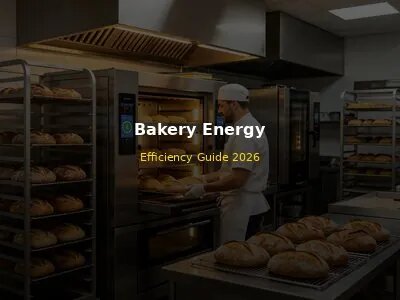
The complete guide to reducing energy costs in your bakery: oven optimization, lighting upgrades, refrigeration efficiency, HVAC optimization, equipment upgrades with ROI analysis, production scheduling, maintenance, energy look overs, government rebates and incentives, common mistakes, and a 30-day action plan to start saving immediately.
Bakery energy efficiency and cost savings guide: Practical ways to reduce energy consumption and costs in your bakery. (1) Why energy efficiency matters—Energy is 3-5% of bakery operating costs; ovens use 30-50% of total energy, refrigeration 20-30%, lighting 10-15%, other equipment rest; energy costs rising 5-10%/year; reducing energy 20-40% adds directly to profit; efficient equipment = lower operating costs + better for environment + marketing opportunity ("green bakery"); many utilities offer rebates for energy-efficient equipment/upgrades; simple changes (no cost/low cost) can reduce 10-20% immediately. (2) Oven energy efficiency (biggest energy user)—Choose right oven: Gas vs electric (gas 50-70% cheaper to operate for high-volume—choose gas if available); Rotary vs deck (rotary more efficient per loaf for high volume—one chamber for 30-60 loaves vs multiple decks); Convection vs conventional (convection 25% faster = less energy per batch); Size (don't buy oversized oven—heating empty space wastes energy; match to volume). Insulation and seals: Thick insulation (less heat loss, more efficient—check oven specs, compare insulation thickness); Door seal (replace if cracked/hardened—leaks = heat loss = energy waste; test with dollar bill: close door on bill, if pulls out easily, seal needs replacement); Door glass (double/triple pane = less heat loss; keep clean); Gaskets (check monthly, replace as needed). Operational habits: Preheat only when needed (don't leave oven on all day if not baking—turn off between batches if >30min gap); Full loads (don't run half-full oven—wait until full, or combine products with similar temp; each opening loses 20-50°F); Batch baking (bake all similar-temp products together—minimize preheat cycles and temp changes); Don't open door frequently (use oven light instead—each opening loses heat, uses more energy to reheat); Use oven light (LED, low energy—check product without opening door); Turn off when done (don't leave oven on after production—cool down naturally, use residual heat for warming if safe); Load efficiently (arrange pans for airflow—don't block vents, don't overcrowd). Maintenance: Clean burners (gas oven—dirty burners = inefficient combustion, more energy; clean regularly); Calibrate thermostat (inaccurate thermostat = overcooking/undercooking, energy waste; calibrate monthly with oven thermometer); Check heating elements (electric oven—replace if damaged/uneven; inefficient elements use more energy); check fans (convection/rotary—clean, lubricate, replace if noisy/slow; poor airflow = uneven baking, more energy); Professional service annually (technician can improve combustion, check gas pressure, clean internal components). (3) Refrigeration energy efficiency (second biggest)—Temperature settings: Fridge 37-40°F (not colder than needed—each degree below 37 wastes ~2-3% more energy; food safety is fine at 37-40°F); Freezer 0°F (not -10°F unless needed—colder = more energy; 0°F is safe for long-term storage); Check temps daily (log, adjust if off—don't set and forget); Use thermometers (don't rely on built-in gauge—can be inaccurate). Door and seals: Door seals (replace if cracked/hardened—test with dollar bill; leaks = cold air escape = compressor works harder = more energy); Door closers (ensure doors close fully—propped open = Large energy loss; install automatic door closers if needed); Strip curtains (for walk-in—reduces cold air loss when door open; cheap, effective); Minimize door opening (organize contents so you know where things are—less time door open; group frequently used items near door). Coils and ventilation: Condenser coils (clean monthly with vacuum/soft brush—dirty coils = 30% more energy + premature compressor failure; be gentle, don't bend fins; this is #1 easiest energy saver for refrigeration); Clearance (4-6 inches around unit for airflow—don't push against wall, don't store items on top/around blocking vents); Location (away from heat sources—oven, dishwasher, direct sunlight; heat makes compressor work harder); Ventilation (ensure room has good airflow—hot room = compressor works harder; use exhaust fan if needed). Defrost and maintenance: Defrost regularly (ice buildup on evaporator = insulation = less efficient + more energy; manual defrost or check auto-defrost function; if ice >1/4 inch, defrost); Check defrost timer/heater (if auto-defrost not working, ice builds—call technician); Clean interior (spills, ice—affects efficiency and food safety); Check refrigerant level (low refrigerant = inefficient cooling + compressor damage; call technician if not cooling well); Professional service annually (check compressor, refrigerant, seals, defrost system, electrical). (4) Lighting efficiency—LED lighting: Replace all bulbs with LED (uses 75% less energy than incandescent, 50% less than fluorescent; lasts 25,000-50,000 hours vs 1,000 incandescent/10,000 fluorescent; saves on replacement costs and labor); Choose correct color temperature (warm white 2700-3000K for display/dining—makes food look appetizing; cool white 4000-5000K for production/prep—bright, functional); Dimmable LEDs (for areas where full brightness not always needed—display, dining); LED display case lighting (specially designed for food display—improves product appearance, low heat (doesn't warm product like incandescent)). Natural light: Maximize daylight (skylights, windows, light tubes—reduces need for electric lighting during day); Position workstations near windows (use natural light for prep); Keep windows clean (dirty windows reduce light); Use light-colored interior (white/light walls, ceilings, floors—reflect light, reduce needed wattage; dark colors absorb light). Controls and habits: Motion sensors (for storage, restrooms, offices—turns off when no one present; saves energy when forgotten); Timers (for exterior lighting, signage—turn off at closing); Turn off lights when not in use (production area when done, storage when not accessing, "last person out turns off lights"); Task lighting (light only where needed—under-cabinet lights for prep, instead of lighting entire room; reduces overall wattage). (5) Mixer and other equipment—Match equipment to task: Don't use oversized mixer for small batches (larger motor = more energy even for small load; use appropriate size mixer for batch); Spiral vs planetary for bread (spiral more energy efficient for dough—gentler, faster, less friction; use spiral for high-volume bread); Don't run equipment empty (turn off mixers, sheeters, dividers when not in use—even idle uses energy; many have standby mode but still draw power); Batch processing (mix multiple batches back-to-back (motor already warm, efficient) rather than one at a time throughout day). Maintenance: Lubricate (gears, bearings—well-lubricated = less friction = less energy + longer life; use correct lubricant per manual); Check belts (tension, wear—loose/worn belts = slippage = energy waste + poor performance; replace as needed); Clean motors (dust, flour buildup on motor vents = overheating = inefficiency + premature failure; clean regularly); Calibrate (scales, timers—accurate = no rework = energy saved from remaking bad product); Professional service annually (motors, gears, electrical connections). (6) Whole facility efficiency—Insulation and building: Insulate walls/ceiling (especially if old building—reduces heating/cooling needs; attic insulation is cheapest, highest ROI); Weatherstrip doors/windows (prevents drafts—cheap, easy, pays back quickly); Insulate hot water pipes (reduces heat loss—cheap, easy); Insulate refrigeration lines (if visible—prevents condensation/heat gain); Seal air leaks (around windows, doors, pipes, electrical outlets—use caulk, weatherstripping, spray foam; reduces heating/cooling loss). HVAC: Programmable thermostat (set back when closed—e.g., 60°F at night/weekend vs 70°F during hours; saves 10-20% on heating/cooling); Change filters regularly (clogged filter = system works harder = more energy + poor air quality; monthly or per manufacturer); Annual HVAC service (clean coils, check refrigerant, calibrate thermostat, check ductwork; improves efficiency 10-20%); Zoning (heat/cool only occupied areas—close vents in unused storage, use separate thermostats if possible); Ventilation (exhaust fans—use only when needed, install make-up air (brings in fresh air efficiently, reduces negative pressure); kitchen exhaust is big energy user—improve). Hot water: Low-flow fixtures (faucets, pre-rinse sprayers—reduces water and energy to heat water; cheap, easy); Insulate water heater (if old/poorly insulated—blanket saves energy); Set water heater temp (120°F is sufficient for most uses—higher = more energy + scald risk; dishwashers may need booster heater); Fix leaks (dripping hot water faucet = energy + water waste; fix promptly); Use cold water when possible (for cleaning tasks that don't need hot—saves energy). Waste heat recovery: Oven exhaust heat (some systems capture heat from oven exhaust to pre-heat incoming air or water—commercial systems available, can save 10-20% on heating); Refrigeration heat (refrigeration compressors produce heat—can be captured to heat water or space in some systems; more advanced); Use residual oven heat (after baking, turn off oven and use residual heat for warming bread, proofing (if safe), drying—don't waste heat). (7) Monitoring and tracking—Track energy use: Monthly utility bills (kWh electricity, therms gas, gallons water—compare to previous months, same month last year; spot spikes); Per-unit metrics (energy cost per loaf, per $100 sales—normalizes for production volume; meaningful comparison); Sub-metering (if possible, meter major equipment separately (oven, refrigeration, lighting)—identifies biggest users); Energy look over (professional look over identifies top savings opportunities—many utilities offer free or low-cost look overs; worth doing). Set goals and improve: Baseline (establish current energy use as baseline); Target (set reduction goal—10% in 6 months, 20% in year); Action plan (spot top 5 savings opportunities, put in place, assign responsibility, timeline); Monitor (track monthly, compare to baseline, celebrate improvements); Continuous improvement (regularly look for new opportunities, new technology, staff ideas). (8) Utility rebates and incentives—Many utilities offer: Equipment rebates ($50-$500+ for ENERGY STAR equipment, high-efficiency ovens, refrigeration, LED lighting); look over programs (free or discounted energy look overs); Installation incentives (rebates for installing energy-efficient equipment); Demand response (pay you to reduce usage during peak demand—sign up if available); Time-of-use rates (lower rates at off-peak times—shift some production to off-peak if possible (e.g., mixing, prep) to save). Contact your utility provider (ask about commercial energy efficiency programs, rebates, look overs—many programs underused; you pay into them via rates, take advantage). (9) Common energy waste mistakes—[ ] Leaving oven on all day (even when not baking—Large waste; turn off between batches if >30min gap) [ ] Dirty condenser coils (30% more energy + premature failure—clean monthly; #1 easiest fix) [ ] Opening oven door frequently (each opening loses 20-50°F—use oven light) [ ] Fridge set too cold (below 37°F wastes energy—set 37-40°F) [ ] Incandescent/old fluorescent lighting (5-10x more energy than LED—replace all with LED) [ ] Leaky door seals (oven/fridge—heat/cold escape, equipment works harder; replace seals) [ ] Running half-full oven batches (same energy as full, less product—wait until full or combine) [ ] Equipment on standby/idle (mixers, sheeters, dividers left on when not in use—turn off) [ ] No monitoring (can't reduce what you don't measure—track monthly utility bills) [ ] Ignoring maintenance (dirty, unlubricated, out-of-calibration equipment uses 10-50% more energy—maintain regularly) [ ] Poor insulation/weatherstripping (drafts, heat loss—cheap fixes with high ROI) [ ] Not taking utility rebates (free money—contact utility, apply for rebates/look overs) (10) Energy efficiency FAQ—Q: What's the fastest, cheapest way to save energy? A: 1. Clean condenser coils on refrigeration (immediate 15-25% refrigeration savings, free, 15 min/month). 2. Replace all light bulbs with LED (75% lighting savings, $2-$5/bulb, pays back in months). 3. Turn off oven/equipment when not in use (don't leave on all day—10-20% oven savings, free). 4. Set fridge to 37-40°F (not colder—saves 2-3% per degree, free). 5. Weatherstrip doors/windows (reduces drafts, $20-$50, pays back in weeks). These five can reduce total energy 15-25% within 1 month, with minimal cost. Q: Is gas oven quite cheaper than electric? A: Yes, for high-volume bakeries. Gas ovens typically cost 50-70% less to operate than electric. Example: electric rotary oven $500-$1,000+/month electricity vs gas $100-$300/month. Over 10 years, gas saves $5,000-$15,000+. However: gas requires gas line installation + hood (higher upfront cost); if gas not available, electric is only option (budget for high electricity costs); for small/low-volume ovens, difference may be less real. When buying oven, calculate total cost of ownership (purchase + 10-year energy) not just purchase price. Q: How much can I realistically save with energy efficiency? A: Quick wins (no/low cost, <$500): 10-20% reduction in 1-3 months (clean coils, LED, turn off equipment, adjust temps, weatherstrip). Moderate investment ($500-$5,000): additional 10-20% (programmable thermostat, high-efficiency equipment replacement, insulation, HVAC service, sub-metering). Major investment ($5,000+): additional 10-20% (new high-efficiency oven/refrigeration, solar panels, waste heat recovery, building insulation). Total realistic: 20-40% reduction within 1-2 years with combination of quick wins and targeted investments. At 3-5% of revenue for energy, 20% savings = 0.6-1% of revenue added directly to profit (large for thin-margin bakery). Q: Should I buy ENERGY STAR equipment? A: Yes, when available. ENERGY STAR certified equipment uses 10-30% less energy than standard models. For refrigeration (biggest energy user after oven), ENERGY STAR saves 10-20%. For ovens, look for high-efficiency models (ENERGY STAR for commercial ovens is limited, but some high-efficiency gas ovens available). For dishwashers, ENERGY STAR saves 20-30%. Calculate payback: energy savings per year vs equipment premium. Usually pays back in 2-5 years, then pure savings. Also check utility rebates (many offer $50-$500 for ENERGY STAR equipment, reducing upfront cost). Q: How do I know if my equipment is energy efficient? A: 1. Check ENERGY STAR label (certified efficient). 2. Compare specs (insulation thickness, BTU/kW rating, estimated energy use—ask manufacturer for energy consumption data). 3. Look for features (programmable controls, auto-shutoff, standby mode, high-efficiency burners/compressors, LED lighting, double-pane glass). 4. Read look overs (other owners' energy costs). 5. Calculate estimated operating cost (BTU/kW × hours/day × days/year × energy rate = annual energy cost; compare models). 6. Ask for energy look over (professional can judge existing equipment efficiency). When replacing, don't just buy cheapest—calculate total cost of ownership (purchase + 10-year energy + maintenance). Summary: bakery energy efficiency = oven efficiency (gas, right size, insulation/seals, operational habits, maintenance), refrigeration efficiency (proper temps, door seals, clean coils, location/ventilation, defrost/maintenance), lighting (LED, natural light, controls/sensors), mixer/equipment (match size, spiral for bread, turn off when idle, maintenance), whole facility (insulation/weatherstripping, HVAC optimization, hot water, waste heat recovery), monitoring (track utility bills, set goals, energy look over), utility rebates (contact utility, take advantage of programs/rebates), avoid common mistakes, FAQ. Energy is 3-5% of costs—reducing 20-40% adds directly to profit. Start with quick wins (clean coils, LED, turn off equipment, adjust temps), then invest in higher-efficiency equipment and building improvements. Energy efficiency = lower costs + better environment + marketing opportunity.
Published: September 8, 2026 | Reading time: 15 minutes
"A medium-sized artisan bakery in Portland was paying $4,200/month in electricity and gas. They knew energy was a major expense but didn't know where to start. They did a simple energy look over and put in placeed a series of changes: batch baking to maximize oven capacity, upgrading to LED lighting, cleaning refrigerator coils, fixing oven door gaskets, scheduling production during off-peak hours, and investing in a high-efficiency convection oven. Within 12 months, their energy bills dropped to $2,900/month — a savings of $1,300/month or $15,600/year. The total investment was $8,500 (mostly the oven), giving them an ROI of just 6.5 months. Energy efficiency isn't about turning off lights and being uncomfortable — it's about working smarter, maintaining your equipment properly, and making smart investments that pay for themselves. This guide will show you exactly how to reduce your bakery's energy costs without sacrificing product quality or customer experience."
— HNH Bakery Equipment, Helping Bakeries Succeed Since 2019
Energy is one of the top operating expenses for bakeries, typically accounting for 5-15% of total operating costs. Unlike food costs (which scale with sales), energy costs are relatively fixed — you pay them whether you're busy or slow. Reducing energy usage directly improves your bottom line.
| End Use | % of Total Energy | Notes |
|---|---|---|
| Ovens | 35-50% | The #1 energy consumer. Includes deck ovens, convection ovens, combi ovens, proofers. |
| Refrigeration | 15-25% | Walk-in coolers/freezers, reach-in refrigerators, display cases, ice machines. |
| HVAC & Ventilation | 10-20% | Heating, cooling, exhaust hoods, make-up air, kitchen ventilation. |
| Lighting | 10-15% | Interior lighting, display case lighting, exterior/sign lighting, parking lot. |
| Mixers & Equipment | 5-10% | Mixers, dough sheeters, dividers, slicers, dishwashers, smallwares. |
| Water Heating | 5-10% | Dishwashing, cleaning, handwashing, dough temperature control. |
Important Insight: Ovens are the #1 energy consumer in a bakery (35-50% of total energy). Improving oven usage and efficiency will have the biggest impact on your energy bills. Start with ovens, then move to refrigeration, lighting, and HVAC. Don't waste time on small savings when big savings are available from your largest energy consumers.
Your ovens consume more energy than anything else in your bakery. Here's how to improve them for maximum efficiency:
ROI Example: If your oven uses 12 kW/hour for 8 hours/day, 6 days/week = 2,304 kWh/month = $276/month at $0.12/kWh. A 25% improvement from batch baking + maintenance + calibration = $69/month savings = $828/year with ZERO investment. A new energy-efficient convection oven ($5,000 premium) saving 30% = $83/month = $996/year, ROI = 5 years. Combined savings = $152/month = $1,824/year.
Lighting is one of the easiest and fastest energy efficiency upgrades. LED lighting uses 75% less energy than incandescent and 30-50% less than fluorescent, and lasts 2-5 times longer.
ROI Example: A small bakery with 30 light fixtures using 60W incandescent bulbs = 1,800W total. Used 12 hours/day = 21.6 kWh/day = 648 kWh/month = $78/month. Replacing with 10W LED bulbs = 300W total = 3.6 kWh/day = 108 kWh/month = $13/month. Savings: $65/month = $780/year. Cost of LED bulbs: $300-$600. ROI: 5-9 months. Plus, LED bulbs last 15-25x longer, reducing replacement costs and labor.
Refrigeration is the #2 energy consumer in most bakeries (15-25% of total energy). Walk-in coolers and freezers, reach-in refrigerators, and display cases run 24/7, so even small efficiency improvements add up noticeably.
Kitchen ventilation and HVAC account for 10-20% of bakery energy usage. Commercial kitchens generate Many heat, smoke, and steam, requiring powerful exhaust systems. Improving these systems can yield meaningful savings.
How you schedule and organize production has a big impact on energy usage. Smart scheduling can reduce energy costs by 10-20% with zero investment.
Water heating accounts for 5-10% of bakery energy usage. Dishwashing, cleaning, and handwashing all require hot water. Reducing hot water usage saves both energy and water costs.
You can't manage what you don't measure. An energy look over identifies where your energy is going and where the biggest savings opportunities are. Many utilities offer free or discounted energy look overs for commercial customers.
There are many government rebates, tax incentives, and utility programs that can noticeably reduce the cost of energy efficiency upgrades. Taking advantage of these can by a lot improve your ROI.
Tip: Apply for incentives BEFORE making purchases — many rebates require pre-approval. Keep all receipts and documentation. You can often stack incentives (federal tax credits + state rebates + utility programs), covering 20-50% of upgrade costs.
Energy efficiency is one of the fastest ways to improve your bakery's profitability. Most bakeries can reduce energy costs by 15-30% with a combination of zero-cost behavioral changes, low-cost upgrades, and strategic equipment investments. The best part: Many measures pay for themselves in 1-3 years through energy savings, and then continue putting money in your pocket for the life of the equipment. At HNH Bakery Equipment, we supply energy-efficient commercial bakery equipment designed to reduce your operating costs while delivering consistent, high-quality results. Our convection ovens, proofers, and other equipment are engineered for efficiency and reliability. Contact us for a free consultation on equipment selection to maximize your energy efficiency and cost savings.
Download our complete bakery equipment checklist with budget estimates for 5 different bakery types.
Free Bakery Equipment Checklist →Use our interactive ROI calculator to see how quickly your bakery equipment investment pays off.
Calculate Your Equipment ROI →Get our printable maintenance calendar to keep your bakery equipment running at peak performance.
Printable Maintenance Calendar →Estimate your bakery equipment energy costs and find ways to reduce your utility bills.
Calculate Energy Costs →Complete guide to bakery equipment maintenance and care.
Complete guide to financial management and profitability for bakeries.
Complete guide to sustainable and eco-friendly bakery practices.
Get a free quote on commercial bakery equipment from HNH.