
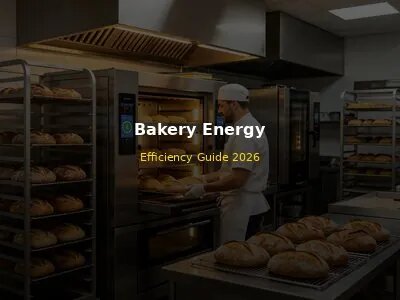
A story from our customer in Melbourne, Australia: "Our energy bills were killing us — $4,500 a month for electricity and gas. We knew we were wasting energy, but we didn't know where to start. We did a simple energy look over and found three big problems: our oven was running 20°C hotter than it should be (wasting 15% more energy), our lights were all old fluorescent tubes, and our walk-in cooler door had a broken seal that was letting cold air escape 24/7. We fixed all three for less than $2,000 — calibrated the oven (free), replaced 40 fluorescent tubes with LEDs ($800), and replaced the cooler door seal ($150). The result? Our energy bill dropped to $3,400 the next month — a $1,100/month savings. That's $13,200 a year, for a $950 investment. The payback period was less than one month. We've since invested in insulation, a heat recovery system, and programmable thermostats, and our energy bill is now $2,600/month — a 42% reduction from where we started. The lesson? Energy efficiency isn't about buying expensive new equipment — it's about finding and fixing the waste you already have. Start small, measure your results, and reinvest the savings."
Energy is one of the largest operating costs for a commercial bakery — typically 5-15% of total operating expenses, second only to labor. Ovens alone can consume 35-50% of a bakery's total energy. Yet many bakeries waste 20-40% of the energy they pay for through inefficient equipment, poor maintenance, bad practices, and lack of awareness.
Improving energy efficiency is one of the highest-ROI investments a bakery can make. Most energy efficiency improvements pay for themselves within 1-3 years, and some (like calibration and behavior changes) cost nothing and start saving immediately.If you're setting up a new bakery or upgrading your existing line, this is the most worth noting thing to get right. Skip the marketing hype and focus on these practical factors that actually figure out your equipment's performance.
1. Understanding Bakery Energy Consumption
Before You can reduce energy costs, You should understand where and how energy is used in your bakery.
1.1 Typical Energy Consumption by Bakery Size
| Bakery Size | Production Volume | Monthly Electricity Use | Monthly Energy Cost (est.) |
|---|---|---|---|
| Small bakery | 10-50 kg/day | 500-2,000 kWh | $75-$300 |
| Medium bakery | 50-500 kg/day | 2,000-15,000 kWh | $300-$2,250 |
| Large bakery | 500-5,000 kg/day | 15,000-50,000 kWh | $2,250-$7,500 |
| Industrial bakery | 5,000+ kg/day | 50,000+ kWh | $7,500+ |
Note: Costs estimated at $0.15/kWh. Gas-fired ovens add natural gas costs of $500-$5,000/month depending on size. Actual costs vary by location, energy rates, equipment, and production volume.
1.2 Energy Consumption by Equipment Type
| Equipment/System | % of Total Energy Use | Notes |
|---|---|---|
| Ovens | 35-50% | Single largest energy consumer. Gas or electric. |
| Mixers & dough processing | 10-15% | Spiral mixers, dividers, rounders, sheeters, moulder |
| Refrigeration & cooling | 10-20% | Walk-in coolers/freezers, reach-in refrigerators, display cases |
| HVAC & ventilation | 10-20% | Heating, cooling, exhaust fans, make-up air |
| Lighting | 5-10% | Production area, retail area, storage, parking |
| Water heating | 5-10% | Sanitation, cleaning, handwashing, dough water |
| Other | 5-10% | Compressors, small appliances, office equipment, electronics |
Important Insight: Ovens Are the #1 Target
Since ovens consume 35-50% of a bakery's total energy, improving oven efficiency has the biggest impact. Even a 10% improvement in oven efficiency can reduce your total energy bill by 3.5-5%. Start with oven calibration (free), then look at loading practices, maintenance, and eventually heat recovery or replacement.
2. Conducting an Energy look over
An energy look over is the first step in reducing energy costs. It identifies where energy is being used, where it's being wasted, and which improvements offer the best ROI.
2.1 Three Levels of Energy look overs
| Level | Description | Duration | Cost | Best For |
|---|---|---|---|---|
| Level 1: Walk-through | Quick visual checkion, spot obvious waste and quick wins | 1-2 hours | Free-$300 | Getting started, spoting quick wins |
| Level 2: Standard | Detailed analysis: utility bills, equipment inventory, measurements, ROI calculations | 1-2 days | $500-$3,000 | Most bakeries, complete savings plan |
| Level 3: Detailed | Engineering analysis, computer simulations, investment-grade analysis | 1-2 weeks | $3,000-$15,000 | Large facilities, major capital projects |
2.2 DIY Energy look over: 8 Steps
- Collect utility bills: Gather 12-24 months of electricity, gas, and water bills. Calculate average monthly use and cost. spot seasonal patterns and trends.
- Create equipment inventory: List all energy-using equipment — ovens, mixers, refrigerators, freezers, HVAC, lighting, water heaters. Note make, model, age, wattage/BTU, and daily hours of use.
- Calculate energy use by equipment: Estimate monthly energy use for each item (wattage × hours × days). spot the largest consumers.
- Walk through the bakery: Look for energy waste — doors open, equipment running when idle, leaks, poor insulation, outdated lighting, dirty equipment, broken seals.
- Measure temperatures: Check oven calibration, refrigerator/freezer temperatures, HVAC settings, water heater temperature.
- spot improvement opportunities: For each area of waste, spot a specific improvement with estimated cost, savings, and payback period.
- focus on improvements: Rank by ROI (payback period) and ease of put in placeation. Create an action plan.
- put in place and track: Start with highest-ROI improvements. Track energy use monthly to measure results.
Pro Tip: Check Your Utility Company
Many utility companies offer free or subsidized energy look overs for commercial customers, plus rebates for energy efficiency improvements (LED lighting, energy-efficient equipment, insulation, etc.). Contact your utility provider before paying for an look over or equipment — You can be eligible for hundreds or thousands of dollars in rebates that noticeably shorten your payback period.
3. Oven Efficiency: The Biggest Opportunity
Ovens are the single largest energy consumer in a bakery. Improving oven efficiency offers the greatest potential for energy savings.
3.1 Oven Energy-Saving Measures
| Measure | Cost | Energy Savings | Payback Period |
|---|---|---|---|
| Calibrate oven temperature | Free (own thermometer) | 5-15% | Immediate |
| Load ovens to full capacity | Free | 10-20% | Immediate |
| Keep oven doors closed | Free | 5-10% | Immediate |
| Replace door seals/gaskets | $50-$200 | 5-15% | 1-3 months |
| Regular maintenance (clean burners, check gas pressure) | $100-$500/year | 5-10% | 2-6 months |
| Install programmable controllers | $500-$3,000 | 5-15% | 6-18 months |
| Add oven insulation | $500-$2,000 | 5-15% | 6-18 months |
| Install heat recovery system | $2,000-$10,000 | 10-30% (on heating/hot water) | 1-3 years |
| Replace with energy-efficient oven | $10,000-$100,000 | 15-40% | 3-7 years |
3.2 Oven Calibration: The Free Energy Saver
Oven temperature drift is the most common — and most overlooked — cause of energy waste in bakeries. Oven thermostats can drift by 10-30°C over time. An oven running 20°C hotter than needed wastes 10-15% more energy, and also produces inconsistent baking results.
How to calibrate your oven:
- Buy a good-quality oven thermometer ($20-$50)
- Place the thermometer in the center of the oven
- Set the oven to 180°C (350°F) and let it preheat fully (20-30 minutes)
- Read the thermometer — if it shows 200°C, your oven is running 20°C hot
- Adjust the oven thermostat following the manufacturer's instructions (usually a screw on the thermostat knob or a calibration setting in digital models)
- Recheck after adjustment
- Repeat at multiple temperature settings (150°C, 180°C, 220°C)
- Calibrate monthly, or whenever you notice inconsistent baking
3.3 Oven Loading and Scheduling
How you load and schedule your ovens can noticeably affect energy use:
- Load to full capacity: Don't run a half-empty oven. A full oven uses only slightly more energy than a half-full one, but produces twice the product. Plan production to maximize oven loads.
- Batch similar products: Bake products with similar temperature and time requirements together to reduce changeover time and temperature adjustments.
- Preheat only when needed: Don't preheat the oven hours before you need it. Most ovens preheat in 15-30 minutes.
- Keep doors closed: Every time you open the oven door, the temperature drops 20-50°C and the oven has to work harder to recover. Use the oven light and window to check on products instead of opening the door.
- Use residual heat: Turn off the oven 5-10 minutes before the end of baking time — the residual heat will finish the job. This works especially well for products with long baking times.
- Schedule during off-peak hours: If your utility offers time-of-use rates, schedule heavy oven use during off-peak hours (typically nights and weekends) when electricity is cheaper.
3.4 Heat Recovery Systems
Ovens exhaust large amounts of hot air — typically 150-250°C. A heat recovery system captures this waste heat and uses it for:
- Space heating: Heat the bakery during cold months (reduces HVAC heating costs by 30-60%)
- Water heating: Preheat water for cleaning and sanitation (reduces water heating costs by 20-50%)
- Make-up air: Preheat incoming fresh air for ventilation (reduces HVAC costs)
- Proofing cabinet heating: Use waste heat to warm proofing cabinets
Heat recovery systems typically cost $2,000-$10,000 installed, and pay for themselves in 1-3 years through reduced heating and water heating costs. They're especially cost-effective in cold climates where heating is needed for many months of the year.
4. Lighting: Quick and High-ROI Savings
Lighting is one of the easiest and fastest areas to improve energy efficiency, with Some shortest payback periods.
4.1 LED Lighting Conversion
| Light Type | Wattage (100W equiv.) | Lifespan | Energy Use vs Incandescent |
|---|---|---|---|
| Incandescent | 100W | 1,000 hours | 100% (baseline) |
| Fluorescent (CFL) | 23W | 8,000 hours | 23% |
| LED | 15-18W | 25,000-50,000 hours | 15-18% |
LED lighting offers:
- 75-85% less energy than incandescent, 30-50% less than fluorescent
- 25-50 times longer lifespan than incandescent, 3-6 times longer than fluorescent
- Better light quality — brighter, more consistent, better color rendering
- Less heat output — reduces HVAC cooling load
- No mercury — safer and easier to dispose of
- Instant on — no warm-up time like fluorescent
- Dimmable — many LED fixtures are dimmable
LED ROI Example
If your bakery has 40 fluorescent tubes (40W each) running 12 hours/day, 30 days/month:
Current energy use: 40 × 40W × 12h × 30d = 576 kWh/month
At $0.15/kWh: $86.40/month = $1,037/year
Replace with LED tubes (18W each):
New energy use: 40 × 18W × 12h × 30d = 259 kWh/month
Cost: $38.88/month = $467/year
Annual savings: $570/year
Cost of 40 LED tubes: ~$400 ($10 each)
Payback period: $400 / $570 = 8.4 months
Plus: LED tubes last 3-6 times longer, so you save on replacement costs and labor too.
4.2 Additional Lighting Savings
- Occupancy sensors: Install motion sensors in storage rooms, restrooms, and offices — lights turn off automatically when no one is present. Savings: 20-50% in those areas. Cost: $20-$50 per sensor. Payback: 6-18 months.
- Daylight sensors: Install sensors that dim or turn off lights when natural light is sufficient. Savings: 20-40% near windows. Cost: $30-$100 per sensor. Payback: 1-2 years.
- Task lighting: Use focused task lighting at workstations instead of brightly lighting the entire space. Lower general lighting to 200-300 lux and add task lighting at 500-750 lux where needed.
- Natural light: Maximize natural light through windows, skylights, and light tubes. Keep windows clean and unobstructed.
- Light-colored surfaces: Paint walls and ceilings white or light colors — they reflect more light, reducing the amount of artificial light needed.
- Turn off lights: The simplest savings of all — turn off lights when not needed. Post reminders near light switches. Make it part of the closing checklist.
5. Refrigeration and Cooling Efficiency
Refrigeration typically consumes 10-20% of a bakery's energy. Improving refrigeration efficiency reduces energy costs and extends equipment life.
5.1 Refrigeration Energy-Saving Measures
| Measure | Cost | Energy Savings | Payback Period |
|---|---|---|---|
| Set correct temperatures | Free | 5-10% | Immediate |
| Keep doors closed | Free | 10-20% | Immediate |
| Clean condenser coils | Free (own brush/vacuum) | 5-15% | Immediate |
| Check/replace door seals | $20-$100 each | 10-25% | 1-6 months |
| Install strip curtains | $50-$300 each | 10-20% | 3-12 months |
| Defrost regularly | Free (labor) | 5-15% | Immediate |
| Organize contents | Free | 5-10% | Immediate |
| Replace with energy-efficient unit | $2,000-$20,000 | 15-40% | 3-7 years |
5.2 Important Refrigeration Practices
- Set correct temperatures: Refrigerator: 2-4°C (36-40°F). Freezer: -18°C (0°F) or colder. Every 1°C below necessary increases energy use by 2-3%. Use a separate thermometer to check — built-in thermometers can be inaccurate.
- Keep doors closed: Every time a walk-in cooler door is opened, cold air escapes and warm air enters. The compressor then has to work harder to remove the heat. Minimize door opening time — know what you need before opening the door. Keep frequently used items near the door.
- Clean condenser coils: Dirty condenser coils reduce heat transfer efficiency, causing the compressor to run longer and use more energy. Clean coils every 3-6 months with a brush or vacuum. This is one of the simplest and most effective maintenance tasks.
- Check door seals: Worn or damaged door seals let cold air escape 24/7. Test seals by closing a piece of paper in the door — if it pulls out easily, the seal needs replacement. Replace seals every 3-5 years or when damaged.
- Install strip curtains: Plastic strip curtains on walk-in cooler/freezer doors reduce cold air loss when the door is open by 70-90%. They cost $50-$300 per door and pay for themselves in 3-12 months.
- Defrost regularly: Frost buildup on evaporator coils reduces heat transfer and increases energy use. Defrost freezers regularly (or use auto-defrost). Don't let frost build up more than 6mm (1/4 inch).
- Don't overpack: Leave space between items for air circulation. Overpacking restricts airflow and reduces cooling efficiency. But don't underpack either — a full cooler is more efficient than an empty one (the cold mass helps maintain temperature).
- Allow air circulation around the unit: Don't push refrigerators/freezers against walls or stack items on top. Leave 10-15cm (4-6 inches) of clearance around the condenser for proper airflow.
- Keep hot food out: Don't put hot or warm food in the refrigerator — it raises the internal temperature and makes the compressor work harder. Cool food to room temperature first (or use an ice bath), then refrigerate.
- Regular maintenance: Check refrigerant levels, check for leaks, clean drains, lubricate fans, and check electrical connections annually by a qualified technician.
6. HVAC and Ventilation Efficiency
HVAC (heating, ventilation, and air conditioning) typically consumes 10-20% of a bakery's energy. Bakeries have unique HVAC challenges because ovens generate large amounts of heat and moisture.
6.1 HVAC Energy-Saving Measures
- Programmable thermostats: Set back temperatures during unoccupied hours. Reduce heating by 3-5°C at night and on weekends. Savings: 5-15%. Cost: $50-$200. Payback: 3-12 months.
- Regular filter changes: Dirty filters restrict airflow and reduce efficiency. Change filters every 1-3 months. Savings: 5-10%. Cost: $10-$50 per filter.
- Annual HVAC maintenance: Clean coils, check refrigerant levels, lubricate motors, check ducts, calibrate thermostats. Savings: 5-15%. Cost: $150-$500/year.
- Seal ductwork: Leaky ducts can waste 20-30% of heating/cooling energy. Seal ducts with mastic sealant or metal tape. Savings: 10-20%. Cost: $200-$1,000. Payback: 1-2 years.
- Heat recovery ventilation: Capture heat from exhaust air and use it to preheat incoming fresh air. Savings: 20-40% on ventilation heating. Cost: $2,000-$10,000. Payback: 1-3 years.
- Variable speed drives: Install variable speed drives (VSDs) on exhaust fans and HVAC motors to match speed to actual need. Savings: 20-50% on fan energy. Cost: $500-$3,000 per motor. Payback: 1-2 years.
- Use oven heat for space heating: In cold weather, use waste heat from ovens to heat the bakery instead of running the heating system. Install ductwork or fans to distribute oven heat.
- improve exhaust fan operation: Run exhaust fans only when needed (during cooking, not during cleanup). Use interlocked controls that turn on exhaust fans only when ovens are running.
- Insulate ducts and pipes: Insulate heating/cooling ducts and hot water pipes to reduce heat loss. Savings: 5-15%. Cost: $100-$1,000. Payback: 1-2 years.
- Zone heating/cooling: Heat or cool only occupied areas. Use separate thermostats for production, retail, storage, and office areas.
7. Insulation and Air Sealing
Insulation and air sealing are the foundation of energy efficiency. A well-insulated, tightly sealed building reduces the load on all heating and cooling systems.
7.1 Insulation Recommendations
| Area | Recommended R-Value (US) | Recommended Thickness | Typical Cost |
|---|---|---|---|
| Roof/ceiling | R-30 to R-49 | 20-30cm (8-12 inches) | $1,000-$5,000 |
| Walls | R-13 to R-21 | 9-15cm (3.5-6 inches) | $2,000-$10,000 |
| Floor (over unheated space) | R-19 to R-30 | 15-20cm (6-8 inches) | $1,000-$5,000 |
| Walk-in cooler walls | R-25 to R-30 | 10-15cm (4-6 inches) | Included in unit |
| Hot water pipes | — | 1-2cm (0.5-1 inch) foam | $50-$300 |
| Heating/cooling ducts | — | 2-5cm (1-2 inches) fiberglass | $200-$1,000 |
7.2 Air Sealing
Air leaks can account for 20-40% of heating and cooling energy use. Common air leak locations in a bakery include:
- Doors: Install weatherstripping and door sweeps. Use self-closing devices. Keep doors closed.
- Windows: Caulk and weatherstrip. Use double-glazed windows. Install window film.
- Loading docks: Install dock seals or shelters. Use strip curtains. Keep dock doors closed when not in use.
- Penetrations: Seal around pipes, wires, vents, and conduits with caulk or spray foam.
- Wall/ceiling joints: Seal gaps between walls and ceilings, around light fixtures, and at baseboards.
- Exhaust fans: Install backdraft dampers to prevent air leakage when fans are off.
How to find air leaks: On a windy day, hold a lit incense stick or tissue near potential leak locations — if the smoke/tissue moves, there's a leak. Or hire a professional to perform a blower door test, which measures overall building air leakage and identifies major leaks.
8. Equipment Maintenance and Efficiency
Well-maintained equipment uses less energy, lasts longer, and produces more consistent results. Regular maintenance is one of the most cost-effective energy efficiency measures.
8.1 Maintenance Energy-Saving Checklist
| Equipment | Maintenance Task | Frequency | Energy Impact |
|---|---|---|---|
| Ovens | Calibrate temperature, clean burners, check gas pressure, check door seals, clean exhaust | Monthly calibration; quarterly deep clean | 5-15% savings |
| Mixers | Lubricate bearings, check belt tension, clean motor vents, check gears | Monthly | 5-10% savings |
| Refrigerators/freezers | Clean condenser coils, check door seals, defrost, check temperatures, clean drains | Coils every 3-6 months; seals monthly | 5-15% savings |
| HVAC | Change filters, clean coils, check refrigerant, lubricate motors, check ducts | Filters monthly; annual service | 5-15% savings |
| Compressors | Check for leaks, change oil, clean filters, drain condensate | Monthly | 10-20% savings |
| All motors | Lubricate, clean vents, check bearings, check voltage | Quarterly | 5-10% savings |
| Conveyors | Lubricate chains, check belt tension, align belts, clean | Weekly | 5-10% savings |
8.2 Compressed Air Efficiency
If your bakery uses compressed air (for pneumatic equipment, cleaning, etc.), it can be a notable energy consumer — and a major source of waste. Compressed air systems are typically only 10-15% efficient, meaning 85-90% of the energy is lost as heat.
- Fix leaks: A single 3mm (1/8 inch) leak can waste $500-$1,000/year in electricity. Use ultrasonic leak detectors or soapy water to find leaks. Fix them immediately.
- Reduce pressure: Operate at the lowest pressure that equipment requires. Every 1 bar (14 psi) reduction saves 7-10% of compressor energy.
- Turn off when not needed: Don't run the compressor 24/7 if you only need it during production hours. Use automatic controls or timers.
- Maintain filters: Clogged air filters reduce efficiency and increase energy use. Change filters regularly.
- Recover heat: Compressors generate large amounts of heat — recover it for space heating or water heating.
- Use proper hose size: Undersized hoses and fittings cause pressure drops, forcing the compressor to work harder. Use the correct size for your equipment.
9. Water Heating Efficiency
Water heating typically accounts for 5-10% of a bakery's energy use. Bakeries use large amounts of hot water for cleaning, sanitation, handwashing, and dough preparation.
9.1 Water Heating Energy-Saving Measures
- Set water heater temperature: Set to 49-54°C (120-130°F) for general use. Higher temperatures waste energy and increase scalding risk. If you need higher temperatures for sanitation, use a booster heater at the dishwasher/sink instead of heating all water to high temperature.
- Insulate hot water pipes: Insulate the first 3 meters (10 feet) of hot water pipes from the water heater, and any pipes in unheated areas. Savings: 5-10% on water heating. Cost: $50-$200. Payback: 6-18 months.
- Insulate the water heater tank: If your water heater is warm to the touch, it's losing heat. Install an insulating blanket ($20-$50). Savings: 4-9%. Payback: 6-12 months. Note: Don't cover the thermostat, burner, or vent.
- Install low-flow fixtures: Low-flow faucets and showerheads reduce water use by 30-50%, which also reduces the energy needed to heat the water. Cost: $20-$100 per fixture. Payback: 3-12 months.
- Fix leaks: A hot water leak dripping 60 drops per minute wastes $30-$60/year in energy (plus water cost). Fix all leaks promptly.
- Use cold water when possible: Use cold water for cleaning floors, rinsing, and other tasks where hot water isn't necessary.
- Heat recovery from ovens: Use waste heat from ovens to preheat water. This can reduce water heating energy by 20-50%.
- Tankless water heaters: For new installations or replacements, consider tankless (on-demand) water heaters. They heat water only when needed, eliminating standby heat loss. Savings: 10-30% on water heating. Cost: $500-$3,000. Payback: 3-7 years.
- Solar water heating: In sunny climates, solar water heaters can provide 50-80% of hot water needs. Cost: $3,000-$10,000 (before rebates). Payback: 4-8 years (shorter with rebates).
10. Production Scheduling and Behavioral Changes
Not all energy savings require spending money. Changing production schedules and staff behavior can reduce energy use by 5-20% at no cost.
10.1 Production Scheduling Optimization
- Batch similar products: Group products with similar baking temperatures and times to reduce oven changeovers and temperature adjustments. Each time you change the oven temperature, it uses extra energy to heat up or cool down.
- Maximize equipment use: Run ovens, mixers, and other equipment at full capacity. A full oven uses only slightly more energy than a half-full one.
- Consolidate production hours: Instead of running equipment sporadically throughout the day, consolidate production into fewer, longer runs. This reduces startup/shutdown energy and allows equipment to operate at peak efficiency.
- Off-peak scheduling: If your utility offers time-of-use electricity rates (cheaper at night/weekends), schedule energy-intensive processes (oven baking, mixing) during off-peak hours. Savings: 10-30% on electricity costs.
- Preheat only when needed: Don't preheat ovens or proofing cabinets hours before use. Most ovens preheat in 15-30 minutes. Schedule preheating to finish just as the product is ready to go in.
- Use residual heat: Turn off ovens 5-10 minutes before the end of baking — residual heat finishes the job. Use oven residual heat for proofing or space heating after baking is done.
10.2 Staff Behavior and Energy Awareness
Staff behavior can account for 5-15% of energy waste. Train your team on energy-saving practices:
- Turn off equipment: Turn off ovens, mixers, lights, and other equipment when not in use. Don't leave equipment running during breaks or after hours. Create a closing checklist that includes turning off all equipment.
- Close doors: Keep refrigerator, freezer, and walk-in doors closed. Don't prop doors open. Close oven doors promptly.
- Report issues: Encourage staff to report equipment problems (strange noises, leaks, broken seals, temperature issues) immediately. Small problems become big energy wasters if ignored.
- Use equipment properly: Don't overload or underload equipment. Follow manufacturer instructions. Don't use equipment for tasks it wasn't designed for.
- Energy awareness training: Include energy efficiency in new employee orientation. Hold periodic energy awareness meetings. Share energy bill results with staff so they see the impact of their actions.
- Incentivize savings: Consider sharing a portion of energy cost savings with staff — e.g., if energy bills go down 10%, use 20% of the savings for a staff bonus or party. This creates buy-in and motivation.
11. Renewable Energy and Long-Term Solutions
For long-term energy savings and sustainability, consider renewable energy solutions.
11.1 Solar Power
Solar photovoltaic (PV) systems can noticeably reduce or remove electricity bills for bakeries with suitable roof space.
- System size: A typical commercial bakery needs a 20-100 kW solar system, depending on energy use. A 50 kW system produces ~6,000-8,000 kWh/month.
- Cost: $1,500-$3,000 per kW installed (before incentives). A 50 kW system: $75,000-$150,000.
- Incentives: Many countries offer tax credits, rebates, feed-in tariffs, or net metering that can reduce costs by 30-60%. Check local incentives.
- Payback period: 4-8 years (with incentives), 7-12 years (without incentives).
- Lifespan: 25-30 years (panels), 10-15 years (inverters).
- ROI: After payback, electricity is importantly free for the remaining 15-25 years of the system's life.
11.2 Other Renewable Options
- Solar water heating: As mentioned in section 9, solar water heaters can provide 50-80% of hot water needs. Especially cost-effective for bakeries with high hot water use.
- Green energy plans: Many utility companies offer green energy plans where you pay a small premium ($0.01-$0.03/kWh) to support renewable energy generation. No equipment investment needed.
- Renewable energy certificates (RECs): Purchase RECs to offset your energy use with renewable energy generation elsewhere. Cost: $0.005-$0.02/kWh.
- Biomass heating: In some areas, biomass boilers (burning wood pellets, agricultural waste) can be cheaper than gas or electric heating. Especially viable if You've access to low-cost biomass fuel.
- Heat pumps: Air-source or ground-source heat pumps can provide heating and cooling at 30-50% less energy than conventional systems. Good for moderate climates.
12. Measuring and Tracking Energy Use
You can't manage what you don't measure. Tracking energy use is fundamental for spoting savings opportunities, measuring progress, and maintaining gains.
12.1 Energy Tracking Methods
- Utility bill tracking: Record monthly electricity, gas, and water use and cost. Create a spreadsheet or use energy management software. Compare to previous months and years. Calculate energy cost per unit of production (e.g., $/kg of bread) to normalize for production volume changes.
- Submetering: Install submeters on major equipment (ovens, HVAC, refrigeration, lighting) to measure energy use by equipment type. This identifies the biggest consumers and targets for improvement. Cost: $100-$500 per submeter.
- Energy management software: Use software (e.g., EnergyCAP, Enel X, Schneider Electric EcoStruxure) to automatically collect, look at, and report energy data. Cost: $50-$500/month. Useful for larger facilities.
- Smart meters: If your utility offers smart meters, You can access real-time or interval energy data (15-minute, hourly, daily) to spot usage patterns and peak demand.
- Regular look overs: Conduct a Level 1 walk-through look over quarterly and a Level 2 standard look over annually to spot new opportunities and measure progress.
12.2 Important Performance Indicators (KPIs)
| KPI | Formula | Target |
|---|---|---|
| Energy cost per kg of product | Total energy cost ÷ total kg produced | Decrease 5-10%/year |
| Energy use per kg of product | Total kWh ÷ total kg produced | Decrease 5-10%/year |
| Oven energy efficiency | kWh per kg baked | 0.3-0.8 kWh/kg (varies by product) |
| Energy cost as % of revenue | Total energy cost ÷ total revenue × 100 | 3-8% (below industry average) |
| Peak demand | Highest kW during billing period | Reduce through scheduling |
| Energy savings achieved | (Baseline use - Current use) ÷ Baseline × 100 | 10-30% within 1-2 years |
Speak with Our Engineering Team
Not sure which machine is right for you? Send us a message with your daily production volume, the products you make, and your available space. We will get back to you within 24 hours with a personalized recommendation.
Get Energy-Efficient Equipment Quote →13. Conclusion: Start Saving Today
Energy efficiency is one of the highest-ROI investments a bakery can make. Most bakeries can reduce energy costs by 10-30% within 1-2 years, with some achieving 40% or more through complete improvements.
Here's a summary of the important takeaways:
- Start with an energy look over: Understand where energy is used and where it's wasted. Many utility companies offer free look overs.
- Focus on ovens first: Ovens consume 35-50% of energy. Calibrate temperatures (free), load efficiently, maintain regularly, and consider heat recovery.
- Convert to LED lighting: One of the fastest and highest-ROI improvements. 75% energy savings, 8-12 month payback.
- improve refrigeration: Set correct temperatures, keep doors closed, clean coils, replace seals, install strip curtains.
- Maintain equipment: Well-maintained equipment uses 5-15% less energy. Create and follow a maintenance schedule.
- Insulate and air seal: Reduce heating/cooling loads by 10-30%. Pay attention to roofs, walls, doors, and penetrations.
- improve production scheduling: Batch similar products, maximize equipment use, consider off-peak scheduling.
- Train staff: Behavior changes save 5-10% at no cost. Turn off equipment, close doors, report issues.
- Track energy use: Measure monthly, calculate KPIs, and celebrate progress. You can't manage what you don't measure.
- Consider renewable energy: Solar power, solar water heating, and green energy plans for long-term savings and sustainability.
Start with quick wins: Calibrate your oven (free), turn off equipment when not in use (free), replace inefficient light bulbs (low cost), and clean refrigerator coils (free). These four actions alone can reduce energy costs by 10-15% with little or no investment.
Then reinvest the savings: Use the money saved on energy bills to fund larger improvements — LED lighting conversion, insulation, heat recovery, programmable thermostats, and eventually energy-efficient equipment or solar panels.
Energy efficiency is a journey, not a destination. Start small, measure your results, and continuously improve. Within a year, you'll see noticeably lower energy bills, better equipment performance, and a more sustainable business.
The best time to start saving energy was yesterday. The second-best time is today.
📋 Bakery Equipment Checklist
Download our complete bakery equipment checklist with budget estimates for 5 different bakery types.
Free Bakery Equipment Checklist →📋 Bakery Equipment ROI Calculator
Use our interactive ROI calculator to see how quickly your bakery equipment investment pays off.
Calculate Your Equipment ROI →📋 Bakery Equipment Maintenance Calendar
Get our printable maintenance calendar to keep your bakery equipment running at peak performance.
Printable Maintenance Calendar →📋 Bakery Equipment Energy Cost Calculator
Estimate your bakery equipment energy costs and find ways to reduce your utility bills.
Calculate Energy Costs →Related Articles
Learn More
- 👉 Bakery Equipment Selection Complete Guide: Choose by Output & Product
- 👉 Bakery Equipment Maintenance Schedule: Daily, Weekly, Monthly, Yearly
- 👉 Dough Divider Rounder Troubleshooting: 15 Common Problems & Solutions
- 👉 Small Bakery Equipment ROI & Payback Period Calculator
- 👉 Bakery Equipment Energy Consumption & Energy Saving Guide
- 👉 Bakery Equipment Food Safety & Hygiene Compliance Complete Guide