
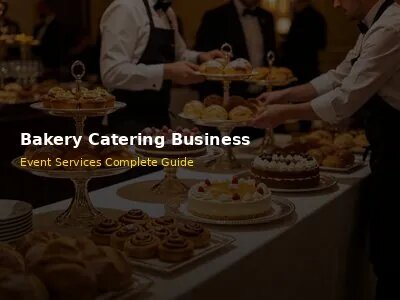
A story from our customer in Chicago, Illinois: "When we opened our neighborhood bakery in 2018, we focused fully on retail. We were busy, but revenue was capped by our store's capacity and profit margins were thin (15-20% net). Then in 2019, a regular customer who worked at a nearby office asked if we could cater breakfast for their team meeting. We said yes, even though we had no catering menu, no delivery vehicle, and no catering experience. We put together a platter of our pastries and muffins, delivered it in our personal car, and charged $120. That customer was so happy that they started ordering breakfast catering every week. Within 3 months, we had 5 corporate clients ordering weekly, generating $1,500-$2,500 per week in additional revenue with 40-50% profit margins. We invested in a used delivery van ($8,000), catering equipment ($2,000), and created a catering menu. By 2023, catering was 45% of our total revenue ($180,000/year) and our most profitable segment. The important lessons: start small (one platter in a personal car), focus on corporate breakfast catering first (most profitable, recurring, low-complexity), price correctly (reason in ALL costs + 40% profit margin), build recurring corporate clients (foundation of stable revenue), invest in reliable delivery and presentation equipment, and provide Great service (generates referrals and repeat business). Catering transformed our bakery from a struggling retail shop with thin margins to a profitable, growing business. If You're a bakery owner and You're not doing catering, You're leaving the most profitable segment of your business on the table. Start small, start today."
Bakery catering is one of the most profitable and fastest-growing segments of the bakery industry. While retail sales are capped by your physical store's capacity and foot traffic, catering allows you to use your existing production capacity, equipment, and staff to generate real additional revenue with higher profit margins. A single corporate catering order can equal 20-50 retail transactions in revenue, and catering profit margins (35-55% net) are typically double retail margins (15-25%). For many successful bakeries, catering eventually becomes 30-60% of total revenue and the primary driver of profitability.
Catering also provides benefits beyond direct revenue: it builds B2B relationships with corporate clients who become recurring customers (providing stable, predictable revenue), exposes your products to dozens or hundreds of new potential customers at each event (powerful marketing and brand exposure), uses off-peak production capacity (reducing waste and improving efficiency), and smooths out seasonal retail fluctuations (corporate catering is steady year-round, holiday catering peaks when retail may be slow). For bakeries looking to grow revenue and improve profitability, catering is the single highest-impact opportunity.
However, starting and growing a profitable catering business requires more than just baking good products. It requires strategic service selection, accurate pricing (the #1 reason catering businesses fail is underpricing), effective marketing and sales, efficient operations and logistics, proper equipment and transportation, legal compliance and insurance, rigorous quality control, and Great customer service. A poorly managed catering business can actually lose money and damage your reputation (a catering disaster at a wedding or corporate event can have lasting negative consequences).Most bakery owners don't realize how much money they're losing until they look over their equipment. Here's what we've learned from working with bakeries across 27 countries. Whether You're just Given adding catering to your bakery or looking to grow an existing catering operation, this bakery catering business guide will help you build a profitable, sustainable catering business.
When it comes to bakery catering, choosing the right equipment is crucial for bakery success. HNH Bakery Equipment provides professional bakery catering solutions for bakeries worldwide. In this guide, we explore everything you need to know about bakery catering and how to select the best equipment for your bakery.
1. Why Bakery Catering is Profitable
Before diving into the how-to, let us establish why bakery catering is such a profitable opportunity and why every bakery should consider adding catering services:
1.1 Higher Average Order Value
Catering orders are typically $200-$2,000+ (vs. $10-$30 for average retail orders), meaning each catering customer generates noticeably more revenue. A single corporate breakfast catering order can equal 20-50 retail transactions in revenue. Wedding cakes and dessert tables are often $500-$5,000+ per order. This high average order value means You can generate large revenue with relatively few catering customers - You don't need hundreds of catering clients to build a large catering business. 10-20 recurring corporate clients plus 5-10 wedding/custom cake clients per month can generate $10,000-$30,000+ per month in catering revenue.
1.2 Better Profit Margins
Catering typically has higher profit margins (35-55% net profit) than retail (15-25%) because:
- Advance planning reduces waste: Catering orders are placed in advance (days or weeks ahead), allowing you to plan production precisely and purchase only the ingredients you need. Retail production requires guessing demand, causing overproduction and waste (a major cost for bakeries). Catering waste is typically 2-5% vs. 10-20% for retail.
- Efficient batch production: Catering orders are produced in batches, which is more efficient per unit than producing individual retail items throughout the day. Batch production reduces labor time per unit and improves consistency.
- Premium pricing: Customers are willing to pay a premium for catering (20-50% more per item than retail) because it links to special events and convenience (delivery, setup, professional presentation). You can also charge delivery and setup fees.
- Lower per-transaction labor: One $1,000 catering order takes noticeably less labor per dollar than 100 $10 retail orders (each requiring individual customer interaction, payment processing, and packaging). Catering labor is concentrated in production and delivery, with minimal per-customer service time.
1.3 Predictable Revenue and Scheduling
Catering orders are placed in advance, allowing you to forecast revenue, plan production, schedule staff, and purchase ingredients efficiently. Unlike retail foot traffic (which is unpredictable and varies day to day), catering revenue is known in advance. This predictability allows for better business planning, cash flow management, and labor scheduling. You can also schedule catering production during off-peak hours (early mornings, midday, weekdays) when your retail operation is slower, using idle capacity.
1.4 uses Off-Peak Capacity
Most bakeries have excess production capacity during off-peak hours: early mornings before retail opens (your ovens and mixers are already running for retail production, so adding catering production adds minimal incremental overhead), midday after the morning rush (retail slows down, but your kitchen and staff are available), and weekdays when retail is typically slower than weekends. Catering allows you to use this idle capacity to generate additional revenue without meaningful additional overhead - your rent, utilities, equipment, and base staff are already paid for. This makes catering incremental revenue highly profitable (margins on incremental catering production can be 50-70% because overhead is already covered by retail).
1.5 Recurring Corporate Revenue
Corporate catering clients (offices, corporate events, meeting planners, co-working spaces) often become recurring customers: weekly breakfast meetings, monthly team lunches, quarterly all-hands meetings, annual holiday parties, and client entertainment events. A single corporate client can generate $5,000-$50,000+ per year in recurring catering revenue. Building a base of 5-10 recurring corporate clients provides a stable, predictable revenue stream that smooths out seasonal retail fluctuations and reduces dependence on walk-in retail traffic. Recurring corporate clients also require less marketing and sales effort over time (they order automatically, often with minimal communication).
1.6 Marketing and Brand Exposure
Catering events expose your products to dozens or hundreds of new potential customers at once: wedding guests (100-300 people), corporate employees (20-200 people), event attendees, and meeting participants. A great catering spread at a wedding or corporate event can generate many new retail customers and referrals (guests ask "where did you get these Great pastries?" and become customers). Catering is importantly a marketing expense that also generates revenue - you get paid to showcase your products to new audiences. Wedding catering in particular provides powerful visual marketing (photos of your cake/dessert table in wedding albums and social media) that can generate inquiries for years.
| Metric | Retail Bakery | Bakery Catering |
|---|---|---|
| Average Order Value | $10-$30 | $200-$2,000+ |
| Net Profit Margin | 15-25% | 35-55% |
| Revenue Predictability | Low (depends on foot traffic) | High (orders placed in advance) |
| Production Waste | 10-20% (demand guessing) | 2-5% (planned production) |
| Recurring Revenue Potential | Low (walk-in customers) | High (corporate weekly/monthly orders) |
| Marketing Exposure per Order | 1 customer | 20-300+ event attendees |
| Capacity Use | Peak hours only | Off-peak hours (idle capacity) |
| Customers Needed for $10K/month | 350-1,000+ customers | 5-50 catering orders |
2. Most Profitable Bakery Catering Services
Not all catering services are equally profitable. The most profitable bakery catering services combine high demand, good margins, efficient production, premium pricing, and low complexity. Start with the simplest, highest-margin services and gradually expand. Here are the most profitable bakery catering services, ranked by profitability and demand:
2.1 Corporate Breakfast and Brunch Catering (#1 Most Profitable)
Corporate breakfast catering is the most profitable and consistent catering service for bakeries. It should be the foundation of any bakery catering business.
- Why it is profitable: High demand (offices have weekly/monthly meetings, team events, client visits, training sessions), predictable recurring revenue (many corporate clients order weekly or monthly), efficient production (breakfast items - pastries, muffins, croissants, breakfast sandwiches, fruit platters, coffee - are your core products, already being produced for retail), premium pricing (corporate clients are less price-sensitive, willing to pay for convenience and quality), low delivery complexity (typically office delivery, simple setup, no on-site service needed), and high margins (35-55% net profit).
- Typical offerings: Breakfast pastry platters (assorted croissants, muffins, danishes, scones - $8-$12/person), full hot breakfast (breakfast sandwiches, quiches, frittatas, oatmeal, fruit - $12-$20/person), continental breakfast (pastries, fruit, yogurt, granola, coffee/juice - $10-$16/person), brunch platters (for weekend corporate events - $15-$25/person), coffee and beverage service ($2-$8/person).
- Minimum order: $50-$150 (ensures profitability after delivery and setup costs).
- Delivery: Usually simple office drop-off or basic setup (arrange platters, set out coffee). No servers or on-site staff needed for most orders.
- How to get started: Create a simple corporate breakfast catering menu (3-5 package options at different price points), print catering menus and business cards, visit local office buildings and businesses to introduce your catering services, offer a first-order discount to trial clients, and deliver Great service to convert trial clients into recurring weekly orders.
2.2 Dessert and Pastry Platters (High Profitability)
Dessert platters are highly profitable and versatile - appropriate for corporate meetings, birthdays, office parties, weddings, funerals, school events, and celebrations.
- Why it is profitable: Simple to produce (batch production of your existing products - cookies, brownies, bars, mini pastries, cake slices, fruit tarts), easy to transport and present (platters, no on-site service), high perceived value (beautiful dessert tables impress guests), premium pricing, broad demand (appropriate for almost any event type), and high margins (40-60% net profit - desserts have lower food cost than savory items).
- Typical offerings: Cookie platters (assorted cookies - $3-$6/person), brownie/bar platters ($4-$7/person), mini pastry platters (mini croissants, tartlets, eclairs - $5-$10/person), assorted dessert platters (mix of cookies, brownies, pastries, fruit - $6-$12/person), cake slice platters ($5-$9/person), fruit tarts ($4-$8/person), custom dessert tables (for weddings/events - $8-$20/person).
- Minimum order: $30-$75.
- Presentation tip: Invest in attractive serving platters and arrange desserts artfully (vary heights, colors, textures). A beautifully presented dessert platter commands a 20-30% premium over the same items in a plain box.
2.3 Custom Celebration Cakes (High Profitability)
Custom cakes for birthdays, anniversaries, graduations, corporate events, baby showers, and other celebrations are high-margin products and a core catering/order service.
- Why it is profitable: Premium pricing (custom cakes command $50-$500+ depending on size and complexity), high margins (40-60% net profit - ingredients are a small percentage of price, value is in design, skill, and artistry), existing capability (you already make cakes), strong word-of-mouth marketing (custom cakes generate referrals and social media exposure - people share cake photos), and broad year-round demand (celebrations happen every week).
- Typical offerings: Birthday cakes (children and adult - $50-$300), anniversary cakes ($60-$350), graduation cakes ($50-$250), corporate logo cakes ($100-$500), baby shower cakes ($60-$300), gender reveal cakes ($50-$200), sculpted/3D cakes ($150-$1,000+), cupcake cakes/pull-apart cakes ($40-$200).
- Pricing: $3-$8/serving for basic buttercream cakes, $8-$15/serving for fondant cakes, $15-$30+/serving for go into detail sculpted/3D designs. Minimum order: $35-$75.
- Important to success: Build a portfolio of cake photos (for your website and social media), offer a consultation process (flavor tasting, design discussion), require a deposit (50% is standard) to secure the order, and set clear order deadlines (1-2 weeks for basic cakes, 3-4 weeks for go into detail designs).
2.4 Wedding Cakes and Dessert Tables (Quite High Profitability, Higher Complexity)
Wedding cakes and dessert tables are high-ticket, high-margin catering services. They require more complex service but generate large revenue and powerful marketing exposure.
- Why it is profitable: Quite high average order value ($500-$5,000+ per wedding), premium pricing (wedding clients are willing to pay noticeably more for their special day), high margins (40-60% net profit), strong marketing exposure (wedding guests become potential customers, wedding photos generate social media exposure and inquiries for years), and referral business (happy brides refer friends and family).
- Typical offerings: Wedding cakes (multi-tiered, custom design - $5-$15+/serving, $500-$5,000+ total), dessert tables/bars (assorted desserts, cookies, cupcakes, pastries - $8-$20/person), cupcake towers ($3-$6/cupcake), donut walls ($2-$4/donut), macaron towers ($2.50-$4/macaron), s'mores stations ($8-$15/person), groom's cakes ($100-$400), wedding favors (cookies, macarons, mini cakes - $2-$8/person).
- Higher complexity: Requires tastings and consultations (1-2 hours per bride), coordination with wedding planners and venues, delivery and setup at venue (often with specific timing), higher stakes/pressure (no room for error on someone's wedding day), and seasonal demand (peaks May-October, slower November-April).
- Important to success: Build a strong wedding portfolio, list your business on wedding directories (The Knot, WeddingWire, Zola), attend bridal shows, offer complimentary tastings (with a deposit that applies to the order), provide detailed contracts (including delivery, setup, design, flavor, and cancellation policies), and invest in reliable delivery and setup equipment.
2.5 Boxed Lunches and Individual Meals (High Profitability, Growing Demand)
Boxed lunches and individual meal boxes are increasingly popular for corporate meetings, conferences, training sessions, and events. Post-pandemic, individual boxed meals are often preferred over shared platters for hygiene and individual preference.
- Why it is profitable: Growing demand (corporate clients increasingly prefer individual meals), efficient production (assembly-line production - make 50 identical boxes efficiently), easy delivery and distribution (individual boxes, no setup needed - just drop off), predictable pricing, recurring corporate clients, and good margins (30-45% net profit).
- Typical offerings: Sandwich/wrap boxed lunches (sandwich/wrap, side salad or chips, dessert, drink - $12-$20/box), salad bowls ($11-$18/box), grain bowls ($12-$20/box), breakfast boxes (breakfast sandwich, pastry, fruit, coffee - $10-$16/box), vegan/gluten-free options ($13-$22/box), kids' meals (for school events - $6-$10/box).
- Minimum order: 10-20 boxes (ensures efficiency and profitability).
- Important to success: Offer 3-5 standard boxed lunch options (makes production and ordering simple), clearly label each box (contents, name/company, dietary info), offer dietary alternatives (vegetarian, vegan, gluten-free), and ensure reliable on-time delivery (boxed lunches are often time-sensitive for meetings).
2.6 Holiday and Seasonal Catering (High Profitability, Seasonal Peaks)
Holiday catering generates meaningful peak revenue and is highly profitable. It uses seasonal demand and advance ordering.
- Why it is profitable: Peak demand (customers order in bulk for holiday gatherings - Thanksgiving, Christmas, Easter, Valentine's Day, Mother's Day, Father's Day, July 4th, Halloween), premium pricing (holiday items command premium prices), advance orders (allowing efficient production planning and ingredient purchasing), high volume (holiday catering can double or triple weekly revenue in peak weeks), and strong customer loyalty (holiday customers often return year after year).
- Typical offerings by holiday: Thanksgiving: pies (pumpkin, apple, pecan, sweet potato - $18-$35/pie), dinner rolls, breads, cookie platters, dessert platters. Christmas: cookie platters/boxes, yule logs/Buche de Noel, fruitcakes, stollen, panettone, gingerbread houses, holiday cakes, breakfast pastries for Christmas morning. Easter: hot cross buns, lamb cakes, carrot cakes, spring pastries, brunch platters. Valentine's Day: chocolate-covered strawberries, heart-shaped cakes/cookies, macarons, dessert boxes for two. Mother's Day: brunch platters, flower-shaped pastries, cakes, tea sets. July 4th: red/white/blue desserts, flag cakes, picnic platters, cupcakes.
- Important to success: Start marketing holiday catering 4-6 weeks in advance (email, social media, website, in-store signage), set clear order deadlines (1-2 weeks before the holiday), offer pre-order discounts to encourage early ordering (helps with production planning), limit menu to your best-selling holiday items (don't overcomplicate), schedule extra staff and production time for peak weeks, and ensure reliable pickup/delivery logistics (holiday weeks are busy - have an organized pickup system).
2.7 Bread and Pastry Wholesale to Cafes/Restaurants (Recurring, Stable, Moderate Margins)
While not traditional 'catering,' wholesale supply of bread and pastries to local cafes, coffee shops, restaurants, hotels, and offices is a profitable recurring revenue stream that many bakeries overlook.
- Why it is profitable: Predictable recurring orders (weekly standing orders - cafes need fresh bread/pastries every day/week), large volume (wholesale orders are typically 20-100+ items per delivery), efficient batch production (produce large quantities at once), stable long-term relationships (wholesale clients often stay for years), and uses early morning production capacity (wholesale delivery is typically 5-7 AM, before retail opens).
- Margins: Lower than retail/catering (20-35% net profit) because wholesale pricing is discounted (typically 50-60% of retail price), but volume and predictability compensate. A wholesale client ordering $500/week at 30% margin generates $750/month profit - with minimal marketing and service effort.
- Typical offerings: Artisan breads (sourdough, baguettes, ciabatta, whole wheat - for cafes/restaurants to serve), pastries (croissants, muffins, danishes, scones - for coffee shops), dessert items (cookies, brownies, cake slices - for restaurants/cafes), custom private-label products (branded with the cafe's name/logo).
- Important to success: Offer consistent quality and reliable early-morning delivery (cafes need products by 6-7 AM), provide volume-based pricing tiers, offer credit terms (net-15 or net-30) for established clients, sign annual contracts with minimum order guarantees, and build relationships with cafe owners/chefs (visit them, bring samples, understand their needs).
2.8 Services to Way Cautiously (Lower Profitability or Higher Risk)
- Full-service plated dinner catering: Requires kitchen staff, servers, rental equipment (tables, chairs, linens, china), on-site cooking, and complex logistics. Much more complex and lower margins than bakery-focused catering. Only consider if You've large catering experience and staff.
- Off-site cooking/action stations: Requires portable cooking equipment, skilled on-site staff, higher liability (open flames, food safety at off-site locations), and additional permits. High risk for food safety issues.
- Bar/alcohol service: Requires liquor license, bartenders, additional insurance and liability, and compliance with alcohol regulations. Complex and high-risk - not a natural extension of a bakery.
- Large-scale event catering (500+ guests): Requires real production capacity, staff, equipment, and logistics. Higher risk if something goes wrong (feeding 500 people is high-pressure). Build up to large events gradually after establishing systems and capacity.
- On-site serving staff for all events: Adding servers/staff increases labor costs and complexity (scheduling, training, payroll, liability). For most bakery catering (corporate breakfast, dessert platters, boxed lunches), drop-off delivery with basic setup is sufficient and more profitable. Reserve on-site service for high-ticket events (weddings, large corporate events) where You can charge enough to cover staff costs.
Recommended Catering Portfolio for Most Bakeries
Start with the simplest, highest-margin services and gradually expand. An optimal catering portfolio for a growing bakery:
60% Corporate breakfast/lunch + dessert platters (recurring, high-margin, low-complexity - the foundation of your catering business)
20% Custom celebration cakes + wedding cakes (high-ticket, high-margin, strong marketing exposure)
15% Holiday/seasonal catering (peak revenue, advance ordering, high volume)
5% Other (boxed lunches, beverage service, dessert stations, wholesale - expand as capacity allows)
Start with corporate breakfast platters and dessert platters (the easiest to launch with your existing products and equipment), add custom cakes (you already make cakes), then gradually add wedding catering, boxed lunches, and holiday catering as you build capacity, reputation, and systems. Do not try to offer everything at once - focus on doing a few services exceptionally well before expanding.
3. How to Price Bakery Catering Correctly
Pricing is the #1 reason in catering profitability - and the #1 reason catering businesses fail. Underpricing causes working harder for less money (or losing money on every order), while overpricing drives customers to competitors. The important is to price from ALL your costs (ingredients, labor, overhead, delivery, equipment) plus a target profit margin - not from what you think customers will pay, what competitors charge, or emotional 'I feel bad charging that much' pricing.
3.1 Step-by-Step Cost-Plus Pricing Method
Step 1: Calculate food cost (cost of ingredients). For each catering item, calculate the exact cost of all ingredients: flour, butter, sugar, eggs, yeast, fillings, toppings, packaging, serving platters, etc. Be precise - weigh ingredients and calculate cost per unit (per cookie, per croissant, per slice of cake). Include all ingredients, even small ones (vanilla extract, salt, spices) - they add up. Food cost should typically be 20-30% of the selling price for bakery items. Also include a 5-10% waste allowance (trim, overproduction, spoilage).
Step 2: Calculate labor cost. Labor is often the largest cost in catering (25-35% of revenue). Calculate labor for each catering order:
- Production labor: hours spent baking/preparing (multiply by fully loaded hourly wage - base wage + payroll taxes + benefits, typically $15-$25/hour for bakers, $12-$18 for prep staff)
- Assembly/packaging labor: hours spent assembling platters, packaging, labeling
- Delivery labor: hours spent loading, driving, unloading, setup (multiply by driver wage + vehicle costs)
- Administrative/communication labor: hours spent on client communication, consultations, quotes, invoicing (typically 5-10% of total labor)
Be realistic about labor time - catering often takes more labor than you estimate (setup, delivery, communication all add up). Track actual hours for each catering order and adjust your estimates over time.
Step 3: Calculate overhead costs. Overhead includes all the costs of running your bakery that are not directly tied to a specific order: rent/mortgage, utilities (gas, electric, water), equipment depreciation and maintenance, insurance (general liability, property, workers comp, catering liability), permits and licenses, marketing, website, software (POS, accounting, scheduling), cleaning supplies, smallwares, and administrative costs. Calculate your monthly overhead, then allocate a portion to each catering order from labor hours or revenue. A simple method: overhead rate = monthly overhead / monthly total labor hours. Multiply the catering order's total labor hours by the overhead rate.
Step 4: Calculate delivery and equipment costs. Catering has additional costs beyond retail:
- Vehicle costs: fuel, maintenance, insurance for delivery vehicle ($0.50-$1.00 per mile is a standard rate)
- Transport equipment: insulated bags, catering racks, coolers (depreciation + cleaning)
- Serving equipment: platters, trays, chafing dishes, serving utensils, display stands (depreciation + cleaning + replacement of lost/damaged items)
- Disposables: plates, napkins, utensils, cups, labels, menu cards (if provided)
- Setup/teardown: labor for on-site setup and cleanup (already counted in labor, but ensure it is included)
Many bakeries charge a separate delivery/setup fee ($25-$100+ depending on distance and complexity) Plus to food costs. This is appropriate and expected by customers.
Step 5: Add your target profit margin. After calculating all costs (food + labor + overhead + delivery/equipment), add your target profit margin. For bakery catering, a healthy net profit margin is 25-40% (after all costs). This is higher than retail (15-25%) because catering has higher average order value and more efficient production. Formula: Selling Price = Total Costs / (1 - Target Profit Margin). Example: Total costs = $362, target margin = 30%, Selling Price = $362 / 0.70 = $517 (round to $525 or $500 for competitive pricing).
3.2 Pricing Example: Corporate Breakfast Platter
| Cost Part | Calculation | Amount | % of Price |
|---|---|---|---|
| Food cost (ingredients + packaging + 5% waste) | 24 pastries x $1.20 + fruit $8 + platter $5 + waste $3 | $44.80 | 22.4% |
| Production labor | 2.5 hours x $20/hour (fully loaded) | $50.00 | 25.0% |
| Assembly/packaging labor | 0.5 hours x $15/hour | $7.50 | 3.8% |
| Delivery/setup labor | 1 hour x $18/hour | $18.00 | 9.0% |
| Admin/communication labor | 0.3 hours x $20/hour | $6.00 | 3.0% |
| Overhead allocation | 4.3 total labor hours x $10/hour overhead rate | $43.00 | 21.5% |
| Delivery/equipment costs | 10 miles x $0.75/mile + equipment $5 | $12.50 | 6.3% |
| Total Costs | $181.80 | 90.9% | |
| Target Profit (30%) | $181.80 / 0.70 - $181.80 | $77.90 | 29.1% |
| Selling Price | Round to standard menu price | $200.00 | 100% |
This breakfast platter (serves 12-15 people) priced at $200 generates $77.90 net profit (39% margin) - far more profitable than selling the same 24 pastries individually at retail ($3 each = $72 revenue, $18 profit at 25% margin). This shows the power of catering pricing.
3.3 Standardized Catering Menus and Pricing
The most efficient way to price and sell catering is to create standardized catering menus with set prices (per person, per platter, per item) rather than custom-quoting every order. This saves time, ensures consistent pricing, and makes it easy for customers to order. Examples of standardized pricing:
- Breakfast pastry platter (serves 10-12): $85-$120
- Full breakfast (per person): $14-$20
- Continental breakfast (per person): $10-$16
- Dessert platter (serves 15-20): $60-$100
- Custom cake: $3.50-$8/serving (buttercream), $8-$15/serving (fondant), $15+/serving (sculpted)
- Wedding cake: $5-$15+/serving
- Boxed lunch: $12-$20/box
- Delivery fee: $25 (within 10 miles), $35 (10-20 miles), custom quote (20+ miles)
- Setup fee: $25-$75 (for events requiring on-site setup/servers)
For custom orders (wedding cakes, custom dessert tables, special events), provide detailed quotes from the cost-plus method above. Always require a deposit (50% is standard for custom orders and weddings) to secure the order and cover initial ingredient costs.
3.4 Common Pricing Mistakes to Avoid
- Underpricing labor: The #1 mistake is underestimating labor time (production, delivery, setup, communication). Track actual hours for each catering order and adjust pricing So.
- Forgetting overhead: Many bakeries price catering based only on food + labor, forgetting to allocate overhead (rent, utilities, insurance, equipment). This means catering orders appear profitable but are actually losing money after overhead.
- Competing on price: Trying to be the cheapest caterer causes low margins, high stress, and attracting price-sensitive customers who are the most demanding. Compete on quality, presentation, reliability, and service instead.
- No minimum order: Taking small catering orders ($20-$30) is rarely profitable after delivery, setup, and communication costs. Set a reasonable minimum order ($50-$150).
- No delivery/setup fee: Including free delivery/setup for all orders erodes profitability. Charge a reasonable delivery/setup fee, especially for orders beyond a certain distance or requiring on-site setup.
- Emotional pricing: Pricing from 'I feel bad charging that much' or 'this customer is a friend' causes underpricing. Use a consistent pricing formula for all customers (You can offer occasional discounts for loyal customers or referrals, but base price should always cover costs + profit).
- Not adjusting for inflation: Ingredient costs, labor costs, rent, and fuel all increase over time. look over and adjust catering pricing every 3-6 months to maintain profit margins.
- Not accounting for waste and spoilage: Catering production generates some waste (trim, overproduction, spoilage). Reason in a 5-10% waste allowance in food costs.
Pricing Golden Rule
Always calculate your true costs (food + labor + overhead + delivery/equipment) and add 25-40% profit margin. Never price from emotion, competition, or guesswork. If a customer says your price is too high, that is okay - pricing correctly means some customers will choose cheaper options, but the customers you do get will be profitable and You'll not lose money on every order. A $500 order at 35% margin ($175 profit) is far better than a $500 order at 5% margin ($25 profit) or a loss. Price for profit, not for volume.
4. Marketing and Sales: How to Find and Win Catering Clients
Even the best-priced, highest-quality catering business will fail without effective marketing and sales. Finding and winning catering clients requires a systematic way - it is not enough to wait for customers to ask about catering. You've to proactively market your catering services and build relationships with potential clients. Here are the most effective marketing and sales strategies for bakery catering:
4.1 Corporate Client Acquisition (Highest Priority)
Corporate clients are the most valuable catering clients because they provide recurring, predictable, high-margin revenue. Here is how to find and win corporate catering clients:
- spot target companies: Make a list of local businesses and organizations that regularly order catering: office buildings (10+ employees), corporate headquarters, tech companies, law firms, accounting firms, medical offices, co-working spaces, government offices, nonprofits, universities, and schools. Focus on companies within a 10-15 mile delivery radius. Use Google Maps, LinkedIn, and local business directories to build your list.
- Door-to-door visits (most effective): Visit target companies in person (Tuesday-Thursday, 9-11 AM or 1-3 PM when offices are staffed but not in peak meetings). Bring a sample platter (4-6 pastries) and catering menus/business cards. Ask to speak with the office manager, admin assistant, or person in charge of ordering food/meetings. Introduce your bakery, leave samples and menus, and ask if they order catering for meetings/events. Follow up with an email and phone call 2-3 days later. Personal visits with samples are the #1 most effective way to win corporate catering clients - people who taste your products are much more likely to order.
- First-order discount/trial offer: Offer a first-order discount (15-20% off) or a free trial platter (for qualified companies) to encourage companies to try your catering. The goal is to convert trial orders into recurring weekly/monthly orders. A $100 first-order discount is a worthwhile investment if it converts to a $500/month recurring client ($6,000/year revenue).
- Build relationships with office managers/admins: Office managers and administrative assistants are the important decision-makers for corporate catering. Build relationships with them: remember their names and preferences, provide Great service (on-time delivery, accurate orders, quick response to requests), occasionally bring small treats/samples when delivering, and send holiday cards/gifts. A good relationship with an office manager can lead to years of recurring catering orders and referrals to other companies.
- LinkedIn outreach: Connect with office managers, admin assistants, event planners, and HR managers at target companies on LinkedIn. Send a personalized message introducing your bakery catering services and offering a first-order discount. LinkedIn is less effective than in-person visits but allows you to reach companies You can't visit in person.
- Email marketing to corporate prospects: Build an email list of corporate prospects (from your visits, LinkedIn, and study) and send periodic catering promotions: new menu items, seasonal offerings, holiday catering reminders, and first-order discounts. Keep emails concise and visual (include photos of your catering spreads).
- Referral program: Offer existing corporate clients a referral incentive (e.g., 'Refer another office and get $50 off your next catering order') to encourage word-of-mouth referrals. Corporate clients often know other office managers and admins who order catering - referrals are highly effective because they come with trust.
- List on corporate catering platforms: List your bakery on corporate catering platforms like ezCater, CaterCow, or Fooda. These platforms connect businesses with local caterers and can generate orders, especially for companies that use these platforms for their catering procurement. Note: these platforms charge commissions (10-20%), so reason that into your pricing.
4.2 Wedding and Social Event Client Acquisition
- Wedding directory listings: List your bakery on wedding directories like The Knot, WeddingWire, Zola, and Wedding Spot. These directories are where brides search for wedding vendors. Create a complete profile with photos of your wedding cakes/dessert tables, pricing information, service area, and look overs. Encourage past wedding clients to leave look overs (look overs are important for wedding directory visibility and conversion).
- Bridal shows and wedding expos: Participate in local bridal shows and wedding expos. Set up a booth with a beautiful display of your wedding cakes/dessert tables, samples, brochures, and business cards. Bridal shows allow you to meet dozens of engaged couples in person and showcase your products. Follow up with leads promptly (within 2-3 days) with a personalized email and offer a complimentary tasting.
- Build a wedding portfolio: Invest in professional photography of your wedding cakes and dessert tables (at actual weddings or styled shoots). A strong portfolio is the #1 reason in winning wedding clients - brides choose cake bakers from portfolio quality. Post wedding photos on your website, social media, and wedding directories. Tag wedding venues, planners, and photographers in social media posts (they may share your content with their audiences).
- Build relationships with wedding vendors: Build relationships with other wedding vendors: wedding planners, venue coordinators, photographers, florists, and DJs. These vendors regularly refer brides to cake bakers and dessert caterers. Meet them in person, bring samples, list each other on preferred vendor lists, and refer business to each other. A strong referral network of wedding vendors can generate a steady stream of wedding inquiries.
- Social media marketing: Post wedding cake and dessert table photos regularly on Instagram, Facebook, and Pinterest (Pinterest is especially important for weddings - brides search Pinterest for cake inspiration). Use wedding-related hashtags (#weddingcake, #desserttable, #[yourcity]wedding, #weddingdesserts). Share behind-the-scenes content (cake decorating, setup at venues) and client testimonials. Run targeted social media ads to engaged couples in your area (Facebook/Instagram allow targeting by relationship status and location).
- Offer complimentary tastings: Offer complimentary cake tastings (with a refundable deposit that applies to the order) for serious wedding inquiries. Tastings allow brides to sample flavors and discuss design details, noticeably increasing conversion rates. Make the tasting experience special and professional (beautiful presentation, personalized consultation).
- SEO for wedding keywords: improve your website for wedding-related search keywords: 'wedding cakes [your city],' 'dessert tables [your city],' 'wedding dessert catering [your city],' 'best wedding cake bakery [your city].' Create dedicated wedding catering pages on your website with portfolio photos, pricing, service area, and contact form. Blog about wedding topics (wedding cake trends, how to choose a wedding cake, dessert table ideas) to drive organic search traffic.
4.3 General Catering Marketing Strategies
- Dedicated catering page on your website: Create a dedicated catering page on your website with: catering menu with prices, service offerings, delivery area, minimum order, photos of catering setups, testimonials, FAQ, and a catering inquiry form/contact information. Make it easy for customers to find your catering information and request a quote. improve the page for SEO (catering keywords).
- Catering menu and business cards: Print professional catering menus (with photos, prices, and contact info) and business cards. Distribute them at your retail counter, with every retail order, at corporate visits, bridal shows, and local businesses. A physical catering menu is a powerful sales tool - customers can take it, share it, and refer to it when planning events.
- In-store promotion: Promote your catering services in your retail bakery: signage at the counter, catering menus by the register, staff verbal prompts ('We also do catering for corporate events and parties - would you like a menu?'), and catering displays (photos of catering setups). Your existing retail customers are your easiest catering conversions - they already know and love your products.
- Email marketing: Promote catering services to your email list: new catering menu items, seasonal catering offerings, holiday catering reminders, catering testimonials, and first-order discounts. Segment your list to send corporate catering promotions to business contacts and wedding/social catering promotions to consumers.
- Social media marketing: Post catering content regularly: photos of catering setups (corporate breakfast spreads, dessert tables, wedding cakes), behind-the-scenes catering production, client testimonials, catering menu promotions, and holiday catering reminders. Use relevant hashtags (#corporatecatering, #weddingcake, #desserttable, #[yourcity]catering, #bakerycatering). Tag corporate clients and wedding vendors in posts (with permission).
- Google Business Profile: Add catering services to your Google Business Profile (categories: Caterer, Bakery, Wedding Bakery). Add catering photos, service descriptions, and service area. Encourage catering clients to leave look overs. Your GBP appears in local search results for 'catering near me' and 'corporate catering [your city].'
- Local partnerships: Build partnerships with complementary local businesses: event planners, wedding venues, corporate meeting spaces, party rental companies, florists, and photographers. These businesses regularly refer catering clients. Offer referral commissions (5-10% of order value) or reciprocal referrals.
- Networking: Join local business networking groups (BNI, Rotary, Chamber of Commerce) and attend local business events. Networking allows you to meet business owners and decision-makers who can become corporate catering clients. Bring catering samples and business cards to networking events.
- Customer testimonials and look overs: Collect testimonials from satisfied catering clients and display them on your website, catering menu, and social media. Encourage catering clients to leave look overs on Google, Yelp, The Knot, and WeddingWire. look overs and testimonials are powerful social proof that increases conversion rates.
- Holiday catering marketing: Start marketing holiday catering 4-6 weeks in advance: email campaigns, social media posts, in-store signage, website banners, and corporate client outreach (send holiday catering menus to all corporate clients 4-6 weeks before major holidays). Holiday catering can generate large peak revenue - don't miss it by starting too late.
5. Operations and Logistics: Production, Delivery, and Quality Control
Efficient operations and logistics are important to catering profitability and customer satisfaction. A catering operation that is disorganized, late, or inconsistent will lose money and damage your reputation. Here is how to set up efficient catering operations:
5.1 Catering Order Management System
- Centralized order tracking: Use a system to track all catering orders: order date, delivery date/time, client name/contact, delivery deal with, order details, price, deposit status, special instructions, and delivery staff. You can use a simple spreadsheet (Google Sheets/Excel), your POS system's catering module, or catering-specific software (ezCater, CaterZen, Total Party Planner). The important is that all orders are tracked in one place and accessible to all relevant staff.
- Order confirmation process: Always send a written order confirmation (email) to the client within 24 hours of receiving the order, including: order details, delivery date/time, deal with, total price, deposit paid/balance due, and special instructions. Ask the client to reply confirming the order is correct. This prevents miscommunication and ensures both parties agree on the order details.
- Production schedule: Create a weekly/daily production schedule that includes all catering orders plus retail production. Schedule catering production during off-peak hours (early mornings, midday) when possible. Assign specific staff to catering production. Ensure catering orders are produced with enough lead time for quality control and packaging.
- Deposit and payment policy: Require a deposit (50% for custom/wedding orders, 25-50% for large corporate orders) to secure the order. Require full payment before delivery for new clients; for established recurring clients, You can offer net-7 or net-15 payment terms. Clearly communicate payment deadlines and late payment policies.
- Cancellation policy: Have a clear cancellation policy: full refund if cancelled 7+ days before, 50% refund if cancelled 3-6 days before, no refund if cancelled less than 48 hours before (because ingredients have been purchased and production scheduled). Communicate this policy clearly in order confirmations and contracts.
5.2 Production Best Practices
- Batch production: Produce catering items in batches for efficiency. If You've multiple catering orders with similar items, combine production to save time and improve consistency.
- Advance preparation: Prepare as much as possible in advance: cookie dough can be made 1-2 days ahead and refrigerated/frozen, cake layers can be baked 1-2 days ahead and frozen, pastry dough can be made ahead and frozen. This reduces last-minute production pressure and ensures quality. Follow food safety guidelines for make-ahead items.
- Quality control checklist: Create a quality control checklist for catering orders: all items present and correct, quality meets standards (fresh, properly baked, visually appealing), correct quantities, dietary requirements met (labeled), packaging is secure and labeled, temperature control (hot items hot, cold items cold), and all serving equipment/utensils included. Check every catering order before it leaves the bakery.
- Consistency: Catering clients expect consistency - the same quality and presentation every time. Standardize recipes, portion sizes, and presentation. Train all staff on catering production standards. Use recipe cards and production guides to ensure consistency across different bakers.
- Food safety: Catering food safety is important (food poisoning at a catered event can destroy your business and result in legal liability). Follow all food safety guidelines: proper temperature control (cold items below 40 degrees F, hot items above 140 degrees F during transport and service), proper handwashing and hygiene, cross-contamination prevention (separate utensils/surfaces for allergens), proper labeling (allergens, ingredients), and proper cooling and storage. If serving food on-site, follow local health department regulations for off-site food service.
- Allergen management: Clearly label all catering items with allergen information (nuts, dairy, gluten, eggs, soy). For clients with severe allergies, prepare their items separately with dedicated utensils and surfaces to prevent cross-contamination. Communicate allergen information clearly to clients and include allergen labels on all catering packaging/plaques.
5.3 Packaging and Presentation
- Professional packaging: Invest in professional catering packaging: sturdy boxes for transport, food-grade platters and trays, clear dome lids (to show food while protecting it), insulated bags/racks for temperature control, and catering labels (client name, order details, date, heating instructions). Professional packaging protects food during transport and presents a professional image to clients.
- Beautiful presentation: Presentation is important for catering - clients judge your quality by how the food looks when it arrives. Arrange food artfully on platters (vary heights, colors, textures), garnish appropriately (fresh herbs, fruit, powdered sugar), include serving utensils, and add a small menu card/label spoting items. A beautifully presented catering spread commands premium pricing and generates referrals and repeat business.
- Branded packaging: Use branded packaging (boxes, labels, ribbons, menu cards with your logo) to reinforce your brand and increase brand recognition. Branded packaging also is marketing - clients and event attendees see your brand and may become customers.
- Heating/assembly instructions: Include clear heating/assembly instructions with catering orders (for items that need to be heated or assembled on-site). This ensures the food is served correctly and maintains quality. Include your contact information in case the client has questions.
5.4 Delivery and Setup
- Reliable delivery vehicle: Invest in a reliable delivery vehicle (van, SUV, or car with adequate cargo space). Ensure it is clean, well-maintained, and properly insured for commercial use. For temperature control, use insulated catering bags, racks, and coolers (with ice packs for cold items, heating pads for hot items). For larger catering operations, consider a refrigerated van or truck.
- Delivery equipment: Invest in delivery equipment: insulated catering bags (various sizes), catering racks (to transport stacked platters without crushing), coolers, ice packs, heating pads, dollies/hand trucks (for moving heavy orders), and a GPS understanding system. Proper delivery equipment ensures food arrives at the correct temperature and in good condition.
- Delivery timing: Always arrive on time (or 5-10 minutes early) for catering deliveries. Late delivery is the #1 complaint about catering and can ruin an event (a corporate meeting starting without breakfast, a wedding without cake). Plan delivery routes in advance, account for traffic, and leave with enough buffer time. For a priority events (weddings, large corporate events), do a practice drive to the venue beforehand if possible.
- Setup service: For orders requiring setup (wedding cakes, dessert tables, corporate breakfast buffets), provide professional setup: arrange food attractively, set out serving utensils, arrange beverages, ensure proper temperature, and clean up the setup area. A professional setup makes a strong impression and ensures the food is presented correctly. For drop-off orders (no setup), ensure the food is packaged and labeled clearly so the client can set it up easily.
- Delivery staff training: Train delivery staff on: safe driving, proper food handling during transport, professional communication with clients (greeting, confirming order details, answering questions), setup procedures, and problem-solving (what to do if something is wrong). Delivery staff are often the only in-person contact with catering clients - they represent your brand and must be professional, reliable, and courteous.
- Post-delivery follow-up: After catering delivery, follow up with the client (email or phone call within 24-48 hours) to ask how everything was, thank them for their business, and deal with any issues. This builds relationships, generates testimonials/referrals, and identifies areas for improvement. For recurring corporate clients, a quick follow-up also helps secure the next order.
6. Equipment and Transportation Needs
Starting a bakery catering business requires some additional equipment and transportation beyond your retail bakery equipment. Here is what you need, organized by priority and budget:
6.1 necessary Equipment (Start with These)
| Equipment | Purpose | Estimated Cost | Priority |
|---|---|---|---|
| Delivery vehicle (van/SUV/car) | Transport catering orders to clients | $0 (use personal car initially) - $15,000 (used van) | core (start with personal car, upgrade as needed) |
| Insulated catering bags (various sizes) | Temperature control during transport (hot and cold items) | $20-$80 each (need 3-5) | needed |
| Catering racks (stackable) | Transport stacked platters/trays without crushing | $50-$200 each (need 1-2) | needed |
| Serving platters and trays (various sizes) | Present food professionally at events | $10-$50 each (need 10-20) | fundamental |
| Catering boxes (sturdy, various sizes) | Transport and package catering items | $1-$5 each (buy in bulk) | core |
| Labels and menu cards | spot items, allergens, and client info | $20-$50 (printer + labels) | needed |
| Serving utensils (tongs, spoons, spatulas) | Serve food at events | $5-$20 each (need 10-15 sets) | a must |
| Coolers and ice packs | Keep cold items at safe temperature | $20-$80 each (need 2-3) | core |
6.2 Recommended Equipment (Add as Business Grows)
| Equipment | Purpose | Estimated Cost | When to Add |
|---|---|---|---|
| Dedicated delivery van | Reliable, branded transport for larger orders | $10,000-$30,000 (used) | When catering revenue exceeds $5,000/month |
| Refrigerated van/truck | Temperature-controlled transport for large/long-distance orders | $20,000-$50,000 (used) | When doing large events/weddings or long-distance delivery |
| Chafing dishes and warming trays | Keep hot food warm during on-site service | $30-$100 each (need 4-8) | When offering on-site hot food service |
| Beverage dispensers (coffee, juice, water) | Serve beverages at events | $30-$150 each | When offering beverage catering |
| Display stands and risers | Create attractive tiered displays for dessert tables/buffets | $20-$100 each (need 5-10) | When doing dessert tables/weddings |
| Table linens and tablecloths | Professional presentation for buffet/dessert tables | $10-$50 each (need 5-10) | When doing on-site setup service |
| Portable handwashing station | Food safety for on-site service (required by some health departments) | $100-$300 | When doing on-site food service/preparation |
| Catering software (order management, CRM) | Track orders, manage clients, automate invoicing | $30-$200/month | When catering orders exceed 10/week |
| Additional production equipment (extra mixer, oven, proofer) | Increase production capacity for catering volume | $2,000-$20,000+ | When catering volume exceeds current production capacity |
Equipment Investment Plan
Start small and reinvest catering profits into equipment. You can launch a catering business with $500-$1,000 in core equipment (insulated bags, catering racks, platters, boxes, labels, utensils) using your personal car for delivery. As catering revenue grows, reinvest 20-30% of catering profits into equipment upgrades (dedicated van, chafing dishes, display stands, additional production capacity). Do not invest heavily in equipment before You've consistent catering revenue - start with what you need, prove the business model, then upgrade. Your existing bakery production equipment (mixers, ovens, proofers, worktables) is already sufficient for most catering production - you mainly need additional transport and presentation equipment.
7. Legal Requirements, Insurance, and Permits
Catering involves additional legal requirements, insurance, and permits beyond retail bakery operations. It's important to comply with all regulations to avoid fines, legal liability, and business closure. Here is what you need:
7.1 Business Licenses and Permits
- Business license: Ensure your bakery business license covers catering services. Some jurisdictions require a separate catering license or endorsement. Check with your local city/county business licensing department.
- Health department permit: Your retail bakery health permit may or may not cover off-site catering. Some jurisdictions require a separate catering food service permit, especially if You're serving food on-site (not just drop-off). Contact your local health department to figure out what permits are required for the catering services you plan to offer. If preparing food off-site (at event venues), You can need an additional mobile food service permit.
- Catering license (if required): Some states/countries require a specific catering license Plus to a bakery license. This may involve additional checkions, food safety training, and fees. Check with your state's department of agriculture or health services.
- Alcohol license (if serving alcohol): If you plan to serve alcohol at catered events, You'll need a liquor license (or caterer's permit). This is complex and heavily regulated - most bakeries do not offer alcohol service and instead refer clients to a separate bar service/caterer.
- Sales tax permit: Ensure You're collecting and remitting sales tax on catering orders (catering is generally taxable in most jurisdictions). Some jurisdictions tax delivery and service fees as well. Consult with your accountant or state tax agency.
- Food handler certifications: Ensure all staff involved in catering production and service have valid food handler certifications. Some jurisdictions require a certified food protection manager on staff for catering operations.
7.2 Insurance
Catering carries additional liability risks beyond retail (food served off-site, delivery driving, event site liability). Ensure You've adequate insurance coverage:
- General liability insurance: Your existing general liability policy may or may not cover catering. Contact your insurance agent to ensure your policy covers off-site catering, foodborne illness claims, and event site liability. You can need to increase coverage limits or add a catering endorsement. Recommended coverage: $1-$2 million per occurrence.
- Product liability insurance: Covers claims related to foodborne illness or allergic reactions from your products. This is important for catering (food served to large groups at events). Ensure your policy covers catering-specific product liability.
- Commercial auto insurance: If using a vehicle for catering delivery, ensure You've commercial auto insurance (personal auto insurance typically does not cover commercial use/delivery). If using employees' personal vehicles for delivery, ensure they have appropriate coverage and add a non-owned auto liability endorsement to your policy.
- Workers' compensation insurance: Required in most states if You've employees. Covers employee injuries during catering production, delivery, and setup. Ensure catering staff are covered.
- Property/inland marine insurance: Covers your catering equipment (platters, racks, chafing dishes, transport equipment) while in transit and at event sites. Standard property insurance may not cover equipment off-site.
- Liquor liability insurance (if serving alcohol): Required if you serve alcohol at catered events. Covers liability related to alcohol service (intoxication, accidents).
- Umbrella/excess liability: Additional liability coverage above your primary policy limits ($1-$5 million). Recommended for high-risk catering (large events, weddings, on-site service).
Contact your insurance agent to look over your coverage and ensure all catering operations are properly insured. The additional premium for catering coverage is typically $500-$2,000/year - a worthwhile investment to protect your business from catastrophic liability claims.
7.3 Contracts and Legal Documents
- Catering contract/agreement: Use a written catering contract for all notable catering orders (weddings, large corporate events, custom orders). The contract should include: client name/contact, event date/time/location, detailed order description (items, quantities, flavors), total price and payment schedule (deposit, balance due date), delivery/setup details, cancellation/refund policy, dietary/allergen information, liability and insurance clauses, force majeure clause, and signature lines. A clear contract protects both you and the client and prevents misunderstandings. Consult with a local attorney to draft a catering contract that complies with your state/country laws.
- Event venue requirements: Some wedding/event venues require caterers to provide proof of insurance, health permits, and may charge a catering fee or require you to be on their approved caterer list. Check venue requirements before signing contracts for events at external venues.
- Allergen disclosure: Include a clear allergen disclosure statement in contracts and order confirmations: 'While we take precautions to prevent cross-contamination, we cannot promise that our products are free from allergens. Clients with severe allergies should inform us in advance.' This manages client expectations and reduces liability.
8. Staffing and Training
As your catering business grows, You can need additional staff for catering production, delivery, and setup. Here is how to way staffing and training:
8.1 Staffing Plan
- Start with existing staff: Initially, use your existing retail bakery staff for catering production (during off-peak hours) and delivery (the owner/manager can handle deliveries initially). This avoids additional labor costs while you build catering volume.
- Part-time catering staff: As catering volume grows (5+ orders/week), hire part-time catering staff: delivery drivers (with clean driving records and reliable vehicles), prep cooks (for catering batch production), and event setup/servers (for weddings and on-site events). Part-time staff allow you to scale labor with catering volume without full-time overhead.
- Catering manager/coordinator: When catering revenue exceeds $10,000-$15,000/month, consider hiring a part-time or full-time catering manager/coordinator to handle: client communication and sales, order management and scheduling, production coordination, delivery logistics, quality control, and marketing. A dedicated catering manager frees you from day-to-day catering operations and allows you to focus on business growth.
- Cross-training: Cross-train retail staff on catering production and delivery so they can help during peak catering periods (holidays, wedding season). Cross-training provides flexibility and ensures catering operations are not dependent on one person.
8.2 Training
- Food safety training: All catering staff must complete food safety training (ServSafe or equivalent). This is especially important for catering (food transported off-site, served to large groups). Train on: temperature control during transport and service, proper handwashing and hygiene, cross-contamination prevention, allergen handling, proper cooling and storage, and cleaning/sanitation procedures.
- Catering production training: Train staff on catering-specific production: batch production techniques, advance preparation, portion control, quality standards for catering (higher visual standards than retail), packaging and labeling procedures, and quality control checklists. Standardize recipes and production guides for catering items.
- Delivery and setup training: Train delivery/setup staff on: safe driving and vehicle maintenance, proper loading/unloading procedures (avoiding damage, maintaining temperature), understanding and timing (arriving on time, planning routes), professional client communication (greeting, confirming details, answering questions), setup procedures (arranging food, setting out utensils, ensuring presentation), and problem-solving (what to do if something is missing/damaged/late).
- Customer service training: Catering staff represent your brand at client events. Train on: professional appearance (clean uniform, good hygiene), courteous communication, attention to detail, anticipating client needs, and handling complaints/problems professionally. A positive catering experience generates referrals and repeat business; a negative experience can damage your reputation.
- Emergency procedures: Train staff on emergency procedures: what to do if the delivery vehicle breaks down, if food is spilled/damaged, if the client is not available at delivery, if there is a food safety concern, or if there is an accident/injury. Establish clear escalation procedures (who to contact, how to resolve issues quickly).
9. Common Catering Mistakes to Avoid
- Underpricing (the #1 mistake): Pricing catering from guesswork, emotion, or competition rather than calculating true costs + profit margin. Underpricing causes working harder for less money (or losing money). Always use the cost-plus pricing method and target 25-40% net profit margins.
- Taking on too much too soon: Trying to offer every catering service (full-service dinners, bar service, off-site cooking, 500-person events) before You've the capacity, systems, and experience. Start small with simple, high-margin services (corporate breakfast platters, dessert platters, custom cakes) and expand gradually as you build capacity and systems.
- Poor communication with clients: Not responding to catering inquiries promptly, not sending written order confirmations, not confirming details before the event, or not following up after delivery. Poor communication causes misunderstandings, errors, and lost clients. Respond to all catering inquiries within 24 hours (ideally within 4 hours during business days), always send written order confirmations, and follow up after delivery.
- Late delivery: Late delivery is the #1 catering complaint and can ruin an event (corporate meeting without breakfast, wedding without cake). Always plan delivery routes in advance, account for traffic, leave with buffer time, and arrive 5-10 minutes early. For important events, do a practice drive beforehand.
- Inaccurate orders (missing/wrong items): Delivering incomplete or incorrect orders (missing items, wrong flavors, wrong quantities) damages trust and requires emergency fixes. Use a detailed order confirmation process (client confirms in writing), a production checklist, and a pre-delivery quality control check (check every item against the order confirmation before it leaves the bakery).
- Poor food safety/temperature control: Delivering food at incorrect temperatures (cold food warm, hot food cold) causes food safety risks and poor quality. Invest in insulated bags, coolers, and heating pads. Train staff on temperature control. Check temperatures before delivery and at setup (if on-site service).
- Unprofessional presentation: Delivering food in plain boxes, unlabeled items, messy platters, or without serving utensils. Professional presentation is important for catering - it justifies premium pricing and generates referrals. Invest in attractive platters, professional packaging, clear labels, and serving utensils. Arrange food artfully.
- No contracts/deposits: Taking large catering orders (weddings, corporate events) without a written contract or deposit. This exposes you to cancellations, non-payment, and misunderstandings. Always use a written contract for large orders and require a deposit (50%) to secure the order.
- Inadequate insurance/permits: Operating catering without proper insurance coverage (general liability, product liability, commercial auto) or required permits (catering license, health permit). A single foodborne illness claim or accident at a catered event can bankrupt an underinsured bakery. Consult with your insurance agent and local health department to ensure all catering operations are properly covered and permitted.
- Ignoring recurring corporate clients: Focusing only on one-time events (weddings, parties) and neglecting recurring corporate catering. Corporate clients provide stable, predictable, high-margin recurring revenue that forms the foundation of a profitable catering business. focus on corporate client acquisition and relationship building.
- Not tracking catering profitability: Not tracking catering revenue, costs, and profit margins separately from retail. Without tracking, You can't know if catering is profitable or which services are most profitable. Track catering financials separately (revenue, food cost, labor, delivery, overhead allocation, profit margin) and look over monthly. Adjust pricing and service offerings from profitability data.
- Overcommitting/overbooking: Taking on more catering orders than your production capacity or staff can handle, causing rushed production, quality issues, late deliveries, and staff burnout. Know your capacity limits and do not exceed them. It is better to decline an order than to deliver a poor-quality catering experience that damages your reputation.
- Poor inventory/ingredient planning: Not ordering enough ingredients for catering orders (causing last-minute emergency purchases at higher cost) or ordering too much (causing waste and spoilage). Plan ingredient purchasing from confirmed catering orders plus retail forecasts. Order non-perishable ingredients in advance; order perishable ingredients as close to production as possible while ensuring availability.
- Not investing in delivery equipment: Using personal cars without proper insulation/temperature control, flimsy boxes, or no catering racks (causing crushed/ruined food). Invest in proper delivery equipment (insulated bags, catering racks, coolers, sturdy boxes) - it is a small investment that protects your catering quality and professional image.
- No follow-up after delivery: Delivering catering and then never following up with the client. Follow-up builds relationships, generates testimonials/referrals, identifies issues, and helps secure repeat orders. Always follow up within 24-48 hours after catering delivery.
10. Step-by-Step Action Plan: Launch Your Bakery Catering Business
Phase 1: Planning and Setup (Weeks 1-2)
- study local catering market: spot competitors, their services and pricing, and gaps/opportunities in your local market.
- Decide which catering services to offer initially (start with 2-3 simple, high-margin services: corporate breakfast platters, dessert platters, custom cakes).
- Calculate your catering costs (food, labor, overhead, delivery) and set prices using the cost-plus method (target 25-40% net profit margin).
- Create a catering menu (3-5 package options with prices, photos, minimum order, delivery area, ordering process).
- Check legal requirements: confirm your business license and health permit cover catering; check if additional permits are required; consult with your insurance agent about catering coverage.
- Purchase fundamental catering equipment: insulated bags, catering racks, serving platters, sturdy boxes, labels, serving utensils, coolers ($500-$1,000 initial investment).
- Set up a catering order tracking system (spreadsheet or catering software).
- Create catering contracts and order confirmation templates (consult with an attorney if needed).
Phase 2: Marketing and Launch (Weeks 3-4)
- Create a dedicated catering page on your website (menu, prices, photos, service area, FAQ, inquiry form).
- Print catering menus and business cards.
- Add catering promotion to your retail bakery: counter signage, menus by register, staff verbal prompts.
- Build a list of 20-50 target corporate clients (office buildings, businesses, co-working spaces within 10-15 miles).
- Visit 5-10 target corporate clients per week (Tuesday-Thursday, 9-11 AM or 1-3 PM) with sample platters and catering menus. Introduce your catering services and leave samples/menus.
- Follow up with all visited companies via email and phone 2-3 days later. Offer a first-order discount (15-20% off) to encourage trial orders.
- Promote catering on social media: post catering photos, menu promotions, and client testimonials. Use catering-related hashtags.
- Send catering promotion to your email list.
- List your catering services on Google Business Profile (add 'Caterer' category, catering photos, service area).
- Set up profiles on wedding directories (The Knot, WeddingWire) if offering wedding cakes/dessert tables.
Phase 3: Operations and Growth (Months 2-6)
- Fulfill all catering orders with Great quality, on-time delivery, and professional presentation. Every catering order is a marketing opportunity - deliver excellence to generate referrals and repeat business.
- Track all catering orders, revenue, costs, and profit margins. look over monthly to spot which services are most profitable and adjust pricing/offerings So.
- Follow up with every catering client within 24-48 hours. Ask for feedback, thank them, and request testimonials/referrals. For corporate clients, ask about their next meeting/event and secure the next order.
- Convert trial corporate clients into recurring weekly/monthly orders. Offer recurring order discounts (5-10% off for standing weekly orders) to encourage repeat business.
- Continue corporate client acquisition: visit 5-10 new target companies per week. Build a pipeline of 20-30 active corporate prospects.
- Build relationships with wedding vendors (planners, venues, photographers) for wedding catering referrals.
- Invest in catering equipment upgrades as revenue grows: dedicated delivery van, chafing dishes, display stands, additional production capacity. Reinvest 20-30% of catering profits into equipment.
- Hire part-time catering staff (delivery drivers, prep cooks, setup servers) as volume grows. Train all staff on food safety, production standards, delivery/setup, and customer service.
- Expand catering services gradually: add boxed lunches, holiday catering, wedding dessert tables, or wholesale as capacity and systems allow.
- put in place a referral program: offer existing clients incentives (discounts, free items) for referring new catering clients.
Phase 4: Scale and improve (Months 6-12+)
- Hire a catering manager/coordinator when catering revenue exceeds $10,000-$15,000/month to handle day-to-day operations, sales, and client management.
- put in place catering software for order management, CRM, invoicing, and production scheduling.
- Develop standardized systems and procedures for all catering operations (production, packaging, delivery, setup, quality control) to ensure consistency and allow scaling without owner involvement.
- Build a base of 10-20 recurring corporate clients (target $5,000-$20,000/month in recurring corporate revenue).
- Expand delivery radius and service area as capacity allows.
- Add higher-margin services: wedding cakes/dessert tables, full breakfast/lunch catering, beverage service, dessert stations.
- Build a strong brand and reputation: collect 50+ catering look overs/testimonials, build a portfolio of catering photos, and become known as the best bakery caterer in your area.
- Target larger corporate clients and events (50-200+ people) as capacity and systems allow.
- Consider wholesale supply to cafes/restaurants as an additional recurring revenue stream.
- Continuously improve pricing, operations, and marketing from data and feedback.
The Most important Takeaway
If you remember nothing else from this bakery catering business guide, remember this: bakery catering is the most profitable and fastest-growing segment of the bakery industry, and every bakery should offer at least basic catering services (corporate breakfast platters, dessert platters, custom cakes). Catering uses your existing production capacity, equipment, and staff to generate large additional revenue with higher profit margins (35-55% vs. 15-25% for retail). The keys to success are: start small (don't try to offer everything at once), price correctly (always calculate true costs + 25-40% profit margin - never underprice), focus on corporate clients first (they provide recurring, predictable, high-margin revenue), deliver Great quality and service (every catering order is a marketing opportunity - excellence generates referrals and repeat business), invest in proper delivery and presentation equipment (it protects your quality and professional image), ensure proper insurance and permits (catering carries additional liability - protect your business), and reinvest catering profits into growth (equipment, staff, marketing). A profitable catering business can add 20-50% to your bakery's total revenue and by a lot improve your overall profitability. Start today - one corporate breakfast platter delivered in your personal car could be the beginning of a whole new, highly profitable revenue stream for your bakery.
Talk to Our Bakery Equipment Specialists
Do not waste money on the wrong equipment. Tell us what you bake and how much you produce, and we will tell you exactly what you need — and what You don't need.
Get Free Equipment Consultation /11.What's the one decision that figure outs whether your bakery succeeds or fails? It's not your recipes. It's not your location. It's the equipment you choose — and how well it matches your production needs. While retail sales are capped by your physical store's capacity and foot traffic, catering allows you to use your existing production capacity, equipment, and staff to generate notable additional revenue with quite a bit higher profit margins. A single corporate catering order can equal 20-50 retail transactions in revenue, and catering profit margins (35-55% net) are typically double retail margins (15-25%). For many successful bakeries, catering eventually becomes 30-60% of total revenue and the primary driver of profitability.
Catering provides benefits beyond direct revenue: it builds B2B relationships with corporate clients who become recurring customers (providing stable, predictable revenue that smooths out seasonal retail fluctuations), exposes your products to dozens or hundreds of new potential customers at each event (powerful marketing and brand exposure that also generates revenue), uses off-peak production capacity (reducing waste and improving efficiency), and allows you to command premium pricing for convenience, delivery, and professional presentation. For bakeries looking to grow revenue and improve profitability, catering is the single highest-impact opportunity available.
The most profitable catering services to start with are corporate breakfast and brunch catering (recurring, high-margin, low-complexity - the foundation of any catering business), dessert and pastry platters (simple to produce, easy to transport, high perceived value), and custom celebration cakes (premium pricing, high margins, strong word-of-mouth). As you build capacity and systems, You can gradually add wedding cakes and dessert tables (quite high-ticket, high-margin), boxed lunches (growing demand, efficient production), holiday and seasonal catering (peak revenue, advance ordering), and bread/pastry wholesale to cafes and restaurants (recurring, stable revenue). Start small with 2-3 simple services and expand gradually - do not try to offer everything at once.
Pricing is the #1 reason in catering profitability and the #1 reason catering businesses fail. Always price using the cost-plus method: calculate ALL your costs (food ingredients + 5-10% waste, labor including production/assembly/delivery/admin, overhead allocation including rent/utilities/insurance/equipment, delivery and equipment costs including vehicle/transport/serving equipment), then add 25-40% target profit margin. Never price from emotion, competition, or guesswork. Create standardized catering menus with set prices (per person, per platter, per item) for efficiency and consistency, and provide detailed custom quotes for weddings and special events. Require deposits (50% for custom/wedding orders) and have clear cancellation and payment policies. look over and adjust pricing every 3-6 months to maintain profit margins as costs increase.
Marketing and sales require a proactive, systematic way - it is not enough to wait for customers to ask about catering. For corporate clients (the most valuable catering clients), the most effective plan is in-person visits with sample platters to office managers and admin assistants, followed by email/phone follow-up and first-order discounts. Build relationships with office managers and admins (they are the important decision-makers), offer referral incentives, and list on corporate catering platforms. For wedding and social event clients, build a strong portfolio, list on wedding directories (The Knot, WeddingWire), participate in bridal shows, build relationships with wedding vendors (planners, venues, photographers), and improve your website and social media for wedding keywords. General marketing strategies include a dedicated catering page on your website, printed catering menus and business cards, in-store promotion, email marketing, social media marketing, Google Business Profile optimization, local partnerships, and networking.
Efficient operations and logistics are important to catering profitability and customer satisfaction. put in place a centralized order management system, always send written order confirmations, create detailed production schedules, use quality control checklists for every order, ensure strict food safety and allergen management, invest in professional packaging and beautiful presentation, ensure reliable on-time delivery with proper temperature control, provide professional setup service when required, and follow up with every client within 24-48 hours. Start with needed equipment (insulated bags, catering racks, platters, boxes, labels, utensils - $500-$1,000 initial investment) using your personal car for delivery, then reinvest catering profits into equipment upgrades (dedicated van, chafing dishes, display stands, additional production capacity) as revenue grows. Ensure all legal requirements are met (business license, health permit, catering license if required, sales tax) and carry adequate insurance (general liability, product liability, commercial auto, workers' comp, inland marine for equipment).
As your catering business grows, hire part-time catering staff (delivery drivers, prep cooks, setup servers) and eventually a catering manager/coordinator. Train all staff on food safety, catering production standards, delivery/setup procedures, and customer service. Cross-train retail staff to help during peak catering periods. Track catering financials separately (revenue, costs, profit margins by service type) and look over monthly to improve pricing and service offerings.
Bakery catering is not without challenges - it requires additional labor, equipment, insurance, logistics, and customer management. But for bakeries that way it strategically (start small, price correctly, focus on corporate clients, deliver Great quality, build systems), catering can transform a struggling retail bakery with thin margins into a profitable, growing business with stable recurring revenue. The investment to start is small ($500-$1,000 in equipment, using your existing production capacity and staff), and the potential return is meaningful (20-50% additional revenue with 35-55% profit margins).
If You're a bakery owner and You're not currently offering catering, You're leaving the most profitable segment of your business on the table. Start today: create a simple catering menu with 2-3 offerings (corporate breakfast platter, dessert platter, custom cakes), price them correctly using the cost-plus method, print some menus, visit 5 local offices this week with samples, and deliver your first catering order. That first order could be the beginning of a whole new, highly profitable revenue stream for your bakery. The demand for bakery catering is Large - offices need breakfast for meetings, couples need wedding cakes, companies need dessert for events, and families need celebration cakes. Your bakery already has the products, equipment, and skills - you just need to package them as catering services and go out and find the clients. Start small, deliver excellence, and watch your catering business - and your bakery's profitability - grow.
📋 Bakery Equipment Checklist
Download our complete bakery equipment checklist with budget estimates for 5 different bakery types.
Free Bakery Equipment Checklist →📋 Bakery Equipment ROI Calculator
Use our interactive ROI calculator to see how quickly your bakery equipment investment pays off.
Calculate Your Equipment ROI →📋 Bakery Equipment Maintenance Calendar
Get our printable maintenance calendar to keep your bakery equipment running at peak performance.
Printable Maintenance Calendar →📋 Bakery Equipment Energy Cost Calculator
Estimate your bakery equipment energy costs and find ways to reduce your utility bills.
Calculate Energy Costs →Related Articles
Learn More
- 👉 Bakery Equipment Selection Complete Guide: Choose by Output & Product
- 👉 Bakery Equipment Maintenance Schedule: Daily, Weekly, Monthly, Yearly
- 👉 Dough Divider Rounder Troubleshooting: 15 Common Problems & Solutions
- 👉 Small Bakery Equipment ROI & Payback Period Calculator
- 👉 Bakery Equipment Energy Consumption & Energy Saving Guide
- 👉 Bakery Equipment Food Safety & Hygiene Compliance Complete Guide