
✉ sales@yuanmhe.com | WhatsApp: +86 137 5500 7928

Commercial Cooling Rack and Trolley Buying Guide: How to Choose the Best Cooling Racks and Trolleys for Your Bakery

Published: September 7, 2026 | By HNH Bakery Equipment | 9 min read

Quick Answer

Commercial bakery equipment buying guide: How to choose the right commercial bakery equipment for your business, including important specifications, price ranges, and factors to consider for each equipment type.Here's what most equipment suppliers won't tell you: the most expensive machine isn't always the best choice. In fact, many bakeries overspend on features they'll never use.g., 50kg flour/day = 80kg dough, need 40kg mixer for 2 batches or 80kg for 1 batch); don't overload (mix at 60-80% of rated capacity for best results)); Power (motor kW/hp—bigger capacity needs more power; 20kg = 1.5-2kW, 40kg = 3-4kW, 80kg = 5.5-7.5kW); Speeds (2-speed standard (low for mixing, high for kneading), variable speed on premium models; timer (digital, programmable); Bowl lift (manual vs hydraulic/electric—bigger bowls need power lift); Construction (stainless steel bowl, spiral hook, solid frame, cast iron base (stability)); Controls (mechanical (simple, durable) vs digital (programmable recipes, timers, more features but more complex/expensive)); Safety (bowl guard, emergency stop, thermal overload protection; Price range: Tabletop/planetary 5-20 quart: $500-$3,000; Spiral 20-40kg: $2,000-$8,000; Spiral 60-120kg: $6,000-$15,000; Spiral 150-300kg: $12,000-$30,000; Premium brands (VMI, Diosna, Kemper): $10,000-$50,000; What to look for: Capacity matches dough volume (2-3 batches/day max, don't run more than 3-4 batches/day (wear)); Reputable brand with local service; Stainless steel construction; Good warranty (1-3 years parts/labor); Energy-efficient motor; Easy to clean (removable bowl, guard); Test before buying (if used): run through cycles, check for unusual noise/vibration, check bowl/hook condition, motor temperature; Dough divider and rounder: What it does: divides bulk dough into equal pieces (weight accuracy ±1-2%) and rounds them into balls; replaces manual dividing (inconsistent, slow, labor-intensive); fundamental for medium/high volume bakeries (500+ pieces/day); Types: Volumetric divider (measures dough by volume, not weight—simple, cheap, but less accurate (±3-5%), good for soft doughs); Hydraulic divider (presses dough into grid, cuts by weight—accurate (±1-2%), versatile, good for all doughs, manual/semi-auto); Automatic divider-rounder (divides + rounds in one machine, high output (1000-12000 pieces/hour), computer-controlled (some models), consistent, reduces labor; manual adjustment vs computer adjustment); Conical rounder (rounds dough pieces after dividing, separate machine, high output); Important specs: Capacity/output (pieces/hour—match to daily volume (e.g., 3000 pieces/day over 4 hours = 750/hour, need 1000+ piece/hour machine); don't buy overcapacity (underused = waste), but plan for growth); Dough weight range (min/max weight per piece—e.g., 30-150g for rolls, 200-500g for loaves; ensure machine handles your product weights); Accuracy (weight variation ±1-2% for good machines; ±3-5% for cheap; accuracy = consistent product, less waste, customer satisfaction); Dough type compatibility (soft dough (bread, rolls), stiff dough (bagel, pizza), laminated dough (croissant—some machines can't handle); check manufacturer specs for your doughs); Automation level (Manual (operator loads dough, machine divides/rounds, operator removes—semi-auto); Automatic (dough hopper, automatic dividing/rounding, output conveyor—less labor, higher output); Computer control (some models: set weight, count, speed via touchscreen—consistent, easy to change products); Construction (stainless steel contact parts, food-grade materials, solid frame); Safety (guards, emergency stop, finger protection, no exposed moving parts); Price range: Manual hydraulic divider (20-36 pockets): $800-$3,000; Semi-automatic divider-rounder (1000-3000 pcs/h): $3,000-$10,000; Automatic divider-rounder (3000-8000 pcs/h): $8,000-$20,000; High-capacity automatic (8000-15000 pcs/h): $15,000-$35,000; Premium brands (WP, Eberhardt, Rademaker): $20,000-$60,000; What to look for: Output matches volume (don't buy machine that can't keep up; but don't buy 12000 pcs/h if only need 2000); Weight accuracy (test with your dough—some machines accurate on soft dough but not stiff); Dough type compatibility (test with your actual dough if possible); Ease of cleaning (removable parts, no crevices, food-grade materials); Brand/service (parts availability, local technicians); Safety features (fundamental for high-speed machines); Test before buying: run with your dough, check weight accuracy (weigh 10-20 pieces, calculate variation), check round quality (smooth, consistent), check noise/vibration, ease of cleaning/changeover; Dough sheeter: What it does: rolls dough to uniform thickness (croissants, danish, puff pastry, pizza, flatbread); replaces manual rolling (inconsistent, slow, labor-intensive); a must for laminated dough production; Types: Tabletop sheeter (small, countertop, 30-50cm width, manual/semi-auto, for small bakeries/cafes); Floor model sheeter (larger, 50-80cm width, higher output, more durable, for medium/high volume); Reversible sheeter (dough passes back and forth through rollers, adjustable thickness, most common, versatile); Automatic sheeter line (conveyor-fed, automatic thickness, cutting, for high-volume industrial); Pastry brake (manual, large rollers, for thin doughs, artisanal); Important specs: Roller width (cm/inches—figure outs max dough width; 30-40cm for small, 50-60cm for medium, 70-80cm for large; match to your product sizes (e.g., 60cm for full sheet pan dough)); Thickness range (min/max thickness—e.g., 1-50mm; ensure can get your desired thickness (croissant dough 3-4mm, pizza 5-10mm); min thickness important for laminated dough (needs quite thin, even layers)); Speed (variable speed on good models, fixed on cheap; faster = higher output but less control for delicate doughs); Construction (stainless steel rollers, food-grade, solid frame, adjustable feet); Controls (manual thickness adjustment (hand crank) vs digital (set thickness, motorized); safety (emergency stop, finger guards, roller protection—core (sheeters can be dangerous)); Price range: Tabletop manual sheeter: $300-$1,500; Tabletop electric sheeter: $1,000-$4,000; Floor model reversible sheeter (50-60cm): $3,000-$10,000; Floor model sheeter (70-80cm): $8,000-$18,000; Automatic sheeter line: $15,000-$50,000; Premium brands (Rondo, Seewer, Fritsch): $10,000-$60,000; What to look for: Roller width matches product sizes (can fit your dough dimensions); Thickness range (especially minimum—can it roll thin enough for your pastry?); Variable speed (better control for different doughs); Reversible (back-and-forth rolling = easier lamination, more versatile); Stainless steel construction (food-grade, durable, easy to clean); Safety features (finger guards, emergency stop—non-negotiable); Brand/service (parts, local technicians); Test before buying: roll your dough to desired thickness, check uniformity (measure thickness at multiple points), check for tearing (especially delicate laminated dough), check speed/control, ease of cleaning, noise; Deck oven: What it does: bakes bread, pastries, pizza on stone/ceramic decks (hearth baking); provides radiant heat + steam; a must for artisan bread, pizza, traditional pastries; Types: Electric deck oven (clean, easy, precise temp, no gas line needed, good for small/medium; slower heat recovery, higher energy cost); Gas deck oven (fast heat recovery, lower energy cost, better for high volume; needs gas line + ventilation); Steam-injected deck oven (steam for bread crust (artisan bread, baguette); manual or automatic steam injection); Multi-deck oven (2-4 decks stacked, independent temp control per deck, higher capacity, space-efficient); Important specs: Number of decks (1-4—each deck = separate baking chamber; more decks = more capacity, independent temps; match to volume (e.g., 2 decks for small, 3-4 for medium/high)); Deck dimensions (cm/inches—figure outs what fits (e.g., 60x40cm = 1-2 trays, 120x80cm = 4-6 trays); match to your tray sizes and volume); Temperature range (max temp—pizza needs 350-400°C, bread 220-260°C, pastries 180-220°C; ensure max temp meets your needs (pizza needs high temp); independent temp per deck); Steam (for bread: steam injection (manual button or automatic programmable); steam quality (dry steam for crisp crust); core for artisan bread); Power/BTU (electric: kW (e.g., 12kW, 18kW, 24kW—needs proper electrical service); gas: BTU/hour (e.g., 40,000-120,000 BTU—needs gas line + ventilation)); Controls (mechanical (thermostats, timers—simple, durable, cheap) vs digital (programmable recipes, precise temp, steam control, multi-stage baking—more features, consistent, expensive)); Construction (stainless steel exterior, stone/ceramic decks (retain heat, even baking), insulation (thick = energy efficient, stable temps), door (double-glass, cool handle, tight seal)); Price range: Single deck electric (small): $1,500-$5,000; Double deck electric (medium): $4,000-$12,000; Triple/quad deck electric: $8,000-$25,000; Gas deck oven: $5,000-$20,000; Premium artisan deck oven (Bongard, WP, Sveba Dahlen): $15,000-$50,000; What to look for: Deck size/count matches volume (can bake your daily output in reasonable time; don't buy too small (bottleneck) or too big (waste)); Temp range (especially max—pizza/artisan bread needs high temp); Steam (if baking bread—needed for good crust; test steam quality); Insulation (thick = energy efficient, stable temps, cooler kitchen); Stone/ceramic decks (better heat retention, even baking than metal); Independent deck control (different products need different temps); Brand/service (ovens are important—good warranty, local service, parts availability); Ventilation (gas needs Type 1 hood + fire suppression; electric may need Type 2 hood (heat/steam only)—check local codes, budget for ventilation); Test before buying: preheat time (how long to reach temp?), temp recovery (after opening door, how fast to recover?), even baking (test with full load—are all trays baked evenly?), steam quality (for bread), energy consumption, noise; Convection oven: What it does: bakes with forced hot air (fan) = even baking, faster, lower temp than deck; versatile (cookies, pastries, roasted items, some breads); good for bakeries with variety, not ideal for artisan bread (no steam, forced air dries crust); Types: Full-size convection oven (commercial, 5-10 trays, for bakeries/restaurants); Countertop convection oven (small, 2-4 trays, for cafes/small bakeries); Combi oven (convection + steam + humidification—most versatile, can do convection, steam, combi mode; expensive but replaces multiple ovens); Rotating rack oven (large, holds full rack (36-72 trays), rotates during baking, even, high volume, for wholesale/large bakeries); Important specs: Capacity (trays/baking sheets—e.g., 5-tray, 10-tray, 20-tray; match to volume (e.g., 5-tray for small, 10-20 for medium); tray size (full-size 18x26" or half-size 13x18")); Fan system (single fan, dual fan, reverse air (reverses direction for even baking); more fans/airflow = more even baking); Temperature range (max temp—usually 250-300°C (480-575°F); ensure meets your needs (most baking 150-220°C)); Humidity/steam (some convection ovens have moisture injection (for bread, pastries); combi ovens have full steam; basic convection has no steam); Power/BTU (electric: kW (e.g., 7kW, 12kW, 20kW); gas: BTU (e.g., 30,000-80,000 BTU)); Controls (mechanical vs digital (programmable recipes, multi-stage cooking, humidity control, probe cooking); digital = consistent, versatile but expensive); Construction (stainless steel interior/exterior, double-glass door, cool handle, insulation); Price range: Countertop convection: $500-$2,500; Full-size electric convection: $2,000-$8,000; Full-size gas convection: $3,000-$10,000; Combi oven (6-10 tray): $8,000-$25,000; Combi oven (20 tray): $15,000-$40,000; Rotating rack oven: $10,000-$30,000; Premium brands (Rational, Convotherm, Eloma): $15,000-$50,000; What to look for: Capacity matches volume (tray count, can bake daily output); Even baking (fan system, test with full load—all trays should bake evenly); Temp range/accuracy (calibrated, consistent); Humidity/steam if needed (bread/pastry benefit from moisture); Digital controls (programmable recipes = consistency, especially with multiple staff); Energy efficiency (insulation, efficient fans); Brand/service (important equipment, good warranty/service); Ventilation (needs Type 1 hood if gas or produces grease; Type 2 if electric/heat only—check codes); Test before buying: even baking (full load, all trays), temp accuracy (use thermometer), preheat time, recovery time, noise, ease of cleaning (rack removal, fan guard), controls intuitiveness; Proofer: What it does: controls temperature and humidity for dough fermentation/proofing (consistent rise, faster than room temp, reduces defects); core for any bakery (proofing is important step, room temp inconsistent); Types: Under-counter proofer (small, fits under counter, 1-2 trays, for small bakeries/cafes); Reach-in proofer (cabinet style, 8-16 trays, for medium bakeries); Roll-in proofer (holds full rack (36-72 trays), for high volume/wholesale); Proofer/oven combo (proofer below + oven above, space-efficient, for small/medium); Important specs: Capacity (trays—match to dough volume (e.g., 8-tray for small, 16-32 for medium, full rack for high); tray size compatibility); Temperature range (usually 20-40°C (70-104°F); accurate ±1°C; consistent throughout cabinet); Humidity range (usually 60-95% RH; accurate ±5%; important (too dry = skin formation, too wet = sticky dough); controls (mechanical (simple) vs digital (precise temp/humidity, programmable, alarms); digital = consistent, worth it); Construction (stainless steel interior/exterior, insulated, tight door seal, water reservoir (for humidity), easy to clean); Price range: Under-counter proofer: $500-$2,000; Reach-in proofer (8-16 tray): $1,500-$5,000; Roll-in proofer (full rack): $4,000-$12,000; Proofer/oven combo: $3,000-$10,000; Premium brands (Bongard, WP, Mono): $5,000-$20,000; What to look for: Capacity matches dough volume (can proof your daily dough batches); Temp/humidity accuracy and consistency (test with thermometer/hygrometer—should be consistent throughout cabinet); Digital controls (precise, programmable = consistent proofing); Good insulation/seal (maintains temp/humidity, energy efficient); Water system (easy to fill, clean, no mineral buildup (use filtered/soft water)); Easy to clean (interior surfaces, drain, trays); Brand/service (proofers are important—consistent proofing = consistent product); Test before buying: temp consistency (measure at multiple locations/shelves), humidity consistency, recovery time (after opening door), water capacity/refill frequency, noise, ease of cleaning; Refrigeration: What it does: stores ingredients, dough, finished products at safe temps; core for food safety, quality, waste reduction; Types: Reach-in refrigerator (1-3 doors, 20-80 cu ft, for daily ingredients, dough, products); Walk-in refrigerator (large, custom-built, for high volume/wholesale, bulk storage); Freezer (reach-in or walk-in, for frozen ingredients, dough (frozen dough method), long-term storage); Dough retarder (specialized fridge for dough slow fermentation (retarding), precise temp (2-6°C), humidity control, for artisan bread, laminated dough); Prep table with refrigeration (work surface + under-refrigeration, for sandwich/salad prep, some bakeries); Important specs: Capacity (cu ft or trays—match to storage needs (ingredients volume, dough batches, finished products; don't overbuy (energy waste) but have enough (overstocking = poor airflow, temp issues)); Temperature range (refrigerator: 1-4°C (34-40°F) for general, 2-6°C for dough retarder; freezer: -18 to -23°C (0 to -10°F); accurate, consistent); Type (solid door vs glass door (glass = see contents, less door opening, but less efficient; solid = more efficient, can't see); reach-in vs walk-in); Construction (stainless steel interior/exterior (commercial grade), thick insulation (foamed-in-place), heavy-duty door (self-closing, stay-open feature), adjustable shelves (stainless, epoxy-coated), casters (for mobility/cleaning)); Compressor (top-mounted (better for hot kitchens, easier maintenance) vs bottom-mounted (more storage space, harder to clean around); hermetic (standard) vs semi-hermetic (serviceable, for large units)); Energy efficiency (Energy Star, thick insulation, LED lighting, efficient compressor, self-closing doors, magnetic gaskets—energy = ongoing cost); Price range: Single-door reach-in fridge: $1,000-$3,000; Double-door reach-in fridge: $2,000-$6,000; Triple-door reach-in fridge: $3,500-$9,000; Reach-in freezer: $1,500-$7,000; Dough retarder: $2,000-$8,000; Walk-in fridge (small): $5,000-$15,000 (installation extra); Walk-in fridge (large/custom): $10,000-$40,000+; Premium brands (Traulsen, True, Delfield): $3,000-$15,000; What to look for: Capacity matches needs (don't overstock (poor airflow), don't underbuy (spoilage); Temp consistency (measure at multiple locations—should be consistent throughout; digital thermometers); Energy efficiency (Energy Star, thick insulation—saves ongoing cost); Stainless steel construction (commercial grade, durable, easy to clean); Door seal/gasket (magnetic, tight—prevents cold air loss; easy to replace); Casters (for mobility, cleaning under unit); Brand/service (refrigeration runs 24/7—good warranty, local service, parts availability; compressor failure = food loss); Test before buying: temp consistency (multiple locations, door open recovery), energy use (if possible), noise, door seal (paper test—should hold), ease of cleaning (shelves removal, interior), compressor location/access; (4) Equipment planning and layout—Before buying, plan entire kitchen: Workflow analysis (map production flow: receiving → storage → prep → mixing → dividing/shaping → proofing → baking → cooling → packaging → service/delivery; equipment should follow flow, minimize backtracking/cross-traffic; spot bottlenecks); Zoning (dry storage, cold storage, prep, mixing, dough prep, baking, cooling, packaging, cleaning, dishwashing, sanitation—each zone with needed equipment/space; separate raw from ready-to-eat (food safety); allocate space by activity); Space planning (measure space, create layout (graph paper or design software), include equipment dimensions + clearance (24-36" aisles, 36" work areas, 6" equipment clearance, ventilation space); don't overcrowd (need space to work, clean, maintain); consider growth (leave space for future equipment)); Utility planning (electrical: total load calculation (all equipment amps), panel capacity, dedicated circuits for high-power equipment, 3-phase power for large equipment; hire electrician; Gas: gas line sizing, total BTU, meter capacity, hire plumber; Water: supply lines, drainage, water pressure, water quality (softener if needed), hot water capacity; Ventilation: Type 1 hood for grease-producing equipment (ovens, fryers, ranges), Type 2 for heat/steam only (convection ovens, steamers), fire suppression system, make-up air, exhaust fan; consult HVAC professional—ventilation is expensive and required by code); Budget allocation (typical bakery equipment budget allocation: mixers 15-20%, ovens 20-25%, dough handling (divider/sheeter/moulder) 15-20%, refrigeration 10-15%, proofing 5-10%, smallwares/tools 5-10%, installation/ventilation/electrical 15-20% (on top of equipment cost); don't spend entire budget on equipment—leave 15-20% for installation/setup/training/maintenance fund); Phased purchasing (if budget limited: Phase 1 (a must): mixer, oven, proofer, fridge, basic tools (can start production); Phase 2 (efficiency): divider, sheeter, moulder, second oven/fridge (increase capacity, reduce labor); Phase 3 (growth): additional capacity, automation, specialty equipment (as volume grows); don't buy everything at once if cash flow tight—start with importants, reinvest profits into more equipment); (5) Common equipment buying mistakes—[ ] Buying on price alone (cheapest equipment = lower quality, shorter life, more repairs, no service; total cost of ownership matters, not just purchase price; invest in quality for important equipment) [ ] Underbuying capacity (equipment too small = can't meet demand, bottlenecks, overtime, lost sales; buy for 2-3 years projected growth, not just today; but don't overbuy either (match to realistic projections)) [ ] Overbuying capacity (equipment too large = underused, higher purchase cost, higher energy cost, wasted space; match capacity to realistic volume; don't buy "just in case" for unlikely growth) [ ] Ignoring installation costs (equipment price + installation (electrical, plumbing, ventilation, delivery) can add 20-50%; budget for total cost, not just equipment sticker price; ventilation alone can be $5K-$20K) [ ] Not checking power/gas requirements (buying equipment that needs 3-phase power but only have single-phase = expensive upgrade or unusable; check voltage, phase, amperage, gas BTU before buying; hire electrician/plumber to check) [ ] Ignoring ventilation requirements (gas ovens/fryers need Type 1 hood + fire suppression + make-up air (expensive, required by code); buying equipment without planning ventilation = can't install, code violations, fire hazard; consult HVAC before buying) [ ] Buying used without checkion (used equipment from unknown source = hidden problems, no warranty, may need expensive repairs; if buying used: check in person, test run, check service records, buy from reputable dealer, get warranty if possible; important equipment (mixer, oven) consider new) [ ] Ignoring brand/service network (no-name brand with no local service = when it breaks, wait weeks for parts/technician = lost production, lost sales; study brand reputation, local service technicians, parts availability, warranty terms; for important equipment, focus on service support) [ ] Not planning for maintenance (equipment needs regular maintenance (cleaning, lubrication, calibration, professional service); no maintenance plan = breakdowns, shorter life, costly repairs; budget for preventive maintenance (5-10% of equipment cost/year), create maintenance schedule, train staff on daily cleaning) [ ] Not training staff (complex equipment (programmable ovens, automated dividers) needs training to use properly; no training = underused equipment, errors, damage, inconsistent product; ask seller about training, invest in training, create SOPs) [ ] Not Given energy efficiency (energy = 5-10% of revenue, ongoing cost; inefficient equipment = higher utility bills forever; look for Energy Star, thick insulation, efficient motors; calculate energy cost over equipment life (sometimes more expensive efficient equipment pays back in energy savings)) [ ] Not Given ease of cleaning (bakery = daily cleaning; hard-to-clean equipment = more labor, food safety risk, health checkion issues; look for NSF certification, removable parts, smooth surfaces, easy disassembly, dishwasher-safe parts) [ ] Impulse buying (buying equipment because it's on sale or looks impressive, not because you need it; every equipment purchase should be justified by: do we need it? can we afford it (total cost)? do we have space/utilities? will it be used?; plan purchases, don't impulse buy) [ ] Not measuring space (buying equipment that doesn't fit through door, in space, or can't be installed; measure carefully: equipment dimensions, doorways, aisles, clearance needed, delivery access; create layout before buying; if in doubt, measure again) [ ] Ignoring resale value (quality commercial equipment holds value (can resell 30-50% after 5 years); cheap equipment has no resale value; consider resale value when choosing brands (reputable brands = better resale); keep service records (increases resale value)) [ ] Not having backup plan (important equipment (mixer, oven) breaking = production stops; have backup plan: maintenance contract (fast response), spare parts for important items, relationship with rental company (temporary replacement), cross-training (staff can use alternative methods); for high-volume bakeries, consider backup/secondary important equipment) (6) Equipment buying FAQ—Q: Should I buy new or used bakery equipment? A: Depends on equipment type, budget, and risk tolerance: New equipment advantages: Warranty (1-5 years parts/labor—peace of mind, no unexpected repair costs); Latest features/technology (energy efficiency, digital controls, safety features); Financing/leasing options (many sellers offer 0% or low-interest financing, leasing preserves cash); Known condition (no wear, no hidden problems, clean); Training/support (seller provides installation, training, support); Predictable lifespan (know expected life, maintenance schedule); New equipment disadvantages: Higher cost (30-100% more than used); Depreciation (loses 20-30% value in first year); Lead time (some equipment made-to-order, wait 4-12 weeks); Used equipment advantages: Lower cost (30-60% less than new—large savings, especially for budget-limited startups); Immediate availability (in stock, can buy and use same week); Depreciation already happened (no big first-year loss); Good for auxiliary equipment (racks, carts, tables, sinks—low risk, simple); Used equipment disadvantages: No warranty (or short 30-90 day dealer warranty—repair costs your responsibility); Unknown condition (may have hidden wear, damage, impending failure; previous owner may not have maintained it); Older technology (less energy efficient, fewer features, may be obsolete (parts hard to find)); No training/support (seller may not provide training or support); Risk of breakdown (important equipment breaking = lost production, costly repairs); Recommendation by equipment type: Buy NEW for: Important/high-use equipment (spiral mixer, deck oven, divider-rounder—these run daily, breakdown = production stop; reliability worth cost); Safety-important equipment (gas equipment, electrical equipment with moving parts—new = safety standards, no hidden damage); Equipment with new technology (energy-efficient models, digital controls—payback through energy savings/consistency); Under warranty protection (if budget allows, peace of mind); Buy USED for: Auxiliary/simple equipment (racks, carts, tables, sinks, shelving—low risk, simple, no moving parts); Backup/secondary equipment (second mixer, extra oven—if it breaks, primary still works); Equipment you're testing (trying a new product line, unsure if volume justifies—used = lower risk experiment); Established relationship with seller (reputable dealer with warranty, checkion, service records); If buying used: check in person (don't buy sight unseen unless from reputable dealer with warranty); Test run (operate equipment, check for unusual noise/vibration, check all functions); Check service records (ask for maintenance history, repairs); Check age/condition (look for wear, rust, damage, odors; ask hours of use if available); Buy from reputable dealer (not Craigslist/unknown private seller); Get warranty in writing (even 30-90 days); Reason in repair/upgrade costs (if needs repairs, add to total cost to compare with new); Have technician check (for expensive/important equipment, hire technician to check before buying); Q: How do I finance bakery equipment? A: Options for financing equipment purchase: 1. Cash purchase (pay upfront): Advantages: no interest/fees, no debt, ownership immediate, may get discount for cash, simpler; Disadvantages: ties up cash (may not have enough for all equipment), no liquidity buffer (if emergency, no cash), opportunity cost (could invest cash in business growth); Best for: established businesses with strong cash flow, buying a must lower-cost equipment, getting cash discount; 2. Equipment loan (term loan): How it works: borrow lump sum, repay monthly over 1-5 years with interest (6-15% APR depending credit); Advantages: ownership immediate, fixed payments, build business credit, may tax-deduct interest (Section 179 depreciation); Disadvantages: interest cost, down payment (10-20%), collateral (equipment itself), personal guarantee often required; Best for: established businesses with good credit, buying long-lasting equipment (mixer, oven), wanting ownership; 3. Equipment leasing: How it works: rent equipment for 1-5 years, monthly payments ($1 buyout at end or fair market value); Advantages: lower upfront cost (no down payment or small), preserve cash/credit, payments may be tax-deductible (operating lease), upgrade flexibility (return/upgrade at end), no collateral (lease itself); Disadvantages: no ownership (unless buyout), total cost higher (interest + fees), long-term commitment, may have usage restrictions, return condition requirements; Best for: startups with limited cash, equipment that becomes obsolete (technology), wanting flexibility, tax deduction benefit; 4. Seller financing (0% or low-interest): How it works: equipment dealer/seller offers financing (often 0% for 6-12 months or low-interest long-term); Advantages: convenient (one-stop shop), promotional rates (0% intro), may include installation/training; Disadvantages: may have higher equipment price (bundled), interest after promo period, limited to seller's brands; Best for: buying from dealer offering promo financing, wanting convenience; 5. SBA loan (US) or government-backed loan: How it works: government-guaranteed loan through bank, lower rates, longer terms (up to 10-25 years); Advantages: low interest (6-9%), long terms (lower payments), high loan amounts, can use for equipment + working capital; Disadvantages: lengthy application (weeks-months), Many paperwork, personal guarantee, collateral, good credit required; Best for: startups/businesses needing large financing, buying real estate + equipment, good credit; 6. Business line of credit: How it works: revolving credit line, draw as needed, repay; Advantages: flexibility (use only what need), interest only on amount used, reusable; Disadvantages: higher interest (10-20%), lower limits, may require good credit; Best for: short-term needs, cash flow gaps, multiple smaller purchases; 7. Crowdfunding/grants: How it works: raise money from community/investors (Kickstarter, local grants, small business grants); Advantages: no debt, community engagement, marketing; Disadvantages: time-consuming, not guaranteed, may need rewards/equity; Best for: unique concept, community-focused business, marketing benefit; Recommendation: For most bakeries: Start with cash for fundamental low-cost equipment + equipment loan/lease for major purchases (mixer, oven); Compare total cost (interest + fees + down payment) across options; Consider tax benefits (Section 179 allows deducting full equipment cost in year of purchase (US)—consult accountant); Don't over-use (keep monthly payments <10-15% of projected revenue); Have cash reserve (3-6 months operating expenses) after equipment purchase; Q: What size mixer do I need for my bakery? A: Mixer sizing depends on: Daily dough volume (flour kg/day) = calculate: number of loaves/pastries × flour per unit; e.g., 200 loaves/day × 0.5kg flour/loaf = 100kg flour/day; Dough weight = flour × 1.6 (typical hydration 60% + other ingredients) = 100kg flour × 1.6 = 160kg dough/day; Number of batches/day = typically 2-4 batches/day (don't run more than 3-4 batches/day (wear, labor)); Mixer capacity = dough weight per batch; e.g., 160kg dough / 3 batches = 53kg per batch → need 60kg mixer (don't run at 100% capacity (run at 60-80% for best results, dough development)); General guidelines by bakery size: Small bakery/cafe (50-100 loaves/day, 20-50kg flour/day): 20-40kg spiral mixer (or 20-30 quart planetary); Medium bakery (100-300 loaves/day, 50-150kg flour/day): 40-80kg spiral mixer; Large bakery/wholesale (300+ loaves/day, 150+kg flour/day): 80-200kg spiral mixer (or multiple mixers); important: Don't overload mixer (running at >80% capacity = poor dough development, motor strain, shorter life; run at 60-80% for optimal); Plan for growth (buy for 2-3 years projected volume, not just today; but don't overbuy unrealistically); Consider dough type (stiff dough (bagel, pizza) needs more power than soft dough (bread, rolls); same capacity, stiff dough may need bigger motor); Mixer type matters (spiral mixer handles dough more efficiently than planetary (same capacity, spiral can handle more dough); planetary is more versatile (attachments) but less efficient for large dough batches); If unsure: calculate daily flour needs, divide by desired batches/day, multiply by 1.6 for dough weight, choose mixer at 60-80% of that capacity; consult with equipment supplier (they can help size from your products/volume); Q: How do I know if my electrical service can handle commercial equipment? A: Steps to figure out electrical capacity: 1. List all equipment with electrical specs: voltage (110V, 220V, 380V, 480V), phase (single-phase, three-phase), amperage (amps), wattage (kW); check equipment nameplates or spec sheets; 2. Calculate total load: add up wattage (kW) of all equipment that might run simultaneously (not all equipment runs at once—consider peak usage); e.g., mixer (3kW) + oven (12kW) + proofer (2kW) + fridge (1kW) + lights (1kW) = 19kW peak; amps = watts / volts (e.g., 19,000W / 220V = 86 amps; three-phase divides by 3 = ~29 amps per phase); 3. Check existing electrical service: look at main breaker panel (main breaker amperage, e.g., 100A, 200A, 400A); check phase (single-phase or three-phase—look at main breaker, meter); check voltage (110/220V single-phase, 220/380/480V three-phase); if unsure, hire electrician to judge; 4. Compare: if total needed amps < main breaker capacity (with 20% safety margin), likely OK; if exceeds, need service upgrade; three-phase equipment needs three-phase service (can't run on single-phase without converter (expensive, inefficient)); 5. Hire licensed electrician: don't guess—commercial electrical is dangerous and code-regulated; electrician can: judge existing service, calculate load, figure out if upgrade needed, install dedicated circuits, get permits, ensure code compliance; cost: service upgrade $2K-$10K+ depending on capacity, new circuits $200-$500 each; Warning signs of insufficient power: lights dim when equipment starts, breakers trip frequently, equipment doesn't run at full power, burning smell from panel; if any of these, call electrician immediately (fire hazard); Most commercial bakeries need: 200-400 amp, 220/380V three-phase service (for mixers, ovens, large equipment); small bakeries may get by with 100-200 amp single-phase if using smaller equipment; plan electrical before signing lease/buying equipment (retrofitting electrical is expensive, may not be possible in some spaces); Q: What certifications should I look for on commercial bakery equipment? A: worth noting certifications: NSF (National Sanitation Foundation): food contact equipment certification—ensures design for easy cleaning, food-safe materials, no crevices; required by many health departments for food contact surfaces (mixers, ovens, prep tables, sinks); look for NSF logo on equipment; UL (Underwriters Laboratories) / ETL (Intertek): electrical safety certification—ensures equipment meets electrical safety standards (wiring, grounding, overheat protection); required by electrical codes, insurance; UL or ETL both acceptable (test to same standards); CE (Conformité Européenne): European safety/health/environmental certification—required for equipment sold in EU; indicates compliance with EU standards (electrical safety, EMC, machinery safety); if buying European equipment, should have CE; Gas certifications (if gas equipment): AGA (American Gas Association) or CSA (Canadian Standards Association) gas certification—ensures safe gas combustion, venting; required by gas company, fire marshal; look for AGA/CSA logo on gas equipment; Energy Star: energy efficiency certification—indicates meets strict energy efficiency guidelines (saves 10-30% energy vs standard); not all commercial bakery equipment has Energy Star (some categories don't), but look where available (refrigeration, some ovens, dishwashers); ISO 9001: quality management system certification (manufacturer level)—indicates manufacturer has quality processes; not equipment-specific, but indicates reputable manufacturer; HACCP (Hazard Analysis Important Control Points): food safety system certification (facility level, not equipment)—some equipment designed for HACCP compliance (easy cleaning, temperature monitoring); Local health department requirements: check with local health department for specific requirements (some require NSF for all food contact equipment, specific construction standards); Why certifications matter: legal compliance (health department, electrical, gas checkions), insurance (may require certified equipment), safety (electrical, gas, fire), food safety (NSF = easy cleaning, no contamination), resale value (certified equipment worth more), financing (some lenders require certified equipment); Beware: no-name imported equipment may lack certifications (can't pass health checkion, insurance may not cover, safety risk); always check certifications before buying (check logo, look up in certification database, ask seller for certificate); Summary: commercial bakery equipment buying guide = why it matters (product quality, efficiency, capacity, safety, durability, compliance, total cost of ownership, resale value), general factors (production volume, space, power/gas/water/ventilation requirements, budget, new vs used, brand/reputation, warranty/service, training, energy efficiency, ease of cleaning), important equipment types (spiral mixer: types, specs, price, what to look for, test; dough divider-rounder: types, specs, price, what to look for, test; dough sheeter: types, specs, price, what to look for, test; deck oven: types, specs, price, what to look for, test; convection oven: types, specs, price, what to look for, test; proofer: types, specs, price, what to look for, test; refrigeration: types, specs, price, what to look for, test), equipment planning/layout (workflow analysis, zoning, space planning, utility planning, budget allocation, phased purchasing), common mistakes, FAQ. Equipment = biggest capital investment—take time to study, calculate needs, plan layout/utilities, budget for total cost (not just sticker price), invest in quality for important equipment, consider new vs used by equipment type, check certifications, ensure service/support, train staff, maintain regularly; right equipment = quality products, efficient operations, happy customers, profitable business; wrong equipment = waste, frustration, lost sales, safety hazards.

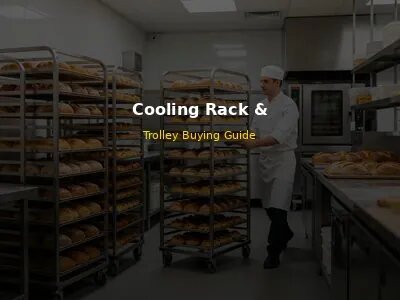
Commercial bakery cooling racks and trolleys with fresh baked bread cooling in modern bakery kitchen

A story from our customer in Sydney, Australia: "When we started our wholesale bakery in 2018, we bought cheap chrome-plated cooling racks from a restaurant supply store, $8 each. We thought a cooling rack is a cooling rack - how different can they be? Within 6 months, the chrome plating started chipping and peeling, and the racks started rusting. We were throwing away racks every month, and the rust was getting on our products - we once had a customer complain about rust spots on their cookies! We also had a problem with capacity: during peak production (we bake 300+ trays a day), we had trays of hot bread sitting on every available surface - countertops, tables, even the floor - because we didn't have enough cooling capacity. This was a food safety hazard and a bottleneck in our production. We finally invested in 4 stainless steel cooling trolleys (16 tiers each, $350 each) and 30 stainless steel cooling racks ($25 each). The difference was night and day: the trolleys hold 64 trays at once, saving us Many floor space and making it easy to move products from the oven to the cooling area to packaging. The stainless steel racks don't rust, are easy to clean (we run them through the dishwasher), and look professional. We spent $2,150 on the trolleys and racks, and 4 years later they are still in perfect condition. The cheap racks ended up costing us more Over time - we went through 50+ cheap racks in the first year ($400+) plus the cost of wasted product from rust and the food safety risk. The lesson: cooling equipment is not something to skimp on. It affects your production efficiency, food safety, product quality, and employee morale. Invest in quality stainless steel cooling racks and trolleys from the start - they will last for years and pay for themselves through improved efficiency and reduced waste."

Cooling racks and cooling trolleys are needed pieces of equipment in any bakery, yet they are often overlooked or treated as an afterthought. When products come out of the oven, they need to cool properly before they can be packaged, decorated, or sold. Proper cooling ensures that products maintain their texture, flavor, and appearance, and it prevents sogginess, mold, and staling that can occur if products are packaged while still warm.

Good cooling equipment does more than just hold products while they cool - it improves production efficiency (allowing you to bake more products per hour by freeing up oven and counter space), ensures food safety (keeping products off the floor and at proper cooling temperatures), saves floor space (vertical storage on trolleys instead of horizontal storage on counters), and makes it easy to move products around the bakery (from oven to cooling area to packaging to delivery).

As our customer in Sydney learned, cheap, flimsy cooling equipment is a false economy. Chrome-plated racks chip and rust, flimsy trolleys bend and break, and insufficient cooling capacity creates bottlenecks and food safety hazards. Investing in quality stainless steel cooling racks and trolleys from the start will save you money, time, and headaches Over time.

What's the one decision that figure outs whether your bakery succeeds or fails? It's not your recipes. It's not your location. It's the equipment you choose — and how well it matches your production needs.

1. Cooling Racks vs. Cooling Trolleys: What's the Difference?

As detailed in the FAQ section, cooling racks and cooling trolleys serve different purposes and have different designs. Understanding the difference is the first step in choosing the right cooling equipment for your bakery.

1.1 Cooling Racks (Wire Racks / Cooling Grids)

A cooling rack is a flat, grid-like wire rack that sits inside a baking tray or on a countertop. It is designed to elevate baked goods above the surface, allowing air to circulate underneath and around the products for even cooling.

  • Design: Flat, grid-like design with wire mesh or parallel bars, elevated 1-2 cm (0.5-1 inch) above the surface by feet or a frame.
  • Size: Available in various sizes to fit standard baking trays (full-size 18x26 inch, half-size 13x18 inch, quarter-size 9x13 inch, and European GN sizes).
  • Capacity: One layer of products per rack. Can be stacked (with spacers or by using the feet) for multi-level cooling, but stacking reduces air circulation.
  • Mobility: Not mobile - must be carried by hand. Lightweight and easy to handle.
  • Price: Inexpensive, typically $5-$30 each depending on material and quality.
  • Best for: Cooling individual trays of products, glazing and decorating (place over a baking tray to catch drips), draining fried products, and small-batch cooling. necessary for any bakery, regardless of size.

1.2 Cooling Trolleys (Rolling Racks / Bun Pan Racks / Sheet Pan Racks)

A cooling trolley is a mobile, multi-tiered rack on wheels, designed to hold multiple baking trays or cooling racks at once. It allows you to cool large quantities of baked goods efficiently while saving floor space and making it easy to move products around the bakery.

  • Design: Vertical frame with multiple horizontal tiers (slots) that hold standard-size baking trays. Mounted on 4 wheels (2 swivel, 2 fixed, often with brakes) for mobility.
  • Size: Designed to hold standard-size baking trays (full-size 18x26 inch or 600x400mm, or GN 1/1 530x325mm). Available in various heights with 10, 16, 20, or more tiers.
  • Capacity: High capacity - can hold 10-20+ trays of products at once, depending on the number of tiers. A 16-tier trolley holds 16 trays, which is equivalent to 16 individual cooling racks in a fraction of the floor space.
  • Mobility: Highly mobile - rolls easily on wheels, making it simple to move products from the oven to the cooling area to packaging to delivery. Can be pushed by one person even when fully loaded.
  • Price: More expensive, typically $100-$500+ each depending on material, size, and quality.
  • Best for: High-volume cooling, bulk production, saving floor space, and moving products around the bakery. a must for medium to large bakeries and wholesale operations. Can also be used for proofing (in a proofing room), storage, and transport.

1.3 Which Do You Need?

Bakery SizeCooling RacksCooling TrolleysNotes
Small bakery/cafe10-200-1 (if space allows)Cooling racks are usually sufficient for low volume
Medium bakery20-402-4Trolleys needed for efficiency and space savings
Large bakery/wholesale40-80+4-8+Trolleys are needed for high-volume production
Industrial bakery80+8+Often with automated cooling systems and conveyors

Most bakeries use both: cooling trolleys for bulk cooling and transport, and individual cooling racks for specific tasks (glazing, decorating, draining, or cooling products that don't need a full tray). The important is to have enough of each to handle your peak production without creating bottlenecks.

2. Types of Cooling Racks

2.1 By Grid Design

  • Wire mesh grid: Fine mesh of intersecting wires, creating small square or rectangular openings. Provides good support for small or delicate products (cookies, pastries) and prevents them from falling through. May leave slight grid marks on quite soft products.
  • Parallel bars: Parallel wires running in one direction, with wider spacing. Provides good air circulation and is easier to clean. Better for larger products (bread, cakes) that won't fall through the wider gaps.
  • Cross-hatch grid: Intersecting wires creating larger square openings (1-2 cm). A middle ground between mesh and parallel bars, providing good support and air circulation for most products.

2.2 By Shape and Size

  • Full-size (18x26 inch / 457x660 mm): Fits full-size baking trays. The most common size for commercial bakeries.
  • Half-size (13x18 inch / 330x457 mm): Fits half-size baking trays. Popular for smaller batches and retail bakeries.
  • Quarter-size (9x13 inch / 229x330 mm): Fits quarter-size baking trays. For tiny batches or sample testing.
  • GN 1/1 (530x325 mm): Fits European Gastronorm trays. Common in European bakeries and commercial kitchens.
  • Round: Round cooling racks for cakes, tarts, and pies. Available in various diameters (8, 9, 10, 12 inch).
  • Adjustable/expandable: Racks that can be adjusted to fit different tray sizes or expanded for larger products. Less common in commercial use Because of lower durability.

2.3 By Special Features

  • Stackable (with feet or spacers): Racks designed to be stacked on top of each other for multi-level cooling. The feet or spacers create space between racks for air circulation. Useful for saving counter space, but stacking more than 2-3 high noticeably reduces air circulation and cooling efficiency.
  • Collapsible/folding: Racks that fold flat for storage. Useful for small bakeries with limited storage space, but the folding mechanism can be a point of failure and may reduce durability.
  • With handles: Racks with built-in handles for easier carrying and maneuvering. Useful for moving racks of hot products from the oven to the cooling area.
  • Non-slip feet: Racks with silicone or rubber feet to prevent slipping on countertops and to protect surfaces from scratches.

3. Types of Cooling Trolleys

3.1 By Configuration

  • End-load (front-load): Trays are loaded from the front (the narrow end) of the trolley. The most common configuration, as it allows the trolley to be placed against a wall or in a narrow space. Trays slide in and out from the front.
  • Side-load: Trays are loaded from the side (the long side) of the trolley. Allows for wider trays and easier access, but requires more space on the side for loading and unloading. Less common in small bakeries Because of space requirements.
  • Double-sided (pass-through): Trays can be loaded from both sides. Useful in high-volume operations where products are loaded on one side (oven area) and unloaded on the other (packaging area). More expensive and requires more space.

3.2 By Number of Tiers

  • 10-tier: Holds 10 trays. Compact size, good for small bakeries or as a supplementary trolley. Easy to maneuver in tight spaces.
  • 16-tier (most common): Holds 16 trays. The standard size for most commercial bakeries. Provides a good balance of capacity and maneuverability. Usually about 1.6-1.8 meters (5-6 feet) tall.
  • 20-tier: Holds 20 trays. Higher capacity for medium to large bakeries. May be too tall for some spaces or for shorter employees to reach the top tiers comfortably.
  • Custom (any number of tiers): Some manufacturers offer custom trolleys with any number of tiers to fit your specific space and capacity needs.

3.3 By Mobility Features

  • Standard wheels (4 casters): 4 wheels, typically 2 swivel (for steering) and 2 fixed (for stability). The most common configuration. Wheels are typically 10-15 cm (4-6 inch) diameter, made of polyurethane, rubber, or nylon.
  • All swivel wheels: All 4 wheels swivel, making the trolley highly maneuverable in tight spaces. Can be less stable when fully loaded or moving at speed.
  • With brakes: 2 or 4 wheels have brakes to lock the trolley in place. fundamental for safety, especially when loading/unloading or when the trolley is on a slightly uneven surface. Look for brakes that are easy to engage and disengage with your foot.
  • Heavy-duty wheels: Larger diameter wheels (15-20 cm / 6-8 inch) with wider tires for easier rolling over thresholds, uneven floors, or outdoor surfaces. Useful for bakeries that need to move trolleys between rooms or outside for loading/unloading.
  • With push handle: A handle on one or both ends for easier pushing and maneuvering. Useful for heavy, fully loaded trolleys.

3.4 Specialized Trolleys

  • Proofing trolley (retarder-proofer trolley): A cooling trolley designed to fit inside a proofing cabinet or retarder-proofer. Used for proofing dough as well as cooling baked goods. Must be compatible with the dimensions of your proofing equipment.
  • Oven rack trolley: A trolley designed to fit inside a rack oven. The entire trolley (with trays of dough) rolls into the oven for baking. Must be specifically designed for your rack oven model and able to withstand oven temperatures.
  • Transport/delivery trolley: A trolley designed for transporting baked goods to customers or between locations. May have enclosed sides, doors, or insulation to protect products during transport.
  • Mobile cooling unit (with fan): A cooling trolley with a built-in fan to accelerate cooling by forcing air circulation around the products. Useful for high-volume operations or for products that need to cool quickly. More expensive and requires a power source.

4. Materials: Which is Best?

As detailed in the FAQ section, the material of your cooling racks and trolleys affects their durability, hygiene, ease of cleaning, and price. Here is a summary of the most common materials:

MaterialDurabilityHygieneEase of CleaningWeightCostBest For
Stainless steel (304)Great (10-20+ yrs)GreatGreat (dishwasher safe)HeavyHighAll commercial bakeries
AluminumGood (3-7 yrs)GoodGoodLightMediumBudget-conscious bakeries
Chrome-plated steelFair (1-3 yrs)FairFair (hand wash)LightLowSmall bakeries, home use
Non-stick coatedFair (1-2 yrs)GoodGoodLightMedium-LowDelicate products, home use

Material Recommendation

For commercial bakeries, stainless steel (304 grade) is the best choice for both cooling racks and cooling trolleys Because of its Great durability, hygiene, and ease of cleaning. While it costs more upfront, it lasts much longer (10-20+ years) and is more cost-effective Over time. Stainless steel is also the most hygienic material, which is important for food safety. For individual cooling racks on a tight budget, chrome-plated steel is an acceptable option, but plan to replace them every 1-3 years as the plating wears off and rust develops. At HNH Bakery Equipment, we offer cooling racks and cooling trolleys in 304 stainless steel and aluminum, with heavy-duty construction and high-quality components for long-lasting commercial use.

5. Sizes and Capacities

5.1 Cooling Rack Sizes

Size NameDimensions (inches)Dimensions (mm)Fits Tray SizeCommon Uses
Full-size16.5 x 24.5420 x 62018x26 inch full-sizeStandard commercial production
Half-size11.5 x 16.5290 x 42013x18 inch half-sizeSmall batches, retail bakeries
Quarter-size8 x 11.5200 x 2909x13 inch quarter-sizeTiny batches, samples
GN 1/112.8 x 20.5325 x 520530x325mm GN 1/1European bakeries, combi ovens
Round (9 inch)9 diameter230 diameter9 inch cake panCakes, tarts, pies
Round (12 inch)12 diameter305 diameter12 inch cake panLarge cakes, tarts

Note: Cooling rack dimensions are typically slightly smaller than the corresponding tray dimensions, so the rack fits inside the tray with a small gap around the edges for air circulation.

5.2 Cooling Trolley Sizes and Capacities

Trolley TypeTiersTray CapacityTypical HeightFootprint (approx)Best For
Compact1010 trays1.2 m (4 ft)0.7 x 0.5 mSmall bakeries, tight spaces
Standard1616 trays1.7 m (5.5 ft)0.7 x 0.5 mMost commercial bakeries
High-capacity2020 trays2.0 m (6.5 ft)0.7 x 0.5 mLarge bakeries, high ceilings
Extra high-capacity24+24+ trays2.3+ m (7.5+ ft)0.7 x 0.5 mIndustrial bakeries, quite high ceilings

a priority: When choosing a trolley height, consider the ceiling height in your bakery and the reach of your employees. The top tier should be at a comfortable height for loading and unloading - typically no higher than 1.8-2.0 meters (6-6.5 feet) for most employees. Trolleys that are too tall can be unsafe and difficult to use.

5.3 Tier Spacing

The spacing between tiers (the vertical distance between each tray slot) is an important consideration. Standard spacing is typically 7-10 cm (3-4 inches), which is sufficient for most baked goods (bread, pastries, cookies). However, if you bake tall products (tall cakes, layered cakes, tall bread loaves, decorated products), You can need wider spacing (12-15 cm / 5-6 inches) or adjustable spacing. Some trolleys offer adjustable tier spacing, allowing you to customize the spacing for different products.

6. How Many Cooling Racks and Trolleys Do You Need?

As detailed in the FAQ section, calculating the right number of cooling racks and trolleys depends on your production volume, oven capacity, cooling times, and available space. Here is a quick reference guide:

Bakery SizeDaily TraysCooling RacksCooling TrolleysTotal Cooling Capacity
Small bakery/cafe<5010-200-110-36 trays
Medium bakery50-20020-402-452-104 trays
Large bakery/wholesale200-50040-804-8104-208 trays
Industrial bakery500+80+8+208+ trays

These are rough estimates - your actual needs will vary from your specific products, cooling times, schedule, and equipment. The important formula is: Trays in cooling at any time = (trays baked per hour) x (average cooling time in hours), plus a 20-30% buffer for peak periods and unexpected spikes.

Common Mistake: Insufficient Cooling Capacity

The most common mistake bakeries make is not having enough cooling capacity. When you don't have enough cooling racks or trolleys, you end up with: hot trays sitting on every available surface (countertops, tables, even the floor) - a food safety hazard; products stacked on top of each other while still warm - causing damage, sogginess, and deformation; production bottlenecks - ovens backed up because there's no place to put hot trays, reducing your overall production capacity; and reduced product quality - products that don't cool properly can become soggy, stale, or moldy. It's always better to have slightly more cooling capacity than you think you need. When in doubt, add one more trolley or a few more racks.

7. Care and Maintenance

Proper care and maintenance will extend the life of your cooling racks and trolleys and ensure they remain hygienic and functional.

7.1 Cleaning

  • Clean regularly: Clean cooling racks after each use (or at least daily) to remove food residue, grease, and crumbs. Cooling trolleys should be wiped down daily and thoroughly cleaned weekly (or more frequently if needed).
  • Stainless steel: Wash with warm soapy water and a sponge or scouring pad. Can be run through a commercial dishwasher. For stubborn stains or baked-on residue, use a stainless steel cleaner or a paste of baking soda and water. Rinse thoroughly and dry immediately to prevent water spots.
  • Aluminum: Wash with warm soapy water and a soft sponge. Avoid abrasive scouring pads or harsh chemicals (they can scratch or discolor the surface). For baked-on residue, soak in warm soapy water before washing. Rinse thoroughly and dry immediately to prevent oxidation and discoloration.
  • Chrome-plated steel: Hand wash with warm soapy water and a soft sponge. Avoid the dishwasher if possible (frequent dishwasher use accelerates plating wear). Avoid abrasive scouring pads (they scratch the plating). Rinse thoroughly and dry immediately to prevent rust, especially if the plating is chipped or scratched.
  • Non-stick coated: Hand wash with warm soapy water and a soft sponge. Never use abrasive scouring pads or metal utensils (they scratch the coating). Avoid the dishwasher if possible. Rinse thoroughly and dry immediately.
  • Sanitize: For commercial bakeries, sanitize cooling racks after washing, especially if they come into direct contact with ready-to-eat products. Use a food-grade sanitizer (chlorine bleach 50-100 ppm, quaternary ammonium 200-400 ppm, or hot water 77C/170F for 30 seconds). Allow to air dry after sanitizing.
  • Clean trolley wheels: Don't forget to clean the wheels and axles of cooling trolleys, as they can accumulate crumbs, grease, and debris. Wipe them down regularly and ensure they roll smoothly.

7.2 Maintenance

  • check regularly: check cooling racks and trolleys regularly for signs of damage: rust, corrosion, bent or broken wires, cracked welds, loose or damaged tiers, wobbly wheels, or damaged brakes. Replace or repair damaged equipment promptly.
  • Check wheels and brakes: Ensure trolley wheels roll smoothly and brakes engage and disengage properly. Lubricate wheel axles periodically with food-grade lubricant if needed. Replace worn or damaged wheels promptly.
  • Check tier stability: Ensure the tiers/slots on cooling trolleys are stable and can hold the weight of loaded trays without bending or sagging. Reinforce or replace any tiers that show signs of bending or weakness.
  • Tighten loose fasteners: Check and tighten any loose screws, bolts, or fasteners on cooling trolleys (handles, wheels, tier supports). Loose fasteners can lead to structural failure and safety hazards.
  • Store properly: Store cooling racks flat or stacked (with spacers) in a clean, dry area. Store cooling trolleys in a designated area with the brakes engaged. Avoid stacking heavy items on top of cooling racks (they can bend).
  • Replace when necessary: Even with proper care, cooling equipment will eventually need to be replaced. Replace cooling racks when: the plating is noticeably chipped or peeling (chrome-plated), there is meaningful rust or corrosion, wires are bent or broken, or the rack no longer sits flat. Replace cooling trolleys when: tiers are noticeably bent or sagging, the frame is cracked or welded joints are failing, wheels are damaged beyond repair, or the trolley is unstable or unsafe to use.

8. Price Comparison and Budgeting

ItemChrome-plated SteelAluminumStainless Steel (304)Notes
Cooling rack (full-size)$5-$15$15-$25$20-$40Price varies by quality and grid design
Cooling rack (half-size)$4-$10$10-$18$15-$30
Cooling rack (round, 9 inch)$3-$8$8-$15$10-$20
Cooling trolley (10-tier)N/A (not common)$100-$200$200-$350Compact size for small bakeries
Cooling trolley (16-tier)N/A (not common)$150-$300$250-$500Standard size for most bakeries
Cooling trolley (20-tier)N/A (not common)$200-$400$350-$600High-capacity for large bakeries
Heavy-duty wheels (upgrade)N/A+$20-$50+$30-$70Larger wheels for rough surfaces
Brakes on all 4 wheels (upgrade)N/A+$15-$30+$20-$40For safety and stability

Note: Prices are approximate and vary by brand, supplier, quantity (volume discounts are common for bulk purchases of 10+ racks or 2+ trolleys), and current market conditions. Shipping costs are additional for online orders.

8.1 Budgeting Tips

  • Buy in bulk: Most suppliers offer volume discounts for purchases of 10+ cooling racks or 2+ cooling trolleys. If you need multiple items, buying them all at once can save 10-25%.
  • Invest in quality: As our customer in Sydney learned, cheap cooling equipment is a false economy. Invest in quality stainless steel equipment from the start - it will last 10-20+ years and save you money Over time through fewer replacements, less wasted product, and improved efficiency.
  • Consider total cost of ownership: When comparing options, consider the total cost of ownership over the equipment's lifespan, not just the upfront price. A $40 stainless steel rack that lasts 15 years costs $2.67/year, while a $10 chrome-plated rack that lasts 2 years costs $5/year. The stainless steel rack is actually cheaper per year of use!
  • Standardize: Using standard-size cooling racks and trolleys (full-size 18x26 inch or 600x400mm) ensures compatibility with your baking trays, ovens, and other equipment. It also simplifies purchasing and replacements.
  • Buy directly from manufacturers: Buying directly from manufacturers (like HNH Bakery Equipment) can save you money compared to buying through distributors or retailers, as there are fewer middlemen marking up the price.
  • Budget for replacements: Plan to replace a portion of your cooling racks each year (typically 10-20% of chrome-plated racks, 5% or less for stainless steel). Include this in your annual equipment budget.

9. Common Mistakes to Avoid

  1. Buying cheap, low-quality cooling equipment: The most common mistake. Cheap chrome-plated racks chip, peel, and rust within 1-3 years. Flimsy trolleys bend and break. Invest in quality stainless steel equipment from the start.
  2. Not having enough cooling capacity: The second most common mistake. Insufficient cooling capacity creates production bottlenecks, food safety hazards, and reduced product quality. Calculate your cooling needs carefully and add a 20-30% buffer.
  3. Using the wrong size racks or trolleys: Cooling racks that don't fit your baking trays properly (too big or too small) are inefficient and can cause products to fall or get damaged. Trolleys that don't fit your trays or your space create operational problems. Always measure your trays and your space before purchasing.
  4. Not Given ceiling height and employee reach: Trolleys that are too tall for your ceiling or for your employees to reach comfortably are unsafe and inefficient. The top tier should be no higher than 1.8-2.0 meters (6-6.5 feet) for most employees.
  5. Ignoring wheel quality: Cheap, flimsy wheels make trolleys difficult to maneuver, can damage floors, and can fail unexpectedly, creating safety hazards. Invest in quality wheels (polyurethane or rubber, 10-15 cm diameter) with brakes.
  6. Not cleaning and maintaining properly: Cooling equipment that is not cleaned regularly can harbor bacteria and food particles, creating food safety risks. Trolleys that are not maintained (wheels not lubricated, loose fasteners not tightened) can fail prematurely. Follow the cleaning and maintenance guidelines in this guide.
  7. Using cooling racks in the oven: Most cooling racks (especially chrome-plated and non-stick coated) are not designed for oven use. Using them in the oven can cause the plating to peel, the non-stick coating to degrade, or the rack to warp. Use oven-safe racks (stainless steel) if You should roast or bake on a rack.
  8. Stacking cooling racks too high: While some cooling racks are designed to be stacked, stacking more than 2-3 high noticeably reduces air circulation and cooling efficiency, causing uneven cooling and soggy products. Use cooling trolleys for multi-level cooling instead.
  9. Not Given tier spacing: Trolleys with standard tier spacing (7-10 cm) may not accommodate tall products (tall cakes, layered cakes, tall bread loaves). If you bake tall products, look for trolleys with wider spacing or adjustable tier spacing.
  10. Overloading trolleys: While cooling trolleys are designed to hold multiple trays, overloading them (exceeding the weight capacity) can cause the frame to bend, wheels to fail, or the trolley to tip over. Check the manufacturer's weight capacity and don't exceed it.

10. How HNH Bakery Equipment Can Help

Every machine we sell comes with a 1-year warranty and lifetime technical support from our engineering team. Our cooling equipment is designed for professional use, with attention to durability, hygiene, and functionality.

Our cooling equipment lineup includes:

  • Stainless steel cooling racks: 304 food-grade stainless steel, available in full-size (18x26 inch), half-size (13x18 inch), quarter-size (9x13 inch), GN 1/1 (530x325mm), and round sizes (8, 9, 10, 12 inch). Wire mesh or cross-hatch grid design, with sturdy feet for stability. Dishwasher safe, rust-proof, and built to last 10-20+ years.
  • Stainless steel cooling trolleys: 304 food-grade stainless steel construction, available in 10-tier, 16-tier, 20-tier, and custom configurations. End-load or side-load design, with reinforced tiers, sturdy frame, and high-quality polyurethane wheels with brakes. Designed to hold standard full-size baking trays (18x26 inch or 600x400mm) or GN 1/1 trays. Built for heavy-duty commercial use with a weight capacity of 100-200+ kg.
  • Aluminum cooling trolleys: Lightweight aluminum construction for bakeries that prefer lighter, more affordable trolleys. Available in 10-tier, 16-tier, and 20-tier configurations. Good durability and corrosion resistance, with quality wheels and brakes.
  • Specialized trolleys: Proofing trolleys (compatible with standard proofing cabinets), oven rack trolleys (for rack ovens), transport/delivery trolleys (with enclosed sides or insulation), and custom trolleys designed to your specifications.
  • Cooling accessories: Tray spacers, stackable rack connectors, replacement wheels, and other accessories to customize and maintain your cooling equipment.

When you purchase cooling equipment from HNH Bakery Equipment, you receive:

  • Factory-direct pricing: As a direct manufacturer, we offer prices that are 20-40% lower than comparable equipment from distributors or retailers, without compromising on quality.
  • Volume discounts: We offer large volume discounts for bulk purchases of 10+ cooling racks or 2+ cooling trolleys. The more you buy, the more you save.
  • Free consultation: Our bakery equipment specialists can help you figure out the right type, size, material, and quantity of cooling equipment for your specific production volume, oven capacity, product mix, cooling times, and available space. We can help you calculate your exact cooling needs and avoid the common mistake of insufficient capacity.
  • Custom manufacturing: We can manufacture custom cooling racks and trolleys to your exact specifications: custom sizes, custom tier counts, custom tier spacing, special features (all swivel wheels, heavy-duty wheels, push handles, enclosed sides), and custom configurations. If You've unique needs, we can build it for you.
  • Professional export packaging and shipping: We handle all export packaging (equipment is carefully packed to prevent damage during shipping) and can arrange shipping to your nearest port or deliver to your door (CIF/DDP terms available). We provide all necessary export documentation.
  • After-sales support and spare parts: We provide complete after-sales support, including warranty coverage (typically 1-2 years on major components), technical support, and a ready supply of spare parts (wheels, brakes, tier supports, fasteners). We keep common spare parts in stock and can ship them quickly to minimize downtime.

Get Your Questions Answered Today

We have helped hundreds of bakery owners choose the right equipment. We can help you too. Send us your requirements and we will put together a customized solution for your bakery.

Request Free Cooling Equipment Consultation / Quote

11. Final Checklist: What to check Before Purchasing

  1. Material: Have I chosen the right material for my needs? (Stainless steel for commercial durability and hygiene, aluminum for lightweight and affordability, chrome-plated for budget individual racks.)
  2. Size compatibility: Do the cooling racks fit my baking trays properly? Do the cooling trolleys accommodate my tray size? Have I measured my trays and my space?
  3. Capacity: Have I calculated how many cooling racks and trolleys I need from my production volume, oven capacity, and cooling times? Have I added a 20-30% buffer for peak periods?
  4. Trolley height: Is the trolley height appropriate for my ceiling height and my employees' reach? (Top tier should be no higher than 1.8-2.0 meters / 6-6.5 feet.)
  5. Tier spacing: Is the tier spacing sufficient for my tallest products? (Standard 7-10 cm for most products, 12-15 cm for tall cakes and breads.)
  6. Wheels and brakes: Do the trolleys have quality wheels (polyurethane or rubber, 10-15 cm diameter) with brakes? Are the wheels suitable for my floor type and any thresholds I need to cross?
  7. Weight capacity: What is the trolley's weight capacity? Is it sufficient for my heaviest loaded trays? (Check manufacturer specifications.)
  8. Grid design: Is the cooling rack grid design appropriate for my products? (Fine mesh for small/delicate products, parallel bars or cross-hatch for larger products and easier cleaning.)
  9. Ease of cleaning: Is the equipment easy to clean? (Stainless steel is dishwasher safe; chrome-plated and non-stick require hand washing.) Can the racks be easily sanitized?
  10. Durability and warranty: What is the expected lifespan of the equipment? What is the warranty coverage? (Stainless steel should last 10-20+ years; chrome-plated 1-3 years.)
  11. Budget and total cost: Have I compared prices across multiple suppliers? Have I considered total cost of ownership (purchase price / lifespan = cost per year)? Have I factored in shipping, customs/duties, and volume discounts?
  12. Supplier reputation: Have I studyed the supplier's reputation? Can they provide references from other bakeries? How long have they been in business? What is their after-sales support like?
  13. Spare parts availability: Are spare parts (wheels, brakes, tier supports, fasteners) readily available? Can I get replacement parts quickly if something breaks?
  14. Sample testing: If possible, have I ordered a sample rack or seen a sample trolley before placing a bulk order? (Testing a sample allows you to check quality, size, and functionality before committing to a large purchase.)

12. Conclusion

Cooling racks and cooling trolleys are a must pieces of equipment in any bakery, yet they are often overlooked or treated as an afterthought. As our customer in Sydney learned, the quality and capacity of your cooling equipment directly affects your production efficiency, food safety, product quality, and employee morale. Cheap, flimsy cooling equipment is a false economy - it costs more Over time through replacements, wasted product, and production bottlenecks.

When choosing cooling equipment, the most important factors are: material (stainless steel is the best choice for commercial bakeries Because of its durability, hygiene, and ease of cleaning), size compatibility (ensure racks fit your trays and trolleys fit your space), capacity (calculate your needs from production volume and cooling times, with a 20-30% buffer), and quality (look for sturdy construction, quality wheels with brakes, and reputable suppliers).

For most commercial bakeries, a combination of stainless steel cooling racks (for individual tray cooling, glazing, and decorating) and stainless steel cooling trolleys (for bulk cooling, space savings, and mobility) is the ideal setup. The number of each depends on your production volume, but as a general guideline: small bakeries need 10-20 racks and 0-1 trolleys; medium bakeries need 20-40 racks and 2-4 trolleys; large bakeries need 40-80+ racks and 4-8+ trolleys.

Proper care and maintenance will extend the life of your cooling equipment: clean regularly with appropriate methods for the material, sanitize for food safety, check for damage, maintain wheels and fasteners, and replace equipment when it shows large signs of wear or damage.

Finally, invest in quality from the start. A $40 stainless steel cooling rack that lasts 15 years is cheaper per year of use than a $10 chrome-plated rack that lasts 2 years. Quality cooling equipment will save you money, time, and headaches Over time, and will contribute to a more efficient, safe, and productive bakery operation.

Every machine we sell comes with a 1-year warranty and lifetime technical support from our engineering team. We can help you calculate your exact cooling needs, recommend the right equipment for your bakery, and even manufacture custom sizes and configurations. Contact us today for a free consultation - we would love to help you find the perfect cooling solution for your bakery.

📋 Bakery Equipment Checklist

Download our complete bakery equipment checklist with budget estimates for 5 different bakery types.

Free Bakery Equipment Checklist →

📋 Bakery Equipment ROI Calculator

Use our interactive ROI calculator to see how quickly your bakery equipment investment pays off.

Calculate Your Equipment ROI →

📋 Bakery Equipment Maintenance Calendar

Get our printable maintenance calendar to keep your bakery equipment running at peak performance.

Printable Maintenance Calendar →

📋 Bakery Equipment Energy Cost Calculator

Estimate your bakery equipment energy costs and find ways to reduce your utility bills.

Calculate Energy Costs →

Related Articles

Learn More