
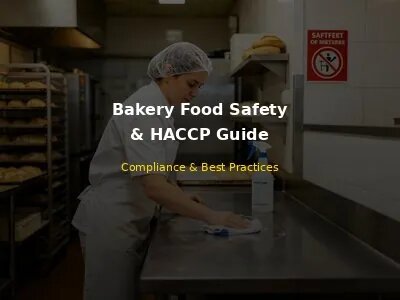
A cautionary tale from a bakery owner in London, UK: "In 2019, my bakery was doing great - we had a loyal customer base, good look overs, and were growing steadily. Then one day, a customer called to say their child had a severe allergic reaction after eating one of our chocolate croissants. We had no idea the croissant contained traces of nuts - we used a shared dough sheeter for both nut-containing and nut-free products, and we didn't have an allergen control plan. The child ended up in the hospital. The health department look intod, found multiple food safety violations (no allergen plan, no temperature logs, no cleaning schedule, employees not trained in food safety), and shut us down for 3 weeks while we fixed everything. We paid a fine, settled a lawsuit, and lost thousands in revenue during the closure. But the worst part was the damage to our reputation - our Google rating dropped from 4.8 to 2.3, and many of our regular customers never came back. It took us two years to recover. After that, I put in placeed a complete food safety program from HACCP principles: written SOPs for everything, temperature logs, a strict allergen management plan with separate equipment for allergen-free products, monthly staff training, a documented cleaning schedule, and monthly self-checkions. We haven't had a single food safety incident since. The lesson: food safety is not optional, and it is not something You can afford to cut corners on. A single food safety incident can destroy a business that took years to build. Investing in food safety - training, procedures, documentation, and the right equipment - is the best investment You can make in your bakery's long-term success."
Food safety is the foundation of any successful bakery. Your customers trust you to provide them with safe, wholesome food - and if you break that trust, the consequences can be devastating: foodborne illness outbreaks, allergic reactions, lawsuits, fines, business closures, reputational damage, and lost customers. In the current regulatory environment, food safety is not optional - it is a legal requirement in virtually every country, and consumers are increasingly aware of and concerned about food safety issues.
HACCP (Hazard Analysis and Important Control Points) is the globally seed gold standard for food safety management. Rather than checking finished products for problems after they occur (which is too late), HACCP takes a preventive way: it identifies potential food safety hazards at every stage of production and puts controls in place to prevent those hazards from occurring. HACCP was originally developed by NASA and Pillsbury in the 1960s to ensure food safety for space missions, and has since been adopted by food safety authorities worldwide (including the FDA, USDA, EFSA, and Codex Alimentarius) as the standard for food safety management.If you're setting up a new bakery or upgrading your existing line, this is the most a priority thing to get right. Skip the marketing hype and focus on these practical factors that actually figure out your equipment's performance. Whether You're a small retail bakery or a large wholesale operation, this guide will help you build a solid food safety program that protects your customers, your business, and your reputation.
1. Understanding Food Safety Hazards in Bakeries
Before put in placeing a food safety program, it is important to understand the types of hazards that can occur in a bakery and where they are most likely to be introduced. Food safety hazards are classified into three categories:
1.1 Biological Hazards
Biological hazards are living organisms or their byproducts that can cause foodborne illness. In bakeries, the most common biological hazards include:
- Bacteria: Salmonella (commonly found in raw eggs, poultry, and dairy), Staphylococcus aureus (carried on human skin and in nasal passages - can contaminate food through hand contact), Bacillus cereus (found in flour and rice - can survive baking and cause illness), Clostridium perfringens (found in soil and raw meat - can grow in improperly cooled foods), Listeria monocytogenes (can grow at refrigerator temperatures - found in dairy, deli meats, and contaminated environments), Escherichia coli (E. coli, found in raw meat and contaminated water).
- Viruses: Norovirus (the most common cause of foodborne illness - highly contagious, spread through fecal-oral route, often by infected food handlers), Hepatitis A (spread through fecal-oral route, can cause serious liver disease).
- Molds and yeasts: While most molds are not harmful, some produce mycotoxins (e.g., aflatoxin in nuts, ochratoxin in grains) that can cause serious illness. Mold growth on baked goods indicates improper storage or excessive shelf life.
- Parasites: Less common in bakeries, but can be present in some ingredients (e.g., Trichinella in pork products used in some pastries).
1.2 Chemical Hazards
Chemical hazards are harmful substances that can contaminate food. In bakeries, common chemical hazards include:
- Cleaning chemicals and sanitizers: Detergents, degreasers, sanitizers (chlorine, quaternary ammonium, iodine), oven cleaners, and descalers can contaminate food if not used properly, if not rinsed off surfaces/equipment, or if stored near food.
- Pesticides and insecticides: Residues on fruits/vegetables used as ingredients, or contamination from pest control treatments.
- Food additives and allergens: While food additives are generally safe when used correctly, excessive use or use of unapproved additives can be harmful. Allergens (milk, eggs, nuts, wheat, soy, etc.) are chemical hazards for allergic individuals - even trace amounts can cause severe reactions.
- Heavy metals: Lead, cadmium, arsenic, and mercury can be present in some ingredients (e.g., lead in some spices, arsenic in rice) or leach from equipment (e.g., lead in old plumbing, cadmium in some coatings).
- Mycotoxins: Produced by molds in grains (flour), nuts, and dried fruits. Aflatoxin (in nuts) and ochratoxin (in grains) are the most common and can cause liver damage and cancer.
- Lubricants and maintenance chemicals: Food-grade lubricants must be used on equipment; non-food-grade lubricants can contaminate food if they leak or drip onto food-contact surfaces.
1.3 Physical Hazards
Physical hazards are foreign objects that can contaminate food and cause injury (choking, cuts, broken teeth, internal damage). In bakeries, common physical hazards include:
- Glass: Broken light bulbs, glass containers, windows, or measuring cups that can shatter and contaminate food.
- Metal: Wire bristles from cleaning brushes, staples, paper clips, jewelry (rings, watches), metal fragments from worn equipment (mixers, slicers, dough sheeters), nuts/bolts/screws, can openers.
- Wood: Splinters from wooden utensils, cutting boards, pallets, or shipping crates.
- Plastic: Fragments from packaging, plastic utensils, cutting boards, or equipment parts.
- Personal items: Hair, fingernails, bandages, jewelry, pens, pencils, buttons, lint from clothing.
- Pest-related: Insects, rodent droppings, feathers, rodent hair.
- Ingredient-related: Stones, dirt, twigs, or other debris in flour, sugar, grains, or dried fruits.
The Danger Zone
The "temperature danger zone" is between 4C (40F) and 60C (140F). Bacteria multiply rapidly in this range - some bacteria can double in number every 20 minutes. Food should spend as little time as possible in the danger zone: cold foods should be kept at or below 4C (40F), hot foods at or above 60C (140F), and food being cooled should move through the danger zone as quickly as possible (from 60C to 21C within 2 hours, and from 21C to 4C within an additional 4 hours). This is one of the most important food safety principles for bakeries, where baked goods are often left out to cool at room temperature.
2. The 7 HACCP Principles Explained
HACCP is from 7 core principles that provide a systematic structure for spoting and controlling food safety hazards. Here is each principle explained in plain language, with bakery-specific examples:
Principle 1: Conduct a Hazard Analysis
This is the foundation of HACCP. You look at every step of your production process (from receiving ingredients to delivering the finished product) and spot potential biological, chemical, and physical hazards at each step. For each hazard, you judge: how likely is it to occur? How severe would the consequences be if it occurred? Can it be prevented, removed, or reduced at this step? Bakery example: At the "mixing" step, You might spot: biological hazard - Salmonella from raw eggs; chemical hazard - allergen cross-contact from previous batch; physical hazard - metal fragments from worn mixer attachments. You judge that Salmonella from eggs is likely and severe, but it will be controlled later at the baking step (so mixing is not a CCP for this hazard).
Principle 2: figure out Important Control Points (CCPs)
A CCP is a step in the process where a control measure is needed to prevent or remove a food safety hazard, or reduce it to an acceptable level. Not every step is a CCP - only those where loss of control would result in an unacceptable health risk, and where the hazard can be controlled. Bakery example: Baking is typically the most matters CCP in a bakery - the high temperature kills pathogens like Salmonella. Cooling is another CCP - rapid cooling prevents bacterial growth. Metal detection (if used) is a CCP for physical metal hazards. Mixing, weighing, and proofing are usually not CCPs because hazards introduced at these steps are controlled later (at baking).
Principle 3: Establish Important Limits
A important limit is a measurable value that separates "safe" from "unsafe" at a CCP. It is the maximum or minimum value to which a parameter must be controlled to prevent or remove the hazard. Important limits must be measurable, from scientific evidence, and specific. Bakery example: For the baking CCP, a important limit might be: minimum internal product temperature of 93C (200F) for at least 15 seconds. For the cooling CCP: cool from 60C (140F) to 21C (70F) within 2 hours, and from 21C (70F) to 4C (40F) within an additional 4 hours. For metal detection: no metal fragments larger than 2mm in any part.
Principle 4: Establish Monitoring Procedures
Monitoring is the scheduled measurement or observation of a CCP relative to its important limits. Monitoring tells you whether the CCP is under control, and if not, allows you to take corrective action before unsafe product reaches the customer. Monitoring should be: continuous if possible (e.g., continuous oven temperature monitoring with a data logger), or frequent enough to detect deviations (e.g., checking internal temperature of every batch), performed by a trained person, and documented in writing. Bakery example: For baking, monitor by: recording oven temperature and baking time for each batch, using a calibrated probe thermometer to check the internal temperature of at least one product per batch. For cooling, monitor by: recording product temperature at the start of cooling, at 2 hours, and at 6 hours. All readings are recorded on a temperature log.
Principle 5: Establish Corrective Actions
Corrective actions are what you do when monitoring shows that a CCP is not under control (i.e., a important limit has been exceeded). Corrective actions must: spot and fix the cause of the problem, bring the CCP back under control, figure out what to do with any affected product (reprocess, hold for evaluation, or destroy), and be documented. Bakery example: If a batch of bread does not reach the required internal temperature of 93C (200F) during baking: 1) Corrective action: return the bread to the oven and bake until it reaches 93C, or discard the batch if it cannot be safely reprocessed. 2) spot cause: look into why the temperature was too low (oven thermostat malfunction? door left open? batch too large? operator error?). 3) Fix cause: repair/replace thermostat, retrain operator, adjust batch size. 4) Document: record the deviation, the corrective action taken, the disposition of the product, and the cause and fix.
Principle 6: Establish Verification Procedures
Verification is the use of methods, procedures, and tests Plus to monitoring to figure out whether the HACCP system is working correctly and is being followed. Verification answers the question: "Are we doing what we said we would do, and is it working?" Verification activities include: look overing monitoring logs (daily/weekly), look overing corrective action records, calibrating monitoring equipment (thermometers, metal detectors) regularly, conducting internal look overs of the HACCP system (at least annually), testing products for pathogens (if applicable), observing actual production to ensure procedures are being followed, and look overing customer complaints and food safety incidents. Bakery example: Weekly: the manager look overs all temperature logs to ensure they are complete and all readings are within important limits. Monthly: calibrate all probe thermometers and oven thermostats using a reference thermometer. Quarterly: conduct a self-checkion using a food safety checklist. Annually: conduct a full internal look over of the HACCP system, or hire an external look overor.
Principle 7: Establish Documentation and Record-Keeping
Documentation is the written HACCP plan and all supporting documents (flow diagrams, hazard analysis, CCP determination, important limits, monitoring procedures, corrective actions, verification procedures). Record-keeping is the ongoing records generated by the HACCP system (monitoring logs, corrective action records, calibration records, training records, verification reports). The rule of thumb in food safety is: "If it isn't documented, it didn't happen." checkors will want to see written evidence that You're following your food safety program. Bakery example: a must records include: temperature logs (refrigerators, freezers, ovens, cooling), cleaning logs, receiving/checkion logs, staff training records, calibration records, corrective action records, pest control records, allergen management records, and verification/look over reports. Records should be legible, accurate, completed in real time, signed/initialed by the responsible person, and retained for 1-3 years (depending on your country's requirements).
3. Most Common Food Safety Violations in Bakeries
From food safety checkion data from around the world, these are the most common violations found in bakeries - and how to avoid them:
| Violation | Why It Happens | How to Avoid It |
|---|---|---|
| Poor personal hygiene (not washing hands, no hairnet, touching face/phone, working while sick) | Lack of training, no handwashing sinks stocked with soap/paper towels, no policy on sick employees, employees in a hurry | Provide proper handwashing training, ensure handwashing sinks are always stocked, enforce hairnet/uniform policy, put in place a sick employee policy (no working while vomiting/diarrheic/feverish), provide hand sanitizer at important stations |
| Inadequate temperature control (fridges too warm, food left in danger zone, no temperature logs) | Thermometers not calibrated, fridges overloaded or doors left open, no monitoring system, employees not trained on temperature danger zone | Calibrate thermometers regularly, don't overload fridges, put in place temperature monitoring schedule (at least 2x/day), use data loggers for continuous monitoring, train staff on danger zone, keep written temperature logs |
| Cross-contamination (raw/ready-to-eat contact, shared tools, allergen cross-contact) | No color-coded tools/boards, no allergen control plan, equipment not cleaned between products, employees not trained on cross-contamination | Use color-coded cutting boards/tools for different product types, put in place allergen control plan (separate tools/equipment for allergen-free, make allergen-free products first, clean between batches), train staff on cross-contamination, store raw ingredients below ready-to-eat |
| Inadequate cleaning (equipment/surfaces not cleaned, no cleaning schedule, hard-to-reach areas neglected) | No written cleaning schedule, no assigned responsibilities, cleaning not done properly (wrong chemicals, no contact time), employees not trained on cleaning procedures | Create a written cleaning schedule (daily/weekly/monthly tasks with assigned person and method), train staff on proper cleaning procedures (use correct chemicals, follow contact time, rinse properly), use checklists to check cleaning, conduct regular deep cleans |
| Pest control issues (rodents, insects, birds) | Doors/windows left open, gaps around pipes/vents, food stored on floor, garbage not covered, no pest control program | put in place a pest control program (regular checkions, bait stations, traps, or professional pest control service), seal all entry points (doors, windows, vents, gaps), install door sweeps and air curtains, keep food at least 15cm off floor, keep garbage covered and removed regularly, clean up spills immediately |
| Improper food storage (food on floor, raw above ready-to-eat, food not covered/labeled, expired ingredients used, chemicals near food) | No storage system, no FIFO (first-in-first-out) rotation, no labeling system, chemicals stored improperly, employees not trained on storage | Store all food at least 15cm (6 inches) off floor, store raw ingredients below ready-to-eat, cover and label all food (with name and date), put in place FIFO rotation, check expiration dates regularly, store chemicals in a separate area away from food, use clearly labeled chemical containers |
| Allergen management failures (undeclared allergens, cross-contact, no allergen plan) | No allergen control plan, labels not checked, shared equipment for allergen/allergen-free products, staff not trained on allergens | Develop a written allergen management plan, spot all allergens in each product (the Big 9: milk, eggs, fish, crustacean shellfish, tree nuts, peanuts, wheat, soybeans, sesame), clearly label all products with allergen information, use separate tools/equipment for allergen-free products (or clean thoroughly between), make allergen-free products first in the production day, train all staff on allergen management |
| Inadequate documentation (no logs, no records, no written plan) | No documentation system, employees not trained on record-keeping, records not look overed, "we do it but don't write it down" mindset | Create simple, practical record forms (temperature logs, cleaning logs, training records, etc.), train staff on how and when to complete records, assign someone to look over records regularly, keep records organized and accessible, remember: "If it isn't documented, it didn't happen" |
4. Temperature Control in Bakeries
Temperature control is one of the most important aspects of bakery food safety. Bacteria multiply rapidly in the "danger zone" (4C-60C / 40F-140F), and many bakery products (especially those with dairy, eggs, or cream fillings) are particularly susceptible to bacterial growth. Here are the important temperature control points in a bakery:
4.1 Refrigeration and Freezing
- Refrigerators: Must maintain a temperature of 4C (40F) or below at all times. Check temperature at least twice daily (opening and closing) and record on a log. Use a thermometer that is accurate and calibrated. Don't overload the refrigerator - air must circulate to maintain even temperature. Don't store food on the floor of the refrigerator. Keep raw ingredients on lower shelves, ready-to-eat on upper shelves.
- Freezers: Must maintain a temperature of -18C (0F) or below. Check temperature at least daily and record. Freeze food quickly to maintain quality - don't put large quantities of warm food in the freezer at once (it will raise the temperature and affect other food). Use proper freezer packaging to prevent freezer burn. Practice FIFO (first-in-first-out) rotation.
- Walk-in coolers/freezers: Same temperature requirements as reach-in units, but with more capacity. Install a continuous temperature monitoring system with alarms that alert you if the temperature goes out of range. Keep doors closed as much as possible - install door closers and strip curtains. Check the door gaskets regularly for damage.
4.2 Baking
- Internal temperature: The most reliable way to ensure baked goods are safe is to check the internal temperature with a calibrated probe thermometer. Most baked goods should reach an internal temperature of at least 93C (200F) to ensure pathogens are killed. Products with meat or egg fillings may require higher temperatures (e.g., 74C/165F for poultry, 71C/160F for ground meat, 63C/145F for whole cuts of meat and fish).
- Oven temperature: Oven thermostats can drift over time - calibrate your oven regularly (at least quarterly) using an oven thermometer. Record oven temperature and baking time for each batch. Don't open the oven door unnecessarily during baking - it lowers the temperature and can affect doneness.
- Batch sizing: Don't overload the oven - bake in batches that allow proper air circulation and even heating. Overloading can result in uneven baking and some products not reaching the required internal temperature.
4.3 Cooling
Cooling is one of the most common food safety failures in bakeries. After baking, products are often left out on racks at room temperature to cool - and if they cool too slowly, bacteria can multiply to dangerous levels in the danger zone.
- Two-stage cooling: The standard for safe cooling is: cool from 60C (140F) to 21C (70F) within 2 hours, and from 21C (70F) to 4C (40F) within an additional 4 hours (total 6 hours). This ensures the product spends minimal time in the danger zone.
- Rapid cooling methods: To speed up cooling: use shallow pans (less than 5cm/2 inches deep) rather than deep containers, divide large batches into smaller portions, use a cooling rack (allows air circulation around the product), use a blast chiller or walk-in cooler (if available), don't cover hot food (it traps heat), place food in the refrigerator or freezer once it has cooled to 21C (70F).
- Monitor cooling: Record the product temperature at the start of cooling, at 2 hours, and at 6 hours. If the product has not reached 21C within 2 hours, or 4C within 6 hours, take corrective action (e.g., divide into smaller portions, use blast chiller, or discard if it has been in the danger zone too long).
4.4 Hot Holding and Display
- Hot holding: If you keep baked goods hot for service (e.g., in a display warmer or hot holding cabinet), maintain a temperature of at least 60C (140F). Check temperature at least every 2 hours and record. Don't mix fresh product with product that has been holding - use FIFO rotation.
- Display cases: Refrigerated display cases must maintain 4C (40F) or below. Non-refrigerated display cases are only appropriate for products that are shelf-stable (do not require refrigeration). Products with cream, custard, dairy, or egg fillings must be refrigerated. Don't overload display cases - allow air circulation. Clean display cases regularly.
5. Allergen Management
Food allergies are a serious and growing concern. Approximately 2-10% of the population has a food allergy, and even trace amounts of an allergen can cause a severe, potentially fatal reaction (anaphylaxis). The "Big 9" allergens account for approximately 90% of all food allergy reactions: milk, eggs, fish, crustacean shellfish, tree nuts (almonds, walnuts, cashews, etc.), peanuts, wheat, soybeans, and sesame (added as the 9th major allergen in the US in 2023, and seed in many other countries).
Bakeries are particularly high-risk for allergen issues because: many bakery products contain common allergens (wheat, milk, eggs, nuts, soy), products are often made on shared equipment, cross-contact (transfer of allergen from one product to another) can happen easily, and many bakeries offer "custom" or "special order" products that may not have standardized recipes and labels.
5.1 Allergen Control Plan
Every bakery should have a written allergen management plan that includes:
- Allergen identification: List all allergens present in each product (check every ingredient label, including sub-ingredients in pre-mixes and flavorings). Maintain a master allergen matrix showing which allergens are in which products.
- Supplier control: Require suppliers to provide allergen information for all ingredients. check that ingredient labels match the supplier's allergen declarations. Use approved suppliers and don't substitute ingredients without checking allergen status.
- Storage segregation: Store allergen-containing ingredients in clearly labeled, sealed containers. Store allergen-containing ingredients below or away from allergen-free ingredients to prevent cross-contact from spills. Use separate storage areas if possible.
- Production scheduling: Schedule allergen-free products to be made first in the production day (before any allergen-containing products), or on separate days if possible. This minimizes the risk of cross-contact from equipment that has not been thoroughly cleaned.
- Equipment and tool segregation: Use separate, clearly labeled tools and equipment (mixers, bowls, spatulas, rolling pins, dough sheeters, cutting boards) for allergen-free products. If separate equipment is not available, clean and sanitize equipment thoroughly between allergen-containing and allergen-free production (with documented cleaning verification).
- Cleaning and sanitation: Develop specific cleaning procedures for allergen changeovers. Clean all food-contact surfaces, equipment, and tools with detergent and water, then sanitize. Use single-use wipes or dedicated cleaning cloths for allergen cleaning. check cleaning effectiveness (visual checkion, and if possible, allergen test kits - e.g., ATP swabs or specific allergen test strips).
- Personal hygiene: Employees handling allergen-free products must wash hands and change gloves/aprons after handling allergen-containing products. Employees with allergen-containing food on their clothes or hands must not handle allergen-free products.
- Labeling: Clearly label all products with allergen information. Include a "may contain" or "manufactured in a facility that processes..." statement if cross-contact is possible (even with controls in place). Use standardized labels - don't hand-write labels (prone to errors). For custom/special orders, double-check the order details and allergen requirements with the customer.
- Training: Train all employees on allergen management: the importance of allergen control, the Big 9 allergens, how cross-contact happens, proper cleaning procedures, labeling requirements, and what to do if an allergen mistake is discovered. Provide refresher training at least annually.
- Corrective actions: Define what to do if an allergen mistake is discovered (e.g., wrong label, cross-contact, customer reports allergic reaction). This may include: stopping production, spoting affected product, removing affected product from sale, notifying customers who purchased affected product, investigating the cause, put in placeing corrective actions, and documenting everything.
Allergen Cross-Contact vs. Cross-Contamination
These terms are often used interchangeably, but they have different meanings: Cross-contamination is the transfer of harmful bacteria or other microorganisms from one food to another (e.g., raw chicken juice dripping onto ready-to-eat salad). Cross-contact is the transfer of an allergen from one food to another (e.g., peanut butter on a knife used to spread jelly, or wheat flour dust settling on a gluten-free product). Cross-contact is particularly dangerous because: it can happen with invisible trace amounts, it is not killed by cooking or sanitizing (unlike bacteria), and even a tiny amount can trigger a severe allergic reaction. To prevent cross-contact, You've to physically remove the allergen through thorough cleaning - sanitizing alone is not enough.
6. Cleaning and Sanitizing
Proper cleaning and sanitizing are needed to prevent cross-contamination, remove bacteria, and maintain a safe food environment. There is an important distinction between cleaning and sanitizing:
- Cleaning: The physical removal of food residue, dirt, grease, and organic matter from surfaces and equipment. Cleaning uses detergent and water, and requires scrubbing/rinsing. Cleaning must be done BEFORE sanitizing - sanitizer cannot work effectively on a dirty surface (the organic matter neutralizes the sanitizer and protects bacteria).
- Sanitizing: The application of a chemical sanitizer (or heat) to a clean surface to reduce the number of bacteria to safe levels. Sanitizing does not clean - it only kills bacteria on a clean surface. Common sanitizers used in bakeries include: chlorine bleach (50-100 ppm for food-contact surfaces, 1 minute contact time), quaternary ammonium (200-400 ppm, 1 minute contact time), iodine (12.5-25 ppm, 1 minute contact time), and hot water (77C/170F for 30 seconds, or 82C/180F for immersion).
6.1 Cleaning Schedule
Create a written cleaning schedule that specifies: what needs to be cleaned, how often (daily, weekly, monthly), how to clean it (procedure, chemicals, tools), who is responsible, and how to check it was cleaned. A typical bakery cleaning schedule includes:
- Daily: Wipe down all food-contact surfaces (mixers, bowls, worktables, dough sheeters, proofers, oven interiors) after each use or at end of day; sweep and mop floors; clean sinks; empty and clean garbage bins; clean display cases; clean handwashing sinks; restock soap/paper towels.
- Weekly: Deep clean ovens (remove racks, clean interior, clean door gaskets); clean refrigerator/freezer interiors (remove all food, clean shelves/walls, check temperatures); clean behind and under equipment; clean walls and ceilings; clean ventilation hoods and filters; clean storage areas; check and clean drains.
- Monthly: Deep clean hard-to-reach areas (top of shelves, above ovens, behind refrigerators); clean light fixtures and replace bulbs if needed; check and clean ventilation ducts (professional cleaning may be needed quarterly/annually); calibrate thermometers; check equipment for damage and wear; pest control checkion.
- Quarterly/Annually: Professional deep clean of ovens, exhaust systems, and ductwork; professional pest control service; full facility deep clean; equipment maintenance and servicing.
6.2 Cleaning Best Practices
- Use the right chemicals: Use food-grade cleaning chemicals approved for use in food establishments. Follow the manufacturer's instructions for dilution, contact time, and rinsing. Don't mix chemicals (especially bleach and ammonia - this creates toxic gas). Store chemicals in clearly labeled, original containers, in a separate area away from food.
- Use the right tools: Use color-coded cleaning tools (cloths, sponges, brushes, mops) for different areas (e.g., red for raw food areas, blue for general cleaning, green for produce/ready-to-eat, yellow for restrooms). This prevents cross-contamination. Use single-use or launderable cloths - don't use sponges (they harbor bacteria and are difficult to clean). Replace cleaning tools regularly.
- Clean in the right order: Clean from top to bottom (ceiling, walls, shelves, equipment, floors) so dirt falls onto uncleaned surfaces. Clean from cleanest to dirtiest areas (ready-to-eat areas first, raw food areas last). Clean before sanitizing. Rinse after cleaning (to remove detergent residue), then sanitize, then allow to air dry (don't wipe with a cloth - it can re-contaminate the surface).
- check cleaning: After cleaning, visually check the surface - it should be clean to sight and touch, with no food residue, grease, or dirt. For important areas (e.g., after allergen changeover), use ATP swabs or allergen test kits to check cleaning effectiveness. Use a cleaning checklist and have the responsible person sign off after each task.
- Maintain cleaning equipment: Clean and sanitize mops, buckets, cloths, and brushes after each use. Store mops hanging up (not on the floor) to allow drying. Launder reusable cloths regularly. Replace worn or damaged cleaning tools.
7. Pest Control
Pests (rodents, insects, birds) are a major food safety hazard in bakeries because they: carry disease-causing bacteria and pathogens, contaminate food and surfaces with droppings, urine, and hair, can cause physical contamination (insect parts, rodent hair), damage packaging and ingredients, and can cause structural damage. Bakeries are particularly attractive to pests because of the abundance of food (flour, sugar, butter, baked goods, crumbs) and the warm, sheltered environment.
7.1 Common Pests in Bakeries
- Rodents (rats and mice): The most common and most dangerous pests. Signs include: droppings (small, dark, pellet-shaped), gnaw marks on packaging/wood/electrical wires, rub marks along walls/baseboards, nests (shredded paper/fabric), burrows, and the sound of scurrying in walls/ceilings. Rodents can carry over 35 diseases, including Salmonella, leptospirosis, and hantavirus.
- Flies (house flies, fruit flies, drain flies): House flies carry over 100 different pathogens and can transfer bacteria from garbage/feces to food. Fruit flies are attracted to fermenting fruit and sugary substances. Drain flies breed in organic matter in drains. Signs include: seeing flies, maggots, or pupae; small dark spots on walls/ceilings (fly specks); and the presence of breeding sites (garbage, drains, overripe fruit).
- Cockroaches: Carry bacteria, viruses, and parasites, and their shed skins and feces can trigger asthma and allergies. Signs include: seeing cockroaches (especially at night), droppings (small, dark, pepper-like), egg cases (small, brown, oval), a musty odor, and smear marks along walls. Cockroaches prefer warm, moist, dark areas (under sinks, behind refrigerators, in drains, inside equipment).
- Stored product pests (weevils, beetles, moths): Infest dry ingredients like flour, grain, cereal, nuts, dried fruit, and spices. Signs include: seeing insects or larvae in ingredients, webbing in flour/grain (from Indian meal moths), small holes in packaging, and dust/debris at the bottom of containers. These pests can render entire batches of ingredients unusable.
- Ants: Attracted to sweet and greasy foods. Signs include: trails of ants, ant nests (in walls, floors, or outdoors), and sawdust-like debris (from carpenter ants).
- Birds (pigeons, sparrows, starlings): Can contaminate exterior areas and loading docks with droppings, and can enter the building through open doors/vents. Bird droppings carry diseases (histoplasmosis, cryptococcosis) and can cause structural damage.
7.2 Pest Control Program
An effective pest control program follows the principle of "Integrated Pest Management" (IPM): a combination of prevention, monitoring, and control that minimizes the use of pesticides. Important components include:
- Prevention (most matters): The best way to control pests is to prevent them from entering and surviving in your facility. This includes:
- Seal all entry points: install door sweeps on all exterior doors, seal gaps around pipes/vents/cables, repair cracks in walls/floors, install screens on windows/vents, use air curtains at loading doors, keep doors closed when not in use.
- remove food sources: store all food in sealed containers, clean up spills immediately, don't leave food out overnight, keep garbage in covered bins and remove regularly, clean crumbs and food debris from floors/shelves/equipment, don't store food on the floor.
- remove water sources: fix leaky faucets/pipes, don't allow standing water, keep drains clean and covered, empty mop buckets after use.
- remove harborage (hiding places): keep the facility clean and clutter-free, don't store items directly against walls (leave at least 30cm/12 inches gap for checkion), keep storage areas organized, remove cardboard boxes (pests like to hide in cardboard - use plastic/metal shelving and containers), trim vegetation around the exterior of the building.
- Monitoring: Regularly check for signs of pests. Install monitoring devices: glue boards/rat traps (for rodents, placed along walls and in corners), pheromone traps (for stored product pests and specific insects), fly lights/UV traps (for flies, placed away from food preparation areas), and bait stations (for rodents, placed around the exterior perimeter). Check monitoring devices at least weekly (or more frequently if there is an active infestation) and record findings. Conduct regular facility checkions (at least monthly) for signs of pests.
- Control: If pests are found, take immediate action:
- spot the pest and the source of the infestation (where are they coming from? what is attracting them?).
- remove the source: remove infested ingredients, clean up food/water sources, seal entry points.
- Use appropriate control measures: mechanical traps (for rodents), insect light traps (for flies), pheromone traps (for stored product pests), or targeted pesticide applications (only by a licensed pest control professional, and only in areas away from food/ food-contact surfaces).
- Document all pest sightings, control measures taken, and follow-up checkions.
- Professional pest control: For most bakeries, Better to hire a licensed pest control company to provide regular service (monthly or quarterly). A professional can: spot pests and sources accurately, apply control measures safely and effectively, provide documentation for checkions, and offer advice on prevention. Ensure the pest control company is licensed and insured, uses food-safe practices, and provides detailed service reports.
8. Staff Training
Your employees are the most worth noting reason in food safety - even the best-written HACCP plan is useless if your staff don't understand it or don't follow it. complete, ongoing training is fundamental.
8.1 Training Topics
- Personal hygiene: Proper handwashing (when and how), hair restraints, clean uniforms, no jewelry, no eating/drinking/smoking in food areas, illness reporting (when to stay home), wound care (bandages and gloves).
- Temperature control: The temperature danger zone, proper refrigeration/freezer temperatures, baking temperatures, cooling procedures, hot holding, how to use and calibrate thermometers, temperature logging.
- Cross-contamination prevention: Raw vs. ready-to-eat separation, color-coded tools/boards, proper cleaning between products, allergen cross-contact prevention.
- Allergen management: The Big 9 allergens, how cross-contact happens, allergen control procedures, labeling requirements, what to do if an allergen mistake occurs.
- Cleaning and sanitizing: The difference between cleaning and sanitizing, proper cleaning procedures, chemical use and safety, cleaning schedule, how to check cleaning.
- Pest control: Common pests, signs of pest activity, how to report pest sightings, prevention practices (keeping doors closed, cleaning up spills, proper food storage).
- HACCP and food safety plan: Overview of the HACCP system, CCPs and important limits, monitoring procedures, corrective actions, documentation requirements, each employee's specific role and responsibilities.
- Emergency procedures: What to do in case of a food safety incident (customer illness complaint, product recall, power outage, equipment failure, fire, flood), who to contact, how to document.
8.2 Training Best Practices
- New employee training: All new employees must complete food safety training before they start working with food. This should include both general food safety principles and bakery-specific procedures. Have the employee sign a training record acknowledging they have received and understood the training.
- Refresher training: Provide refresher training at least annually for all employees. More frequent training (quarterly or monthly) may be needed for high-risk areas (allergen management, CCP monitoring) or if there are recurring issues.
- On-the-job training: Written training is important, but hands-on demonstration and practice are fundamental. Have experienced employees show new employees how to perform tasks correctly, and provide feedback. Use "show-tell-do" method: show the correct procedure, explain why it is matters, have the employee do it while you observe, and provide feedback.
- Make it relevant and practical: Use real examples from your bakery (not generic textbook examples). Show employees what can go wrong if procedures are not followed. Use visual aids (posters, checklists, videos) as reminders. Keep training sessions short and focused (15-30 minutes is more effective than 3-hour marathons).
- Test understanding: After training, have employees show their understanding (e.g., show you how to wash hands properly, take a temperature reading, clean a piece of equipment). Use short quizzes or verbal checks. Don't assume they understood just because they sat through the training.
- Document everything: Keep records of all training: date, topic, trainer, attendees, and any test/quiz results. These records are necessary for checkions and for demonstrating due diligence.
- Create a food safety culture: Food safety should be a core value of your bakery, not just a set of rules. Lead by example (management should follow all food safety procedures), encourage employees to report food safety concerns without fear of retaliation, see and reward good food safety practices, and continuously improve your food safety program from feedback and incidents.
9. Preparing for Food Safety checkions
Food safety checkions are a fact of life for every bakery. Whether conducted by a local health department, a third-party look overor (for certification), or a customer (for supplier approval), checkions can be stressful - but with proper preparation, they don't have to be. The important is to be "checkion-ready" at all times, not just when you know an checkion is coming.
9.1 Before the checkion
- Conduct regular self-checkions: Use a food safety checkion checklist (similar to what the checkor will use) to conduct your own checkions at least monthly. This helps you spot and fix problems before the checkor finds them. Assign someone to be responsible for self-checkions and follow up on any issues found.
- Maintain your food safety program: Keep your HACCP plan/food safety plan up to date. Ensure all SOPs are current and accurate. Keep all records (temperature logs, cleaning logs, training records, pest control reports, calibration records) organized, complete, and easily accessible.
- Train staff on checkion procedures: Make sure all employees know what to do during an checkion: be polite and cooperative, don't argue with the checkor, answer questions honestly and directly, don't volunteer information that isn't asked for, refer complex questions to the manager/owner, and don't try to hide problems (checkors can usually tell when something is being hidden, and it makes things worse).
- Keep the facility clean and organized: A clean, well-organized facility makes a good first impression and suggests that food safety is taken seriously. Ensure all areas (including storage, restrooms, and exterior) are clean and well-maintained.
- Prepare documentation: Have important documents ready and easily accessible: food safety/HACCP plan, employee training records, temperature logs (most recent 3 months), cleaning logs, pest control reports, equipment calibration records, supplier approvals and ingredient specifications, product labels and allergen information, and any previous checkion reports and corrective actions.
9.2 During the checkion
- Greet the checkor promptly: Ask for identification (badge, ID). Be polite and professional. Escort the checkor throughout the facility - don't leave them unsupervised (but don't hover or interfere).
- Answer questions honestly: Don't lie or try to cover up problems. If you don't know the answer, say so and offer to find out. If there is a problem, admit it and explain what You're doing to fix it. checkors appreciate honesty and proactive corrective action.
- Take notes: Write down any observations, violations, or recommendations the checkor makes. This helps you remember what needs to be fixed and provides a record for follow-up. Take photos of any issues if appropriate.
- Don't argue: If you disagree with the checkor's finding, don't argue during the checkion. You can discuss it calmly, ask for clarification, and if you still disagree, You can appeal the finding later through the proper channels. Arguing during the checkion rarely helps and often makes things worse.
- Ask for clarification: If the checkor cites a violation, ask for specific details: what regulation is being violated, what specifically needs to be corrected, and what the deadline is for correction. Make sure you understand exactly what is expected.
- Request a copy of the checkion report: At the end of the checkion, ask for a copy of the report (or find out when and how it will be provided). look over it carefully for accuracy.
9.3 After the checkion
- look over the report: Read the checkion report carefully. Make sure you understand all findings, violations, and recommendations. Check for any factual errors (if you find errors, contact the checkor to discuss).
- Develop a corrective action plan: For each violation or finding, create a corrective action plan that includes: what the problem is, what corrective action will be taken, who is responsible, when it will be completed, and how it will be verified. focus on violations by risk (important violations that pose an immediate health risk must be fixed immediately; major violations within a specified timeframe; minor violations as soon as possible).
- put in place corrective actions: Take action to fix each problem. For important violations (e.g., active pest infestation, sewage backup, imminent health hazard), fix immediately - the checkor may require you to close until the problem is resolved. For major violations, fix within the specified deadline (usually 10-30 days). For minor violations, fix as soon as possible (usually within 30-90 days).
- Document corrective actions: Keep records of all corrective actions: what was done, when, by whom, and verification that the problem was fixed. Take before/after photos if appropriate. Submit proof of corrective action to the checkor if required (some jurisdictions require you to send documentation; others will conduct a follow-up checkion).
- Follow up: If a follow-up checkion is scheduled, prepare for it using the same steps as above. Make sure all corrective actions are complete and documented. If You've questions about the checkion or the corrective actions, contact the checkor - they are usually willing to provide guidance.
- Learn from the checkion: Use the checkion as an opportunity to improve your food safety program. spot any systemic issues (e.g., recurring violations in the same area, training gaps, equipment problems) and deal with them. Update your SOPs, training, and self-checkion checklist from the checkor's findings.
10. How the Right Equipment Supports Food Safety
The equipment you use in your bakery plays a real role in your ability to maintain food safety. Poorly designed or maintained equipment can be a source of contamination, make cleaning difficult, and fail to maintain proper temperatures. On the other hand, well-designed, food-safe equipment makes it easier to maintain high food safety standards and pass checkions.
10.1 Food-Safe Equipment Features
- Food-grade materials: All food-contact surfaces should be made of food-grade stainless steel (304 or 316), food-grade plastic (UHMW, nylon, PU, HDPE), or other approved materials. Avoid aluminum for food-contact surfaces (can react with acidic foods, pit and corrode over time, and is difficult to clean). Avoid painted or coated surfaces near food - the coating can chip and contaminate product.
- Smooth, non-porous surfaces: Food-contact surfaces should be smooth, non-porous, and free of cracks, crevices, seams, or pits where food can accumulate and bacteria can grow. Welds should be ground smooth and polished. Corners should be rounded (coved) rather than sharp 90-degree angles (which are difficult to clean).
- Easy to clean and disassemble: Equipment should be designed for easy cleaning: parts that contact food should be removable without tools (or with simple tools), there should be no hidden areas where food can accumulate, and the equipment should be easy to move or access for cleaning (on casters, with removable panels). Avoid equipment with complex internal mechanisms that cannot be properly cleaned.
- Accurate temperature control and monitoring: Ovens, proofers, refrigerators, and freezers should have accurate, reliable temperature control with clear displays. They should also have the ability to monitor and record temperatures (either built-in data logging or compatibility with external data loggers). Temperature alarms (audible/visual alerts when temperature goes out of range) are a valuable feature.
- Proper drainage: Equipment that produces water or is cleaned with water (dough mixers, proofers, sinks) should have proper drainage to prevent standing water (which is a breeding ground for bacteria and pests). Floor drains should be properly trapped and maintained.
- Safety features: Equipment should have appropriate safety features (emergency stop, safety guards, interlocks) that protect employees from injury. Injured employees are more likely to contaminate food (e.g., blood from a cut). Safety features also protect the equipment from damage.
- Sealed construction: Motors, electrical components, and bearings should be sealed to prevent ingress of flour, dust, water, and cleaning chemicals. Flour and dust can get into motors and bearings, causing overheating and premature failure, and can also be a fire hazard. Open motors and electrical boxes are also difficult to clean.
- Compatibility with cleaning chemicals: Equipment materials should be compatible with the cleaning chemicals and sanitizers used in your bakery. Some chemicals can corrode certain metals or damage plastics. Check the manufacturer's recommendations for approved cleaning chemicals.
10.2 Equipment Maintenance for Food Safety
Even the best equipment can become a food safety hazard if not properly maintained. Important maintenance practices include:
- Regular cleaning: Clean equipment after each use (or at least daily) following the manufacturer's instructions. Disassemble removable parts and clean them separately. Clean hard-to-reach areas (under, behind, inside equipment) regularly. Don't forget to clean the exterior of equipment (knobs, handles, control panels) - these are frequently touched and can harbor bacteria.
- Preventive maintenance: Follow the manufacturer's recommended maintenance schedule: lubricate moving parts (with food-grade lubricant), check belts/chains/bearings for wear, check electrical connections, calibrate thermostats and thermometers, check gaskets and seals for damage, and replace worn parts before they fail. Keep maintenance records.
- Calibration: Calibrate all temperature-measuring devices (oven thermostats, probe thermometers, refrigerator thermometers, data loggers) regularly (at least quarterly, or more often if they are dropped or damaged). Use a calibrated reference thermometer. Record calibration results. Inaccurate thermometers can lead to undercooked food or improper storage temperatures - serious food safety hazards.
- Repair or replace damaged equipment: If equipment is damaged (cracked mixing bowl, peeling surface, frayed wire, broken gasket, malfunctioning thermostat), repair or replace it immediately. Damaged equipment is difficult to clean, can harbor bacteria, and may not function properly (e.g., an oven with a faulty thermostat may not reach the required temperature). Don't use damaged equipment - it is a food safety risk.
- Equipment layout: Arrange equipment in your facility to support food safety: separate raw and ready-to-eat areas, provide adequate space between equipment for cleaning and employee movement, place handwashing sinks near food preparation areas, ensure proper ventilation (to prevent condensation and grease buildup), and keep equipment away from walls (at least 15cm/6 inches) for cleaning access.
Get Your Questions Answered Today
Our team has real bakery experience, not just sales experience. We will give you honest advice from your actual situation, not just try to sell you the most expensive machine.
View Our Equipment11. Food Safety Documentation Checklist
Use this checklist to ensure You've all the fundamental food safety documentation in place. checkors will ask to see these records, so keep them organized, complete, and easily accessible.
| Document | Frequency | What It Should Include |
|---|---|---|
| Food safety/HACCP plan | Updated as needed (look over at least annually) | Hazard analysis, CCPs, important limits, monitoring procedures, corrective actions, verification procedures, flow diagrams, SOPs |
| Temperature logs (refrigerators/freezers) | At least 2x daily | Date, time, temperature, initials of person taking reading, corrective action if out of range |
| Temperature logs (baking/cooking) | Every batch | Product, batch number, oven temperature, bake time, internal temperature, initials |
| Cooling logs | Every batch requiring cooling | Product, start time/temp, temp at 2 hours, temp at 6 hours, initials, corrective action if needed |
| Hot holding logs | Every 2 hours | Product, temperature, time, initials |
| Cleaning logs | Daily/weekly/monthly | Task, area/equipment, date, time, person responsible, verification (initial/signature) |
| Sanitizer concentration log | Each time sanitizer is mixed | Date, time, sanitizer type, concentration (ppm), test method, initials |
| Receiving/checkion logs | Every delivery | Date, supplier, ingredients received, quantity, temperature (if applicable), condition (packaging, quality), rejected items, person receiving |
| Staff training records | Initial + annual refresher | Employee name, date, training topic, trainer, employee signature/acknowledgment, test/quiz results if applicable |
| Calibration records | At least quarterly | Device calibrated, date, method, before/after readings, person performing calibration |
| Pest control records | Monthly (or per service contract) | Date, service performed, pests found, pesticides used (name, amount, location), recommendations, technician name/signature |
| Allergen management records | Per batch/changeover | Product, allergens present, cleaning verification (if shared equipment), label check, person responsible |
| Corrective action records | As needed | Date, problem/violation, cause, corrective action taken, person responsible, completion date, verification |
| Equipment maintenance records | Per maintenance schedule | Equipment, date, maintenance performed, parts replaced, technician, next service due |
| Self-checkion/look over reports | Monthly/quarterly/annually | Date, checkor, findings, violations, corrective actions, follow-up date |
| Customer complaint/illness reports | As received | Date received, customer info, complaint description, product involved, investigation, corrective action, resolution |
| Supplier approvals and specs | Updated as needed | Supplier name, ingredients supplied, allergen info, specifications, approval date, expiration/renewal date |
12. Conclusion
Food safety is not just a legal requirement - it is the foundation of your bakery's reputation, customer trust, and long-term success. A single food safety incident (a customer getting sick, an allergic reaction, a failed checkion, a product recall) can destroy a business that took years to build. The good news is that most food safety incidents are preventable with a systematic way from HACCP principles.
put in placeing a food safety program from HACCP does not have to be complicated or expensive, especially for a small bakery. Start with the basics: written SOPs for cleaning, personal hygiene, temperature control, and allergen management; temperature logs for refrigerators, freezers, and baking; a documented cleaning schedule; staff training; and proper documentation. These are the foundation of any food safety program and will deal with the most common food safety violations. As your bakery grows, You can expand your program to include a full HACCP plan with CCPs, important limits, monitoring, and verification.
Remember the important principles: prevention is better than detection (spot and control hazards before they cause problems), temperature control is important (keep cold food cold, hot food hot, and minimize time in the danger zone), cross-contamination and allergen cross-contact must be prevented (through proper separation, cleaning, and scheduling), cleaning must be done before sanitizing (and both must be done properly), documentation is core ("if it isn't documented, it didn't happen"), and staff training is ongoing (your employees are your most matters food safety tool).
Finally, invest in food-safe equipment and maintain it properly. The right equipment - made of food-grade stainless steel, with smooth easy-to-clean surfaces, accurate temperature control, and sealed construction - makes food safety easier and more achievable. At HNH Bakery Equipment, we design our equipment with food safety in mind, and we are committed to helping bakeries around the world produce safe, high-quality baked goods. Contact us to learn more about how our equipment can support your food safety program.
Food safety is a journey, not a destination. It requires continuous effort, vigilance, and improvement. But the reward - safe food, satisfied customers, a strong reputation, and a successful, sustainable bakery business - is well worth the effort. Your customers trust you with their health and safety - don't let them down.
📋 Bakery Equipment Checklist
Download our complete bakery equipment checklist with budget estimates for 5 different bakery types.
Free Bakery Equipment Checklist →📋 Bakery Equipment ROI Calculator
Use our interactive ROI calculator to see how quickly your bakery equipment investment pays off.
Calculate Your Equipment ROI →📋 Bakery Equipment Maintenance Calendar
Get our printable maintenance calendar to keep your bakery equipment running at peak performance.
Printable Maintenance Calendar →📋 Bakery Equipment Energy Cost Calculator
Estimate your bakery equipment energy costs and find ways to reduce your utility bills.
Calculate Energy Costs →Related Articles
Learn More
- 👉 Bakery Equipment Selection Complete Guide: Choose by Output & Product
- 👉 Bakery Equipment Maintenance Schedule: Daily, Weekly, Monthly, Yearly
- 👉 Dough Divider Rounder Troubleshooting: 15 Common Problems & Solutions
- 👉 Small Bakery Equipment ROI & Payback Period Calculator
- 👉 Bakery Equipment Energy Consumption & Energy Saving Guide
- 👉 Bakery Equipment Food Safety & Hygiene Compliance Complete Guide