
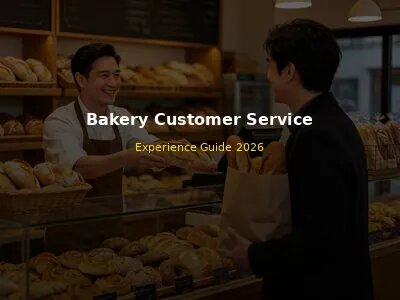
A story from our customer in Austin, USA: "We opened our artisan bakery with Great products — our sourdough was featured in the local paper, and food bloggers were raving about our croissants. But after 6 months, sales were flat. We couldn't figure it out — the products were great, the prices were fair, but customers weren't coming back. Then a regular customer told us the truth: the bread is Great, but the staff behind the counter are rude and unwelcoming. They never smile, they never greet customers, and they act like you're bothering them. We were shocked — we had focused fully on product quality and fully neglected customer service. We immediately put in placeed a customer service training program, hired a few naturally friendly staff members, and started leading by example (the owner started working the counter every morning). Within 3 months, our Google rating went from 3.6 to 4.7, repeat business increased by 40%, and we started getting word-of-mouth referrals. The lesson was hard but valuable: great products get customers in the door, but great customer service keeps them coming back. In the bakery business, customer service is not a nice-to-have — it's needed for survival and growth."
Customer service is one of the most matters — and most often overlooked — factors in bakery success. Great products get customers in the door, but it's Great customer service that turns first-time visitors into loyal regulars, generates positive word-of-mouth referrals, and builds a strong online reputation. In an industry where customers have many options (grocery stores, cafes, other bakeries, big-box stores), customer service is one of the few ways to truly differentiate and create lasting loyalty.When we first started manufacturing bakery equipment, we thought the machine was everything. After 10 years and thousands of installations, we know it's quite about the right fit for your specific operation.E.A.R.N. method), building customer loyalty and retention programs, personalization, community engagement, communication strategies, gathering and acting on feedback, measuring customer service performance, and creating a culture of service excellence. Whether you're a small artisan bakery or a large wholesale operation, these strategies will help you build stronger customer relationships, increase repeat business, and grow your bakery through Great customer experiences.
1. Why Customer Service Matters for Bakeries
Customer service is not a "soft" cost — it's a direct driver of revenue, profitability, and long-term success. Here's why it matters more for bakeries than for many other businesses:
1.1 The Financial Impact of Customer Service
| Reason | Impact of Good Service | Impact of Poor Service |
|---|---|---|
| Customer retention | 70-80% of customers return; higher lifetime value | 50-70% of customers leave after one bad experience |
| Word-of-mouth | Happy customer tells 2-3 friends; positive look overs | Unhappy customer tells 10-15 people; negative look overs |
| Online reputation | 4.5+ star rating; 20-40% more foot traffic | 3.5 star rating; lost customers to competitors |
| Average spend | Loyal customers spend 20-40% more per visit | One-time customers spend minimum amount |
| Price sensitivity | Loyal customers less price-sensitive; pay premium | Price-sensitive; switch for lower prices |
| Marketing cost | Free word-of-mouth; lower customer acquisition cost | Higher marketing spend to replace lost customers |
1.2 Important Statistics
- Repeat customers drive 70-80% of bakery revenue: Most bakery revenue comes from regulars, not one-time visitors. A daily regular who spends $5/day generates $1,500+/year. Losing one regular to poor service costs far more than most owners realize.
- Acquiring a new customer costs 5-10 times more than retaining an existing one: Investing in customer service to retain existing customers is one of the highest-ROI investments a bakery can make.
- 70-80% of customers whose complaints are resolved effectively will do business with you again: A well-handled complaint can create stronger loyalty than if the problem had never occurred.
- 85% of customers say they'd pay more for a better customer experience: Great service justifies premium pricing.
- 91% of unhappy customers will leave without complaining: Most dissatisfied customers just leave silently — you never get a chance to fix the problem. This makes proactive customer service even more important.
2. Elements of a Great Bakery Customer Experience
A great customer experience is the sum of every interaction a customer has with your bakery — from the moment they see your storefront to the moment they leave (and beyond, through follow-up communication). Here are the important elements:
2.1 The First Impression
- Storefront and signage: Clean, attractive, well-lit storefront with clear signage. Your storefront should communicate what you offer and invite customers in.
- The aroma: The smell of fresh baking is one of your most powerful marketing tools. Ensure proper ventilation that lets some baking aroma into the sales area (without making it uncomfortably warm or smoky).
- Cleanliness: A clean, organized store creates immediate trust. Floors, counters, display cases, tables, and restrooms should be spotless. Customers notice cleanliness — and they notice dirt.
- Visual appeal: Attractive product displays, good lighting, appealing packaging, and a warm, inviting color scheme. Products should look fresh and abundant (but not overstocked to the point of looking stale).
2.2 The Greeting
- Warm welcome: Greet every customer within 10 seconds of their entry. Make eye contact, smile, and offer a genuine welcome (Welcome! or Hi there, how can I help you today?).
- Personalization for regulars: Greet regulars by name and admit their usual order (Good morning, John! The usual sourdough and coffee?).
- admit waiting customers: If you're helping another customer, admit those waiting with eye contact, a smile, and I'll be right with you. Don't ignore waiting customers — it makes them feel invisible and unvalued.
2.3 The Interaction
- Product knowledge: Staff should know every product: ingredients, allergens, baking methods, flavor profiles, and recommendations. Customers ask questions (Is this vegan? Does this contain nuts? What's your most popular item?) — knowledgeable staff create trust and confidence.
- Active listening: Listen carefully to customer orders and requests. Repeat orders back to confirm (So that's one almond croissant, one sourdough loaf, and a medium latte — is that right?). This prevents mistakes and shows you're paying attention.
- Suggestive selling (not pushy): Tactfully suggest complementary products (Would you like a coffee with that croissant? We just pulled a fresh batch of cinnamon rolls — would you like to try one?). Suggestive selling increases average order value, but must be done naturally, not as a hard sell.
- Handling special requests: Be accommodating when possible (Can you slice this bread thicker? Do You've anything without nuts? Can you write a message on this cake?). Even if You can't fulfill a request, explain why politely and offer alternatives.
- Speed and efficiency: Process orders quickly and accurately. Long waits are the #1 cause of customer dissatisfaction. Have enough staff during peak hours, use efficient POS systems, and keep the line moving.
2.4 The Farewell
- Thank you: Thank every customer sincerely. A genuine Thank you, have a great day! or Thanks for coming in, see you tomorrow! leaves a positive lasting impression.
- Invite return: For first-time customers, invite them back (Hope you enjoy the croissant — come back and try our sourdough sometime!). For regulars, admit their next visit (See you tomorrow, John!).
- Handle payment gracefully: Process payment efficiently, hand back change and receipts neatly, and don't make customers feel rushed or like a transaction.
2.5 Beyond the Visit
- Follow-up: For large/custom orders, follow up to ensure satisfaction (Just checking in — how was the cake for your event?). This personal touch creates loyalty and generates referrals.
- Communication: Stay in touch through email newsletters, social media, and SMS alerts. Provide value (new products, baking tips, special offers) — don't just sell.
- Loyalty rewards: admit and reward repeat customers through a loyalty program. Make them feel appreciated for their continued business.
3. Hiring and Training Customer-Focused Staff
Your staff are the face of your bakery — their interactions with customers directly figure out the customer experience. Hiring and training the right people is important.
3.1 Hiring for Customer Service
- Hire for attitude, train for skills: Baking and POS skills can be taught, but personality, warmth, and customer focus are inherent. Look for candidates who are naturally friendly, patient, empathetic, and enjoy interacting with people.
- Behavioral interview questions: Ask scenario-based questions: Tell me about a time you dealt with an angry customer, How would you handle a long line of waiting customers?, What does good customer service mean to you? Listen for empathy, problem-solving, and customer focus in their answers.
- Observe interactions: During interviews, observe how candidates interact with you and others. Do they make eye contact? Smile? Listen actively? These behaviors predict how they'll interact with customers.
- Check references: Ask previous employers about the candidate's customer service skills, reliability, and teamwork. Specific references are more informative than generic ones.
- Trial shifts: For promising candidates, offer a paid trial shift (2-4 hours) to observe how they interact with customers and handle the pace of a real bakery environment. This is often the best predictor of success.
3.2 Customer Service Training Program
Develop a complete training program that covers:
- Customer service philosophy: Explain why customer service matters for the bakery, what great service looks like, and the bakery's service standards. Share stories of great (and not-so-great) customer experiences.
- Greeting and engagement: Train on greeting customers (eye contact, smile, warm welcome), acknowledging waiting customers, and personalizing interactions for regulars. Role-play different scenarios.
- Product knowledge: Train on every product: ingredients, allergens, baking methods, flavor profiles, storage, shelf life, and recommendations. Provide a product knowledge manual and conduct regular quizzes. Have new employees taste every product.
- Order taking and POS: Train on active listening, order confirmation, POS system operation, payment processing, and receipt handling. Practice until employees are fast and accurate.
- Suggestive selling: Train on natural, non-pushy suggestive selling techniques. Provide specific scripts and examples. Role-play with feedback.
- Complaint handling: Train on the L.E.A.R.N. method (Listen, Empathize, Apologize, Resolve, Notify). Role-play difficult customer scenarios. Empower employees to resolve issues within reasonable limits.
- Phone etiquette: Train on answering the phone promptly (within 3 rings), greeting professionally, taking orders accurately, and handling phone inquiries. Don't put customers on hold for long periods.
- Special requests and custom orders: Train on handling special requests (dietary restrictions, custom cakes, large orders), when to say yes, when to involve a manager, and how to set realistic expectations.
- Cleanliness and presentation: Train on maintaining a clean, organized store, attractive product displays, personal hygiene and appearance (clean uniform, hairnets, handwashing), and the importance of cleanliness for customer trust.
- Teamwork: Train on working as a team — helping coworkers during busy periods, communicating effectively, and supporting each other. Great customer service requires the whole team working together.
Training Tip
Training is not a one-time event — it's ongoing. Conduct daily 5-minute pre-shift huddles to look over a customer service topic, share feedback, and set the tone for the day. Conduct monthly training sessions on specific topics (complaint handling, product knowledge, suggestive selling). Use real customer interactions as teaching opportunities — both positive and negative. Shadow new employees for their first week and provide constructive feedback. The best customer service training is continuous, practical, and reinforced by leadership.
4. Creating a Welcoming Bakery Environment
The physical environment noticeably impacts the customer experience. A warm, inviting, well-organized bakery makes customers feel comfortable and encourages them to stay longer (and spend more).
4.1 Store Design and Layout
- Flow: Design the store layout for easy customer flow: entrance → display case → ordering counter → payment → pickup → exit. Avoid bottlenecks and confusion. Ensure the line doesn't block the entrance or display case.
- Display cases: Use attractive, well-lit display cases that showcase products at their best. Keep displays clean, organized, and well-stocked (but not overcrowded). Label products clearly with names, prices, and important attributes (vegan, gluten-free, nut-free). Rotate products to ensure freshness (front products are oldest).
- Lighting: Use warm, inviting lighting (2700-3000K color temperature) that makes products look appetizing. Avoid harsh fluorescent lighting. Use accent lighting to point out display cases and important products. Ensure the store is well-lit but not glaring.
- Temperature: Maintain a comfortable temperature (68-72°F / 20-22°C) in the sales area. Customers won't stay long if the store is too hot or too cold. Ensure proper ventilation that lets baking aroma in without making the area uncomfortably warm.
- Music: Play pleasant, background-appropriate music at a low volume (customers should be able to converse without raising their voices). Match music to your brand (jazz for upscale, acoustic for artisan, upbeat for casual). Avoid music with explicit lyrics or that polarizes customers.
- Seating (if space allows): If You've space for seating, provide comfortable tables and chairs. Ensure adequate spacing between tables (customers value personal space). Keep seating areas clean and organized. Free Wi-Fi encourages customers to stay longer (and buy more).
- Restrooms: If You've public restrooms, keep them spotlessly clean and well-stocked (soap, paper towels, toilet paper). Customers judge businesses by their restrooms — a dirty restroom undermines trust in food safety.
4.2 Sensory Experience
- Aroma: The smell of fresh baking is your most powerful sensory marketing tool. Bake throughout the day (not just early morning) so customers always encounter fresh-baking aroma. Use ventilation strategically — let some aroma into the sales area, but exhaust smoke and excessive heat.
- Visual: Products should look fresh, abundant, and appetizing. Use attractive packaging, garnishes, and display techniques. Keep the store visually clean and organized. Use your brand colors consistently.
- Tactile: Packaging should feel high-quality (sturdy boxes, nice paper bags, comfortable cup sleeves). Products should have appealing texture (crispy crust, soft crumb). The store should feel clean and well-maintained to the touch.
- look overory: The store should sound welcoming — friendly greetings, pleasant background music, the sounds of baking (mixers, ovens, espresso machines). Avoid loud, jarring noises (slamming doors, shouting, loud equipment in the sales area).
5. Reducing Wait Times and Improving Efficiency
Long waits are the #1 cause of customer dissatisfaction in bakeries. Reducing wait times improves customer satisfaction, increases throughput (more customers served), and reduces lost sales from customers who leave without buying.
5.1 Strategies to Reduce Wait Times
| Plan | Description | Impact |
|---|---|---|
| Adequate staffing | Schedule enough staff during peak hours (mornings, weekends, holidays). Cross-train employees to cover multiple positions. | High — most wait issues are staffing issues |
| Efficient POS system | Use a modern, fast POS system with product shortcuts, integrated payment, and customer-facing displays. Train staff to use it quickly. | High — slow POS is a common bottleneck |
| Pre-packaging | Pre-package popular items (bread loaves, cookies, pastries) so customers can grab and go without waiting for service. | Medium — reduces transaction time |
| Pre-ordering/pickup | Offer online/phone pre-ordering with a dedicated pickup counter. Customers skip the line fully. | High — removes customers from the line |
| Express line | Have a dedicated express line for simple orders (1-2 items, cash payment). Keeps the main line moving for complex orders. | Medium — reduces line length |
| Line management | Have a staff member manage the line during busy periods: greet waiting customers, take orders in advance, answer questions, and keep the line organized. | High — makes waits feel shorter |
| Menu simplification | Keep the menu focused — too many options slow down ordering and preparation. Offer a core menu with daily/weekly specials. | Medium — reduces decision time |
| Batch preparation | Prepare components in batches (brew coffee in batches, pre-slice bread, pre-make sandwiches) to reduce per-order preparation time. | Medium — speeds up fulfillment |
5.2 Making Waits Feel Shorter
Even with efficient operations, there will be waits during peak periods. Make waits feel shorter by:
- Acknowledging waiting customers: Eye contact, a smile, and I'll be right with you makes customers feel admitd and reduces frustration.
- Providing distractions: Interesting product displays, menu boards, reading materials, or a view into the kitchen (customers love watching bakers at work) distract from waiting.
- Offering samples: Offer small samples of products to waiting customers — it's a nice gesture, distracts from waiting, and may lead to additional purchases.
- Setting expectations: If there's a wait, tell customers approximately how long (It'll be about 5 minutes — thanks for your patience!). Unknown waits feel longer than known waits.
- Keeping the line moving: Even if service is slow, visible progress (the line is moving) reduces frustration. A line that isn't moving creates anxiety and anger.
6. Handling Customer Complaints Effectively
Complaints are inevitable in any bakery — but how you handle them figure outs whether you lose a customer or create a loyal one. A well-handled complaint can turn an unhappy customer into one of your biggest advocates.
6.1 The L.E.A.R.N. Method
- L — Listen: Let the customer tell their full story without interrupting. Maintain eye contact, nod, and use verbal acknowledgments. Don't get defensive or make excuses. The customer wants to feel heard.
- E — Empathize: Show that you understand and care about their frustration. Use phrases like: I can see why you'd be upset, That must have been disappointing. Empathy doesn't mean you agree — it means you admit their feelings.
- A — Apologize: Apologize sincerely for the problem, regardless of who's at fault. Use: I'm sorry this happened, We apologize for the inconvenience. Avoid non-apologies like I'm sorry you feel that way — they sound insincere.
- R — Resolve: Offer a solution. Ask what would make it right, but be prepared with options. Match the resolution to the severity: replace a defective product, refund a ruined custom order, offer a complimentary item for a long wait. Empower employees to resolve issues on the spot.
- N — Notify (follow up): Follow up to ensure satisfaction. For serious complaints, call/email a few days later. For minor complaints, a sincere thank-you and promise to do better suffices. Also, notify the team so everyone can learn and prevent recurrence.
6.2 Common Bakery Complaints and Resolutions
| Complaint Type | Example | Recommended Resolution |
|---|---|---|
| Product quality | "This croissant is burnt/stale/dry" | Apologize, replace with fresh product (no charge), offer complimentary item, look into cause |
| Wrong order | "This isn't what I ordered" | Apologize, remake the correct order immediately (no charge), let customer keep wrong order if safe, offer discount on next visit |
| Custom order issue | "The cake doesn't look like what I ordered" | Apologize, offer to remake if time allows, refund if not, offer discount on future order, look over order-taking process |
| Allergen/food safety | "There's a nut in my gluten-free pastry" | Take quite seriously, apologize, full refund, look into immediately, document, offer follow-up, look over allergen procedures |
| Long wait | "I've been waiting 20 minutes" | Apologize, admit the wait, offer complimentary item/discount, expedite their order, look over staffing |
| Rude staff | "Your employee was quite rude to me" | Apologize sincerely, take the complaint seriously, look into, follow up with customer, coach/discipline employee if warranted |
| Cleanliness | "Your store/restroom is dirty" | Apologize, clean immediately, thank for bringing to attention, look over cleaning schedule, follow up |
| Pricing dispute | "I was charged more than the advertised price" | Apologize, honor the lower price, look into pricing discrepancy, update signage/POS if needed |
6.3 Handling Online Complaints and look overs
- Respond to every look over: Respond to both positive and negative look overs. For positive look overs, thank the customer and express appreciation. For negative look overs, apologize, offer to resolve, and invite them to contact you directly (phone/email) to discuss further.
- Respond promptly: Respond to negative look overs within 24 hours. A prompt response shows you care and may prevent the customer from escalating (posting on more platforms, telling more friends).
- Don't argue online: Never argue with a customer in a public look over. Even if you're right, arguing makes you look defensive and unprofessional. Take the conversation offline.
- Don't disclose private details: Don't share the customer's personal information, order details, or any private communication in a public response. Respect their privacy.
- Use look overs for improvement: Regularly look over all feedback (positive and negative) to spot patterns and improvement areas. Share look overs with the team (anonymized) as learning opportunities.
- Encourage positive look overs: Happy customers often don't think to leave look overs. Gently encourage satisfied customers to leave a look over (We'd love to hear about your experience — here's a link to our Google page). Don't offer incentives for look overs (violates platform policies).
7. Building Customer Loyalty and Retention
Customer loyalty is the holy grail of bakery success — loyal customers spend more, visit more often, refer friends, and are less price-sensitive. Building loyalty requires consistent effort across multiple touchpoints.
7.1 Loyalty Program Options
| Program Type | How It Works | Best For | Cost |
|---|---|---|---|
| Punch card | Buy 9, get 1 free. Simple paper card with punches. | Small bakeries, low-tech | Low (printing cards) |
| Points system | Earn points per dollar spent, redeem for free products/discounts. | Medium bakeries, more sophisticated | Medium (POS integration or app) |
| Subscription/club | Monthly subscription for set products (Bread of the Month, Pastry Box). | Artisan bakeries, recurring revenue | Medium (management and fulfillment) |
| App-based | Digital loyalty app with personalized offers, birthday rewards, push notifications. | Large bakeries, tech-savvy customers | High (development and maintenance) |
| Tiered rewards | Multiple tiers (Bronze, Silver, Gold) with increasing benefits from spend/visits. | Bakeries with high-volume regulars | Medium-High (management) |
7.2 Loyalty Program Best Practices
- Make it easy to understand and use: Customers won't participate if the program is confusing or requires too much effort. Simple punch cards work because everyone understands them.
- Offer meaningful rewards: A free pastry after 10 purchases is meaningful; 5% off is not. The reward should feel like a genuine thank-you, not a token gesture.
- Celebrate milestones: admit customer milestones (10th visit, 50th visit, 1-year anniversary) with a special reward or recognition. This makes customers feel valued.
- Birthday rewards: Offer a free product or discount on the customer's birthday. This is one of the most popular loyalty program features and creates positive emotional association.
- Personalize offers: Use loyalty program data to offer personalized rewards (a customer who always buys croissants gets a free croissant; a customer who buys bread gets a free loaf). Personalized offers have higher redemption rates.
- Exclusive access: Offer loyalty members early access to new products, pre-orders for holiday items, exclusive products, and special events (tasting nights, baking classes). Exclusivity makes membership feel valuable.
- Track and look at: Track loyalty program participation, redemption rates, and impact on customer retention and spending. look at which rewards are most popular and adjust the program So.
7.3 Beyond Loyalty Programs: Building Emotional Loyalty
Loyalty programs are useful, but true loyalty is emotional — customers feel connected to your bakery and choose you over competitors because of how you make them feel. Build emotional loyalty by:
- Knowing customers personally: Learn regulars' names, preferences, families, and stories. A bakery where the owner knows your name and asks about your kids creates a connection that no competitor can match.
- Being part of the community: Sponsor local events, donate to food banks, participate in farmers markets, support local schools. Customers feel loyal to businesses that give back to their community.
- Creating a "third place": Make your bakery a place where customers want to spend time — comfortable seating, free Wi-Fi, good music, friendly staff. A bakery that becomes a customer's "third place" (after home and work) earns deep loyalty.
- Sharing your story: Customers connect with stories — why you started the bakery, your baking philosophy, your commitment to quality. Share your story through your website, social media, in-store signage, and personal interactions. Authenticity builds trust and loyalty.
- Being consistent: Loyalty is built through hundreds of consistent, positive interactions. Customers should know exactly what to expect every time — same quality, same friendly service, same great products. Inconsistency erodes trust faster than anything.
- Saying thank you: Express genuine gratitude regularly. A sincere thank-you, a handwritten note with a large order, a small free sample for a regular, or a public shout-out on social media all make customers feel appreciated.
8. Gathering and Acting on Customer Feedback
Customer feedback is one of your most valuable resources — it tells you what you're doing well, what needs improvement, and what customers want that you don't currently offer. But feedback is only valuable if you gather it systematically and act on it.
8.1 Methods for Gathering Feedback
- In-person conversations: The simplest and most valuable method. Ask customers casually: How is everything today? Is there anything we could do better? What's your favorite product? Train staff to ask for feedback and report it to management.
- Comment cards: Place simple comment cards near the counter or on tables. Ask 3-5 questions: How was your experience? What did you enjoy? What could we improve? Would you recommend us? Provide a drop box for completed cards.
- Online surveys: Send short surveys (5-10 questions) to email newsletter subscribers or loyalty program members. Offer a small incentive (10% off next visit) for completion. Keep surveys short — completion rates drop sharply after 10 questions.
- Online look overs: Monitor Google, Yelp, Facebook, and other look over platforms regularly. look overs are candid feedback that customers may not share in person. Respond to every look over.
- Social media: Monitor comments, direct messages, and mentions on social media. Customers often share feedback (positive and negative) on social platforms.
- Mystery shopping: Hire a mystery shopper (or ask a friend) to visit your bakery anonymously and judge the customer experience. Mystery shoppers catch issues that regular customers may not mention.
- Customer advisory group: Invite 5-10 loyal regulars to a quarterly focus group (provide free food and coffee). Ask for detailed feedback on products, service, and ideas for improvement. This provides deep, qualitative feedback.
- Point-of-sale data: look at sales data to spot trends: which products are selling (and which aren't), peak hours, average order value, repeat customer rate. Sales data is objective feedback on what customers value.
8.2 Acting on Feedback
Gathering feedback is useless if you don't act on it. Create a feedback-to-action process:
- Collect and organize: Gather feedback from all sources into one place (a spreadsheet or feedback management tool). Categorize by type (product, service, environment, pricing, new ideas).
- look at patterns: look over feedback weekly (management) and monthly (full team). Look for patterns and recurring issues. One customer complaining about slow service is an anecdote; ten customers complaining is a pattern that needs action.
- focus on: Not all feedback requires action. focus on from: frequency (how many customers mention it), impact (how much does it affect the customer experience), and feasibility (how easy/costly is it to fix). Focus on high-frequency, high-impact, high-feasibility items first.
- put in place changes: Assign responsibility for each action item, set a deadline, and track progress. Communicate changes to the team (and to customers, when appropriate).
- Follow up: After put in placeing a change, follow up with customers who provided the feedback: We heard your feedback about long waits and added a second register during morning hours — we'd love to know if you notice an improvement. This closes the loop and shows customers their feedback matters.
- Measure impact: Track whether changes actually improved the metrics you intended (e.g., did adding a register reduce wait times? Did the new product customers asked for sell well?). If a change didn't have the intended impact, try a different way.
9. Measuring Customer Service Performance
You can't improve what you don't measure. Establish important metrics to track customer service performance and spot areas for improvement.
9.1 Important Customer Service Metrics
| Metric | What It Measures | How to Track | Target |
|---|---|---|---|
| Customer Satisfaction Score (CSAT) | Overall satisfaction with the experience | Post-visit survey: How satisfied were you? (1-5 scale) | 4.2+/5.0 |
| Net Promoter Score (NPS) | Likelihood to recommend to others | Survey: How likely are you to recommend us? (0-10 scale) | 50+ (good), 70+ (Great) |
| Online rating | Average star rating on Google/Yelp/Facebook | Monitor look over platforms weekly | 4.5+/5.0 |
| Repeat customer rate | % of customers who return within 30 days | POS data / loyalty program data | 40%+ (retail), 80%+ (wholesale) |
| Average wait time | Average time from entry to receiving order | Timed observations during peak hours | Under 5 minutes |
| Order accuracy | % of orders fulfilled correctly (no mistakes) | Track returns/complaints; mystery shopping | 98%+ |
| Complaint rate | Number of complaints per 100 customers | Complaint log / POS transactions | Under 2% |
| Complaint resolution rate | % of complaints resolved to customer satisfaction | Follow-up after complaint resolution | 90%+ |
| Customer lifetime value (CLV) | Average total revenue per customer over their relationship | POS data / loyalty program data | Increasing year-over-year |
| Employee retention | % of employees retained over 6/12 months | HR records | 70%+ (12 months) |
9.2 Using Metrics to Drive Improvement
- Track consistently: Measure metrics on a regular schedule (weekly for operational metrics, monthly for satisfaction/loyalty metrics). Use the same method each time for comparability.
- Share with the team: Share metrics with the whole team in weekly huddles and monthly meetings. When employees see the impact of their service (our CSAT went up to 4.6 this month — great job!), they're motivated to continue.
- Set goals: Set specific, measurable goals for each metric (Increase Google rating from 4.2 to 4.5 within 3 months, Reduce average wait time to under 4 minutes). Track progress toward goals.
- look into anomalies: When a metric suddenly drops (CSAT drops from 4.5 to 3.8), look into immediately. Talk to employees, look over customer feedback, and spot the cause. Quick response prevents small issues from becoming big problems.
- Celebrate improvements: When metrics improve, celebrate with the team. Recognition reinforces positive behavior and motivates continued improvement.
- Don't over-rely on metrics: Metrics are useful tools, but they don't capture everything. A customer may be "satisfied" (4/5) but not loyal. Balance metrics with qualitative feedback (conversations, look overs, focus groups) to get a complete picture.
10. Creating a Culture of Service Excellence
Sustainable customer service excellence requires more than training programs and SOPs — it requires a culture where every employee is committed to providing Great service, and where service excellence is embedded in how the bakery operates.
10.1 Building a Service Culture
- Define your service vision: Create a clear, inspiring statement of what great service means at your bakery (e.g., We make every customer feel like a regular, or We serve joy, one pastry at a time). Communicate this vision repeatedly — in training, in huddles, in signage, in hiring. Make it part of your bakery's identity.
- Lead by example: Owners and managers must show the service behaviors they expect. If the owner is rude to customers or ignores waiting customers, employees will follow suit. Be visible on the floor, interact with customers, handle difficult situations personally, and show genuine care for both customers and employees.
- Hire for cultural fit: Hire employees who align with your service values. During interviews, judge not just skills but attitude, empathy, and customer focus. A skilled baker with a bad attitude will undermine your service culture; a friendly person with average skills can be trained to be great.
- Empower employees: Give employees the authority, tools, and information to provide great service. Empower them to resolve customer issues on the spot (within reasonable limits). Provide them with product knowledge, training, and support. When employees feel empowered, they take ownership of the customer experience.
- see and reward: admit and reward employees who provide Great service. Use specific recognition (I saw how you handled that upset customer — that was great, not just Good job). Offer tangible rewards (employee of the month, small bonuses, extra time off, public recognition). Celebrate positive customer look overs and share them with the team.
- Communicate openly: Maintain open, two-way communication with employees. Share customer feedback (positive and negative) with the team. Ask employees for their ideas on improving service. Hold regular team meetings to discuss service issues and improvements. When employees feel heard and informed, they're more engaged and committed.
- Invest in employee well-being: Happy employees provide better customer service. Invest in employee well-being: fair wages, reasonable schedules (no mandatory overtime), breaks, a positive work environment, opportunities for growth, and work-life balance. Burned-out, stressed employees can't provide great service — no matter how much training they receive.
- Make service everyone's responsibility: Customer service is not just the job of front-counter staff — it's everyone's responsibility. Bakers should care about product quality (which affects customer satisfaction). Dishwashers should care about clean dishes (which affects the customer experience). Delivery drivers should care about on-time, friendly delivery. Instill a culture where every employee understands how their role contributes to the customer experience.
- Continuously improve: Service excellence is a journey, not a destination. Regularly look over customer feedback, spot improvement areas, put in place changes, and measure results. Encourage employees to suggest improvements and experiment with new ideas. Celebrate successes and learn from failures. A culture of continuous improvement ensures your service keeps getting better over time.
Ready to Take the Next Step?
Tell us about your bakery, your production volume, and your budget. We will recommend the right equipment for your specific needs — no pressure, no obligation.
Get Free Equipment Consultation →11. Conclusion: Customer Service Is Your Competitive Advantage
In the bakery industry, great products are necessary but not sufficient. Customers have many options — grocery stores, cafes, other bakeries, big-box stores — and most offer decent products at similar prices. What truly differentiates a successful bakery from an average one is the customer experience: the warm greeting, the personal connection, the efficient service, the handling of problems, the feeling of being valued.
Customer service is not a cost center — it's a profit driver. Great customer service increases customer retention (loyal customers spend 20-40% more and visit more often), generates word-of-mouth referrals (the most cost-effective marketing channel), builds a strong online reputation (4.5+ star ratings drive 20-40% more foot traffic), and creates emotional loyalty that makes customers resistant to competitor offers. The cost of acquiring a new customer is 5-10 times higher than retaining an existing one — so investing in customer service to retain existing customers is one of the highest-ROI investments a bakery can make.
Building a customer service-focused bakery requires: hiring friendly, customer-focused employees; providing complete, ongoing training; creating a welcoming, well-organized environment; reducing wait times and improving efficiency; handling complaints effectively (turning problems into loyalty opportunities); building customer loyalty through programs and personal connections; gathering and acting on customer feedback; measuring customer service performance; and creating a culture of service excellence where every employee is committed to making every customer feel valued.
Customer service is not a one-time project — it's an ongoing commitment that requires consistency, leadership, and continuous improvement. But the payoff is large: higher customer retention, more word-of-mouth referrals, better online look overs, increased average order value, higher customer lifetime value, and finally, a more profitable and sustainable bakery business.
Start today: pick one area from this guide to focus on first (greeting customers more warmly, reducing morning wait times, put in placeing a loyalty program, training on complaint handling), put in place it consistently for 30 days, measure the impact, and then add the next area. Over time, these small, consistent improvements will transform your bakery's customer experience and create a loyal customer base that drives sustainable growth. Remember: every customer interaction is an opportunity to build loyalty — make every one count.
📋 Bakery Equipment ROI Calculator
Use our interactive ROI calculator to see how quickly your bakery equipment investment pays off.
Calculate Your Equipment ROI →📋 Bakery Equipment Maintenance Calendar
Get our printable maintenance calendar to keep your bakery equipment running at peak performance.
Printable Maintenance Calendar →📋 Bakery Equipment Energy Cost Calculator
Estimate your bakery equipment energy costs and find ways to reduce your utility bills.
Calculate Energy Costs →Related Articles
Learn More
- 👉 Bakery Equipment Selection Complete Guide: Choose by Output & Product
- 👉 Bakery Equipment Maintenance Schedule: Daily, Weekly, Monthly, Yearly
- 👉 Dough Divider Rounder Troubleshooting: 15 Common Problems & Solutions
- 👉 Small Bakery Equipment ROI & Payback Period Calculator
- 👉 Bakery Equipment Energy Consumption & Energy Saving Guide
- 👉 Bakery Equipment Food Safety & Hygiene Compliance Complete Guide