Related Articles
Related Products
Ready to Upgrade Your Bakery?
Get a free quote on commercial bakery equipment from HNH.
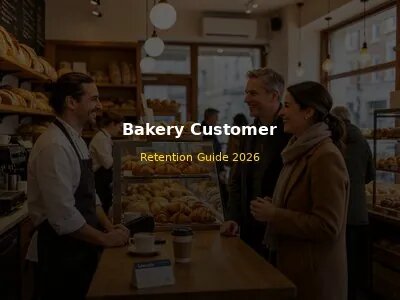
The complete guide to building customer loyalty in your bakery: customer lifetime value, loyalty programs, customer experience optimization, personalization, email marketing, complaint handling, community building, churn reduction strategies, and a 30-day action plan to turn one-time visitors into lifelong regulars.
Bakery customer retention loyalty guide: Increasing customer retention by just 5% increases profits by 25-95% (Harvard Business look over). The complete guide covers 8 areas: (1) Customer Retention Metrics—measure what matters: customer retention rate = ((customers at end of period - new customers getd) / customers at start of period) × 100; target 70%+ annually. Repeat purchase rate = number of customers who purchased more than once / total customers × 100; target 50%+. Customer churn rate = customers lost / total customers × 100; target <10% monthly. Customer Lifetime Value (CLV) = average purchase value × purchase frequency × customer lifespan; aim to increase CLV by 20%+ annually. Net Promoter Score (NPS) = % promoters - % detractors; target 50+. Track these monthly using POS data and email marketing software. (2) First Impression and Onboarding—the first 30 days figure out long-term loyalty: welcome experience (greet every new customer warmly, offer a free sample of your signature product, explain your story briefly, collect their email/phone for future communication with permission), loyalty program signup (offer immediate incentive to join: 'Sign up today and get 10% off your next purchase' or 'Free pastry on your birthday'), follow-up (send a thank-you email within 24 hours with a special offer for their next visit, include your story, product recommendations, and storage tips), personalization (use their name in communications, reference their first purchase, recommend complementary products), make it easy to return (no-hassle return policy, if they don't love it, refund or replace—this builds trust and actually reduces returns long-term). (3) Loyalty Programs—structured rewards drive repeat visits: points-based program (1 point per $1 spent, 100 points = $5 off, or buy 10 get 1 free—simpler is better, use POS-integrated system like Square Loyalty, Toast, Clover, or even a paper punch card if budget tight), tiered rewards (Bronze: 0-500 points = 5% off all purchases; Silver: 500-1500 = 10% off + free birthday treat + early access to seasonal products; Gold: 1500+ = 15% off + free monthly bread + exclusive baking classes + priority ordering), birthday rewards (free bread or pastry on birthday—collect birthdays at signup, send email 3 days before birthday with coupon, this drives visits and makes customers feel special), bread subscription (weekly/biweekly delivery or pickup, 10% discount, guaranteed revenue for you, convenience for them, can pause/skip—this is the ultimate retention tool because it creates habitual purchasing), referral program (give $10, get $10—existing customer refers friend, both get $10 credit; referrals have 3x higher CLV than other customers because they come with built-in trust; make sharing easy with unique referral links/codes). (4) Personalization and Relationship Building—people buy from people: know your customers (use POS to track purchase history, remember regulars' orders, greet by name, ask about their family/weekend—this creates emotional connection), personalized recommendations (from purchase history: if they buy sourdough, recommend your butter or jam; if they buy croissants, recommend your coffee pairing; send targeted emails: 'We noticed you love our sourdough—try our new rye sourdough this week'), customer appreciation (host customer appreciation days (free samples, discounts, meet the baker), send handwritten thank-you notes to top 20 customers quarterly, remember special occasions (anniversaries, new baby, job promotion) and send a small free treat, create a 'Baker's Circle' VIP group for top customers with exclusive perks), community building (create Facebook/Instagram group for customers, host monthly baking classes or bread tasting events, feature customers on social media (with permission), sponsor local events and involve customers, create a sense of belonging—customers who feel part of a community are 3x more loyal). (5) Great Customer Service—service is the #1 retention driver: greeting protocol (greet within 3 seconds, eye contact, smile, use name if known, 'Welcome back!' for returning customers), active listening (let customers fully explain, don't interrupt, show empathy, repeat back to confirm understanding), problem resolution (L.A.S.T. method: Listen, Apologize, Solve, Thank; empower staff to resolve issues up to $20 without manager approval; 95% of unhappy customers return if complaint resolved quickly and satisfactorily), follow-up (after a complaint, follow up in 2-3 days to ensure satisfaction; after a large purchase or special order, send a thank-you note; this shows you care beyond the transaction), consistency (every customer, every visit, every employee should deliver the same level of service—document service standards, train regularly, mystery shop quarterly), staff happiness (happy employees = happy customers; invest in training, fair wages, positive culture, recognition—employees who feel valued deliver better service). (6) Email Marketing for Retention—email has 4x higher ROI than social media ($42 return per $1 spent): build your list (offer incentive at signup: 10% off first order, free pastry, exclusive recipes; collect at checkout, on website, on social media, in-store; ask for permission—never buy lists), segment your list (new customers (welcome series), regular customers (loyalty rewards, new products), lapsed customers (win-back offers), VIP customers (exclusive perks), by purchase preference (bread lovers, pastry lovers, cake lovers, gluten-free), send targeted content to each segment), email calendar (weekly newsletter (new products, baking tips, special offers, behind-the-scenes—send Tuesday or Wednesday morning, 8-10am), seasonal promotions (holiday products, limited editions, pre-order deadlines), birthday emails (3 days before birthday with coupon), win-back emails (customers inactive 60+ days: 'We miss you! Here's 20% off to come back'), transactional emails (order confirmations, receipts, delivery updates—these have highest open rates, include cross-sell offers), email content best practices (subject line under 50 characters, personalize with first name, mobile-first design (70%+ open on mobile), one clear call-to-action per email, include product photos, keep copy concise, A/B test subject lines, monitor open rate (target 20-30%), click rate (target 2-5%), unsubscribe rate (target <0.5%), use tools like Mailchimp, ConvertKit, or Klaviyo (e-commerce focused)). (7) Win-Back Strategies for Lapsed Customers—recovering lost customers is 5x cheaper than acquiring new ones: spot lapsed customers (no purchase in 60+ days = at risk; 90+ days = lapsed; use POS data to spot), win-back email sequence (Email 1 (day 1): 'We miss you!' + 10% off, friendly tone, remind them of what they love; Email 2 (day 7): 'Here's what you've missed' + new products since their last visit + 15% off; Email 3 (day 14): 'Final offer' + 20% off + free item, create urgency; if no response after 3 emails, move to less frequent communication (monthly newsletter only)), personal outreach (for top 50 lapsed customers, call or send handwritten note—personal touch has 3x higher response rate than email; ask why they stopped coming, offer to make it right, invite them back with special offer), survey lapsed customers (send short survey (3-5 questions) with incentive (free bread for completion): What made you stop visiting? What would bring you back? What products do you wish we offered? Use feedback to improve; common reasons: moved away, found cheaper option, quality declined, service issue, forgot about you—deal with each), re-engagement events (host a 'We Miss You' event with free samples and discounts, invite lapsed customers personally, create a reason to come back and experience improvements). (8) Retention Metrics and Continuous Improvement—track, measure, improve: monthly retention dashboard (retention rate, repeat purchase rate, churn rate, CLV, NPS, loyalty program enrollment %, active loyalty members %, email open/click rates, customer satisfaction score, look over ratings), spot trends (are retention rates improving or declining? Which segments have highest/lowest retention? What events correlate with changes? Are new customers returning within 30 days?), A/B test retention strategies (test different loyalty program structures, email subject lines, welcome offers, referral incentives—measure which drives higher retention), customer feedback loops (quarterly customer surveys (3-5 questions, offer incentive), online look over monitoring (Google, Yelp, Facebook—respond to all), in-store feedback (comment cards, simply ask 'How was everything?'), staff feedback (weekly huddles to discuss customer comments), annual look over and plan (look over retention metrics annually, spot what worked and what didn't, set goals for next year, update strategies, allocate budget to highest-ROI retention tactics), budget allocation (loyalty program costs: $100-300/month (free items, discounts), email marketing: $50-200/month (software, content creation), customer appreciation: $100-300/month (events, samples, gifts), personalization: $50-150/month (time, tools), win-back: $50-200/month (offers, outreach). Total: $350-1,150/month. Expected ROI: 4:1 to 10:1—retention is the highest-ROI marketing activity because you're selling to people who already know and love you.
Published: September 8, 2026 | Reading time: 15 minutes
"When I opened my artisan bakery in Seattle, I focused all my energy on getting new customers through the door. I ran ads, did sampling events, offered grand opening discounts — and it worked. We had a line out the door the first month. But by month three, the line was gone. I was spending more on marketing every month just to keep the same revenue. Then a mentor told me something that changed everything: 'It costs 5 times more to get a new customer than to keep an existing one. Stop chasing new customers and start taking care of the ones you already have.' I shifted my focus to retention: I learned regulars' names and orders, started a simple punch card loyalty program, sent a weekly email with new products and baking tips, and created a 'regulars table' where locals could gather. Within 6 months, my revenue was up 40% — and my marketing costs were down 60%. The best part? I didn't have to work as hard. My regulars did the marketing for me by bringing friends and telling everyone about our bakery. Customer retention isn't about being cheap or giving away free stuff. It's about building relationships, making people feel valued, and creating an experience they can't get anywhere else. This bakery customer retention guide will show you exactly how to do that."
— HNH Bakery Equipment, Helping Bakeries Succeed Since 2019
When it comes to bakery customer, choosing the right equipment is crucial for bakery success. HNH Bakery Equipment provides professional bakery customer solutions for bakeries worldwide. In this guide, we explore everything you need to know about bakery customer and how to select the best equipment for your bakery.
Most bakery owners spend all their time and money trying to get new customers. But the real profit is in keeping the customers you already have. Here's why:
Customer Lifetime Value is the total revenue a customer generates for your bakery over the entire relationship. Understanding CLV helps you make smarter decisions about how much to invest in acquiring and retaining customers.
CLV = Average Transaction Value × Purchase Frequency × Customer Lifespan
Example calculation:
That means every regular customer is worth nearly $4,000 to your bakery over 3 years. Losing one regular customer costs you $4,000 in future revenue. Keeping that customer for 5 years instead of 3 increases their value to $6,630. This is why retention is so valuable.
Important Insight: If You've 200 regular customers with an average CLV of $4,000, that's $800,000 in future revenue. Increasing retention by just 10% (keeping 20 more customers) adds $80,000 in future revenue. And the cost to retain those customers is a fraction of what it would cost to get 20 new ones.
You can't retain customers if you don't know who they are, what they want, and why they come to your bakery. The first step to retention is understanding your customers deeply.
Not all customers are the same. Segment your customers into groups so You can tailor your retention efforts to each group:
| Segment | Description | Retention Plan |
|---|---|---|
| VIPs / Super Fans | Top 10% of customers by spending/visits. Visit 3+ times/week. Spend $50+/week. | Personal recognition, exclusive plook overs, free upgrades, VIP events, handwritten thank-you notes. |
| Regulars | Visit 1-2 times/week. Spend $20-$50/week. Know your menu. | Loyalty program rewards, personalized offers, first access to new products, remember their order. |
| Occasional | Visit 1-3 times/month. Spend $10-$30/visit. May be trying you out. | Welcome emails, incentives to visit more often, new product announcements, "we miss you" offers. |
| One-Time / New | First visit or only visited once. High churn risk. | Welcome offer, "come back for 15% off" coupon, follow-up email, ask for feedback. |
| At-Risk / Lapsed | Used to visit regularly but haven't been in 30+ days. | "We miss you" email with strong incentive, personal outreach, win-back offer, ask what changed. |
| Wholesale / B2B | Cafes, restaurants, offices that buy in bulk. | Dedicated account manager, volume discounts, consistent quality, reliable delivery, quarterly business look overs. |
The #1 reason customers keep coming back is the experience — not the products, not the price, but how you make them feel. A great product with bad service will lose to an average product with great service every time. Here's how to create an experience that keeps customers coming back:
A loyalty program is one of the most effective retention tools — but only if it's designed well. Most bakery loyalty programs are too complicated, too generous (unprofitable), or too stingy (not motivating). Here's how to build one that works:
| Program Type | How It Works | Cost | Best For |
|---|---|---|---|
| Punch Card | Buy 9, get 1 free. Physical card punched at each visit. | $0.05-$0.10/card | Small bakeries, low tech, simple |
| Digital Stamp | App-based digital stamps (Stamp Me, Perkville, etc.). | $20-$100/month | Tech-savvy bakeries, tracking |
| Points-Based | Earn points per dollar spent, redeem for rewards. | $50-$200/month | Medium/large bakeries, flexibility |
| Subscription/Membership | Monthly/annual fee for exclusive benefits (discount, free coffee, early access). | Minimal (tracking) | Established bakeries with regulars |
| Tiered VIP | Bronze/Silver/Gold tiers with increasing benefits. | Software + rewards | High-volume bakeries, gamification |
Email marketing has the highest ROI of any marketing channel ($36-$42 return for every $1 spent). It's also one of the most effective retention tools — it keeps you top-of-mind and gives you a direct line to your customers. Here's how to do it right:
The best bakery emails are 80% value/entertainment and 20% promotion. If every email is "20% off this week," customers will unsubscribe. But if you provide valuable content, they'll look forward to your emails.
| Content Type | Examples | Frequency |
|---|---|---|
| New Products | "New: Salted Caramel Croissants are here!" "Limited edition: Pumpkin Spice Muffins" | 1-2x/month |
| Behind the Scenes | "Meet Maria, our head baker" "How our sourdough is made" "A day in our bakery" | 1x/month |
| Recipes & Tips | "5 ways to use day-old bread" "How to store bread to keep it fresh" "Our favorite bread recipe" | 1-2x/month |
| Events & Community | "Baking class this Saturday" "Customer appreciation day" "Holiday market schedule" | As events happen |
| Special Offers | "Loyalty member exclusive: BOGO free" "Holiday pre-order special" "Refer a friend, get $5" | 1-2x/month |
| Customer Spotlights | "Customer of the month: John" "Why Sarah loves our bakery" "Regulars share their favorites" | 1x/month |
| Holiday Reminders | "Last day for Thanksgiving pre-orders" "Christmas hours" "Order your Valentine's treats" | Before holidays |
How you handle complaints can make or break customer loyalty. study shows that 95% of unhappy customers will return if their complaint is resolved quickly and satisfactorily. And customers who have a complaint resolved well often become more loyal than customers who never had a complaint at all (the "service recovery paradox").
Empower Your Staff: Give your staff authority to resolve complaints up to a certain dollar amount (e.g., $20) without manager approval. This speeds up resolution and makes customers happy. Train them on the 5-step process and role-play common complaint scenarios. A staff member who can resolve a complaint on the spot is worth their weight in gold.
The most loyal bakeries aren't just places to buy bread — they're community hubs. When customers feel a sense of belonging and community, they become emotionally attached and will choose you over any competitor, even if you're more expensive.
Even with the best retention efforts, some customers will stop coming. The important is to spot at-risk customers early and win them back before they're gone for good. Here's how:
Win-Back Stats: 20-30% of lapsed customers can be won back with a well-timed, personalized campaign. Winning back a customer costs 5-10x less than acquiring a new one. And customers who are won back often become more loyal than before — they appreciate that you cared enough to reach out. Don't give up on lapsed customers too easily.
Customer retention is the most profitable investment You can make in your bakery. A 5% increase in retention can increase profits by 25-95%. And it doesn't require a Large budget — it requires attention, consistency, and genuine care for your customers. When you buy from us, you work directly with the people who build the machines — not a sales team reading from a script. When your equipment works perfectly every day, You can focus on what matters most: building relationships with your customers. Contact us for a free consultation on equipment that will help your bakery thrive.
Use our interactive ROI calculator to see how quickly your bakery equipment investment pays off.
Calculate Your Equipment ROI →Get our printable maintenance calendar to keep your bakery equipment running at peak performance.
Printable Maintenance Calendar →Estimate your bakery equipment energy costs and find ways to reduce your utility bills.
Calculate Energy Costs →Complete guide to bakery marketing plan and growth.
Complete guide to bakery customer service and experience.
Complete guide to bakery brand building and marketing.
Get a free quote on commercial bakery equipment from HNH.