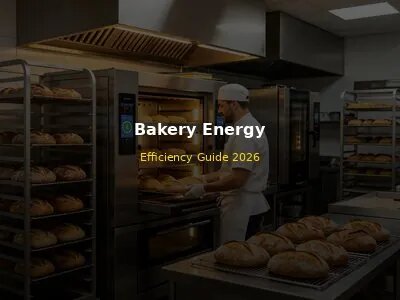
After 7 years selling bakery equipment to over 20 countries, the question I hear more than any other is: "Should I buy a rotary oven or a deck oven?" It's not a simple answer because both machines do Great work — but they're designed for different types of bakeries and different products.
Quick Answer
Rotary oven vs deck oven: Complete comparison. (1) Deck oven: Stone hearth, radiant heat, 1-4 decks. Capacity: 4-12 loaves/batch (per deck); Price: $800-$8,000; Best for: artisan bread, pizza, croissants, baguettes, small-medium volume (20-200 loaves/day). Pros: Great crust quality (radiant heat + steam), versatile (bread + pizza + pastries), durable (15-25 years), no moving parts (low maintenance), lower price, gas or electric, better flavor development. Cons: lower volume (4-12 loaves/batch), longer bake time, needs skill (temp management, steam), heavy, loading/unloading labor-intensive, limited capacity per batch. (2) Rotary oven: Rotating rack inside chamber, hot air circulation. Capacity: 30-60+ loaves/batch (1-2 racks); Price: $5,000-$20,000; Best for: medium-high volume bread, pastries, cookies (200-1,000+ loaves/day). Pros: high volume (30-60 loaves/batch, 5-10x deck), consistent baking (rotating rack = even heat), efficient (one person loads/unloads rack), gas efficient, programmable (some models), less labor per loaf. Cons: expensive ($5,000-$20,000), large/heavy (500-1,500 lbs, 7-8ft tall), needs hood + gas line (adds cost), less artisan control (convection heat dries crust), moving parts (more maintenance—rack drive, fans, motors), lower crust quality than deck for artisan bread, electric rotary costly to operate. (3) Important differences: Heat type (deck = radiant + conduction from stone; rotary = convection hot air); Crust quality (deck = Great, thick crispy crust; rotary = good, but thinner/less crispy for artisan bread); Volume (deck = 4-12 loaves/batch; rotary = 30-60+ loaves/batch); Labor (deck = load/unload each tray, labor-intensive; rotary = load/unload rack once, efficient); Price (deck = $800-$8K; rotary = $5K-$20K); Space (deck = medium, stackable; rotary = large, tall, heavy); Maintenance (deck = simple, no moving parts; rotary = more complex, rack drive/fans/motors); Skill (deck = needs skill, temp management; rotary = easier, programmable); Energy (deck = gas or electric; rotary = gas strongly preferred—electric costly); Product range (deck = bread, pizza, pastries; rotary = bread, pastries, cookies, sheet items—less ideal for pizza/artisan). (4) How to choose: 70%+ artisan bread (baguette, sourdough, croissant) → deck oven (a must for crust quality); 200+ loaves/day → rotary oven (deck can't keep up); Mixed bakery (bread + pastries, medium volume 50-200 loaves/day) → deck oven (versatile, better quality); High-volume bread factory (500+ loaves/day) → rotary oven (necessary for volume); Pizza-focused → deck oven (stone hearth fundamental for pizza); Budget <$5,000 → deck oven (rotary too expensive); Limited space/ceiling <8ft → deck oven (rotary too tall); New/startup bakery → deck oven (lower risk, versatile, learn craft); Established/growing bakery → add rotary oven for volume (keep deck for artisan products); Best combination for growing bakery: deck oven (artisan bread, pizza) + rotary oven (high-volume bread, pastries) — covers both quality and volume. (5) Cost comparison (10-year TCO): Deck: $3,000 purchase + $300/year maintenance × 10 = $3,000 + $3,000 = $6,000; labor: 2hr/day loading/unloading × $15 × 30 days × 12 months × 10 years = $108,000; energy: $150/month × 12 × 10 = $18,000; total = $132,000. Rotary: $10,000 purchase + $600/year maintenance × 10 = $10,000 + $6,000 = $16,000; labor: 0.5hr/day × $15 × 30 × 12 × 10 = $27,000; energy: $200/month × 12 × 10 = $24,000; total = $67,000. Rotary saves $65,000 over 10 years in labor (but higher purchase cost). For high volume, rotary is more cost-effective long-term. (6) Common mistakes: Buying rotary for artisan bread (poor crust quality—convection heat dries crust, no stone hearth); Buying deck for 500+ loaves/day (can't keep up, labor costs Large); Ignoring hood/gas cost for rotary (adds $2K-$10K to budget); Buying electric rotary (costly to operate—$500-$1,000+/month vs gas $100-$300); Not checking ceiling height (rotary 7-8ft tall—needs clearance); Not maintaining rotary rack drive (moving parts need regular maintenance—rack drive, fans, motors); Buying too small deck (1 deck for growing bakery—add decks as you grow, stackable); Not Given combination (deck + rotary is best for many bakeries—artisan quality + high volume).
Table of Contents
- What Is a Rotary Oven?
- What Is a Deck Oven?
- Rotary Oven vs Deck Oven: Complete Comparison Table
- Capacity and Production Volume
- Product Quality: Which Oven Bakes Better Bread?
- Energy Efficiency and Operating Costs
- Price Comparison: How Much Does Each Oven Cost?
- Maintenance and Long-Term Reliability
- Which Oven Is Right for Your Bakery?
- Often Asked Questions
In this guide, I'll walk you through everything we've learned from our customers' real-world experiences. We'll compare capacity, energy use, product quality, price, maintenance, and which oven makes sense for your specific situation. By the end, You should have a clear picture of which oven is right for your bakery.
"I spent 3 months debating between a rotary oven and a deck oven for my new bakery. After talking to the HNH team, I went with a 32-tray rotary oven. Two years later, I'm baking 600 loaves a day and couldn't be happier. The consistency is Great — every loaf comes out the same color."
— Ahmed K., Bakery Owner in Nigeria
What Is a Rotary Oven?
A rotary oven (also called a rack oven or rotating oven) is a large commercial oven where a full rack of trays rotates inside the oven cavity during baking. The rotation ensures that every tray receives even heat distribution, producing consistent results across the entire batch.
Rotary ovens come in various sizes, from 16-tray models suitable for small bakeries to 64-tray industrial models for large-scale production. They can be powered by gas, electricity, or diesel, depending on your local infrastructure and utility costs.
Important Features of Rotary Ovens:
- Rotating rack system for even heat distribution
- Large batch capacity (16-64 trays per bake)
- Steam injection for crust development
- Digital temperature and humidity control
- Fast heat recovery between batches
- Energy-efficient for high-volume production
What Is a Deck Oven?
A deck oven (also called a hearth oven or stone oven) is a traditional oven where products are baked directly on heated stone or ceramic decks. Each deck has its own independent temperature control, allowing you to bake different products at different temperatures simultaneously.
Deck ovens are the preferred choice for artisan bakers because the direct contact with the hot stone creates a distinctive crust and crumb structure that's difficult to achieve in other oven types. They're commonly used for sourdough bread, pizza, baguettes, and specialty pastries.
Important Features of Deck Ovens:
- Direct hearth baking on stone or ceramic decks
- Independent temperature control per deck
- Superior crust development for artisan bread
- Lower upfront cost for small operations
- Long lifespan (15-20 years with proper care)
- Versatile for bread, pizza, and pastries
Rotary Oven vs Deck Oven: Complete Comparison Table
| Reason | Rotary Oven | Deck Oven |
|---|---|---|
| Capacity per bake | 16-64 trays (large batches) | 4-12 trays per deck (small batches) |
| Daily production | 300-2000+ loaves | 50-500 loaves |
| Product consistency | Great (rotating rack) | Good (depends on deck loading) |
| Crust quality | Good (with steam injection) | Great (direct hearth baking) |
| Energy efficiency | High (per kg of product) | Medium (per kg of product) |
| Upfront cost | $3,000-15,000 | $1,500-8,000 |
| Footprint | Large (floor-standing) | Medium (stackable decks) |
| Operator skill | Low (set and forget) | Medium (requires experience) |
| Best for | High-volume commercial bakeries | Artisan bakeries, pizza shops |
| Lifespan | 10-15 years | 15-20 years |
Capacity and Production Volume
The biggest difference between rotary ovens and deck ovens is capacity. A standard 32-tray rotary oven can bake 300-500 loaves in a single 30-40 minute bake cycle. That means You can easily produce 1000-2000 loaves in a typical 8-hour baking day.
A 2-deck oven, by comparison, might hold 8-12 loaves per deck, so 16-24 loaves per bake. Even with fast cycle times, you're looking at 200-500 loaves per day — a fraction of what a rotary oven can produce.
Here's how to think about capacity for your bakery:
- Under 200 loaves/day: Deck oven is sufficient and more affordable
- 200-500 loaves/day: Either works — depends on your product mix and growth plans
- 500-1000 loaves/day: Rotary oven is strongly recommended
- Over 1000 loaves/day: Rotary oven is needed — consider 48 or 64-tray models
"I started with a 2-deck oven because it was cheaper. After 6 months, I was running 3 shifts a day just to keep up with demand. I finally upgraded to a 32-tray rotary oven and cut my baking time in half. I wish I'd bought the rotary oven from the start — it would have saved me money Over time."
— Maria S., Bakery Owner in the Philippines
Product Quality: Which Oven Bakes Better Bread?
This is where the debate gets interesting. Both ovens can produce Great bread, but they excel at different things.
Rotary Oven Product Quality:
Rotary ovens produce consistent, uniform results. Because the rack rotates, every loaf is exposed to the same heat conditions. This means you get the same crust color, crumb structure, and bake level across every tray in the oven. For commercial bakeries selling standardized products (toast bread, sandwich loaves, hamburger buns), this consistency is invaluable.
The steam injection system in most rotary ovens also helps create a good crust, though it's different from the direct hearth effect of a deck oven.
Deck Oven Product Quality:
Deck ovens produce artisan-quality crust and crumb. The direct contact with the hot stone deck creates a distinctive bottom crust that many bakers consider superior. The radiant heat from the stone also produces a more complex crumb structure with larger, more irregular holes — the hallmark of good artisan sourdough.
Deck ovens are also better for pizza, baguettes, and products where the bottom crust is a important part of the eating experience.
Our Recommendation:
- If you primarily bake toast bread, sandwich loaves, buns, and rolls: Rotary oven is the better choice for consistency and volume
- If you primarily bake artisan sourdough, baguettes, pizza, and specialty breads: Deck oven will give you the crust quality your customers expect
- If you bake both: Many successful bakeries use both — a rotary oven for volume products and a small deck oven for artisan specialties
Energy Efficiency and Operating Costs
Energy costs are a major consideration for any bakery. Here's what we've observed from our customers' actual utility bills:
Rotary Oven Energy Use:
Rotary ovens are more energy-efficient per kilogram of product baked. Because they bake large batches at once, the energy is distributed across more product. A typical 32-tray gas rotary oven uses about 0.8-1.2 kW of energy per kg of bread baked. This translates to roughly $0.10-0.15 in energy cost per kg of bread (depending on local gas/electricity prices).
Deck Oven Energy Use:
Deck ovens use more energy per kilogram of product because you're heating the entire stone deck even for small batches. A 2-deck electric oven uses about 1.2-1.8 kW per kg of bread. However, deck ovens have an advantage for small-batch baking because You can heat only one deck at a time, reducing standby energy consumption.
Cost Comparison Example:
| Scenario | Rotary Oven (32-tray gas) | Deck Oven (2-deck electric) |
|---|---|---|
| Daily production: 800 loaves | $8-12/day energy cost | $15-22/day energy cost |
| Daily production: 200 loaves | $5-8/day energy cost | $6-10/day energy cost |
| Monthly savings (800 loaves/day) | — | $210-300 more per month |
For high-volume bakeries, the energy savings of a rotary oven can add up to thousands of dollars per year — often enough to pay for the price difference within 2-3 years.
Price Comparison: How Much Does Each Oven Cost?
Price is often the deciding reason for new bakery owners. Here's a realistic price range for commercial-grade equipment:
Rotary Oven Prices:
- 16-tray model: $3,000-5,000 (small bakery, cafe)
- 32-tray model: $5,000-8,000 (medium retail bakery) — most popular
- 48-tray model: $8,000-12,000 (large bakery, wholesale)
- 64-tray model: $12,000-15,000 (industrial production)
Deck Oven Prices:
- 1-deck model: $1,500-3,000 (small bakery, startup)
- 2-deck model: $3,000-5,000 (medium retail bakery) — most popular
- 3-deck model: $5,000-7,000 (large bakery, artisan)
- 4-deck model: $7,000-8,000 (high-volume artisan bakery)
As a China-based manufacturer, we offer factory-direct pricing that's typically 30-50% below comparable European brands. We also offer flexible payment terms, including 30% deposit and 70% before shipment, with XTransfer and T/T accepted.
Ready to Take the Next Step?
Questions about specifications, pricing, delivery, or installation? We have answers. Send us a message and our team will get back to you within 24 hours.
Request a Free QuoteMaintenance and Long-Term Reliability
Both oven types are built for commercial use and will provide many years of reliable service with proper maintenance. Here's what to expect:
Rotary Oven Maintenance:
- Daily: Clean oven cavity, wipe down trays, check door seals
- Weekly: check rotating mechanism, lubricate chain, check gas/electric connections
- Monthly: Calibrate temperature, check heating elements/burners, check steam generator
- Annual: Professional servicing, replace worn parts, deep clean
- Expected lifespan: 10-15 years with proper maintenance
Deck Oven Maintenance:
- Daily: Clean stone decks, remove crumbs, wipe exterior
- Weekly: Check heating elements, check door hinges, clean control panel
- Monthly: Calibrate temperature per deck, check stone condition, check insulation
- Annual: Professional servicing, replace stones if cracked, deep clean
- Expected lifespan: 15-20 years with proper maintenance (stone decks are quite durable)
Deck ovens generally have a longer lifespan because they have fewer moving parts — no rotating mechanism, no chain, no steam generator. The stone decks can last decades with proper care. Rotary ovens have more mechanical components that can wear out, but with regular maintenance, they'll still provide 10-15 years of reliable service.
Which Oven Is Right for Your Bakery?
After reading this comparison, You should have a good idea of which oven fits your needs. Here's our quick decision guide:
Choose a Rotary Oven If:
- You produce 500+ loaves per day
- Your primary products are toast bread, sandwich loaves, buns, and rolls
- Consistency is important for your business
- You want to minimize labor and operating costs
- You've space for a floor-standing oven
- You're planning for future growth
Choose a Deck Oven If:
- You produce under 300 loaves per day
- Your primary products are artisan sourdough, baguettes, pizza, and specialty breads
- Crust quality is your top priority
- You've limited upfront budget
- You've an experienced baker who can manage deck baking
- You value traditional baking methods
Consider Both If:
- You produce both volume products and artisan specialties
- You've the space and budget for both machines
- You want to offer a diverse product range
Many of our most successful customers use both: a 32-tray rotary oven for their daily bread and bun production, and a 1 or 2-deck oven for their artisan sourdough and pizza. This gives them the best of both worlds — volume and consistency from the rotary, and artisan quality from the deck.
"We have both a rotary oven and a deck oven in our bakery. The rotary does our 500 daily sandwich loaves, and the deck does our artisan sourdough and pizza on weekends. It's the perfect setup — we get volume and consistency during the week, and artisan quality for our weekend specials. Best investment we ever made."
— Jean-Pierre L., Bakery Owner in Côte d'Ivoire
📋 Bakery Equipment Checklist
Download our complete bakery equipment checklist with budget estimates for 5 different bakery types.
Free Bakery Equipment Checklist →📋 Bakery Equipment ROI Calculator
Use our interactive ROI calculator to see how quickly your bakery equipment investment pays off.
Calculate Your Equipment ROI →📋 Bakery Equipment Maintenance Calendar
Get our printable maintenance calendar to keep your bakery equipment running at peak performance.
Printable Maintenance Calendar →📋 Bakery Equipment Energy Cost Calculator
Estimate your bakery equipment energy costs and find ways to reduce your utility bills.
Calculate Energy Costs →🏭 Bakery Equipment Capacity Calculator
Not sure what size equipment you need? Use our free interactive calculator to find the perfect dough divider, mixer, oven, and proofer capacity for your production volume.
Calculate Your Equipment Needs →⚖️ Bakery Equipment Comparison Tool
Compare dough dividers, spiral mixers, ovens, proofers and dough sheeters side by side. View specs, prices, capacity and features to find the best equipment for your bakery.
Compare Equipment Now →Often Asked Questions
Q: Which is better: rotary oven or deck oven?
A: It depends on your bakery type and production volume. Rotary ovens are better for high-volume production (500+ loaves/day), consistent baking, and energy efficiency. Deck ovens are better for artisan bread, pizza, and products requiring direct hearth baking, with lower upfront cost for small operations.
Q: How much does a rotary oven cost vs a deck oven?
A: Commercial rotary ovens typically cost $3,000-15,000 depending on capacity (16-64 trays), fuel type (gas/electric/diesel), and features. Deck ovens range from $1,500-8,000 depending on number of decks (1-4) and capacity. As a China manufacturer, we offer factory-direct pricing 30-50% below European brands.
Q: Can I bake bread in a rotary oven?
A: Yes, rotary ovens are Great for baking bread, especially toast bread, sandwich loaves, buns, and rolls. The rotating rack ensures even heat distribution around every loaf, producing consistent color and crust. Many commercial bakeries use rotary ovens as their primary bread baking equipment. For artisan sourdough with high hydration, some bakers prefer deck ovens for the direct hearth effect.
Q: Which oven uses less energy: rotary or deck?
A: Rotary ovens are generally more energy-efficient per kg of product baked because they bake larger batches at once with better heat circulation. A typical 32-tray rotary oven uses 0.8-1.2 kW per kg of bread, while a 2-deck oven uses 1.2-1.8 kW per kg. However, deck ovens use less energy when baking small batches because you only heat one deck at a time. For high-volume production, rotary ovens have lower operating costs.
Q: What size rotary oven do I need for my bakery?
A: Choose rotary oven size from your daily production: 16-tray model for 100-300 loaves/day (small bakery/cafe); 32-tray model for 300-800 loaves/day (medium retail bakery); 48-tray model for 800-1500 loaves/day (large bakery/wholesale); 64-tray model for 1500+ loaves/day (industrial production). Consider your peak demand and future growth. We recommend sizing for 30-50% above current production to accommodate growth.
Q: Gas or electric rotary oven: which is better?
A: Gas rotary ovens are more common in commercial bakeries because they have lower operating costs (gas is typically 30-50% cheaper than electricity per unit of heat) and faster heat recovery. Electric rotary ovens offer more precise temperature control, no combustion byproducts, and are easier to install (no gas line or venting required). Choose from your local utility costs, available infrastructure, and environmental regulations. Both produce Great baking results.
Q: How long do commercial bakery ovens last?
A: With proper maintenance, commercial rotary ovens last 10-15 years, and deck ovens last 15-20 years. Important maintenance factors: daily cleaning of oven cavity and trays, weekly checkion of heating elements/burners, monthly calibration of temperature, annual professional servicing. Stainless steel construction and quality insulation noticeably extend lifespan. We provide detailed maintenance manuals and lifetime spare parts support for all our bakery equipment.
The Practical Summary
Choosing between a rotary oven and a deck oven is one of the most a priority decisions you'll make for your bakery. Both are Great machines, but they're designed for different purposes. The important is to match the oven to your production volume, product mix, and long-term goals.
If you're still unsure which oven is right for your bakery, we're here to help. With 7 years of experience selling bakery equipment to over 20 countries, we've helped hundreds of bakers make the right choice. Tell us about your bakery — your daily production volume, the products you bake, your available space, and your budget — and we'll give you honest, practical advice on which oven configuration makes the most sense for your situation.
We don't believe in pushing the most expensive machine. We believe in recommending the right machine for your needs — even if that means starting smaller and upgrading later. Your success is our success, and we want to build a long-term relationship with every customer.
Ready to Take the Next Step?
Questions about specifications, pricing, delivery, or installation? We have answers. Send us a message and our team will get back to you within 24 hours.
Contact HNH Bakery Equipment