Understanding Dough Sheeters
A dough sheeter (also called a dough roller or pastry brake) is an essential machine for any bakery producing croissants, puff pastry, Danish pastries, pie crusts, or any laminated dough product. It replaces the labor-intensive process of hand-rolling dough with a consistent, mechanical system that ensures uniform thickness every time.
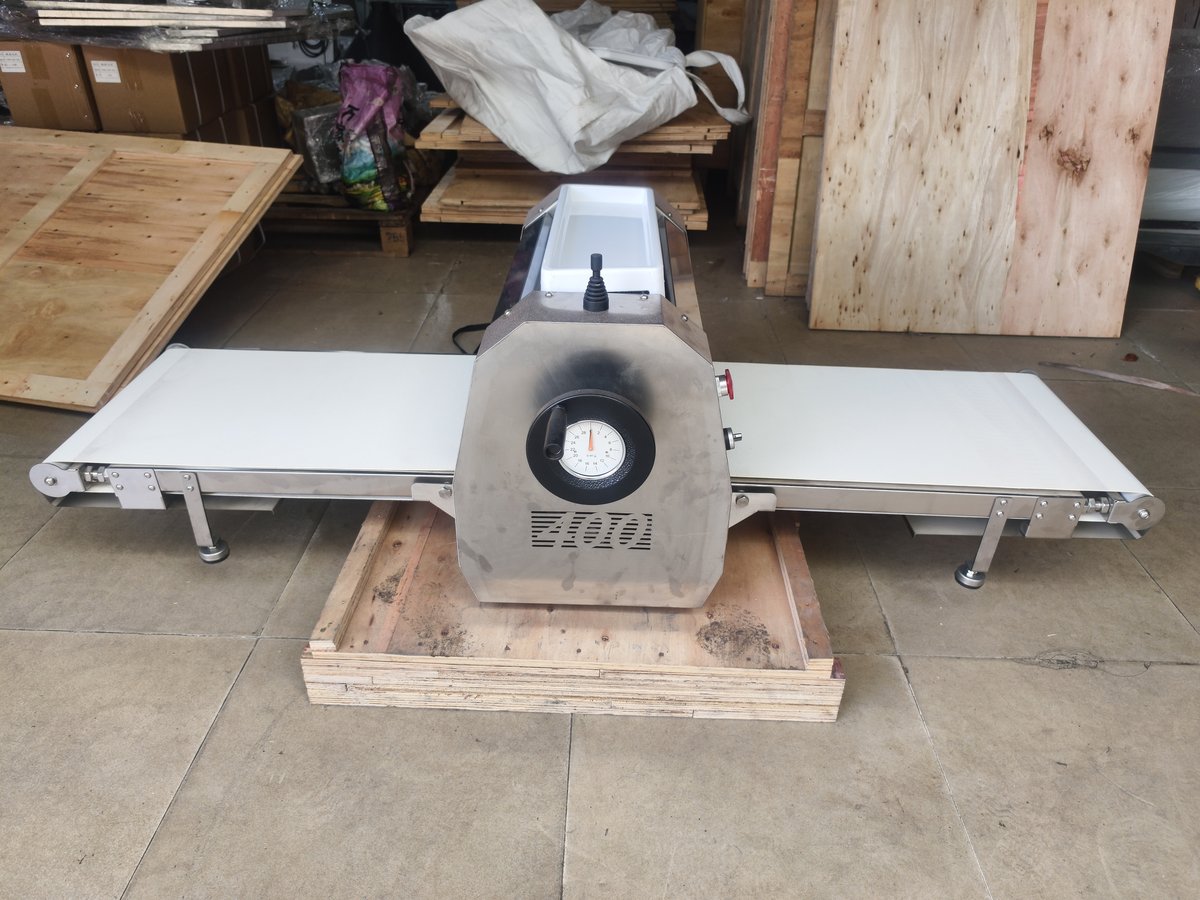
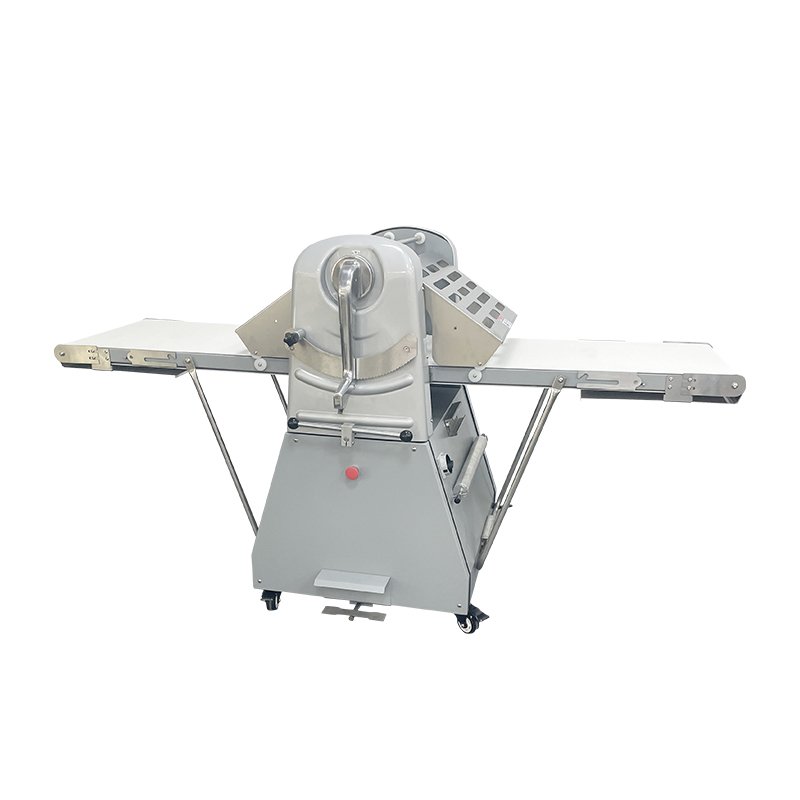
The two main configurations are tabletop (countertop) models and vertical (floor-standing) models. While both perform the same fundamental function — rolling dough to a precise thickness — they differ significantly in capacity, durability, workspace requirements, and price.
Side-by-Side Comparison
| Feature | Tabletop Dough Sheeter | Vertical Dough Sheeter |
|---|---|---|
| Price Range | $1,500 - $4,000 | $3,500 - $8,000 |
| Roller Width | 300 - 450 mm | 500 - 650 mm |
| Thickness Range | 2 - 30 mm | 1 - 40 mm |
| Thickness Adjustment | Manual hand wheel | Manual hand wheel (some models digital) |
| Conveyor Belt | Single direction (some reversible) | Reversible, dual-speed |
| Hourly Capacity | 10 - 25 kg dough/hour | 30 - 80 kg dough/hour |
| Daily Croissant Output | 100 - 300 pieces | 500 - 2,000 pieces |
| Footprint (W×D×H) | ~600×500×400 mm (on table) | ~800×700×1100 mm (floor) |
| Weight | 40 - 80 kg | 150 - 250 kg |
| Power | 0.37 - 0.75 kW | 0.75 - 1.5 kW |
| Voltage | 220V single phase | 220V / 380V |
| Best For | Small bakeries, cafes, startups, limited space | Medium-large bakeries, croissant specialists, hotels |
| Typical ROI Period | 3-8 months | 6-14 months |
Tabletop Dough Sheeter: Pros and Cons
✓ Advantages
- Affordable — entry price under $2,000 for basic models
- Space-saving — sits on counter, can be stored when not in use
- Easy to move — lightweight (40-80kg), one person can relocate
- Simple operation — straightforward controls, minimal training
- Low power consumption — runs on standard 220V single phase
- Quick setup — plug in and start using immediately
- Easy to clean — compact design, fewer nooks for dough buildup
✗ Disadvantages
- Limited capacity — not suitable for high-volume production
- Narrower rollers — 300-450mm width limits dough sheet size
- Thickness limitations — minimum 2mm vs 1mm on vertical models
- Slower production — single direction belt means more manual handling
- Less durable — lighter construction, shorter lifespan under heavy use
- Requires sturdy table — needs a solid workbench that can handle vibration
- Noisy at high speed — smaller motors can be louder under load
Vertical Dough Sheeter: Pros and Cons
✓ Advantages
- High capacity — handles 30-80kg dough per hour
- Wide rollers — 500-650mm width for large dough sheets
- Wide thickness range — 1mm to 40mm, perfect for all pastry types
- Reversible belt — dough can pass back and forth without manual flipping
- Heavy-duty construction — built for continuous, all-day operation
- Consistent results — more stable frame means uniform thickness across full width
- Long lifespan — with proper maintenance, lasts 10+ years
- Professional appearance — floor-standing machine looks impressive to customers
✗ Disadvantages
- Higher price — 2-3x the cost of tabletop models
- Large footprint — requires dedicated floor space (~0.6 sqm)
- Heavy — 150-250kg, difficult to move once placed
- Higher power — some models require 380V three-phase power
- More complex — reversible belt, dual speed, more components to maintain
- Longer setup — needs proper installation and leveling
- Harder to clean — larger size means more surface area to sanitize
Which One Should You Choose?
Choose Tabletop If:
- You produce under 300 croissants or pastries per day
- You have limited floor space but have counter space available
- You're a startup, cafe, or small bakery with budget under $4,000
- You only need sheeting for 1-2 hours per day
- You need to move the machine between different workstations
- Your power supply is only 220V single phase
- You primarily make standard thickness pastries (not ultra-thin puff pastry)
Choose Vertical If:
- You produce 500+ croissants or pastries per day
- You have dedicated floor space in your bakery
- You're a medium to large bakery, hotel, or pastry shop
- You need sheeting for 4+ hours per day or continuous operation
- You make ultra-thin puff pastry requiring 1mm thickness
- You need large dough sheets (500mm+ width) for efficient production
- You want a machine that will last 10+ years with daily use
- You plan to expand pastry production in the next 1-2 years
Real-World Production Examples
Example 1: Small Cafe in the Philippines
A small cafe producing 150 croissants and 50 Danish pastries per day opted for a tabletop dough sheeter ($2,200). The machine sits on their prep counter, runs for about 90 minutes each morning, and has reduced their dough prep time from 2 hours to 30 minutes. The owner reports the machine paid for itself in 5 months through labor savings and reduced dough waste.
Example 2: Croissant Specialty Shop in South Korea
A specialty croissant shop producing 1,200 croissants per day invested in a vertical dough sheeter ($5,500). The reversible belt allows their pastry chef to laminate dough in a fraction of the time, and the 1mm minimum thickness enables the ultra-flaky layers their brand is known for. Production capacity increased by 60% within the first month, and the machine achieved ROI in 8 months.
Example 3: Hotel Bakery in Saudi Arabia
A 5-star hotel bakery producing pastries for 3 restaurants and room service chose a heavy-duty vertical sheeter ($7,200). The machine runs 6-8 hours daily, handling everything from thin filo pastry to thick bread dough. The hotel reports that the consistency of their pastries improved dramatically, and guest satisfaction scores for breakfast pastries increased by 25%.
📋 Bakery Equipment Checklist
Download our complete bakery equipment checklist with budget estimates for 5 different bakery types.
Free Bakery Equipment Checklist →📋 Bakery Equipment ROI Calculator
Use our interactive ROI calculator to see how quickly your bakery equipment investment pays off.
Calculate Your Equipment ROI →📋 Bakery Equipment Maintenance Calendar
Get our printable maintenance calendar to keep your bakery equipment running at peak performance.
Printable Maintenance Calendar →📋 Bakery Equipment Energy Cost Calculator
Estimate your bakery equipment energy costs and find ways to reduce your utility bills.
Calculate Energy Costs →🏭 Bakery Equipment Capacity Calculator
Not sure what size equipment you need? Use our free interactive calculator to find the perfect dough divider, mixer, oven, and proofer capacity for your production volume.
Calculate Your Equipment Needs →⚖️ Bakery Equipment Comparison Tool
Compare dough dividers, spiral mixers, ovens, proofers and dough sheeters side by side. View specs, prices, capacity and features to find the best equipment for your bakery.
Compare Equipment Now →Often Asked Questions
Need Help Choosing the Right Dough Sheeter?
Tell us about your pastry production volume and workspace, and we'll recommend the perfect sheeter for your bakery.
Related Products
Ready to Choose the Right Equipment?
Get a free consultation and customized recommendation from our bakery equipment experts.
Get a Free Quote