

1. Why Croissants & Pastries Are Profitable
Croissants and pastries are among the highest-margin products in a bakery, with gross margins of 65-75% — significantly higher than bread (55-65%) or wholesale products (30-45%). A croissant that costs $0.30-$0.50 to produce typically retails for $2.50-$4.50, representing a 500-800% markup. This makes pastry production one of the most profitable segments of the bakery industry.
Market Demand & Growth
The global croissant market is growing steadily, driven by:
- Café culture expansion — Coffee shops and cafes worldwide are adding fresh croissants and pastries to their menus, creating steady B2B demand
- Premiumization trend — Consumers are willing to pay more for artisanal, butter-rich croissants vs. mass-produced alternatives
- Breakfast on-the-go — Croissants are the ultimate portable breakfast food, driving morning demand
- Hotel & hospitality — Hotels, restaurants, and catering services need consistent, high-quality pastry supply
- Frozen croissant market — Pre-shaped frozen croissants (bake-off) are the fastest-growing segment, allowing cafes to bake fresh on demand
Profitability Analysis
| Product | Cost to Produce | Retail Price | Gross Margin | Daily Volume (100) |
|---|---|---|---|---|
| Butter croissant | $0.35-$0.50 | $2.50-$3.50 | 80-86% | $250-$350 revenue |
| Chocolate croissant | $0.45-$0.65 | $3.00-$4.00 | 82-85% | $300-$400 revenue |
| Almond croissant | $0.55-$0.75 | $3.50-$4.50 | 83-85% | $350-$450 revenue |
| Pain au raisin | $0.50-$0.70 | $3.00-$4.00 | 80-83% | $300-$400 revenue |
| Danish pastry | $0.40-$0.60 | $2.80-$3.80 | 82-85% | $280-$380 revenue |
💡 Key Profit Insight
A small pastry operation producing 200 croissants/day at $3.00 average retail price generates $600/day or $18,000/month in revenue. With 75% gross margin, that's $13,500/month gross profit. After labor ($4,000), rent ($1,500), utilities ($500), and other costs ($1,000), net profit is approximately $6,500/month — a 36% net margin. This is why pastry production is one of the most profitable bakery segments. The key is consistency — customers return for the same quality every time, which is why proper equipment (especially a dough sheeter) is essential.
2. Essential Equipment List
Here's the complete equipment list for commercial croissant and pastry production, organized by production stage and priority.
Priority 1: Essential Equipment (Cannot Operate Without)
| Equipment | Cost Range | Purpose | Why Essential |
|---|---|---|---|
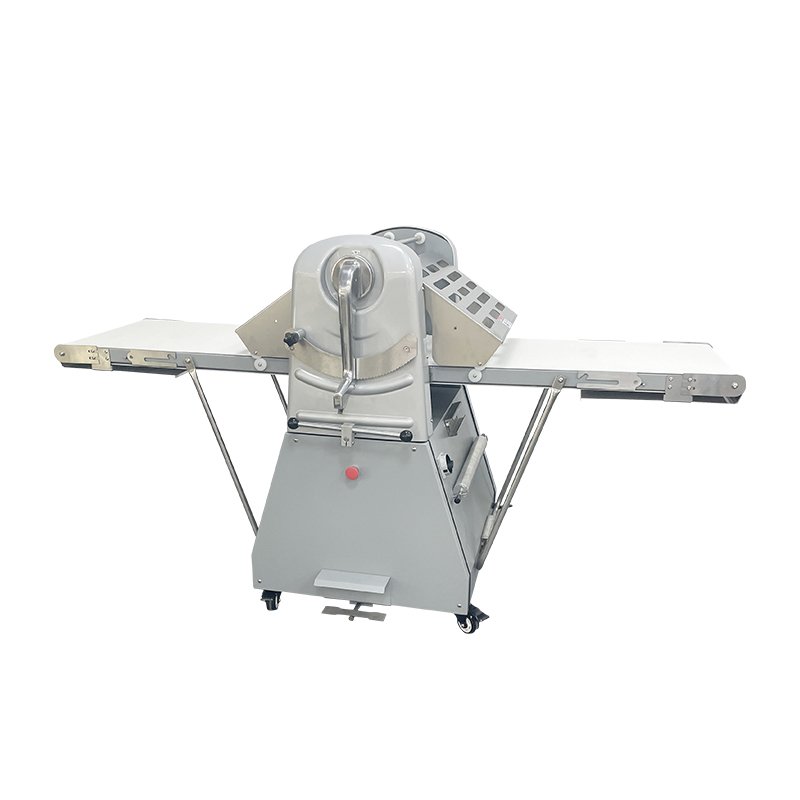
| Dough sheeter (floor model) | $2,000-$6,000 | Lamination — rolling dough to uniform thin layers | The single most important equipment. Hand-lamination is 10x slower and inconsistent. |
| Spiral or planetary mixer | $1,500-$5,000 | Mixing dough (détrempe) | Consistent dough development, essential for gluten formation. |
| Proofing cabinet (humidity-controlled) | $2,000-$5,000 | Final fermentation of shaped croissants | Croissants need precise temp (26-28°C) and humidity (75-80%) to proof properly. |
| Oven (convection or deck) | $3,000-$10,000 | Baking croissants and pastries | Even heat distribution and steam injection are critical for croissant baking. |
| Refrigerator / retarder | $1,000-$3,000 | Dough resting between lamination turns | Butter must stay cold during lamination. A dedicated refrigerator is essential. |
Priority 2: Important Equipment (Importantly Improves Efficiency)
| Equipment | Cost Range | Purpose | ROI Impact |
|---|---|---|---|
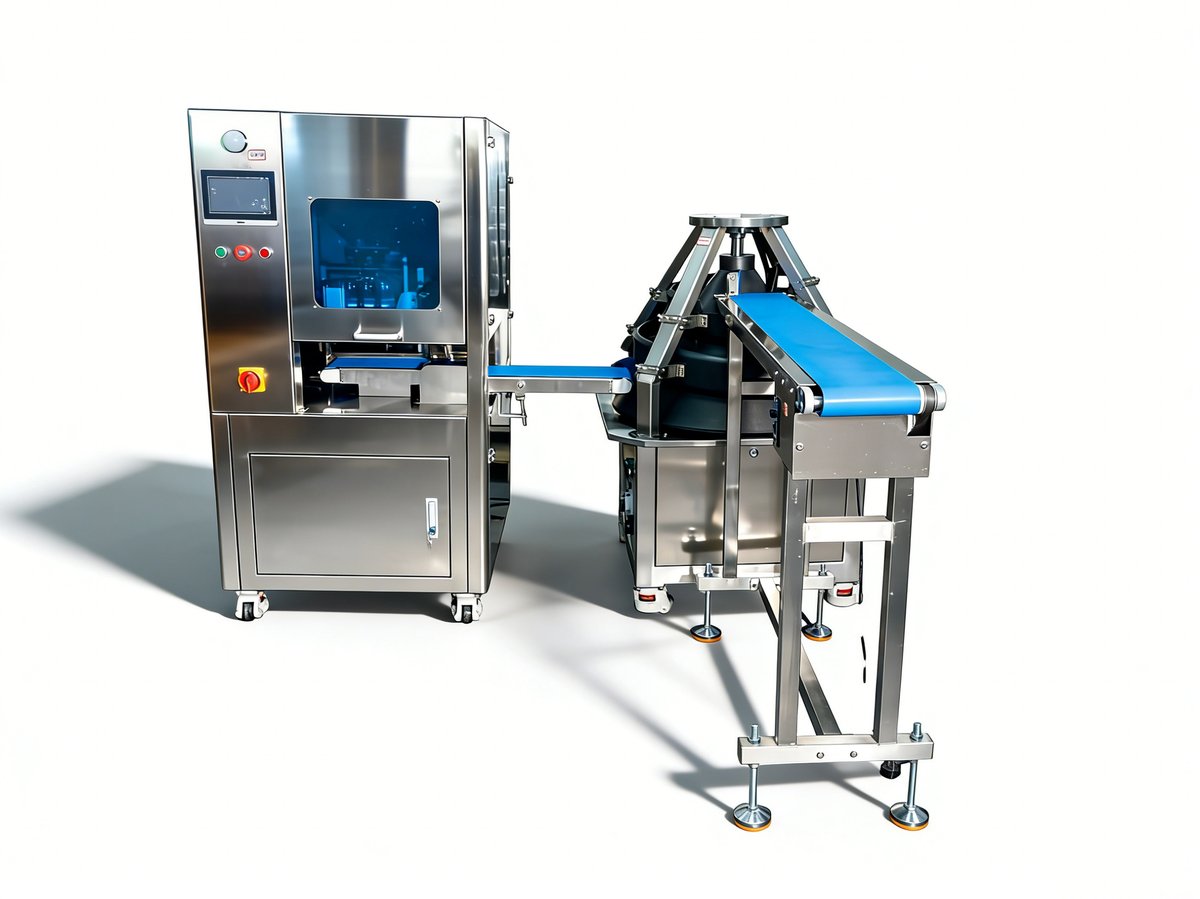
| Croissant cutter / roller | $1,500-$4,000 | Automatic cutting and rolling of croissants | Doubles shaping output, reduces labor by 1 worker |
| Dough divider | $3,000-$8,000 | Dividing dough into uniform portions | Consistent dough weight, faster prep, less waste |
| Convection oven (with steam) | $4,000-$12,000 | Baking with precise steam control | Better oven spring, shinier crust, more even baking |
| Walk-in cooler / retarder | $5,000-$15,000 | Large-scale dough retardation and storage | Enables overnight retardation, better flavor development |
| Pastry depositor | $2,000-$5,000 | Filling danishes and pastries with cream/fruit | Faster filling, consistent portioning, less waste |
Priority 3: Small Tools & Accessories
| Item | Cost Range | Quantity Needed |
|---|---|---|
| Stainless steel worktables | $200-$500 each | 2-3 tables |
| Pastry rollers (wooden) | $20-$50 each | 3-5 rollers |
| Croissant cutting wheels | $15-$40 each | 3-5 wheels |
| Pastry brushes (egg wash) | $5-$15 each | 5-10 brushes |
| Baking trays (perforated) | $15-$30 each | 20-30 trays |
| Proofing cloths / couche | $20-$50 each | 3-5 cloths |
| Digital scale (precision) | $50-$150 each | 2-3 scales |
| Dough temperature thermometer | $20-$50 each | 2 thermometers |
| Butter paddles / beaters | $15-$30 each | 2-3 paddles |
| Pastry bags & tips | $20-$50 set | 2-3 sets |
⚠️ Equipment Budget Warning
The #1 mistake new pastry businesses make is buying a cheap tabletop dough sheeter to save money. Tabletop sheeters ($800-$1,500) are designed for occasional home or small cafe use — they cannot handle daily commercial production. They will break down within 6-12 months, and the downtime costs more than the savings. For any commercial operation (100+ croissants/day), invest in a floor-model dough sheeter ($2,000-$4,000). It's the most important equipment you'll buy, and a good one will last 10-15 years with proper maintenance.
3. Dough Sheeter: The Critical Investment
The dough sheeter (also called a pastry sheeter, dough roller, or laminator) is the single most important piece of equipment for croissant production. It replaces the most labor-intensive and skill-dependent part of croissant making — hand-rolling and folding laminated dough.
How a Dough Sheeter Works
A dough sheeter uses two adjustable rollers and a moving conveyor belt to roll dough to a precise, uniform thickness. The operator:
- Sets the roller gap to the desired thickness (e.g., 20mm for first pass)
- Places the dough on the conveyor belt
- The belt moves dough through the rollers, compressing it to the set thickness
- Operator folds the dough (single or double turn)
- Repeats with progressively thinner settings (15mm → 10mm → 5mm → 3mm)
Tabletop vs. Floor-Model Dough Sheeters
| Feature | Tabletop Sheeter | Floor-Model Sheeter |
|---|---|---|
| Belt width | 300-400mm | 500-700mm |
| Max dough batch | 2-3 kg | 5-15 kg |
| Production capacity | 30-50 croissants/hour | 150-300 croissants/hour |
| Motor power | 0.25-0.5 kW | 0.75-1.5 kW |
| Durability (daily use) | 6-12 months | 10-15 years |
| Price | $800-$2,000 | $2,000-$6,000 |
| Suitable for | Home bakers, small cafes (50/day) | Commercial bakeries (100+/day) |
| Footprint | Compact, portable | Requires floor space |
Key Features to Look For
- Reversible belt — Allows dough to pass through in both directions, essential for lamination turns
- Precision thickness adjustment — Digital or calibrated dial with 0.1mm increments. Consistency is everything.
- Food-grade belts — Smooth, non-stick, easy to clean. Avoid fabric belts — they harbor bacteria.
- Safety guards — Finger guards at roller entry points, emergency stop button. Commercial kitchens require these.
- Stainless steel construction — Frame, rollers, and table should be stainless steel for durability and hygiene
- Adjustable feet — For leveling on uneven floors
- Removable scrapers — For cleaning dough residue from rollers
- Speed control — Variable speed is useful for different dough types and thicknesses
Dough Sheeter Maintenance
🔧 Daily Maintenance (5 minutes)
- Wipe down belts and rollers with food-safe sanitizer after each use
- Remove and clean scrapers
- Check for any dough buildup in roller gaps
- Wipe down exterior surfaces
🔧 Weekly Maintenance (15 minutes)
- Deep clean belts and rollers (remove if possible)
- Check belt tension and adjust if needed
- Lubricate moving parts with food-grade lubricant
- Check roller alignment and calibration
- Inspect electrical cord and connections
🔧 Annual Professional Service
- Replace belts if worn or stretched
- Replace bearings if noisy or rough
- Recalibrate thickness settings
- Check motor and gearbox
- Replace safety guards if damaged
4. The Lamination Process Explained
Lamination is the heart of croissant production — it's the process of creating hundreds of alternating layers of dough and butter that give croissants their characteristic flaky, airy texture. When baked, the water in the butter turns to steam, pushing the layers apart and creating the signature honeycomb interior.
The Science of Lamination
A properly laminated croissant has 81+ layers of dough and butter (after 3 single turns). Here's how the math works:
- Starting: 1 layer dough + 1 layer butter = 2 layers
- 1st single turn (fold in 3): 2 × 3 = 6 layers
- 2nd single turn: 6 × 3 = 18 layers
- 3rd single turn: 18 × 3 = 54 layers
- Final roll & shape: Additional stretching creates 81+ effective layers
Ingredients & Formulation
| Ingredient | Baker's % | For 5kg Dough | Notes |
|---|---|---|---|
| Bread flour (12-14% protein) | 100% | 5,000g | High protein flour essential for strong gluten |
| Cold water | 45-50% | 2,250-2,500g | Use ice water to keep dough cold |
| Whole milk | 10-15% | 500-750g | Adds richness and color |
| Granulated sugar | 10-12% | 500-600g | Feeds yeast, adds flavor and browning |
| Fresh yeast | 4-6% | 200-300g | Or 1.5-2% instant yeast |
| Salt | 1.5-2% | 75-100g | Enhances flavor, controls yeast |
| Butter (in dough) | 5-8% | 250-400g | Softened, mixed into dough |
| Butter (for lamination) | 25-30% | 1,250-1,500g | European-style 82%+ fat, cold but pliable |
Step-by-Step Lamination Process
- Prepare the détrempe (dough): Mix flour, water, milk, sugar, yeast, salt, and softened butter until smooth dough forms. Do not over-mix — gluten will develop during lamination. Dough temperature should be 20-22°C. Wrap and refrigerate 1-2 hours or overnight.
- Prepare the butter block: Take European-style butter (82%+ fat) from refrigerator. It should be cold but pliable — you should be able to indent it with your finger. Shape into a rectangle about 1cm thick, using parchment paper. The butter block should be about 2/3 the size of the rolled-out dough.
- First turn (tour): Roll dough into a rectangle 3x the size of the butter block. Place butter block in center, fold dough over to enclose completely (like an envelope). Seal edges well. Roll out to 3x length (about 15mm thick). Fold into thirds (letter fold). This is one single turn. Wrap and refrigerate 30-60 minutes.
- Second turn: Remove dough from refrigerator. Roll out again to 3x length (15mm thick). Fold into thirds. This is the second turn. Wrap and refrigerate 30-60 minutes. At this point you have 18 layers.
- Third turn: Repeat the process one more time. This is the third turn. Wrap and refrigerate at least 1 hour (or overnight for better flavor). At this point you have 54 layers.
- Final roll: Remove dough from refrigerator. Let rest 10-15 minutes at room temp (don't let butter get too soft). Roll out to 3-4mm thickness in a long rectangle. Keep edges straight and even.
- Cut & shape: Cut dough into triangles (base 9-10cm, height 18-20cm for standard croissants). Stretch slightly, roll from base to tip, curve into crescent shape. Place on baking tray with tip underneath (prevents unrolling during proofing).
- Egg wash & proof: Apply first egg wash (1 egg + 1 tbsp milk, strained). Proof at 26-28°C with 75-80% humidity for 2-3 hours, until 1.5x original size and jiggles slightly when tray is tapped.
- Second egg wash & bake: Apply second egg wash carefully (don't deflate). Bake at 190-200°C (375-390°F) for 15-18 minutes with steam for first 5 minutes. Croissants should be deep golden brown.
- Cool & serve: Remove from oven, transfer to cooling rack. Best served within 2-4 hours of baking. Croissants lose crispness after 6 hours.
⚠️ Critical Temperature Control
The #1 rule of lamination: keep the butter cold. If the butter gets too warm, it melts into the dough and you lose the layers. If the butter gets too cold, it breaks through the dough during rolling. The ideal butter temperature is 12-15°C (54-59°F) — cold but pliable. Work in a cool kitchen (18-20°C / 64-68°F). If your kitchen is warm, work in smaller batches and return dough to the refrigerator more frequently. A dough sheeter makes this much easier because it rolls dough quickly and uniformly, minimizing the time butter spends at room temperature.
5. Production Workflow & Planning
Efficient production planning is essential for a profitable pastry business. Croissants are time-sensitive — they must be baked fresh each morning, which means production starts the night before or very early in the morning.
Typical Production Schedule (Overnight Retardation Method)
| Time | Task | Workers | Duration |
|---|---|---|---|
| Day 1, 14:00 | Mix dough (détrempe) | 1 | 30 min |
| Day 1, 14:30 | Dough rest (refrigerator) | 0 | 2 hours |
| Day 1, 16:30 | Prepare butter blocks | 1 | 30 min |
| Day 1, 17:00 | Lamination (3 turns on sheeter) | 1-2 | 1.5 hours |
| Day 1, 18:30 | Final roll & cut & shape | 2-3 | 1.5 hours |
| Day 1, 20:00 | Place in retarder (4°C) overnight | 0 | 10-12 hours |
| Day 2, 05:00 | Remove from retarder, egg wash | 1 | 30 min |
| Day 2, 05:30 | Final proof (26-28°C, 75% humidity) | 0 | 2-2.5 hours |
| Day 2, 08:00 | Second egg wash & bake (batches) | 1-2 | 1.5 hours |
| Day 2, 09:30 | Cool, package, deliver/sell | 1-2 | 1 hour |
Production Capacity by Operation Size
| Operation Size | Croissants/Day | Workers | Equipment | Daily Revenue |
|---|---|---|---|---|
| Micro (cafe) | 50-100 | 1-2 | Tabletop sheeter + small oven | $150-$300 |
| Small bakery | 100-300 | 2-3 | Floor sheeter + convection oven | $300-$900 |
| Medium bakery | 300-800 | 4-6 | Floor sheeter + cutter + 2 ovens | $900-$2,400 |
| Large bakery | 800-2,000 | 8-12 | 2 sheeters + auto line + rack oven | $2,400-$6,000 |
| Industrial | 2,000+ | 15+ | Fully automated croissant line | $6,000+ |
Production Planning Tips
- Batch size matching — Mix dough in batches that match your sheeter capacity. A 5kg batch is standard for a 500mm sheeter. Don't mix 10kg if your sheeter can only handle 5kg at a time.
- Stagger baking — Don't put all croissants in the oven at once. Bake in batches of 2-4 trays, staggering by 5-10 minutes. This ensures each batch gets proper oven spring and you don't overwhelm the oven.
- Frozen backup — Always keep 20-30% of production as frozen pre-shaped croissants. If you have a busy day or equipment breakdown, you can bake from frozen. This also allows cafes to bake fresh on demand.
- Track waste — Pastry production has 5-10% waste (trimmings, misshapes, over-bakes). Track waste daily and look for patterns. Trimmings can be reused for "escargot" or other pastries.
- Schedule maintenance — Schedule equipment maintenance during off-peak hours (afternoon/evening). Never have a dough sheeter breakdown during morning production — it's catastrophic.
- Prep the night before — Set up trays, pre-measure ingredients, prepare egg wash, and organize tools the night before. Morning production should be execution-only, not prep.
6. Proofing & Fermentation
Proofing (final fermentation) is the stage where shaped croissants rise before baking. This is one of the most critical and often mishandled stages of croissant production. Under-proofed croissants are dense and don't rise properly; over-proofed croissants collapse and lose their shape.
Ideal Proofing Conditions
| Parameter | Ideal Range | Why It Matters |
|---|---|---|
| Temperature | 26-28°C (79-82°F) | Too cold = slow/no rise. Too warm = butter melts, dough collapses. |
| Humidity | 75-80% | Too dry = skin forms on surface, prevents rise. Too wet = dough sticks to tray. |
| Duration | 2-3 hours (from cold) | Depends on dough temperature, yeast activity, and proofing temp. |
| Target size increase | 1.5x original size | Croissant should visibly grow and feel light, not dense. |
| Jiggle test | Jiggles slightly when tray tapped | Indicates proper gluten development and gas retention. |
How to Tell When Croissants Are Perfectly Proofed
- Visual — Croissants have increased in size by 1.5x. Layers are visible and the dough looks puffy, not tight.
- Touch — Gently press the side with a floured finger. The indentation should slowly spring back (80% recovery). If it springs back immediately, under-proofed. If it doesn't spring back, over-proofed.
- Jiggle — Tap the tray gently. The croissants should jiggle slightly, like Jell-O. This indicates the dough is light and full of gas.
- Edges — The layers at the cut edges should be visible and slightly separated. If edges are tight and smooth, under-proofed.
- Smell — A slightly yeasty, fermented aroma. Strong alcohol smell means over-fermented.
Common Proofing Problems
| Problem | Cause | Solution |
|---|---|---|
| Croissants don't rise at all | Yeast dead (old or killed by heat); proofing temp too cold; dough over-worked | Check yeast freshness; proof at 26-28°C; don't over-knead dough |
| Rise is uneven (some big, some small) | Inconsistent dough weight; uneven oven/proofer temperature; some croissants closer to heat source | Weigh dough portions uniformly; rotate trays in proofer; ensure even air circulation |
| Butter leaks out during proofing | Proofing temp too high; butter was too warm during lamination; dough not sealed properly | Keep proofer at 26-28°C max; ensure butter is cold during lamination; seal dough edges well |
| Skin forms on surface | Humidity too low; uncovered proofing; draft from air conditioning | Maintain 75-80% humidity; cover trays lightly; avoid drafts |
| Croissants collapse when moved | Over-proofed; dough too weak; moved too roughly | Proof less time; strengthen dough (more flour, less water); handle gently |
| Croissants are too sour | Over-proofed; too much yeast; retarded too long | Reduce proofing time; reduce yeast to 4%; limit retardation to 12-15 hours |
💡 Retardation = Better Flavor + Better Schedule
Overnight retardation (holding shaped croissants at 4°C for 10-15 hours before proofing) is the secret to professional-quality croissants. Benefits: (1) Better flavor — slow fermentation develops complex, nutty, buttery flavors that fast-proofed croissants don't have. (2) Better schedule — you can do all the labor-intensive work (lamination, shaping) during normal daytime hours, then bake fresh in the morning. (3) More consistent — retarded croissants proof more uniformly and have better oven spring. (4) Flexibility — you can pull trays from the retarder as needed, baking only what you need. This is how 90% of professional bakeries operate.
7. Baking Techniques
Baking is the final and most visible stage of croissant production. Proper baking transforms the laminated dough into a golden, flaky, airy croissant with a crisp crust and tender interior.
Ideal Baking Parameters
| Parameter | Standard Croissant | Chocolate Croissant | Almond Croissant |
|---|---|---|---|
| Oven temperature | 190-200°C (375-390°F) | 185-195°C (365-385°F) | 180-190°C (355-375°F) |
| Baking time | 15-18 minutes | 16-19 minutes | 18-22 minutes |
| Steam (first 5 min) | Yes (high humidity) | Yes | Yes (lighter) |
| Target internal temp | 92-95°C (198-203°F) | 92-95°C | 90-93°C |
| Color target | Deep golden brown | Golden brown | Light golden (topping burns easily) |
The Role of Steam in Croissant Baking
Steam is essential for croissant baking. During the first 5 minutes of baking, steam:
- Delays crust formation — Keeps the surface moist and elastic, allowing the croissant to expand (oven spring) before the crust sets
- Gelatinizes surface starch — Creates a shiny, crisp crust
- Enhances oven spring — The combination of steam and heat causes rapid expansion, creating the characteristic flaky layers
- Improves color — Steam helps create an even, golden-brown color through Maillard reaction
How to Add Steam to Your Oven
| Method | Equipment Needed | Effectiveness | Notes |
|---|---|---|---|
| Built-in steam injection | Commercial oven with steam | ★★★★★ | Best results, consistent, professional grade |
| Steam pan (water + lava rocks) | Cast iron pan + lava rocks | ★★★★ | Preheat pan with rocks, pour water when loading |
| Spray bottle | Water spray bottle | ★★★ | Spray walls of oven before closing. Repeat at 2 min. |
| Ice cubes on tray | Ice cubes + baking tray | ★★ | Place ice on hot tray when loading. Creates steam as it melts. |
| Wet towel | Wet kitchen towel | ★ | Place on bottom of oven. Creates some steam but uneven. |
Baking Troubleshooting
| Problem | Cause | Solution |
|---|---|---|
| Pale, white croissants | Oven temp too low; not enough sugar in dough; no egg wash; baked too short | Increase temp 10°C; ensure 10-12% sugar; apply egg wash; bake longer |
| Burnt bottom, pale top | Oven heat from bottom only; tray too close to bottom element; no convection | Use convection; raise tray position; preheat oven thoroughly; use double tray |
| Croissants spread flat | Over-proofed; butter too warm; dough too soft; oven temp too low | Proof less; keep butter cold; reduce water in dough; bake at higher temp |
| No oven spring | Under-proofed; yeast weak; no steam; oven not preheated | Proof until 1.5x; check yeast; use steam; preheat 30+ min |
| Uneven baking | Oven hot spots; trays overcrowded; no rotation | Use oven thermometer; leave space between trays; rotate trays halfway |
| Raw dough inside | Oven temp too high (outside burns before inside cooks); too large; under-proofed | Lower temp 10°C; bake longer; ensure proper proofing; check internal temp 92°C+ |
| Croissants stick to tray | No parchment paper; butter leaked; tray not greased | Use parchment paper or silicone mat; ensure proper lamination; grease tray lightly |
8. Other Pastry Products
Once you have the lamination process mastered, you can use the same laminated dough to produce a wide variety of profitable pastry products. This maximizes your equipment utilization and product range.
Pastry Products from Laminated Dough
| Product | Shape Method | Filling/Topping | Retail Price | Margin |
|---|---|---|---|---|
| Butter croissant | Triangle rolled into crescent | None (egg wash only) | $2.50-$3.50 | 80-86% |
| Chocolate croissant (pain au chocolat) | Rectangle folded around chocolate batons | 2 dark chocolate batons | $3.00-$4.00 | 82-85% |
| Almond croissant | Croissant split, filled with frangipane, topped with almonds | Almond cream (frangipane) + sliced almonds + powdered sugar | $3.50-$4.50 | 83-85% |
| Pain au raisin | Rolled spiral with pastry cream and raisins | Pastry cream + rum-soaked raisins | $3.00-$4.00 | 80-83% |
| Danish (various) | Square/round shapes with fillings | Cream cheese, fruit, custard, almond | $2.80-$3.80 | 82-85% |
| Cinnamon roll | Rolled spiral with cinnamon sugar | Brown sugar + cinnamon + cream cheese frosting | $3.00-$4.00 | 80-83% |
| Apple turnover | Triangle folded around apple filling | Apple compote + cinnamon + sugar | $3.00-$4.00 | 78-82% |
| Escargot (pinwheel) | Rolled spiral with chocolate or almond | Chocolate spread or almond cream | $2.50-$3.50 | 80-83% |
| Mille-feuille (Napoleon) | Rectangles of baked puff pastry layered with cream | Pastry cream + powdered sugar top | $4.00-$5.50 | 75-80% |
| Palmier (elephant ear) | Folded puff pastry with sugar, sliced | Granulated sugar (caramelized) | $1.50-$2.50 | 85-88% |
Non-Laminated Pastries (Additional Products)
These products use different dough types but can be produced with the same basic equipment (mixer, oven, worktables):
- Brioche — Rich, egg-and-butter bread dough. Can be shaped as brioche à tête, brioche loaf, or used for bread pudding. High margin product.
- Challah — Braided egg bread, popular for Friday/Saturday markets. Simple to make, high perceived value.
- Cinnamon rolls — Soft yeast dough with cinnamon sugar filling and cream cheese frosting. One of the most popular pastries worldwide.
- Donuts — Yeast-raised or cake donuts. Requires a fryer (additional equipment $500-$2,000) but very high volume product.
- Muffins & scones — Quick breads, no yeast required. Easy to produce, good for cafes and breakfast service.
- Tarts & pies — Shortcrust or sweetcrust pastry with fruit or cream fillings. Requires tart pans and a rolling pin (or sheeter).
💡 Product Mix Strategy
The most profitable pastry operations use a 60/30/10 product mix: (1) 60% core products (croissants, chocolate croissants, pain au raisin) — proven sellers, consistent demand, high margin. (2) 30% seasonal/specialty products (almond croissants in winter, fruit danishes in summer, pumpkin pastries in fall) — create excitement, command premium prices, drive repeat visits. (3) 10% experimental/new products — test new ideas, some will become future core products. This mix ensures steady revenue from core products while driving growth through innovation. Always track sales by product and discontinue slow sellers — they waste production capacity and ingredients.
9. Troubleshooting Common Problems
Even experienced bakers encounter problems with croissants. Here's a comprehensive troubleshooting guide covering the most common issues and their solutions.
Lamination Problems
| Problem | Cause | Solution |
|---|---|---|
| Butter breaks through dough | Butter too cold/hard; dough too soft; rolling too fast | Let butter warm to 12-15°C; chill dough; roll slowly and evenly |
| Butter melts into dough (no layers) | Butter too warm; kitchen too hot; not resting between turns | Keep butter cold; work in cool kitchen (18-20°C); rest 30-60 min between turns |
| Uneven layers (thick on one side) | Butter block not centered; rolling uneven; dough not squared | Center butter block; roll evenly from center; keep dough rectangular |
| Dough shrinks after rolling | Gluten too tight; not rested enough; rolled too thin too fast | Rest dough longer; roll progressively thinner; don't force thinness |
| Dough tears during rolling | Dough too cold; butter too hard; rolling too aggressively | Let dough warm 10 min; soften butter slightly; use lighter passes |
| Layers are too few / not flaky | Not enough turns; folds not precise; butter too thin | Do 3 full turns; fold precisely into thirds; use 25-30% butter |
Proofing Problems
| Problem | Cause | Solution |
|---|---|---|
| No rise at all | Yeast dead; temp too cold; dough over-worked; salt directly on yeast | Test yeast; proof at 26-28°C; don't over-knead; don't let salt touch yeast directly |
| Rise too fast (collapses) | Too much yeast; temp too high; dough too weak | Reduce yeast to 4%; lower temp to 26°C; strengthen dough (more flour) |
| Uneven rise | Inconsistent dough weight; hot spots in proofer; trays too close | Weigh portions uniformly; rotate trays; leave space for air circulation |
| Skin on surface | Humidity too low; draft; uncovered | Increase humidity to 75-80%; cover trays; eliminate drafts |
| Butter leaks during proofing | Temp too high; butter too warm; dough not sealed | Keep temp ≤28°C; ensure cold butter during lamination; seal edges well |
| Sour smell/taste | Over-proofed; too much yeast; retarded too long | Reduce proofing time; reduce yeast; limit retardation to 15 hours max |
Baking Problems
| Problem | Cause | Solution |
|---|---|---|
| Pale color | Temp too low; no egg wash; not enough sugar; baked too short | Increase temp; apply egg wash; ensure 10-12% sugar; bake longer |
| Burnt bottom | Bottom heat too strong; tray too low; no insulation | Use double tray; raise tray position; use convection mode |
| No oven spring | Under-proofed; no steam; oven not hot enough; yeast weak | Proof until 1.5x; use steam; preheat 30+ min; check yeast |
| Flat/spread out | Over-proofed; butter melted; dough too soft; temp too low | Proof less; keep butter cold; reduce water; bake at higher temp |
| Raw inside | Temp too high (outside burns first); too large; under-proofed | Lower temp; bake longer; proof properly; check internal temp 92°C+ |
| Uneven color | Oven hot spots; trays overcrowded; no rotation | Use oven thermometer; space trays; rotate halfway through |
| Croissants stick to tray | No parchment; butter leaked; tray not greased | Use parchment paper; improve lamination; grease tray lightly |
Texture & Flavor Problems
| Problem | Cause | Solution |
|---|---|---|
| Dense, bread-like interior | Not enough layers; butter melted; under-proofed; no oven spring | Ensure 3 turns; keep butter cold; proof properly; use steam |
| Too many large holes (honeycomb too open) | Over-proofed; too much yeast; butter too thick | Proof less; reduce yeast; use 25-30% butter (not more) |
| Crust not crisp | No steam; not baked long enough; stored in sealed container | Use steam; bake until deep golden; store uncovered (crisp returns when reheated) |
| Buttery flavor lacking | Not enough butter; cheap butter (low fat content); butter not European-style | Use 25-30% butter; use 82%+ fat European butter; quality butter = quality flavor |
| Sour/fermented taste | Over-proofed; retarded too long; too much yeast | Reduce proofing/retardation time; reduce yeast to 4% |
| Salty taste | Too much salt; salt not mixed evenly; butter is salted | Use 1.5-2% salt; mix salt into flour first; use unsalted butter for lamination |
| Stale quickly | Not enough sugar/fat in dough; over-baked; stored improperly | Ensure 10-12% sugar; don't over-bake; store in paper bag (not plastic) |
10. Quality Control & Consistency
Consistency is the hallmark of a professional pastry operation. Customers return because they know exactly what to expect — the same flaky, buttery, perfectly baked croissant every single time. Here's how to achieve and maintain consistency.
Standard Operating Procedures (SOPs)
Create written SOPs for every production step. This ensures consistency regardless of who is working:
- Mixing SOP — Exact ingredient weights, mixing time, speed, target dough temperature (20-22°C)
- Lamination SOP — Butter temperature (12-15°C), number of turns (3), resting time (30-60 min), final thickness (3-4mm)
- Cutting & shaping SOP — Triangle dimensions (9cm base × 18cm height), dough weight per croissant (80-100g), shaping technique
- Proofing SOP — Temperature (26-28°C), humidity (75-80%), duration (2-3 hours), target size (1.5x)
- Baking SOP — Oven temp (190-200°C), steam duration (5 min), baking time (15-18 min), target color (deep golden)
- Cooling & storage SOP — Cooling time (15-20 min on rack), storage method (paper bag, not plastic), shelf life (best within 4 hours)
Quality Checkpoints
| Checkpoint | What to Check | Standard | Frequency |
|---|---|---|---|
| Dough mixing | Dough temperature, consistency, gluten development | 20-22°C, smooth, windowpane test passes | Every batch |
| Butter block | Temperature, pliability, size/shape | 12-15°C, indentable, uniform rectangle | Every batch |
| Lamination | Layer visibility, no butter breakthrough, even thickness | Visible layers, no tears, 3-4mm final | Every batch |
| Portioning | Dough weight per croissant | ±2g of target (e.g., 90g ± 2g) | Every 10 croissants |
| Shaping | Shape, size, seal, placement on tray | Uniform crescent, tip sealed underneath, evenly spaced | Every tray |
| Proofing | Size increase, jiggle test, touch test | 1.5x size, jiggles, 80% spring back | Every batch (before baking) |
| Egg wash | Coverage, thickness, no drips | Even, thin coat, no pooling | Every tray |
| Baking | Color, size, shape, no butter leakage | Deep golden, 1.5x baked size, no leakage | Every batch (first tray) |
| Cooling | Internal temperature, crispness | ≤40°C before packaging, crisp crust | Every batch |
Equipment Calibration
- Oven temperature — Oven thermostats are often off by 10-30°C. Use an independent oven thermometer and recalibrate monthly. Record actual vs. displayed temperature.
- Proofer temperature & humidity — Use a separate thermometer/hygrometer to verify proofer readings. Calibrate monthly. Humidity is especially important — many proofers don't maintain accurate humidity.
- Dough sheeter thickness — Verify roller gap settings with a dough thickness gauge or by measuring rolled dough. Calibrate quarterly. A 0.5mm error in thickness significantly affects croissant quality.
- Scale calibration — Digital scales drift over time. Calibrate with standard weights monthly. Use 0.1g precision scales for ingredient weighing.
- Thermometer calibration — Dough and probe thermometers should be calibrated monthly using ice water (0°C) and boiling water (100°C) method.
- Timer accuracy — Kitchen timers are generally accurate, but verify with a stopwatch quarterly. Baking time errors of 1-2 minutes significantly affect quality.
Employee Training
📋 Training Program Structure
- Week 1: Observation — New employee watches experienced baker, takes notes, asks questions. No hands-on work.
- Week 2: Supervised practice — New employee performs tasks under direct supervision. Experienced baker corrects technique in real-time.
- Week 3: Independent practice with checkpoints — New employee works independently but every batch is checked by experienced baker before moving to next stage.
- Week 4: Full independence — New employee works independently. Spot checks only. Quality is monitored through finished product evaluation.
- Ongoing: Monthly refreshers — All bakers attend monthly quality training sessions covering SOP review, troubleshooting, and new techniques.
11. Starting a Pastry Business
Starting a pastry business requires more than baking skill — it requires business planning, financial management, marketing, and operations. Here's a comprehensive guide to starting a profitable pastry business.
Business Models
| Model | Startup Cost | Revenue Potential | Pros | Cons |
|---|---|---|---|---|
| Home bakery (cottage food) | $2,000-$5,000 | $1,000-$3,000/month | Low overhead, flexible, test market | Limited production, legal restrictions, no storefront |
| Online delivery only | $10,000-$25,000 | $5,000-$15,000/month | No retail rent, wider reach, lower overhead | Delivery logistics, packaging costs, no foot traffic |
| Wholesale (cafes/restaurants) | $15,000-$40,000 | $10,000-$30,000/month | Steady volume, predictable orders, no retail | Lower margins, payment terms 30-60 days, client concentration risk |
| Retail bakery/cafe | $50,000-$150,000 | $20,000-$60,000/month | Highest margins, brand building, customer relationship | High rent, staffing, longer hours, more competition |
| Hotel/restaurant supply | $30,000-$80,000 | $15,000-$50,000/month | Large orders, consistent demand, premium pricing | Strict quality requirements, delivery schedules, contract negotiation |
| Frozen bake-off supply | $40,000-$100,000 | $20,000-$80,000/month | Scalable, longer shelf life, wider distribution | Freezer storage, blast freezer needed, logistics complex |
Startup Costs Breakdown (Small Retail Bakery)
| Category | Cost Range | % of Total | Notes |
|---|---|---|---|
| Equipment (major) | $15,000-$35,000 | 30-35% | Sheeter, mixer, oven, proofer, refrigerator |
| Equipment (small tools) | $3,000-$6,000 | 6-8% | Tables, trays, scales, tools, bakeware |
| Lease deposit & renovation | $10,000-$25,000 | 20-25% | Security deposit, build-out, ventilation, plumbing |
| Initial inventory | $2,000-$5,000 | 4-6% | Flour, butter, yeast, sugar, packaging (2-4 weeks) |
| Licenses & permits | $1,000-$3,000 | 2-3% | Business license, health permit, food handler certs |
| Marketing & branding | $2,000-$5,000 | 4-6% | Logo, signage, website, social media, grand opening |
| Working capital | $10,000-$20,000 | 20-25% | Operating funds for 3-6 months (rent, payroll, utilities) |
| Insurance | $1,000-$3,000 | 2-3% | General liability, property, workers comp, product liability |
| Total | $46,000-$102,000 | 100% |
Key Success Factors
- Consistency above all — Customers return for the same quality every time. One bad croissant loses a customer forever. SOPs and quality control are non-negotiable.
- Location (for retail) — Foot traffic, visibility, parking, nearby businesses (offices = morning customers). A bad location can kill even a great bakery.
- Price for profit, not for competition — Don't underprice to compete. Price based on cost + desired margin. A $3.50 croissant that costs $0.45 to make is 87% gross margin — don't sell it for $2.00.
- Build a brand — Customers don't buy croissants — they buy "your" croissants. Build a brand story, consistent visual identity, and emotional connection.
- Wholesale + retail mix — Retail has high margins but variable volume. Wholesale has lower margins but steady volume. A mix of both stabilizes revenue.
- Manage cash flow — The #1 reason bakeries fail is cash flow, not bad products. Track cash flow weekly, maintain 3-6 months working capital, don't over-invest in equipment before revenue is established.
- Hire and train well — Your team is your product. Invest in training, pay fairly, create a positive work environment. High turnover = inconsistent quality = lost customers.
- Listen to customers — Ask for feedback, track best-sellers, discontinue slow sellers. Your customers will tell you what they want — listen to them.
⚠️ Common Reasons Pastry Businesses Fail
- Under-capitalization — Running out of cash before the business becomes profitable. Need 3-6 months working capital minimum.
- Inconsistent quality — Great one day, mediocre the next. Customers don't return for inconsistent products.
- Bad location — No foot traffic, hard to find, no parking. Even the best croissants won't sell if nobody finds you.
- Poor pricing — Underpricing to "build customer base" — never works. You go out of business before building the base.
- Over-expansion — Buying too much equipment, too much space, too many employees before revenue supports it.
- Lack of differentiation — "We make croissants" is not a differentiator. Every bakery makes croissants. What makes yours special?
- Poor inventory management — Over-producing (waste) or under-producing (lost sales). Track daily sales and production closely.