
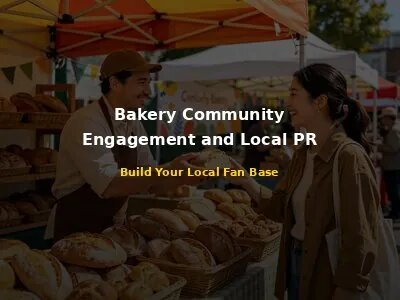
A story from our customer in Portland, Oregon: "When I opened my artisan bakery in a quiet Portland neighborhood five years ago, I thought great bread would be enough. I was wrong. The first six months were brutal - I had maybe 10-15 customers a day, and I was barely covering rent. I was ready to give up. Then a friend suggested I try the local farmers market. I was skeptical - I already had a storefront, why would I need to sell at a market? But I was desperate, so I gave it a try. That first Saturday at the farmers market changed everything. I brought 50 loaves of sourdough and a batch of croissants, and I sold out by 10 AM. But more importantly, I talked to people. I told them my story - how I'd quit my corporate job to pursue baking, how I sourced local flour, how I fermented my dough for 24 hours. People loved it. They came back the next week. And the week after. Within a month, my storefront traffic doubled. People were finding me at the market and then coming to my bakery during the week. But the farmers market was just the beginning. I started donating day-old bread to the local food bank. I sponsored a Little League team. I partnered with a nearby coffee shop for cross-promotions. I hosted baking classes for kids on weekends. I built relationships with local food bloggers and got featured in the local paper's 'Best Bakeries' list. I joined the Chamber of Commerce and started attending local business networking events. Within two years, my bakery was a local institution. We had lines out the door on weekends, a loyal base of regulars, and a reputation as a community-focused business. Last year, we did $850,000 in revenue - up from $120,000 in our first year. The difference wasn't better bread (my bread was always good). The difference was community. I stopped thinking of my bakery as just a place that sells bread, and started thinking of it as a community hub. I showed up, I gave back, I built relationships, and I told my story. Community engagement isn't marketing - it's being a good neighbor. And good neighbors get loyal customers. My advice to every bakery owner: get out from behind the counter. Go to the farmers market. Sponsor the local team. Donate to the food bank. Partner with other local businesses. Tell your story. Build relationships. Your community will embrace you, and your business will thrive because of it."
Community engagement and local public relations (PR) are among the most powerful - and most underused - marketing strategies for local bakeries. Unlike paid advertising, which can be expensive and impersonal, community engagement builds genuine relationships with local customers, creates word-of-mouth marketing (the most effective form of marketing), and establishes your bakery as a beloved local institution.
As our Portland customer learned, great bread alone isn't enough. You should connect with your community, tell your story, and build relationships.Here's what most equipment suppliers won't tell you: the most expensive machine isn't always the best choice. In fact, many bakeries overspend on features they'll never use.
When it comes to bakery community, choosing the right equipment is crucial for bakery success. HNH Bakery Equipment provides professional bakery community solutions for bakeries worldwide. In this guide, we explore everything you need to know about bakery community and how to select the best equipment for your bakery.
1. Why Community Engagement Matters for Bakeries
Bakeries are inherently local businesses. Your customers live or work nearby. They choose your bakery over the supermarket or chain bakery because of quality, freshness, and - importantly - the personal connection. Community engagement amplifies that connection and turns casual customers into loyal advocates.
1.1 The Benefits of Community Engagement
| Benefit | Description | Impact |
|---|---|---|
| Word-of-Mouth Marketing | Happy community members recommend your bakery to friends, family, and neighbors | Quite High - most trusted form of marketing |
| Customer Loyalty | Community-connected customers are more loyal and less price-sensitive | High - repeat business, higher lifetime value |
| Local Visibility | Community events, sponsorships, and partnerships increase local brand awareness | High - reaches potential customers who don't see your ads |
| Media Coverage | Community-focused businesses attract local media attention | Medium-High - free, credible publicity |
| Positive Reputation | Being seen as a community-minded business improves your reputation | High - differentiates from chains and competitors |
| Employee Morale | Employees feel proud to work for a community-focused business | Medium - better retention, better customer service |
| Resilience | Community-supported businesses weather economic downturns better | High - loyal customers support you through tough times |
| Feedback and Insights | Community engagement gives you direct feedback from customers | Medium - helps improve products and service |
1.2 The "Shop Local" Movement
The "shop local" movement has grown noticeably in recent years, driven by consumers who want to support local businesses, keep money in the community, and enjoy unique, personalized experiences. Studies show:
- Local businesses recirculate a much higher percentage of revenue back into the local economy (typically 40-70% vs. 10-30% for chains).
- Consumers are increasingly willing to pay more for local, artisan products.
- "Shop local" campaigns drive real foot traffic to local businesses.
- Local businesses create more local jobs and support more local suppliers.
As a local bakery, You're perfectly positioned to benefit from this movement. Community engagement is how you tap into it.
2. Community Engagement Strategies
2.1 Farmers Markets and Local Events
Farmers markets are one of the best ways to connect with your local community. They attract customers who are already interested in local, fresh, artisan food - exactly your target audience.
- Set up a booth: Apply for a spot at your local farmers market (weekly or seasonally). Bring your best products, signage, and business cards.
- Offer samples: Free samples are the most effective way to get people to try your products. Have small bite-sized samples of your signature items.
- Sell portable items: Focus on items that are easy to eat at the market (cookies, muffins, individual pastries, bread rolls).
- Collect emails: Offer a discount or free item for customers who sign up for your email newsletter at the market.
- Tell your story: Have a sign or handout that tells your bakery's story. People connect with stories.
- Participate in local events: Food festivals, street fairs, community celebrations, holiday markets. Each event is an opportunity to reach new customers.
- Be consistent: Show up every week. Regulars will look for you, and consistency builds trust.
2.2 Charitable Giving and Community Support
Supporting local charities and causes builds goodwill, shows your values, and connects you with community members who care about those causes.
- Donate day-old products: Donate unsold bread and pastries to local food banks, shelters, and soup kitchens. This reduces waste AND builds goodwill. Many food banks will pick up donations regularly.
- Sponsor local teams and events: Sponsor a Little League team, a school event, a community fundraiser, or a local race. Your logo on their jerseys/programs/banners = local visibility.
- Host fundraisers: Donate a percentage of sales on a specific day to a local cause. Promote the event to your customers and the community.
- Provide baked goods for events: Donate products for charity galas, auctions, community events, and school functions. Your products as auction items or event refreshments = visibility.
- Support local schools: Donate cookies for bake sales, provide bread for school events, offer student discounts, host field trips.
- Partner with nonprofits: Build ongoing relationships with 1-2 local nonprofits whose missions align with your values. Deep partnerships are more impactful than one-off donations.
2.3 Local Business Partnerships
Partnering with complementary local businesses is a win-win: you reach their customers, they reach yours, and together you create something more valuable than either could alone.
- Cross-promotion: Partner with coffee shops, bookstores, florists, gift shops, yoga studios, wine shops. 'Buy coffee at X and get 10% off at our bakery' and vice versa.
- Joint products: Create collaborative products or gift baskets (e.g., 'Local Breakfast Box' with your bread + local coffee + local jam + local honey).
- Display each other's materials: Exchange business cards, flyers, and promotional materials to display in each other's shops.
- Host joint events: 'Wine and Bread Tasting' with a local wine shop, 'Coffee and Croissant Morning' with a local coffee roaster, 'Book and Bakery Night' with a local bookstore.
- Join business associations: Chamber of Commerce, local business association, merchant association. Attend meetings, build relationships, participate in joint promotions.
- Participate in 'shop local' campaigns: Join local 'shop small' and 'shop local' initiatives. These campaigns drive large foot traffic.
- Referral network: Build a network of local businesses you trust and can refer customers to. They'll refer customers to you in return.
2.4 Community Events and Workshops
Hosting events at your bakery turns your space into a community gathering place and gives people reasons to visit beyond just buying bread.
- Open houses and tours: Host 'behind the scenes' tours of your bakery. People love seeing how bread is made. Offer samples during the tour.
- Baking classes and workshops: Offer classes for kids and adults (sourdough basics, cookie decorating, croissant making, bread baking 101). Classes generate revenue AND build community connection AND serve as marketing.
- Themed events: 'National Bread Day' celebration, holiday cookie decorating party, sourdough starter workshop, 'Bake with the Baker' day.
- Community gathering space: Create comfortable seating, free Wi-Fi, board games, local art on walls. Make your bakery a place people want to linger.
- Local art shows: Feature a different local artist each month. Host opening receptions. Sell the art (with a commission for the bakery). This attracts art lovers and supports local artists.
- Community groups: Host book clubs, knitting circles, board game nights, or other community gatherings in your space during off-peak hours.
- Live music: Host local musicians on weekend evenings or special event nights. Live music creates atmosphere and attracts music lovers.
2.5 School and Youth Engagement
- Field trips: Offer bakery tours for local school groups. Include a baking demonstration and a sample. Kids who visit become customers for life (and they bring their parents).
- Culinary program partnerships: Partner with local high school/college culinary programs. Offer internships, do demonstrations, provide guest lectures, sponsor scholarships.
- Sponsor school events: Donate products for school bake sales, fundraisers, and events. Your support is remembered by parents and staff.
- Student discounts: Offer a discount for students with ID. Students are budget-conscious but loyal, and they become long-term customers.
- Hire local students: Offer part-time, after-school, and summer jobs to local students. They become ambassadors for your bakery among their peers and families.
2.6 Local Sourcing and Sustainability
- Source locally: Buy flour from a local mill, eggs from a local farm, honey from a local beekeeper, fruit from local orchards. Local sourcing is a powerful marketing story.
- Tell supplier stories: Feature your local suppliers on your menu, website, and social media. Tell their stories. Customers love knowing where their food comes from.
- Participate in local food movements: Join 'farm to table,' 'slow food,' and 'local food' initiatives. These communities are passionate and loyal.
- Sustainable practices: Compost food waste, recycle, reduce packaging, use energy-efficient equipment, donate unsold products. Sustainability resonates with many customers.
- Educate customers: Share your sustainability and local sourcing efforts on social media, in your bakery, and with local media. This builds your reputation as a responsible business.
3. Local PR and Media Relations
3.1 Why Local Media Coverage Matters
Local media coverage - in the newspaper, on local food blogs, on the radio, or on TV - is one of the most valuable forms of publicity for a local bakery. It's free, it reaches thousands of local potential customers, and it carries third-party credibility that advertising can't match. When a local newspaper says your bakery has the best croissants in town, that's far more persuasive than you saying it yourself.
3.2 Build a Media List
spot all local media outlets and contacts:
- Local newspapers: Daily paper, weekly paper, community papers. Find the food editor, business editor, features editor, and community reporter.
- Local magazines: City/regional magazines, lifestyle magazines. Find the food editor and local business editor.
- Food blogs and influencers: study local food bloggers, Instagram food influencers, and YouTube food creators in your area. Micro-influencers (1,000-10,000 followers) often have higher engagement.
- Local radio: Morning show hosts, food segment hosts, community affairs hosts.
- Local TV: Morning show producers, food segment producers, community affairs reporters.
- Online/hyperlocal news: Local online publications, neighborhood news sites, Patch.com, etc.
- Chamber of Commerce publications: Editor of the local chamber's newsletter/magazine.
For each contact, find their name, email, phone, social media handles, and what they cover. Build a spreadsheet to track contacts and your interactions.
3.3 Create a Press Kit
A press kit makes it easy for journalists to write about you. Include:
- Company overview: Your story, mission, what makes you unique.
- Owner/head baker bio: Personal story, background, passion for baking.
- Product information: Signature products, what makes them special, ingredients.
- High-quality photos: Product photos, bakery interior/exterior, owner at work, behind-the-scenes.
- Fact sheet: Important facts (year founded, employees, products, location, hours).
- Press releases: Any recent press releases.
- Testimonials: Customer look overs and quotes.
- Contact information: Who to contact for media inquiries.
Make your press kit available digitally (PDF or a page on your website) and have printed copies for in-person meetings.
3.4 Write Effective Press Releases
Send press releases for newsworthy events: grand opening, new product launch, anniversary, award, community initiative, unique event, expansion, collaboration. A good press release:
- Has a catchy, newsworthy headline
- Leads with the most important information (who, what, when, where, why)
- Includes quotes from the owner/head baker
- Provides details and context
- Ends with a call to action
- Includes contact information
- Is concise (1 page, 300-500 words)
- Is formatted professionally
Send press releases via email with a brief personalized note. Follow up with a phone call a few days later if you don't hear back.
3.5 Pitch Creative Story Ideas
Don't just send press releases - pitch creative story ideas that journalists will love. Examples:
- 'How a Local Baker is Reviving Traditional Sourdough in [Your City]'
- 'The Art of Croissant Making: Behind the Scenes at [Your Bakery]'
- 'How [Your Bakery] is Reducing Food Waste by Donating 500 Loaves a Month'
- 'Local Baker Shares Tips for Perfect Holiday Cookies'
- 'From Corporate Job to Bakery Owner: One Person's Journey to Following Their Passion'
- '[Your City]'s Best Bakeries: A Local Food Guide'
- 'How Local Bakeries are Surviving and Thriving in the Current Economy'
Personalize each pitch to the specific journalist and their beat. Keep pitches short (2-3 paragraphs) and explain why their readers/viewers would care.
3.6 Build Relationships with Journalists
Media relations is about relationships, not one-off pitches:
- Follow journalists on social media and engage with their posts
- Read their articles and mention specific stories you enjoyed
- Offer to be a source for future stories ('If you ever need a baking expert, I'd be happy to help')
- Invite journalists for a private tour and tasting
- Send holiday cards or small gifts to important contacts (a box of your best cookies goes a long way)
- Be responsive when journalists contact you (respond quickly, provide what they need)
- Thank journalists when they cover you (send a thank-you note, share their article, tell your customers)
3.7 Host Media Events
- Grand opening plook over: Invite local media for a plook over event before opening to the public
- New product launch: Host a tasting event for media and influencers
- Anniversary celebration: Invite media to your anniversary party
- Holiday media plook over: Host a holiday tasting for media in October/November
- Behind-the-scenes tour: Offer private tours for journalists and food bloggers
Make events fun, visual, and newsworthy. Provide good food, photo opportunities, and a clear story angle.
4. Customer Loyalty and Word-of-Mouth
4.1 Loyalty Programs
A loyalty program encourages repeat business and turns casual customers into regulars:
- Punch card: Buy 10, get 1 free. Simple, low-tech, effective.
- Points-based system: Earn points for purchases, redeem for free products or discounts. More flexible than punch cards.
- Tiered program: Different tiers with increasing benefits (Bronze/Silver/Gold). Encourages higher spending.
- Digital loyalty app: Use a loyalty app (like Belly, Perka, or a custom app) for digital tracking and personalized offers.
- Birthday rewards: Send customers a free treat on their birthday. Personal and appreciated.
- Exclusive perks: Early access to new products, member-only events, special discounts.
4.2 Great Customer Service
Great customer service is the foundation of word-of-mouth marketing:
- Learn regulars' names and orders: Nothing makes a customer feel more valued than being seed and remembered.
- Be friendly and warm: Greet every customer with a smile. A friendly attitude is contagious.
- Handle complaints gracefully: When something goes wrong, fix it quickly and generously. A well-handled complaint can create a more loyal customer than if nothing had gone wrong.
- Add personal touches: Remember a customer's allergy, ask about their family, throw in an extra cookie for a regular. Small touches create big loyalty.
- Train your team: Every employee should understand the importance of customer service and be trained to deliver it consistently.
4.3 Encourage look overs and Testimonials
- Ask happy customers: Most happy customers are willing to leave a look over if asked. Train your team to ask at the end of a positive interaction.
- Make it easy: Have QR codes on tables/counters that link to your Google/Yelp/Facebook look over pages. Include look over links in your email newsletter.
- Respond to all look overs: Thank positive look overers. deal with negative look overs professionally and offer to make it right. Potential customers read your responses.
- Display testimonials: Feature customer testimonials on your website, social media, and in your bakery (with permission).
- Create a referral program: Reward customers who refer friends (e.g., 'Give $5, get $5' referral program).
4.4 Customer Appreciation
- Customer appreciation day: Host an annual (or quarterly) customer appreciation event with free samples, discounts, and special treats.
- Regulars' night: Host an evening event for your most loyal customers with exclusive products and discounts.
- Surprise rewards: Occasionally give regulars a free item or discount 'just because.' Surprise and delight builds Great loyalty.
- Feature customers: Feature regular customers on your social media (with permission). People love being seed.
5. Social Media Local Engagement
5.1 Local-Focused Social Media Plan
- Use local hashtags: #YourCityBakery, #ShopLocalYourCity, #YourCityFood, #YourCityEats. study which local hashtags are most active.
- Geotag your posts: Always add your location to posts. This makes your content discoverable to people searching for your area.
- Tag local businesses: Tag the local coffee shop you partner with, the local farm you source from, the local event you're attending.
- Engage with local accounts: Like, comment on, and share posts from other local businesses, organizations, and customers. This builds relationships and visibility.
- Share local content: Share local news, events, and stories (not just your own content). This positions you as a community hub, not just a business.
- Feature local customers: Share photos of customers enjoying your products (with permission). User-generated content is authentic and engaging.
- Run geotargeted ads: Use Facebook/Instagram geotargeting to reach people within a specific radius of your bakery. This is highly targeted and cost-effective.
- Create location-specific content: 'Our Favorite Local Spots,' 'Things to Do in Our City,' 'A Day in [Your City]' with your bakery as a stop.
5.2 Local Influencer Partnerships
- spot local influencers: study local food bloggers, Instagram food influencers, and TikTok food creators with engaged local followings.
- Invite for tastings: Invite influencers for a free meal/tasting at your bakery. Make it a great experience.
- Send products for look over: Mail or deliver products to influencers for honest look overs.
- Collaborate on content: Co-create content (e.g., a 'day in the life' video, a recipe collaboration, a taste test).
- Offer exclusive promotions: Create discount codes or promotions for an influencer's followers. Track results with unique codes.
- Build long-term relationships: Don't treat influencers as one-off transactions. Build ongoing relationships with 2-3 local influencers whose audiences align with your target customers.
Micro-influencers (1,000-10,000 followers) often have higher engagement rates and more loyal local followings than macro-influencers. Don't overlook them.
6. Measuring Community Engagement Success
6.1 Important Metrics to Track
| Metric | How to Track | Target |
|---|---|---|
| Foot traffic | Customer counts, sales transactions, door counter | Month-over-month growth |
| New customers | First-time customer surveys, loyalty program sign-ups | Growing number of new customers |
| Repeat customer rate | Loyalty program data, POS customer tracking | >40% repeat customers |
| Social media engagement | Likes, comments, shares, follower growth | Growing engagement rate |
| Media mentions | Google Alerts, media monitoring, press clippings | Increasing mentions |
| Event attendance | Sign-in sheets, head counts, sales at events | Growing attendance |
| Partnership results | Coupon redemptions, cross-referral tracking, joint sales | Positive ROI from partnerships |
| Customer look overs | Google, Yelp, Facebook look overs. Quantity and rating. | Growing number of positive look overs |
| Email list growth | Newsletter sign-ups, email open/click rates | Growing list,>20% open rate |
| Community feedback | Customer surveys, comment cards, direct feedback | Positive sentiment |
6.2 How to Know What's Working
- Ask customers: 'How did you hear about us?' Train your team to ask every new customer. Track the responses. This tells you which channels drive the most new customers.
- Use unique tracking: Unique coupon codes for different partnerships/events/channels. UTM parameters for online campaigns. QR codes for specific promotions.
- Track sales by channel: If you sell at farmers markets, track market sales separately from store sales. If you run promotions, track promotion-related sales.
- Monitor social media analytics: Use built-in analytics (Instagram Insights, Facebook Insights) to track reach, engagement, and follower demographics.
- Conduct regular look overs: Monthly or quarterly look over of your community engagement efforts. What's working? What's not? What should you do more of? What should you stop?
7. Common Mistakes to Avoid
- Being transactional: Community engagement isn't about what You can get - it's about what You can give. Be genuine. Customers can tell when you're only engaging for marketing purposes.
- Spreading too thin: Don't try to do everything at once. Pick 2-3 strategies that align with your interests and resources, and do them well. Quality over quantity.
- Being inconsistent: Community engagement is a long-term plan. Show up regularly, not just when you need a boost. Consistency builds trust and relationships.
- Not telling your story: Your story is one of your most powerful marketing tools. Don't be shy about sharing it - how you started, why you love baking, what makes your bakery special.
- Ignoring social media: Even if you're not a 'social media person,' You should be active on at least one platform (Instagram is best for bakeries). Social media is where your customers are.
- Not following up with media: If a journalist covers you, thank them. If you pitch a story and don't hear back, follow up once (gently). Don't nag, but don't give up after one try.
- Neglecting existing customers: While it's a priority to attract new customers, don't neglect your regulars. They are your foundation. Show them appreciation.
- Not measuring results: If you don't track what's working, you'll waste time and money on ineffective strategies. Measure, look over, and adjust.
- Being afraid to ask: Ask customers for look overs. Ask for referrals. Ask local businesses for partnerships. Ask journalists for coverage. The worst they can say is no. Most will say yes or be flattered.
- Not investing in quality: If you're going to host an event, do it well. If you're going to send a press release, make it professional. If you're going to be on social media, post good photos. Half-hearted efforts produce half-hearted results.
8. 30-Day Community Engagement Action Plan
Week 1: Foundation and study
- Day 1: spot your target community (neighborhood, city, region). study local demographics, events, organizations, and media.
- Day 2: Build your media list (newspapers, magazines, blogs, radio, TV, influencers). Find contact information for each.
- Day 3: Create your press kit (company overview, owner bio, product info, photos, fact sheet, testimonials, contact info).
- Day 4: study local farmers markets, community events, and festivals. Apply for 1-2 upcoming events.
- Day 5: spot 3-5 complementary local businesses for potential partnerships. Visit them (as a customer) and introduce yourself.
- Day 6: study local charities and nonprofits. Choose 1-2 whose missions align with your values. Contact them about partnership opportunities.
- Day 7: Set up social media accounts if not already active (Instagram, Facebook). improve profiles with photos, bio, location, hours. Post 3 engaging posts this week.
Week 2: Launch Initial Efforts
- Day 8: Send your first press release (or pitch a story idea) to your media list. Follow up with phone calls to important contacts.
- Day 9: Launch your loyalty program (punch cards or digital). Promote it to customers. Train your team to explain it.
- Day 10: Set up a system for collecting customer emails (sign-up sheet at counter, QR code, online form). Offer an incentive for sign-ups.
- Day 11: Reach out to 3 local food bloggers/influencers. Invite them for a free tasting at your bakery.
- Day 12: Start donating day-old products to a local food bank/shelter. Set up a regular schedule (weekly or bi-weekly).
- Day 13: Plan your first community event at your bakery (open house, baking class, or themed event). Set a date and start planning.
- Day 14: Post on social media every day this week. Use local hashtags. Engage with 5 local business accounts per day.
Week 3: Build Relationships
- Day 15: Follow up with media contacts who didn't respond. Pitch a different story angle or offer a private tasting.
- Day 16: Meet with 1-2 local business owners to discuss partnership opportunities (cross-promotion, joint products, events).
- Day 17: Launch your first cross-promotion with a partner business. Create promotional materials and train your team.
- Day 18: Host your first community event at your bakery. Invite customers, local businesses, and media. Take photos and share on social media.
- Day 19: Send a personalized thank-you note to your top 10 regular customers. Include a small free treat or discount.
- Day 20: Sponsor a local team, event, or organization. Get your logo on their materials. Promote the sponsorship on social media.
- Day 21: look over your social media analytics. spot what content performs best. Adjust your content plan So.
Week 4: judge and Plan Ahead
- Day 22: Track and measure results from the past 3 weeks (foot traffic, new customers, social media growth, media mentions, event attendance, partnership results).
- Day 23: Conduct a customer survey (in-store or online) to gather feedback on your products, service, and community efforts.
- Day 24: Follow up with all media contacts, influencers, and partners. Thank them for their support. Discuss future opportunities.
- Day 25: Plan your community engagement calendar for the next 3 months. Schedule events, farmers markets, sponsorships, and social media content.
- Day 26: Create a system for ongoing community engagement (assign responsibilities, set reminders, establish routines).
- Day 27: Host a customer appreciation day or event to celebrate your first month of community engagement. Thank your customers for their support.
- Day 28: look over your progress, celebrate your wins, and spot areas for improvement. Set goals for the next month.
- Day 29: Write a blog post or social media series about your community engagement journey. Share your experiences and lessons learned.
- Day 30: Commit to ongoing community engagement. Make it a core part of your business plan, not a one-time campaign. Your community will thank you - and your business will thrive.
9. Conclusion
Community engagement and local PR are not just marketing tactics - they are the foundation of a successful local bakery. As our Portland customer learned, great bread alone isn't enough. You should connect with your community, tell your story, build relationships, and be a good neighbor. The bakeries that thrive are the ones that become beloved local institutions - not just places to buy bread, but community hubs where people gather, connect, and feel at home.
Community engagement doesn't require a big budget. It requires time, effort, authenticity, and consistency. Show up at the farmers market. Sponsor the local Little League team. Donate to the food bank. Partner with other local businesses. Tell your story. Build relationships with local media. Create a loyalty program. Provide Great customer service. Host community events. Engage on social media. And most importantly, be genuine - truly care about your community, and your community will care about you.
The investment in community engagement pays off in Many ways: loyal customers, word-of-mouth marketing, local visibility, media coverage, positive reputation, employee morale, and business resilience. In an era of chain bakeries and supermarket bread, community connection is your greatest competitive advantage. Use it.
Start small. Pick 2-3 strategies from this bakery community engagement guide that resonate with you and your bakery. put in place them consistently. Measure your results. Adjust and expand. Over time, you'll build deep roots in your community, and your bakery will become the beloved local institution you've always dreamed of.
Get a Custom Quote for Your Operation
Not sure which machine is right for you? Send us a message with your daily production volume, the products you make, and your available space. We will get back to you within 24 hours with a personalized recommendation.
View Our Bakery Equipment📋 Bakery Equipment ROI Calculator
Use our interactive ROI calculator to see how quickly your bakery equipment investment pays off.
Calculate Your Equipment ROI →📋 Bakery Equipment Maintenance Calendar
Get our printable maintenance calendar to keep your bakery equipment running at peak performance.
Printable Maintenance Calendar →📋 Bakery Equipment Energy Cost Calculator
Estimate your bakery equipment energy costs and find ways to reduce your utility bills.
Calculate Energy Costs →Related Articles
Learn More
- 👉 Bakery Equipment Selection Complete Guide: Choose by Output & Product
- 👉 Bakery Equipment Maintenance Schedule: Daily, Weekly, Monthly, Yearly
- 👉 Dough Divider Rounder Troubleshooting: 15 Common Problems & Solutions
- 👉 Small Bakery Equipment ROI & Payback Period Calculator
- 👉 Bakery Equipment Energy Consumption & Energy Saving Guide
- 👉 Bakery Equipment Food Safety & Hygiene Compliance Complete Guide