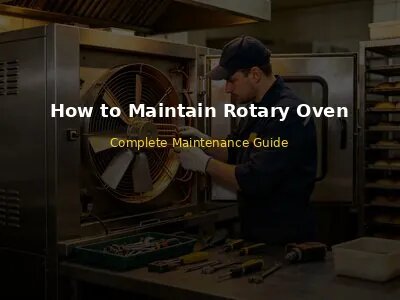
The answer is not as complicated as most guides make it sound. Here is the straightforward version: I've seen bakeries running 15-year-old ovens that still perform like new because they're maintained properly, and I've seen bakeries with 3-year-old equipment that's already falling apart because it's never been serviced.
Quick Answer
Bakery equipment maintenance schedule complete guide: Proper maintenance extends equipment life 50-100% and reduces breakdowns by 70%. Daily tasks (15-30 min, after each use): Clean all food-contact surfaces (warm water + food-safe detergent), wipe machine exteriors, remove dough buildup/crumbs, check for unusual noises/vibrations during operation, check power cords/plugs for damage, check safety guards in place, lubricate specified points with food-grade grease, empty crumb trays/drip pans, clean work area around equipment. Weekly (1-2 hours, same day each week): Deep clean hard-to-reach areas (behind, under, inside), check belt tension and condition (cracks, fraying, glazing), check blades/cutting edges for sharpness/wear, clean motor vents/cooling fans (remove dust/lint), check electrical connections (tighten loose), calibrate oven/proofer temperature with thermometer, check water lines/filters, check gas connections (if gas, smell test), clean/lubricate adjustment mechanisms, test safety interlocks/emergency stops. Monthly (2-4 hours): Replace worn belts (if cracked/stretched), check/replace blades (if dull/chipped), lubricate all bearings/bushings with food-grade grease, test all safety devices (emergency stop, interlocks, guards), check heating elements (oven) for damage/wear, check gearbox oil level (if applicable), calibrate timers/controls, check/clean ventilation systems, check all fasteners (tighten loose), check frame for cracks/rust, check grounding, clean electrical cabinet (if accessible), check water hoses for leaks/cracks. Quarterly (2-3 hours): check motor brushes (if DC motor), check all wiring insulation (cracks, fraying), check frame for structural damage, check all safety labels visible/legible, clean condenser coils (refrigeration), check refrigerant levels, check door seals/gaskets (replace if damaged), test all electrical outlets/circuits, check casters/wheels (replace if worn), check exhaust hood/filters. Semi-annually (3-4 hours): Professional checkion (if possible), deep clean all components (disassemble if needed), check all wear parts (belts, blades, bearings, seals), replace any parts showing 50%+ wear, calibrate all controls/thermostats, test emergency systems, update maintenance log. Annually (4-8 hours): Professional service/checkion, motor testing (amp draw, insulation resistance), full bearing replacement (if high-use), gearbox oil change, electrical system checkion (megger test), full calibration verification, replace all worn parts (belts, blades, seals, bearings), safety checkion (all guards, interlocks, emergency stops), update maintenance records, consider equipment replacement if repair costs >50% replacement. Equipment-specific schedules: Mixer - daily clean, weekly belt check, monthly gearbox check, annual bearing service. Oven - daily clean, weekly part check, monthly thermostat calibration, annual professional service. Divider/rounder - daily clean, weekly blade check, monthly belt replacement as needed, annual bearing service. Sheeter - daily clean rollers, weekly tension check, monthly belt check, annual roller checkion. Proofer - daily clean, weekly water line check, monthly humidity calibration, annual part service. Record keeping: Maintenance log (date, equipment, work done, parts replaced, technician, cost), checkion checklist (daily/weekly/monthly sign-off), repair history (problems, solutions, costs), warranty tracking, spare parts inventory. Cost: Typical small bakery $500-$1,500/year for parts/supplies, $200-$500 for professional service. ROI: Every $1 spent on maintenance saves $5-$10 in repairs/downtime. HNH equipment comes with detailed maintenance manuals, recommended spare parts kits, and 24h technical support to help you maintain your equipment properly.
Table of Contents
- Why Preventive Maintenance Matters
- Complete Maintenance Schedule by Frequency
- Equipment-Specific Maintenance Details
- Most Common Maintenance Mistakes (and How to Avoid Them)
- Maintenance Cost Breakdown
- DIY vs Professional Maintenance: What Can You Do Yourself?
- How to Create Your Customized Maintenance Schedule
- Often Asked Questions
- The Bottom Line
- Related Articles
The truth is, preventive maintenance costs a fraction of emergency repairs and downtime. A $50 bearing replacement becomes a $500 motor replacement if ignored. A $20 belt becomes a $200 emergency service call at 2 AM on a Saturday. And equipment that should last 15-20 years may need replacement in 5-8 years if neglected.
In this complete guide, I'll share the maintenance schedules we recommend for all types of bakery equipment, from manufacturer specifications and real-world experience. I'll cover daily, weekly, monthly, quarterly, and annual maintenance tasks for rotary ovens, spiral mixers, dough dividers, sheeters, moulders, and more. I'll also share the most common maintenance mistakes I see, how much maintenance should cost, and how to create a customized schedule for your bakery.
"I used to think maintenance was something you did when something broke — 'if it ain't broke, don't fix it.' That philosophy cost me dearly. My rotary oven broke down during our busiest week of the year, and the repair took 5 days because the part had to be special-ordered. I lost over $8,000 in production and had to turn away loyal customers. The technician told me the failure was caused by a bearing that had been making noise for months — a $40 part that would have taken 15 minutes to replace. After that, I put in placeed a strict maintenance schedule. I haven't had an unplanned breakdown in 4 years, and my equipment runs better than ever. Maintenance isn't an expense — it's an investment in reliability."
— Marco T., Bakery Owner in Italy
Why Preventive Maintenance Matters
Before diving into the specific schedules, let's understand why preventive maintenance is so important for bakery equipment:
1. Extends Equipment Life
A well-maintained rotary oven can last 15-20 years or more. A neglected oven may need replacement in 5-8 years. That's a difference of $5,000-15,000 in replacement costs, not including the downtime and disruption of replacing major equipment.
2. Reduces Emergency Repairs
Emergency repairs cost 2-3x more than scheduled maintenance. You pay premium rates for after-hours service, rush shipping on parts, and lost production. Most emergency failures are caused by small problems that could have been caught and fixed during routine maintenance.
3. Ensures Consistent Product Quality
Equipment that's out of calibration or not performing optimally produces inconsistent results. An oven thermostat that's off by 15°C causes some batches to be underbaked and others overbaked. A mixer with worn belts produces inconsistent dough development. Regular maintenance ensures your equipment performs consistently, batch after batch.
4. Improves Energy Efficiency
Dirty heating elements use 10-20% more energy. Worn belts and bearings increase friction and motor load. Clogged ventilation causes equipment to overheat and work harder. Regular maintenance keeps your equipment running at peak efficiency, reducing energy costs by 10-25%.
5. Maintains Warranty Coverage
Most equipment warranties require proof of regular maintenance. If You can't show that you followed the manufacturer's maintenance schedule, warranty claims may be denied. Keep detailed maintenance records to protect your warranty coverage.
6. Ensures Food Safety
Proper cleaning and maintenance prevent bacteria growth, pest infestations, and contamination. Equipment that's difficult to clean because of worn seals or damaged surfaces creates food safety hazards. Regular maintenance ensures your equipment can be properly cleaned and sanitized.
7. Creates a Safer Work Environment
Well-maintained equipment is safer equipment. Loose guards, frayed electrical cords, malfunctioning safety interlocks, and leaking gas connections create serious safety hazards. Regular maintenance identifies and fixes these hazards before they cause injuries.
Important Statistic: Every $1 spent on preventive maintenance saves $3-5 in repair and replacement costs. Regular maintenance reduces downtime by 70-80% compared to reactive (break-fix) maintenance.
Complete Maintenance Schedule by Frequency
Here's the complete maintenance schedule we recommend for commercial bakery equipment. This is a general guide — always follow your equipment manufacturer's specific recommendations, which may vary by model and usage intensity.
Daily Maintenance (Every Production Day)
These tasks should be completed at the end of every production day, or more frequently if needed. They take 30-60 minutes total for a medium bakery.
| Equipment | Daily Tasks |
|---|---|
| Rotary Oven | Wipe exterior surfaces; Empty and clean crumb tray; Check door seal for debris; check temperature reaches set point; Listen for unusual noises |
| Spiral Mixer | Wipe exterior; Remove and wash bowl, hook, attachments; Check bowl clamp mechanism; check power cord; check safety guards function |
| Dough Divider | Wipe exterior; Remove and wash dividing head, blades, hopper; Clean flour accumulation; Check blade sharpness; check safety guards |
| Dough Sheeter | Wipe exterior; Clean rollers with damp cloth; Remove flour buildup; Check roller adjustment; check emergency stop works |
| Moulder | Wipe exterior; Clean forming belts and rollers; Remove dough buildup; Check belt tension; check safety guards |
| Proofer | Wipe exterior; Clean interior surfaces; Check water level in humidifier; check temperature and humidity; Clean condensation tray |
| Refrigeration | Wipe exterior; Clean spills immediately; Check door seals; check temperature; Ensure proper airflow around unit |
| All Equipment | Visual checkion for damage, loose parts, leaks; Ensure all safety guards in place; Report any unusual symptoms immediately |
Weekly Maintenance (Once Per Week)
These tasks take 1-2 hours and should be scheduled on a slower production day or at the end of the week.
| Equipment | Weekly Tasks |
|---|---|
| Rotary Oven | Deep clean interior (after cooling); Clean heating elements with dry soft brush; Clean fan blades and housing; check door seal for compression/cracks; Clean ventilation outlets; check trolley wheel bearings |
| Spiral Mixer | Deep clean mixer body; Clean bowl lift mechanism; check spiral hook for wear/cracks; Tighten visible screws/bolts; Clean motor ventilation grills |
| Dough Divider | Deep clean all components; check blades for sharpness/damage; Check and lubricate pivot points; check drive belt; Clean flour from electrical components |
| Dough Sheeter | Deep clean rollers and frame; Check roller alignment; Lubricate adjustment mechanism; check drive belt; Clean scrapers |
| Moulder | Deep clean belts and rollers; Check belt tension and alignment; check rollers for wear; Lubricate bearings (if specified); Clean flour accumulation |
| Proofer | Deep clean interior; Descale humidifier; Clean heating elements; Check door seal; Calibrate temperature/humidity |
| Refrigeration | Clean interior; Check door seals; Clean exterior condenser area; check temperature; Check for ice buildup |
| Ventilation | Clean or replace exhaust filters; Clean intake vents; Check fan operation; check for grease buildup |
Monthly Maintenance (Once Per Month)
These tasks take 2-4 hours and may require some basic tools and food-grade lubricants.
| Equipment | Monthly Tasks |
|---|---|
| Rotary Oven | Lubricate trolley wheel/motor bearings (food-grade); Calibrate thermostat with separate thermometer; check heating elements for corrosion/damage; Check/adjust drive belt tension; check electrical connections; Clean control panel |
| Spiral Mixer | Lubricate bowl lift guide rods/pivots; Check/adjust belt tension; check belts for wear; Check gearbox oil level; check electrical connections; Check motor temperature; check speed settings |
| Dough Divider | Lubricate specified moving parts; Check/adjust belt tension; check belts/chains; Check gearbox oil; Calibrate portion weight; check blade condition; Check electrical connections |
| Dough Sheeter | Lubricate bearings and adjustment mechanism; Check/adjust belt tension; check belts; Check roller alignment; check electrical connections; check thickness settings |
| Moulder | Lubricate bearings; Check/adjust belt tension; check belts for wear; Check roller alignment; check electrical connections; check forming settings |
| Proofer | Lubricate fan motor bearings; Calibrate temperature/humidity; check heating elements; Check water supply/connections; check door seal; Clean humidifier thoroughly |
| Refrigeration | Clean condenser coils thoroughly; Check door seal condition; check temperature calibration; check for refrigerant leaks; Check compressor operation; Clean drain lines |
| All Equipment | check all electrical cords/plugs; Check for unusual vibrations/noises; Tighten all visible fasteners; check all safety features function; Update maintenance log |
Quarterly Maintenance (Every 3 Months)
These tasks are best performed by a qualified technician, although some can be done in-house if You've the skills and tools.
| Equipment | Quarterly Tasks |
|---|---|
| Rotary Oven | Professional checkion of motor/drive; Check amperage draw; check/clean fan motor; Check gearbox oil; check steam injection system; Check insulation resistance; Professional cleaning of exhaust ducts |
| Spiral Mixer | Professional checkion of motor/gearbox; Check amperage draw; Listen for bearing noise; check/replace worn belts; Check/adjust bowl alignment; Test safety interlocks; Clean motor cooling fan |
| Dough Divider | Professional checkion of drive system; Check motor performance; check/replace worn belts/chains; Check gearbox oil; Calibrate portion accuracy; check blade replacement schedule |
| All Equipment | Professional electrical checkion; Check all safety systems; check grounding; check emergency stops; Check for wear on major components; look over maintenance log for recurring issues |
Annual Maintenance (Once Per Year)
Annual maintenance should always be performed by a qualified technician. This is the most complete service and ensures your equipment is safe, efficient, and ready for another year of production.
| Equipment | Annual Tasks |
|---|---|
| Rotary Oven | Full professional service; Replace worn belts/bearings/seals; check/replace heating elements if degraded; Recalibrate all controls/thermostats; check/service motors/gearboxes; Electrical safety checkion; Update maintenance log |
| Spiral Mixer | Full professional service; Replace gearbox oil; check/replace worn bearings/belts/seals; check spiral hook/bowl for wear; Electrical safety checkion; Recalibrate timer/speeds; Update maintenance log |
| Dough Divider | Full professional service; Replace worn belts/chains/bearings; check/replace blades if needed; Recalibrate portioning; check/service motor/gearbox; Electrical safety checkion; Update maintenance log |
| All Equipment | Complete safety certification; Full electrical checkion; check all structural components; check compliance with safety standards; look over entire maintenance history; Plan for upcoming replacements; Update all records |
a priority: This is a general guide. Always follow your equipment manufacturer's specific maintenance recommendations, which may vary by model, usage intensity, and operating conditions. When in doubt, consult the manufacturer or a qualified technician.
Equipment-Specific Maintenance Details
Rotary Oven Maintenance
The rotary oven is typically the most expensive and most important piece of equipment in a bakery. Proper maintenance is necessary for consistent baking performance and long equipment life.
Important maintenance points:
- Heating elements: Clean monthly with a dry soft brush. Never use water or abrasive cleaners. Replace when efficiency drops or visible damage appears.
- Door seals: check weekly. Replace when compressed, cracked, or not sealing properly. A bad seal wastes 10-15% of oven energy.
- Fan motor: Clean quarterly. Check for vibration and noise. The fan is important for even heat distribution.
- Trolley wheels: Lubricate monthly. Check for smooth rotation. Worn wheels cause uneven baking and can damage the oven floor.
- Thermostat calibration: Calibrate monthly with a separate quality oven thermometer. Adjust if deviation exceeds 5°C.
- Ventilation: Clean filters weekly. Have exhaust ducts professionally cleaned quarterly.
Spiral Mixer Maintenance
The spiral mixer is important for dough quality. Proper maintenance ensures consistent dough development and prevents costly breakdowns during production.
Important maintenance points:
- Bowl and hook: Clean after every use. check hook weekly for wear, cracks, or deformation.
- Bowl lift mechanism: Clean weekly. Lubricate guide rods monthly with food-grade lubricant.
- Belts: Check tension monthly. Replace when cracked, frayed, or glazed.
- Gearbox: Check oil level monthly. Replace oil annually (or as specified by manufacturer).
- Motor: Clean ventilation grills weekly. Check temperature monthly — should be warm but not too hot to touch (under 70°C).
- Safety interlocks: Test daily. Mixer should not operate with guard open or bowl not properly positioned.
Dough Divider Maintenance
Dough dividers have many moving parts and require regular maintenance to ensure accurate portioning and long equipment life.
Important maintenance points:
- Blades: Clean after every use. check weekly for sharpness and damage. Replace when dull or damaged — dull blades cause inconsistent portioning and can damage dough.
- Drive system: Check belts/chains monthly. Lubricate as specified. Replace worn components promptly.
- Portion calibration: Calibrate monthly. Weigh multiple portions and adjust if deviation exceeds 2-3%.
- Flour accumulation: Clean thoroughly weekly. Flour buildup causes bearings to seize and electrical components to short.
- Lubrication: Follow manufacturer specifications carefully. Use only food-grade lubricants on components that may contact dough.
Dough Sheeter Maintenance
Dough sheeters are relatively simple machines but still require regular maintenance for consistent performance.
Important maintenance points:
- Rollers: Clean after every use with a damp cloth. Never use sharp objects to scrape dough — this can damage the roller surface.
- Roller alignment: Check monthly. Misaligned rollers cause uneven dough thickness.
- Adjustment mechanism: Lubricate monthly. Ensure smooth, precise adjustment.
- Drive belt: Check tension monthly. Replace when worn.
- Scrapers: Clean weekly. Replace when worn — worn scrapers leave dough residue on rollers.
- Emergency stop: Test daily. Ensure it stops the machine immediately.
Moulder Maintenance
Moulders (toast moulder, baguette moulder, etc.) require regular maintenance to ensure consistent product shape and quality.
Important maintenance points:
- Belts: Clean after every use. Check tension and alignment monthly. Replace when worn, stretched, or damaged.
- Rollers: Clean weekly. check for wear. Replace when grooved or worn — this affects product shape.
- Bearings: Lubricate monthly (as specified). Check for noise or roughness.
- Flour dusting system: Clean weekly. Ensure even flour distribution. Clogged dusters cause dough sticking and product defects.
- Adjustments: Check all settings monthly. check product shape and weight consistency.
"I run a high-volume wholesale bakery with 3 rotary ovens, 4 spiral mixers, and a full line of dough processing equipment. For years, I handled maintenance reactively — fixing things when they broke. My annual repair costs were over $15,000, and I had at least one major breakdown every quarter that disrupted production. Then I hired a maintenance consultant who helped me create a complete preventive maintenance schedule. I trained my staff to do daily/weekly/monthly tasks, and I scheduled quarterly professional service. The first year, my repair costs dropped to $4,000, and I had zero major breakdowns. The second year, costs were even lower. I now spend $6,000/year on total maintenance (in-house supplies + professional service), compared to $15,000+ on repairs alone. And my equipment runs better, produces more consistent quality, and has noticeably longer expected life. Preventive maintenance is the best investment I've made in my bakery."
— Sarah K., Wholesale Bakery Owner in the USA
Most Common Maintenance Mistakes (and How to Avoid Them)
After 7 years in the bakery equipment business, I've seen the same maintenance mistakes repeated in bakery after bakery. Here are the most common ones, and how to avoid them:
1. Ignoring Small Problems
This is the #1 most expensive mistake. Many bakers notice unusual noises, temperature inconsistencies, or minor performance issues but keep running the equipment "until it breaks." A $50 bearing replacement becomes a $500 motor replacement. A $20 belt becomes a $200 emergency service call. Fix: deal with any unusual symptom immediately. When in doubt, call a technician. It's always cheaper to fix a small problem early.
2. Skipping Regular Cleaning
Flour, dough, and grease buildup doesn't just look bad — it causes bearings to seize, heating elements to overheat, belts to slip, and electrical components to short out. I've seen equipment fail prematurely simply because it was never properly cleaned. Fix: Follow the daily/weekly cleaning schedule religiously. Pay special attention to hard-to-reach areas where flour accumulates. Make cleaning part of every employee's daily routine.
3. Using Wrong Lubricants
Using the wrong oil or grease can damage bearings, contaminate food, and cause premature part failure. Some bakers use whatever oil is handy (motor oil, cooking oil, WD-40) instead of manufacturer-recommended food-grade lubricants. Fix: Use only food-grade lubricants specified by the manufacturer. Keep lubricant containers clearly labeled and stored properly. When in doubt, consult the manual or contact the manufacturer.
4. Over-Tightening or Under-Tightening Belts
Over-tightening belts causes premature bearing and motor failure. Under-tightening causes belt slippage, overheating, and inconsistent performance. I've seen many equipment failures caused by incorrect belt tension. Fix: Follow manufacturer specifications for belt tension. Check tension monthly and adjust as needed. A properly tensioned belt should deflect 10-15mm under moderate pressure.
5. Not Calibrating Thermostats
Built-in oven thermostats can drift by 10-20°C over time, causing inconsistent baking, wasted product, and customer complaints. Many bakers never check thermostat accuracy — they just trust the digital display. Fix: Calibrate oven thermostats monthly using a separate quality oven thermometer. Adjust or recalibrate if deviation exceeds 5°C. This simple step by a lot improves baking consistency.
6. Neglecting Ventilation
Clogged ventilation filters and exhaust ducts cause equipment to overheat, reduce motor life, and create fire hazards. Many bakers never clean ventilation systems until there's a problem — or until the fire marshal shows up. Fix: Clean ventilation filters weekly. Have exhaust ducts professionally cleaned quarterly or semi-annually depending on usage. This is also a important fire safety measure.
7. DIY Repairs Without Expertise
Some bakers attempt complex electrical or mechanical repairs to save money, causing more damage and creating safety hazards. I've seen ovens damaged beyond repair by well-meaning but unqualified DIY repairs. Fix: Do basic cleaning and lubrication yourself, but leave electrical repairs, motor replacement, and complex mechanical work to qualified technicians. The money you "save" on DIY repairs often costs much more in additional damage and safety risks.
8. Not Keeping Maintenance Records
Without a maintenance log, it's impossible to track service history, predict when parts need replacement, or check warranty coverage. Many bakers have no idea when their equipment was last serviced or what was done. Fix: Keep a detailed maintenance log for each piece of equipment, recording all cleaning, service, repairs, and part replacements with dates. This is also core for warranty claims and insurance purposes.
9. Using Abrasive Cleaners on Heating Elements
Steel wool, abrasive pads, or liquid cleaners on heating elements cause damage, reduce efficiency, and create safety hazards. I've seen heating elements destroyed by improper cleaning. Fix: Clean heating elements with a dry soft brush only. Never use water or abrasive cleaners. If elements are heavily soiled, consult a professional for proper cleaning.
10. Waiting for Annual Service
Annual professional service is important, but it's not a substitute for regular daily/weekly/monthly maintenance. Equipment that's neglected all year and then "serviced" once will still have noticeably shorter life and more breakdowns. Fix: Follow the complete maintenance schedule — daily, weekly, monthly, quarterly, and annual. Professional service complements, not replaces, regular in-house maintenance.
Bottom Line: Avoiding these common mistakes can extend equipment life by 50-100% and reduce total maintenance costs by 30-50%. The important is consistency — follow the schedule, deal with problems early, and keep good records.
Maintenance Cost Breakdown
Many bakers ask me how much they should budget for equipment maintenance. Here's a realistic breakdown from bakery size and equipment type:
In-House Maintenance Costs (Tasks You Do Yourself)
| Category | Monthly Cost | Annual Cost |
|---|---|---|
| Cleaning supplies (detergents, sanitizers, brushes, cloths) | $20-50 | $240-600 |
| Lubricants (food-grade oils and greases) | $10-30 | $120-360 |
| Replacement parts (belts, seals, filters, fuses) | $50-150 (average) | $600-1,800 |
| Total In-House (Medium Bakery) | $80-230 | $960-2,760 |
Professional Maintenance Costs
| Service | Cost | Frequency |
|---|---|---|
| Quarterly service visit | $150-300/visit | 4x/year ($600-1,200) |
| Annual major service (per major equipment) | $300-600/item | 1x/year ($600-1,500 for 2-3 items) |
| Emergency repair calls | $100-200 + parts | Varies (avoid with preventive maintenance) |
| Total Professional (Medium Bakery) | $1,200-3,000/year | — |
Total Annual Maintenance Cost by Bakery Size
| Bakery Size | Equipment Items | Annual Maintenance Cost |
|---|---|---|
| Small bakery (low volume) | 2-3 items | $1,000-2,500 |
| Medium bakery (moderate volume) | 5-8 items | $2,000-5,000 |
| Large bakery (high volume) | 10+ items | $4,000-10,000 |
Cost Comparison: Preventive vs Reactive Maintenance
| Reason | Preventive Maintenance | Reactive (Break-Fix) |
|---|---|---|
| Annual maintenance cost | $2,000-5,000 | $5,000-15,000 (repairs only) |
| Equipment life | 15-20 years | 5-8 years |
| Annual depreciation (rotary oven) | $200-500/year | $500-1,600/year |
| Downtime per year | 1-3 days (scheduled) | 5-15 days (unscheduled) |
| Production loss from downtime | $1,000-3,000/year | $5,000-15,000/year |
| Total annual cost | $3,200-8,500 | $10,500-31,600 |
ROI of Preventive Maintenance: Every $1 spent on preventive maintenance saves $3-5 in repair and replacement costs. Regular maintenance reduces downtime by 70-80%. Maintained equipment has 50-100% longer service life. The numbers don't lie — preventive maintenance pays for itself many times over.
DIY vs Professional Maintenance: What Can You Do Yourself?
One of the most common questions I get is: "Can I do my own maintenance, or do I need to hire a professional?" The answer is: You can and should do much of it yourself, but certain tasks require professional expertise.
Maintenance Tasks You can Do Yourself
Approximately 60-70% of maintenance tasks are basic cleaning, checkion, and lubrication that require no special skills or tools. Doing this yourself saves meaningful money and ensures consistency.
Daily tasks (all staff):
- Wipe down equipment exteriors with damp cloth and mild detergent
- Clean mixing bowls, hooks, and attachments
- Empty and clean crumb trays
- Remove racks and trays from ovens for washing
- Visual checkion for damage, loose parts, or unusual symptoms
- check safety guards and interlocks are in place and functional
Weekly tasks (designated staff):
- Deep clean oven interior (after cooling fully)
- Clean heating elements with dry soft brush
- Clean ventilation filters
- check belts, chains, and seals for visible wear
- Tighten visible loose screws and bolts
- Clean motor ventilation grills
Monthly tasks (maintenance person/manager):
- Lubricate specified moving parts with food-grade lubricant (follow manufacturer manual)
- Calibrate oven thermostats with separate thermometer
- Check and adjust belt tension (if accessible and clearly marked)
- Clean condenser coils on refrigeration units
- check electrical cords for visible damage
- Check and top up gearbox oil (if accessible and clearly marked)
Tools Needed for DIY Maintenance
- Basic hand tools (screwdrivers, wrenches, pliers)
- Soft brushes (for cleaning heating elements)
- Food-grade lubricants (as specified by manufacturer)
- Oven thermometer (for calibration)
- Cleaning supplies (mild detergent, sanitizer, cloths)
- Flashlight (for checking hard-to-reach areas)
- Maintenance log (for recording all work)
Maintenance Tasks You shouldn't Do Yourself
For safety and equipment protection, these tasks should always be performed by qualified professionals:
- Electrical repairs: Any work involving opening electrical panels, replacing wiring, or working with live electricity. This is dangerous and may violate electrical codes.
- Motor replacement or rewinding: Motors require proper alignment, electrical connections, and testing.
- Complex mechanical repairs: Gearbox overhaul, bearing replacement in hard-to-reach locations, major part disassembly.
- Gas equipment service: Any work on gas lines, burners, valves, or combustion systems. This requires certification and creates safety hazards.
- Refrigeration system work: Recharging refrigerant, compressor replacement, or sealed system repairs. This requires specialized tools and certification.
- Control board or electronic repairs: Complex electronic components require diagnostic equipment and expertise.
- Safety system testing and certification: Annual safety checkions and certifications should be done by qualified professionals.
When to Call a Professional
- Any electrical problem (tripping breakers, sparks, burning smell)
- Unusual noises that don't have an obvious cause (loose part, debris)
- Temperature inconsistencies that calibration doesn't fix
- Motor overheating or unusual vibration
- Gas smell or combustion problems
- Any problem you're not confident You can fix safely
- Annual major service and safety certification
Safety First: When in doubt, call a professional. Trying to fix a problem you don't understand can cause more damage, create safety hazards, and void warranties. The money you "save" on DIY repairs often costs much more Over time.
How to Create Your Customized Maintenance Schedule
Every bakery is different — different equipment, different production volume, different operating conditions. While the schedules above are a great starting point, You should create a customized schedule for your specific situation. Here's how:
Step 1: Inventory All Equipment
Create a complete list of every piece of equipment in your bakery, including:
- Equipment name and model
- Manufacturer
- Purchase date
- Warranty expiration date
- Location in bakery
- Current condition (good, fair, poor)
- Last service date
Include everything: ovens, mixers, dividers, sheeters, moulders, proofers, refrigerators, freezers, slicers, scales, ventilation systems, water heaters, and any other equipment.
Step 2: Gather Manufacturer Documentation
Collect the owner's manual and maintenance guide for each piece of equipment. These documents specify:
- Recommended maintenance tasks
- Frequency of each task
- Lubricant types and quantities
- Belt tension specifications
- Calibration procedures
- Part numbers for common replacement items
- Safety precautions
If you've lost manuals, contact the manufacturer or search online — most are available as free PDFs.
Step 3: Categorize Tasks by Frequency
Organize all tasks into frequency categories: daily, weekly, monthly, quarterly, semi-annually, annually. For each task, note:
- Which equipment it applies to
- What needs to be done
- Tools or supplies needed
- Who should do it (staff or technician)
- Estimated time to complete
Step 4: Create a Master Schedule
Create a calendar or spreadsheet showing all maintenance tasks organized by frequency. Include:
- Date or week the task should be performed
- Equipment name
- Task description
- Assigned person
- Completion checkbox
- Notes column for observations or issues
You can use a simple wall calendar, a spreadsheet (Excel, Google Sheets), maintenance management software, or a whiteboard with weekly tasks.
Step 5: Assign Responsibility
Clearly assign each maintenance task to a specific person:
- Daily/weekly cleaning: All production staff (assign specific equipment to each person)
- Monthly tasks: Designated maintenance person or bakery manager
- Quarterly/annual professional service: Qualified technician
Ensure everyone understands their responsibilities and has the training and supplies to complete tasks correctly.
Step 6: Create Checklists
For each frequency category, create a detailed checklist that can be printed and posted:
- Daily maintenance checklist (posted near equipment)
- Weekly maintenance checklist
- Monthly maintenance checklist
Each checklist should have: task description, equipment, checkbox for completion, initials of person completing, date.
Step 7: Set Up a Maintenance Log
Create a maintenance log for each major piece of equipment to record:
- All maintenance performed (date, task, person)
- All repairs (date, problem, parts replaced, cost)
- All part replacements
- Calibration results
- Technician visit notes
- Observations of potential problems
This log is invaluable for tracking equipment history, predicting when parts need replacement, checking warranty coverage, and spoting recurring problems.
Step 8: Build a Spare Parts Inventory
Keep common replacement parts on hand to minimize downtime:
- Belts (for each equipment model)
- Seals and gaskets
- Fuses
- Filters
- Heating elements (if easy to replace)
- Lubricants
- Cleaning supplies
Store parts in a clearly labeled, organized location. Track inventory and reorder when supplies run low.
Step 9: Schedule Professional Service in Advance
Don't wait for a breakdown to find a technician:
- study and select a qualified equipment technician before you need one
- Schedule quarterly and annual service visits in advance
- Have the technician's contact information posted prominently
- Build a relationship for priority service and better rates
Step 10: look over and Adjust the Schedule
Every 3-6 months, look over your maintenance schedule:
- Are tasks being completed consistently?
- Are there recurring problems that need more frequent attention?
- Is any equipment showing signs of needing more frequent service?
- Are there tasks that can be reduced in frequency?
Adjust the schedule from actual equipment condition and performance.
"When I first opened my bakery, I had no maintenance schedule — I just cleaned things when they looked dirty and fixed things when they broke. After two expensive breakdowns in the first year, I knew I needed a better way. I spent a weekend creating a complete maintenance schedule: I inventoried all my equipment, gathered all the manuals, and created daily, weekly, and monthly checklists. I posted the daily checklist on the wall next to each piece of equipment and trained my staff to follow it. I also scheduled quarterly professional service visits a year in advance. The results have been Great: no unplanned breakdowns in 3 years, my equipment runs better than ever, and my total maintenance costs are lower than what I used to spend on emergency repairs alone. The important was making maintenance a routine, not an afterthought. Now it's just part of how we operate, like washing hands or wearing hairnets."
— Pierre L., Artisan Bakery Owner in France
📋 Bakery Equipment Checklist
Download our complete bakery equipment checklist with budget estimates for 5 different bakery types.
Free Bakery Equipment Checklist →📋 Bakery Equipment ROI Calculator
Use our interactive ROI calculator to see how quickly your bakery equipment investment pays off.
Calculate Your Equipment ROI →📋 Bakery Equipment Maintenance Calendar
Get our printable maintenance calendar to keep your bakery equipment running at peak performance.
Printable Maintenance Calendar →📋 Bakery Equipment Energy Cost Calculator
Estimate your bakery equipment energy costs and find ways to reduce your utility bills.
Calculate Energy Costs →🏭 Bakery Equipment Capacity Calculator
Not sure what size equipment you need? Use our free interactive calculator to find the perfect dough divider, mixer, oven, and proofer capacity for your production volume.
Calculate Your Equipment Needs →⚖️ Bakery Equipment Comparison Tool
Compare dough dividers, spiral mixers, ovens, proofers and dough sheeters side by side. View specs, prices, capacity and features to find the best equipment for your bakery.
Compare Equipment Now →Often Asked Questions
Q: How often should I maintain my bakery equipment?
A: Bakery equipment maintenance should follow a structured schedule from frequency of use and equipment type: Daily maintenance (every day after production): Clean all equipment surfaces, wipe down ovens and mixers, empty crumb trays, check for visible damage, ensure all safety guards are in place, check temperature readings are normal. Weekly maintenance (once per week): Deep clean oven interior and heating elements, clean mixer bowls and attachments thoroughly, check belts and chains for wear, check and tighten loose screws and bolts, clean ventilation filters, check electrical cords for damage. Monthly maintenance (once per month): Lubricate moving parts (bearings, chains, gears) according to manufacturer specifications, calibrate oven thermostats with a separate thermometer, check and replace worn door seals, clean condenser coils on refrigeration units, check and adjust belt tension, check heating elements for corrosion or damage, test safety features (emergency stops, thermal cutoffs). Quarterly maintenance (every 3 months): Professional checkion of major components, check motor performance and amperage draw, check and clean fan blades and motors, check gearbox oil levels and top up if needed, check and clean exhaust systems, check all electrical connections are tight. Annual maintenance (once per year): Full professional service by qualified technician, replace worn belts, chains, and bearings, check and replace heating elements if degraded, recalibrate all thermostats and controls, check and service motors, check and replace electrical components as needed, perform safety checkion and certification, update maintenance log. The exact frequency depends on usage intensity: High-volume bakeries (12+ hours/day, 6-7 days/week) may need monthly professional service, while lower-volume bakeries (4-8 hours/day, 5 days/week) can follow the standard schedule above. The important is consistency — regular preventive maintenance costs far less than emergency repairs and equipment downtime.
Q: What maintenance does a rotary oven need?
A: Rotary ovens are the workhorses of most bakeries and require regular maintenance to ensure consistent baking performance and long equipment life: Daily maintenance: 1) Wipe down exterior surfaces with a damp cloth and mild detergent. 2) Empty and clean crumb tray at the bottom of the oven. 3) Check door seal for visible damage or debris. 4) check oven reaches set temperature within normal time (15-20 minutes for most models). 5) Listen for unusual noises during operation (grinding, squealing, rattling). Weekly maintenance: 1) Deep clean oven interior — remove racks and trays, wash with warm soapy water, rinse and dry thoroughly. 2) Clean heating elements with a soft brush to remove grease and carbon buildup (do not use abrasive cleaners or water on elements). 3) Clean oven fan blades and housing — remove accumulated grease and dust. 4) check door seal for compression, cracks, or tears — clean seal with mild detergent. 5) Check and clean ventilation outlets and exhaust ducts. 6) check trolley/wheel bearings — clean and check for smooth rotation. Monthly maintenance: 1) Lubricate trolley wheel bearings and motor bearings with food-grade lubricant (follow manufacturer specifications). 2) Calibrate oven thermostat using a separate oven thermometer — adjust if temperature deviates more than 5°C from set point. 3) check heating elements for corrosion, hot spots, or physical damage — replace if degraded. 4) Check and adjust belt tension on drive system (if applicable). 5) check electrical connections for tightness and signs of overheating. 6) Clean and check control panel — ensure all displays and buttons function correctly. Quarterly maintenance: 1) Professional checkion of motor and drive system — check amperage draw, bearing condition, and gearbox oil level. 2) check and clean fan motor — check for vibration and noise. 3) Check insulation resistance of heating elements and electrical system. 4) check steam injection system (if equipped) — clean nozzles, check water supply, descale if needed. Annual maintenance: 1) Full professional service by qualified technician. 2) Replace worn belts, bearings, and seals. 3) check and replace heating elements if efficiency has dropped. 4) Recalibrate all controls and thermostats. 5) check and service motors and gearboxes — replace oil if needed. 6) Perform electrical safety checkion and insulation resistance test. 7) Check and update maintenance log. Important maintenance tips: Always allow oven to cool fully before cleaning interior components. Never use water or liquid cleaners on heating elements — use a dry soft brush only. Use only food-grade lubricants on components that may come into contact with food. Keep a maintenance log recording all service, repairs, and part replacements. deal with unusual noises or temperature inconsistencies immediately — small problems become expensive repairs if ignored. A well-maintained rotary oven can last 15-20 years or more, while a neglected oven may need replacement in 5-8 years.
Q: How do I maintain a spiral mixer?
A: Spiral mixers are important for dough quality and require regular maintenance to ensure consistent performance and prevent costly breakdowns: Daily maintenance: 1) Wipe down exterior surfaces with a damp cloth and mild detergent — avoid getting water in electrical components. 2) Remove and wash mixing bowl, spiral hook, and any attachments with warm soapy water — rinse and dry thoroughly before replacing. 3) Check bowl clamping mechanism — ensure it locks securely and releases smoothly. 4) check power cord for damage — ensure plug is in good condition. 5) Listen for unusual noises during mixing (grinding, squealing, knocking). 6) Check that safety guards and interlocks function correctly — mixer should not operate with guard open. Weekly maintenance: 1) Deep clean mixer body — remove accumulated flour and dough from crevices, under the bowl, and around the mixing head. 2) Clean and check bowl lift mechanism — wipe down guide rods, check for smooth operation. 3) check spiral hook for wear, cracks, or deformation — replace if damaged. 4) Check and tighten all visible screws and bolts. 5) Clean ventilation grills on motor housing — ensure adequate airflow for motor cooling. Monthly maintenance: 1) Lubricate bowl lift guide rods and pivot points with food-grade lubricant (follow manufacturer specifications — do not over-lubricate). 2) Check and adjust belt tension (if belt-driven) — belt should deflect 10-15mm under moderate pressure. 3) check belts for cracks, fraying, or glazing — replace if worn. 4) Check gearbox oil level (if accessible) — top up with manufacturer-recommended oil if low. 5) check electrical connections for tightness and signs of overheating. 6) Check motor temperature after extended use — motor should be warm but not too hot to touch (under 70°C). 7) check mixing speed settings — ensure both speeds operate correctly and transition smoothly. Quarterly maintenance: 1) Professional checkion of motor and gearbox — check amperage draw, listen for bearing noise, check gear wear. 2) check and replace worn belts if needed. 3) Check and adjust bowl alignment — ensure bowl centers correctly under spiral hook. 4) check safety interlock switches — test all safety features. 5) Clean motor cooling fan — remove dust buildup from fan blades and housing. Annual maintenance: 1) Full professional service by qualified technician. 2) Replace gearbox oil (if applicable). 3) check and replace worn bearings, belts, and seals. 4) check spiral hook and bowl for wear — replace if noticeably worn. 5) Perform electrical safety checkion and insulation resistance test. 6) Recalibrate timer and speed controls if needed. 7) Update maintenance log. Important maintenance tips: Never run the mixer without dough in the bowl — this causes unnecessary wear on gears and bearings. Do not overload the mixer — exceeding capacity can damage motor, gears, and drive system. Allow mixer to cool between batches if doing continuous high-volume mixing. Keep flour and dough out of electrical components and ventilation openings. Use only manufacturer-recommended replacement parts. A well-maintained spiral mixer can last 10-15 years, while a neglected mixer may fail in 3-5 years.
Q: What are the most common bakery equipment maintenance mistakes?
A: After 7 years selling bakery equipment and visiting hundreds of bakeries, I've seen the same maintenance mistakes repeated over and over. These mistakes lead to premature equipment failure, costly repairs, and production downtime. Here are the most common mistakes and how to avoid them: 1) Ignoring small problems: Many bakers notice unusual noises, temperature inconsistencies, or minor performance issues but keep running the equipment 'until it breaks.' This is the most expensive mistake — a $50 bearing replacement becomes a $500 motor replacement if ignored. Fix: deal with any unusual symptom immediately. When in doubt, call a technician. 2) Skipping regular cleaning: Flour, dough, and grease buildup doesn't just look bad — it causes bearings to seize, heating elements to overheat, belts to slip, and electrical components to short out. Fix: Follow the daily/weekly cleaning schedule religiously. Pay special attention to hard-to-reach areas where flour accumulates. 3) Using wrong lubricants: Using the wrong oil or grease can damage bearings, contaminate food, and cause premature part failure. Some bakers use whatever oil is handy instead of manufacturer-recommended food-grade lubricants. Fix: Use only food-grade lubricants specified by the manufacturer. Keep lubricant containers clearly labeled and stored properly. 4) Over-tightening or under-tightening: Over-tightening belts causes premature bearing and motor failure. Under-tightening causes belt slippage, overheating, and inconsistent performance. Fix: Follow manufacturer specifications for belt tension. Check tension monthly and adjust as needed. 5) Not calibrating thermostats: Built-in oven thermostats can drift by 10-20°C over time, causing inconsistent baking, wasted product, and customer complaints. Many bakers never check thermostat accuracy. Fix: Calibrate oven thermostats monthly using a separate quality oven thermometer. Adjust or recalibrate if deviation exceeds 5°C. 6) Neglecting ventilation: Clogged ventilation filters and exhaust ducts cause equipment to overheat, reduce motor life, and create fire hazards. Many bakers never clean ventilation systems until there's a problem. Fix: Clean ventilation filters weekly. Have exhaust ducts professionally cleaned quarterly or semi-annually depending on usage. 7) DIY repairs without expertise: Some bakers attempt complex electrical or mechanical repairs to save money, causing more damage and creating safety hazards. Fix: Do basic cleaning and lubrication yourself, but leave electrical repairs, motor replacement, and complex mechanical work to qualified technicians. 8) Not keeping maintenance records: Without a maintenance log, it's impossible to track service history, predict when parts need replacement, or check warranty coverage. Fix: Keep a detailed maintenance log for each piece of equipment, recording all cleaning, service, repairs, and part replacements with dates. 9) Using abrasive cleaners on heating elements: Steel wool, abrasive pads, or liquid cleaners on heating elements cause damage, reduce efficiency, and create safety hazards. Fix: Clean heating elements with a dry soft brush only. Never use water or abrasive cleaners. 10) Waiting for annual service: Annual professional service is worth noting, but it's not a substitute for regular daily/weekly/monthly maintenance. Equipment that's neglected all year and then 'serviced' once will still have noticeably shorter life. Fix: Follow the complete maintenance schedule — daily, weekly, monthly, quarterly, and annual. Professional service complements, not replaces, regular in-house maintenance. Avoiding these common mistakes can extend equipment life by 50-100% and reduce total maintenance costs by 30-50%.
Q: How much does bakery equipment maintenance cost?
A: Bakery equipment maintenance costs vary depending on equipment type, age, usage intensity, and whether you do basic maintenance yourself or hire professionals. Here's a realistic breakdown: In-house maintenance costs (daily/weekly/monthly tasks you do yourself): 1) Cleaning supplies: $20-50/month (detergents, sanitizers, brushes, cloths). 2) Lubricants: $10-30/month (food-grade oils and greases). 3) Replacement parts (belts, seals, filters): $50-150/month average (some months more, some less). 4) Total in-house: $80-230/month or $960-2,760/year for a medium bakery with 5-8 pieces of equipment. Professional maintenance costs: 1) Quarterly service visit: $150-300 per visit ($600-1,200/year). 2) Annual major service: $300-600 per major equipment item (rotary oven, mixer) — $600-1,500/year for 2-3 major items. 3) Emergency repair calls: $100-200 service call + parts (varies widely). 4) Total professional: $1,200-3,000/year for a medium bakery. Total annual maintenance cost: Small bakery (2-3 equipment items, low volume): $1,000-2,500/year. Medium bakery (5-8 equipment items, moderate volume): $2,000-5,000/year. Large bakery (10+ equipment items, high volume): $4,000-10,000/year. Cost comparison: maintenance vs repair: Preventive maintenance costs $2,000-5,000/year for a medium bakery. Emergency repairs and downtime can cost $5,000-15,000 per major breakdown (parts, labor, lost production, emergency service premiums). Equipment replacement: $5,000-20,000 per major item when it fails prematurely. A well-maintained rotary oven lasts 15-20 years ($4,000-8,000 = $200-500/year depreciation). A neglected rotary oven lasts 5-8 years ($4,000-8,000 = $500-1,600/year depreciation). ROI of preventive maintenance: Every $1 spent on preventive maintenance saves $3-5 in repair and replacement costs. Regular maintenance reduces downtime by 70-80% compared to reactive maintenance. Maintained equipment has 50-100% longer service life. Tips to reduce maintenance costs: 1) Do basic cleaning and lubrication yourself — this is 60-70% of maintenance and requires no special skills. 2) Follow the maintenance schedule consistently — small problems caught early are cheap to fix. 3) Buy quality equipment from the start — cheaper equipment often has higher maintenance costs and shorter life. 4) Keep spare parts on hand for common failures (belts, seals, fuses) — this reduces downtime and emergency service costs. 5) Build a relationship with a reliable technician — regular customers often get better rates and priority service. 6) Train your staff on basic maintenance and care — everyone should know how to clean equipment properly and report problems. 7) Keep detailed maintenance records — this helps predict failures, check warranty coverage, and ensure consistent care. At HNH Bakery Equipment, all our equipment comes with detailed maintenance manuals and 24/7 technical support. We also offer maintenance training for your staff and can recommend qualified service technicians in your region. Contact us for more information on maintenance best practices for your specific equipment.
Q: Can I do my own bakery equipment maintenance?
A: Yes, You can and should do much of your own bakery equipment maintenance. In fact, 60-70% of maintenance tasks are basic cleaning, checkion, and lubrication that require no special skills or tools. Doing this yourself saves real money and ensures consistency. However, there are certain tasks that should be left to qualified professionals. Here's a clear breakdown: Maintenance tasks You can do yourself: Daily tasks: 1) Wipe down equipment exteriors with damp cloth and mild detergent. 2) Clean mixing bowls, hooks, and attachments. 3) Empty and clean crumb trays. 4) Remove racks and trays from ovens for washing. 5) Visual checkion for damage, loose parts, or unusual symptoms. 6) check safety guards and interlocks are in place and functional. Weekly tasks: 1) Deep clean oven interior (after cooling fully). 2) Clean heating elements with dry soft brush. 3) Clean ventilation filters. 4) check belts, chains, and seals for visible wear. 5) Tighten visible loose screws and bolts. 6) Clean motor ventilation grills. Monthly tasks: 1) Lubricate specified moving parts with food-grade lubricant (follow manufacturer manual). 2) Calibrate oven thermostats with separate thermometer. 3) Check and adjust belt tension (if accessible and clearly marked). 4) Clean condenser coils on refrigeration units. 5) check electrical cords for visible damage. 6) Check and top up gearbox oil (if accessible and clearly marked). Tools needed for DIY maintenance: Basic hand tools (screwdrivers, wrenches, pliers), Soft brushes (for cleaning heating elements), Food-grade lubricants (as specified by manufacturer), Oven thermometer (for calibration), Cleaning supplies (mild detergent, sanitizer, cloths), Flashlight (for checking hard-to-reach areas), Maintenance log (for recording all work). Maintenance tasks You shouldn't do yourself: 1) Electrical repairs: Any work involving opening electrical panels, replacing wiring, or working with live electricity. This is dangerous and may violate electrical codes. 2) Motor replacement or rewinding: Motors require proper alignment, electrical connections, and testing. 3) Complex mechanical repairs: Gearbox overhaul, bearing replacement in hard-to-reach locations, major part disassembly. 4) Gas equipment service: Any work on gas lines, burners, valves, or combustion systems. This requires certification and creates safety hazards. 5) Refrigeration system work: Recharging refrigerant, compressor replacement, or sealed system repairs. This requires specialized tools and certification. 6) Control board or electronic repairs: Complex electronic components require diagnostic equipment and expertise. 7) Safety system testing and certification: Annual safety checkions and certifications should be done by qualified professionals. When to call a professional: 1) Any electrical problem (tripping breakers, sparks, burning smell). 2) Unusual noises that don't have an obvious cause (loose part, debris). 3) Temperature inconsistencies that calibration doesn't fix. 4) Motor overheating or unusual vibration. 5) Gas smell or combustion problems. 6) Any problem you're not confident You can fix safely. 7) Annual major service and safety certification. Best way: Do all basic cleaning, checkion, and lubrication yourself (this is most of the work). Build a relationship with a qualified technician for complex repairs and annual service. Learn basic troubleshooting from your equipment manual and technician — many 'problems' are simple fixes (loose connection, clogged filter, calibration needed). Keep spare parts on hand for common failures. Train all staff on basic care and cleaning. At HNH Bakery Equipment, we provide detailed maintenance manuals with every piece of equipment, and our technical support team is available 24/7 to help you troubleshoot problems and figure out whether You can fix it yourself or need a professional. Contact us for maintenance guidance specific to your equipment.
Q: How do I create a bakery equipment maintenance schedule?
A: Creating an effective bakery equipment maintenance schedule is fundamental for ensuring consistent equipment performance, minimizing downtime, and extending equipment life. Here's a step-by-step guide to creating your schedule: Step 1: Inventory all equipment. Create a complete list of every piece of equipment in your bakery, including: Equipment name and model, Manufacturer, Purchase date, Warranty expiration date, Location in bakery, Current condition (good, fair, poor), Last service date. Include everything: ovens, mixers, dividers, sheeters, moulders, proofers, refrigerators, freezers, slicers, scales, ventilation systems, water heaters, and any other equipment. Step 2: Gather manufacturer documentation. Collect the owner's manual and maintenance guide for each piece of equipment. These documents specify: Recommended maintenance tasks, Frequency of each task, Lubricant types and quantities, Belt tension specifications, Calibration procedures, Part numbers for common replacement items, Safety precautions. If you've lost manuals, contact the manufacturer or search online — most are available as free PDFs. Step 3: Categorize maintenance tasks by frequency. Organize all tasks into frequency categories: Daily (every production day), Weekly (once per week), Monthly (once per month), Quarterly (every 3 months), Semi-annually (every 6 months), Annually (once per year). For each task, note: Which equipment it applies to, What needs to be done, Tools or supplies needed, Who should do it (staff or technician), Estimated time to complete. Step 4: Create a master schedule. Create a calendar or spreadsheet showing all maintenance tasks organized by frequency. Include: Date or week the task should be performed, Equipment name, Task description, Assigned person, Completion checkbox, Notes column for observations or issues. You can use: A simple wall calendar in the bakery, A spreadsheet (Excel, Google Sheets), Maintenance management software, A whiteboard with weekly tasks. Step 5: Assign responsibility. Clearly assign each maintenance task to a specific person: Daily/weekly cleaning: All production staff (assign specific equipment to each person). Monthly tasks: Designated maintenance person or bakery manager. Quarterly/annual professional service: Qualified technician. Ensure everyone understands their responsibilities and has the training and supplies to complete tasks correctly. Step 6: Create checklists. For each frequency category, create a detailed checklist that can be printed and posted: Daily maintenance checklist (posted near equipment), Weekly maintenance checklist, Monthly maintenance checklist. Each checklist should have: Task description, Equipment, Checkbox for completion, Initials of person completing, Date. Step 7: Set up a maintenance log. Create a maintenance log for each major piece of equipment to record: All maintenance performed (date, task, person), All repairs (date, problem, parts replaced, cost), All part replacements, Calibration results, Technician visit notes, Observations of potential problems. This log is invaluable for: Tracking equipment history, Predicting when parts need replacement, checking warranty coverage, Proving maintenance was performed (for insurance or look overs), spoting recurring problems. Step 8: Build a spare parts inventory. Keep common replacement parts on hand to minimize downtime: Belts (for each equipment model), Seals and gaskets, Fuses, Filters, Heating elements (if easy to replace), Lubricants, Cleaning supplies. Store parts in a clearly labeled, organized location. Track inventory and reorder when supplies run low. Step 9: Schedule professional service in advance. Don't wait for a breakdown to find a technician: study and select a qualified equipment technician before you need one, Schedule quarterly and annual service visits in advance, Have the technician's contact information posted prominently, Build a relationship for priority service and better rates. Step 10: look over and adjust the schedule. Every 3-6 months, look over your maintenance schedule: Are tasks being completed consistently? Are there recurring problems that need more frequent attention? Is any equipment showing signs of needing more frequent service? Are there tasks that can be reduced in frequency? Adjust the schedule from actual equipment condition and performance. Sample maintenance schedule template: Daily: Clean all equipment, Empty crumb trays, Visual checkion, Check safety guards. Weekly: Deep clean ovens, Clean heating elements, Clean ventilation filters, check belts and seals. Monthly: Lubricate moving parts, Calibrate thermostats, Check belt tension, Clean condenser coils. Quarterly: Professional checkion, Check motor performance, Clean exhaust ducts, Test safety features. Annually: Full professional service, Replace worn parts, Recalibrate all controls, Safety certification. At HNH Bakery Equipment, we provide customizable maintenance schedule templates with every equipment purchase, and our technical support team can help you create a schedule tailored to your specific equipment and production volume. Contact us for assistance with your maintenance planning.
The Bottom Line
Maintenance is not the most exciting part of running a bakery, but it's one of the most important. I've seen too many bakeries struggle with constant breakdowns, high repair bills, and premature equipment replacement simply because they didn't follow a regular maintenance schedule. The good news is that most maintenance is simple, inexpensive, and doesn't require special skills — it just requires consistency and commitment.
Start with the basics: clean your equipment properly every day, check it regularly, lubricate as specified, and deal with small problems before they become big ones. Create a maintenance schedule that works for your bakery, train your staff to follow it, and keep good records. Schedule professional service in advance, and build a relationship with a qualified technician You can trust.
The payoff is large: lower repair bills, less downtime, longer equipment life, more consistent product quality, better energy efficiency, and peace of mind. Every dollar you spend on preventive maintenance saves three to five dollars in repairs and replacements. That's an ROI that's hard to beat in any business.
Our team has installed bakery production lines in Africa, Southeast Asia, the Middle East, and South America. Every piece of equipment comes with a detailed maintenance manual, and our technical support team is available 24/7 to help you with maintenance questions, troubleshooting, and part recommendations. We also offer maintenance training for your staff and can help you create a customized maintenance schedule for your specific equipment and production volume.
Contact us today to learn more about our equipment and how we can help you keep it running at peak performance for years to come. Whether you're buying new equipment or looking for maintenance guidance on your existing equipment, we're here to help.
Get a Custom Quote for Your Operation
Join hundreds of bakery owners worldwide who trust us for their equipment needs. Contact us today to discuss your project and get a personalized quote.
Get Maintenance Support