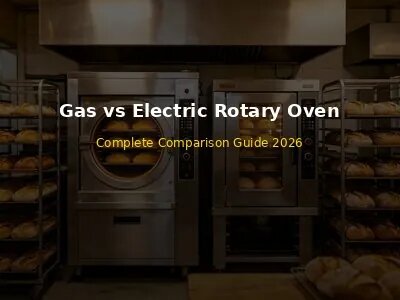
Energy costs are one of the largest expenses for any bakery — typically accounting for 5-15% of total operating costs. After 7 years selling bakery equipment and visiting hundreds of bakeries around the world, I've seen that most bakeries are wasting 15-30% of their energy through inefficient equipment, poor maintenance, and bad operational habits. The good news? Most of this waste is easy and inexpensive to fix.
Quick Answer
Bakery equipment energy efficiency and cost savings guide: How to reduce energy costs 20-40% in your bakery. (1) Why energy efficiency matters—Energy is 3-5% of bakery costs; ovens are biggest energy user (30-50% of total energy); refrigeration second (20-30%); lighting, mixers, other equipment rest; reducing energy 20-40% adds directly to profit; energy costs rising 5-10%/year; efficient equipment = lower operating costs + better for environment. (2) Oven energy efficiency—Choose gas over electric for high-volume (gas 50-70% cheaper to operate than electric for ovens); Buy well-insulated oven (thick insulation = less heat loss, 15-25% more efficient); Rotary oven vs deck (rotary more efficient per loaf for high volume—one heat chamber for 30-60 loaves vs multiple decks); Convection vs conventional (convection 25% faster = less energy per batch); Regular maintenance (clean burners, calibrate thermostat, check door seal—inefficient oven uses 20-50% more energy); Operational habits (preheat only when needed, full loads, batch baking similar temps, turn off when not in use, don't open door frequently (heat loss), use oven light instead of opening door). (3) Refrigeration efficiency—Clean condenser coils monthly (dirty coils = 30% more energy + premature failure); Proper temp (fridge 37-40°F, freezer 0°F—not colder than needed, each degree below 37 costs more); Don't overload (blocks airflow, uneven cooling, compressor works harder); Check door seals (leaks = energy waste, replace if cracked/hardened); Keep doors closed (minimize opening time, use strip curtains, organize so you know where things are); Locate away from heat (ovens, direct sunlight, hot water heaters—heat makes compressor work harder); Allow clearance (4-6 inches around unit for airflow); Defrost regularly (ice buildup = insulation, less efficient, more energy); Energy Star certified (uses 10-20% less than standard). (4) Lighting efficiency—LED lights (use 75% less energy than incandescent, 50% less than fluorescent, last 25x longer); Natural light (skylights, windows—reduce electric lighting during day); Task lighting (light only where needed, not entire kitchen); Motion sensors (turn off lights in storage, restrooms, offices when not in use); Turn off (lights when not in area, end of day). (5) Mixer and other equipment—Match mixer size to batch (overly large mixer for small batches = inefficient, uses more energy); Spiral vs planetary for bread (spiral more energy efficient for dough—gentler, less friction, faster); Turn off when not in use (don't leave mixers, sheeters, dividers on standby); Regular maintenance (lubricate, check belts, clean—well-maintained equipment uses 10-15% less energy); Energy Star where available. (6) Whole facility efficiency—Insulation (walls, ceiling, roof—reduces heating/cooling needs); Weatherstripping (doors, windows—prevents drafts); HVAC maintenance (clean filters, regular service, programmable thermostat—set back when closed); Hot water (insulate pipes, low-flow fixtures, only heat what you need, solar water heating if feasible); Waste heat recovery (oven exhaust heat can pre-heat incoming air or water—some systems available); Energy look over (professional look over identifies top savings opportunities, often free or low-cost from utility company). (7) Monitoring and tracking—Track energy use monthly (kWh, therms, cost per unit of production); Compare to benchmarks (bakery energy use: 1,500-3,000 kWh per $10,000 sales, or 0.5-1.5 kWh per loaf); spot spikes (sudden increase = equipment problem, waste, or rate change); Set reduction targets (10-20% reduction in first year); Celebrate improvements; Involve staff (they see waste you don't, ask for ideas, incentivize savings). (8) Common energy waste mistakes—[ ] Leaving oven on all day (even when not baking—Large waste) [ ] Opening oven door frequently (each opening loses 20-50°F, uses more energy to reheat) [ ] Dirty condenser coils (30% more energy, premature compressor failure) [ ] Overcooling fridge (below 37°F wastes energy, doesn't improve food safety) [ ] Incandescent/old fluorescent lights (5-10x more energy than LED) [ ] No maintenance (inefficient equipment uses 20-50% more energy) [ ] Half-full oven batches (same energy as full, less product—wait until full or combine) [ ] Leaky door seals (oven/fridge—heat/cold escape, equipment works harder) [ ] Equipment on standby (mixers, sheeters, dividers—turn off when not in use) [ ] No monitoring (can't reduce what you don't measure—track monthly) (9) Energy efficiency FAQ—Q: What's the fastest energy savings? A: Clean condenser coils (immediate 15-25% refrigeration savings), switch to LED (75% lighting savings), and improve oven use (full loads, turn off when not in use—10-20% oven savings). These three can reduce total energy 15-25% within 1 month, no capital investment. Q: Is gas oven quite cheaper than electric? A: Yes—for high-volume bakeries, gas ovens cost 50-70% less to operate than electric. Example: electric rotary oven $500-$1,000+/month electricity vs gas $100-$300/month. Over 10 years, gas saves $5,000-$15,000. But gas requires gas line + hood installation (higher upfront cost). If gas not available, electric is only option—but budget for high electricity costs. Q: How much can LED lighting save? A: LED uses 75% less energy than incandescent, 50% less than fluorescent. For a bakery using 1,000 kWh/month for lighting, LED saves 500-750 kWh/month = $50-$100/month = $600-$1,200/year. LED bulbs last 25,000-50,000 hours (vs 1,000 incandescent, 10,000 fluorescent), so also save on replacement costs and labor. Payback usually 6-18 months. Q: Should I buy Energy Star equipment? A: Yes—Energy Star certified equipment uses 10-30% less energy than standard models. For refrigeration (biggest energy user after oven), Energy Star saves 10-20%. For ovens, look for high-efficiency models with good insulation. Calculate payback: energy savings per year vs equipment premium. Usually pays back in 2-5 years, then pure savings. Also check for utility rebates (many utilities offer $50-$500 rebates for Energy Star equipment). Q: What's a typical bakery energy bill? A: Small bakery (1,000 sq ft, <200 loaves/day): $300-$800/month. Medium bakery (2,000-3,000 sq ft, 200-1,000 loaves/day): $800-$2,500/month. Large bakery/wholesale (5,000+ sq ft, 1,000+ loaves/day): $2,500-$10,000+/month. Oven = 30-50%, refrigeration = 20-30%, lighting = 10-15%, other = 10-20%. Track per loaf or per $10,000 sales for meaningful comparison. Summary: bakery energy efficiency = oven efficiency (gas, insulation, maintenance, operational habits), refrigeration efficiency (clean coils, proper temp, door seals, don't overload, location), lighting (LED, natural light, sensors, turn off), mixer/equipment (match size, spiral for bread, turn off, maintenance), whole facility (insulation, weatherstripping, HVAC, hot water, waste heat recovery, energy look over), monitoring (track monthly, benchmarks, targets, staff involvement), avoid common mistakes, FAQ. Target: reduce energy 20-40% within 6-12 months, adding directly to profit margin.
Table of Contents
- Understanding Bakery Energy Consumption
- The Biggest Energy Wasters in a Bakery
- Quick Energy-Saving Changes You can Make Today
- Equipment Upgrades with the Best ROI
- How to Calculate ROI for Energy Upgrades
- put in placeing a Sustainable Energy Reduction Program
- Energy Efficiency and Product Quality
- Environmental Benefits of Energy Efficiency
- Often Asked Questions
- The Practical Summary
In this bakery equipment energy guide, I'll share everything I've learned about bakery energy efficiency — from quick changes You can make today to equipment upgrades that pay for themselves in energy savings. I'll also show you how to calculate ROI, spot the biggest energy wasters, and put in place a sustainable energy reduction program that saves you money year after year.
"My energy bills were killing my profit margins — I was paying $1,200/month just for electricity. I tried everything the utility company suggested, but nothing made a real difference. Then I did a complete energy look over of my bakery. The biggest finds: my 12-year-old oven was using 30% more energy than it should because of dirty heating elements and a worn door seal, my fluorescent lighting was using 4x more energy than LED, and my exhaust fans were running at full speed 24/7. I fixed all of these issues for less than $1,500, and my energy bills dropped to $750/month — a $450/month savings that paid for the upgrades in just over 3 months. Energy efficiency isn't about sacrificing quality — it's about eliminating waste. Every bakery can save money with the right way."
— Robert K., Bakery Owner in Canada
Understanding Bakery Energy Consumption
Before You can reduce energy consumption, You should understand where your energy is going. In a typical bakery, energy is distributed roughly as follows:
| End Use | % of Total Energy | Annual Cost (Medium Bakery) |
|---|---|---|
| Ovens and baking equipment | 30-50% | $2,000-6,000 |
| Refrigeration and freezing | 15-25% | $1,000-3,000 |
| Lighting | 10-15% | $600-1,800 |
| Ventilation and exhaust | 8-15% | $500-1,800 |
| Mixers and dough processing | 5-10% | $300-1,200 |
| Hot water heating | 5-10% | $300-1,200 |
| Space heating and cooling | 3-8% | $200-1,000 |
| Other (controls, standby, etc.) | 2-5% | $100-600 |
Important insight: Ovens are the biggest energy consumer in most bakeries, accounting for 30-50% of total energy. This means oven efficiency improvements have the biggest potential impact. Lighting and ventilation are also meaningful, and these are typically the easiest and cheapest to fix.
The Biggest Energy Wasters in a Bakery
1. Oven Inefficiency (30-50% of Total Energy)
The oven is typically the largest energy consumer, and also the biggest source of waste:
- Dirty heating elements: Grease and carbon buildup insulates elements, forcing them to use 10-20% more energy.
- Worn door seals: A damaged or compressed seal allows heat to escape, wasting 10-15% of oven energy.
- Excessive preheating: Preheating longer than necessary wastes energy. Most rotary ovens reach temperature in 15-20 minutes.
- Frequent door opening: Each door opening loses 10-15% of heat. Plan batches to minimize door openings.
- Poor insulation: Degraded or damaged insulation increases energy consumption by 15-25%.
- Partially loaded batches: A partially loaded oven uses almost as much energy as a full one, increasing energy per loaf by 20-30%.
- Old, inefficient models: Ovens 10+ years old use 15-25% more energy than modern models.
2. Lighting Waste (10-15% of Total Energy)
- Traditional fluorescent lighting uses 3-4x more energy than LED.
- Lights left on in unoccupied areas (storage, restrooms, offices).
- Overly bright lighting in areas that don't need it.
- Old, inefficient fixtures that waste energy as heat.
3. Ventilation and Exhaust Waste (8-15% of Total Energy)
- Constant-speed exhaust fans running at full speed even when not needed.
- Exhaust pulling conditioned air (heated or cooled) out of the bakery.
- No heat recovery from oven exhaust — waste heat goes up the chimney.
- Dirty filters and clogged ducts reducing efficiency.
4. Refrigeration Waste (15-25% of Total Energy)
- Dirty condenser coils forcing compressors to work harder (+15-25% energy).
- Worn door seals allowing cold air to escape.
- Temperatures set lower than necessary.
- Old, inefficient models using 20-40% more energy.
- Excessive door opening and leaving doors open.
5. Mixer and Processing Waste (5-10% of Total Energy)
- Mixers without inverter drives running at full speed for light loads.
- Old, inefficient motors using 15-25% more energy.
- Equipment left running when not in use.
- Overmixing — longer mix times use more energy and can damage dough quality.
Quick Energy-Saving Changes You can Make Today
These quick, low-cost changes can reduce your bakery's energy consumption by 15-25% with little or no investment. Most pay for themselves within weeks or months.
1. Turn Off Equipment When Not in Use
Turn off ovens, mixers, lights, and other equipment when not in use. Don't leave equipment on standby unnecessarily. Many bakeries leave ovens on for hours between batches "to keep them warm" — this wastes real energy. Instead, plan production to minimize downtime, and turn off equipment during long breaks.
Savings: 5-10% of total energy | Cost: $0 | Payback: Immediate
2. Clean Oven Heating Elements
Use a soft brush to remove dust and grease from heating elements. Dirty elements use 10-20% more energy because the buildup acts as insulation. Clean elements monthly, or more often if you bake greasy products.
Savings: $200-600/year for a 32-tray oven | Cost: $0 | Payback: Immediate
3. Check and Replace Worn Door Seals
check oven, refrigerator, and freezer door seals regularly. Replace any that are cracked, torn, compressed, or not sealing properly. A simple test: close the door on a piece of paper — if it pulls out easily, the seal needs replacement.
Savings: $150-500/year | Cost: $20-100 per seal | Payback: 1-3 months
4. Batch Bake Efficiently
Plan production to maximize oven load. A fully loaded oven uses less energy per loaf than a partially loaded one. Avoid opening the oven door unnecessarily — each opening loses 10-15% of heat. Use the oven light and window to check progress instead of opening the door.
Savings: 10-15% of oven energy | Cost: $0 | Payback: Immediate
5. Switch to LED Lighting
Replace fluorescent and incandescent bulbs with LED. LED uses 60-75% less energy, lasts 10-20x longer, and produces less heat (reducing cooling costs). This is one of the highest-ROI energy upgrades You can make.
Savings: $200-500/year | Cost: $100-300 for a medium bakery | Payback: 6-12 months
6. Use Residual Oven Heat
After baking, leave the oven door slightly open to use residual heat for proofing, drying, or space heating. Don't waste the heat you've already paid for. You can also use residual heat to warm the bakery in winter, reducing heating costs.
Savings: $100-300/year | Cost: $0 | Payback: Immediate
7. Clean Refrigerator Coils
Vacuum or brush dust from refrigerator and freezer condenser coils. Dirty coils make compressors work harder, using 15-25% more energy. Clean coils every 3-6 months, or monthly in dusty environments.
Savings: $100-300/year | Cost: $0 | Payback: Immediate
8. Set Proper Temperatures
Ensure oven, proofer, refrigerator, and freezer temperatures are set correctly. Overheating or overcooling wastes energy. Use a separate thermometer to check actual temperatures — built-in thermostats can be off by 5-15°C.
Savings: 5-10% of heating/cooling energy | Cost: $10-20 for a thermometer | Payback: 1-2 months
Equipment Upgrades with the Best ROI
Once you've put in placeed the quick changes above, consider these equipment upgrades. Each has a strong ROI and will save you money for years to come.
1. Energy-Efficient Rotary Oven
Modern rotary ovens use 15-25% less energy than models 10+ years old, Because of better insulation, more efficient heating elements, improved fan design, and smarter controls. If your oven is 10+ years old or requires frequent repairs, upgrading to a new energy-efficient model is usually a sound investment.We get asked this question at least 10 times a week: 'What's the best [equipment] for my bakery?' The honest answer? It depends. But here's a structure that works for 90% of the bakeries we work with.
2. Inverter-Driven Spiral Mixer
Traditional mixers run at full speed regardless of load, wasting energy during light mixing. Inverter-driven mixers adjust motor speed from load, saving 20-30% energy. They also provide gentler mixing, better dough quality, and reduced wear on components.
Savings: $300-800/year | Cost premium: $300-800 over standard mixer | Payback: 1-2 years
3. LED Lighting Upgrade
As noted, LED lighting is one of the highest-ROI upgrades. For a medium bakery, a complete LED upgrade costs $100-300 and saves $200-500/year, with a payback of 6-12 months. LED bulbs also last 10-20x longer, reducing maintenance and replacement costs.
4. Variable-Speed Exhaust Fans
Most bakery exhaust fans run at constant full speed, even when cooking loads are light. Variable-speed fans adjust speed from actual needs, saving 30-50% of exhaust energy. They also reduce noise and improve kitchen comfort.
Savings: $300-700/year | Cost: $500-1,500 | Payback: 1-2 years
5. Heat Recovery System
Oven exhaust contains meaningful waste heat — typically 200-300°C. A heat recovery system captures this waste heat and uses it to preheat incoming combustion air, heat water, or warm the bakery space. This can reduce overall energy consumption by 10-15%.
Savings: $500-1,500/year | Cost: $1,500-4,000 | Payback: 2-4 years
6. Energy-Efficient Refrigeration
Modern commercial refrigerators and freezers use 20-40% less energy than models 10+ years old, Because of better insulation, more efficient compressors, and smarter controls. If your refrigeration is old, upgrading can yield notable savings.
Savings: $400-1,200/year | Cost: $1,500-5,000 | Payback: 3-5 years
How to Calculate ROI for Energy Upgrades
Before investing in any energy upgrade, calculate the expected ROI to ensure it's a sound financial decision. Here's the step-by-step process:
Step 1: Calculate Current Energy Cost
For electric equipment:
Current annual cost = Power (kW) × Hours/day × Days/year × Electricity rate ($/kWh)
For gas equipment:
Current annual cost = Gas consumption (units/hour) × Hours/day × Days/year × Gas price ($/unit)
Step 2: Calculate New Equipment Energy Cost
New annual cost = Current annual cost × (1 - Energy savings percentage)
Typical savings percentages:
- Modern rotary oven vs 10+ year old: 15-25% savings
- Inverter mixer vs standard: 20-30% savings
- LED vs fluorescent lighting: 60-75% savings
- Variable-speed fan vs constant-speed: 30-50% savings
Step 3: Calculate Annual Savings
Annual savings = Current annual cost - New annual cost
Step 4: Calculate Total Investment
Total investment = Equipment cost + Installation cost + Additional costs - Incentives/rebates
Step 5: Calculate Payback Period
Payback period (years) = Total investment ÷ Annual savings
Step 6: Calculate ROI
ROI (%) = (Annual savings × Equipment lifespan - Total investment) ÷ Total investment × 100
ROI Guidelines: Payback under 2 years = Great, do it immediately. Payback 2-4 years = Good, worth doing. Payback 4-6 years = Moderate, consider if equipment needs replacement anyway. Payback over 6 years = Marginal, may not be worth it unless equipment is at end of life.
ROI Calculation Example
Let's calculate the ROI of upgrading from an old 32-tray electric oven to a new energy-efficient model:
- Current oven: 12 kW average × 10 hours/day × 300 days/year = 36,000 kWh/year
- At $0.15/kWh = $5,400/year current cost
- New oven uses 20% less = $4,320/year
- Annual savings = $1,080/year
- New oven cost (including installation) = $7,000
- Payback period = $7,000 ÷ $1,080 = 6.5 years
- ROI over 15-year lifespan = ($1,080 × 15 - $7,000) ÷ $7,000 × 100 = 131%
In this example, the upgrade has a moderate payback but Great long-term ROI. If the old oven also requires frequent repairs ($500-1,000/year), the total savings would be even higher, shortening the payback period to 4-5 years.
put in placeing a Sustainable Energy Reduction Program
To achieve lasting energy savings, put in place a structured energy reduction program:
1. Measure and Monitor
- Install sub-meters for major equipment (oven, refrigeration, lighting) to spot energy hogs.
- Track energy consumption per unit of production (kWh per loaf, per kg of dough).
- look over utility bills monthly and compare to previous periods.
- Set specific, measurable energy reduction targets (e.g., 10% reduction in 6 months).
2. Assign Responsibility
- Designate an "energy champion" on your team who is responsible for tracking energy use and put in placeing savings measures.
- Involve all employees — energy efficiency is a team effort.
- Include energy-saving practices in employee training and standard operating procedures.
3. put in place in Phases
- Phase 1 (0-1 month): Quick wins — turn off equipment, clean elements, replace seals, switch to LED, adjust temperatures.
- Phase 2 (1-3 months): Operational changes — batch baking, production scheduling, staff training, preventive maintenance program.
- Phase 3 (3-12 months): Equipment upgrades — inverter mixers, variable-speed fans, heat recovery, new energy-efficient equipment as budget allows.
4. Maintain and Improve
- Schedule regular equipment maintenance to keep everything running efficiently.
- look over energy performance monthly and adjust as needed.
- Celebrate successes and share results with the team.
- Continuously look for new ways to reduce energy consumption.
"I used to think energy efficiency was just about buying new equipment — something I couldn't afford. But when I started measuring our energy use, I realized we were wasting thousands of dollars a year through simple things like leaving equipment on, dirty heating elements, and bad lighting. I put in placeed a structured energy reduction program: first the quick wins (cleaning, LED, turning things off), then operational changes (batch baking, staff training), then equipment upgrades as we could afford them. Within a year, we'd reduced our energy consumption by 22% and saved over $4,000. The best part? We didn't have to spend a lot upfront — most of the savings came from changing habits and doing basic maintenance. Energy efficiency isn't about spending money — it's about stopping waste."
— Anna L., Bakery Owner in Australia
Energy Efficiency and Product Quality
One concern many bakers have is whether energy-saving measures will affect product quality. The good news is that most energy efficiency measures actually improve product quality:
- Clean heating elements: Provide more even heat distribution, causing more consistent baking.
- Proper door seals: Maintain consistent oven temperature, reducing temperature fluctuations that cause uneven baking.
- Calibrated thermostats: Ensure accurate temperatures, eliminating underbaking or overbaking.
- Inverter-driven mixers: Provide gentler, more controlled mixing, improving dough quality and consistency.
- Batch baking: Ensures each batch gets consistent heat, rather than competing for heat in a partially loaded oven.
- Modern energy-efficient ovens: Offer better temperature control, more even heat distribution, and more consistent results than older models.
The only measure that could potentially affect quality is reducing oven temperature to save energy — but this is not recommended. Always bake at the correct temperature for your products. Energy savings should come from eliminating waste, not from compromising product quality.
Environmental Benefits of Energy Efficiency
Plus to cost savings, energy efficiency offers meaningful environmental benefits:
- Reduced carbon footprint: Most bakery energy comes from fossil fuels, so reducing consumption directly reduces CO2 emissions. A 20% energy reduction for a medium bakery saves 5-10 Many CO2 per year.
- Less air pollution: Reduced energy consumption means less power plant emissions (SO2, NOx, pexpress matter), improving local air quality.
- Resource conservation: Less energy use means less extraction of coal, natural gas, and other resources.
- Marketing advantage: Many customers prefer to support environmentally responsible businesses. Promoting your energy efficiency efforts can be a marketing differentiator.
- Regulatory compliance: Many regions are put in placeing energy efficiency regulations and carbon pricing. Reducing energy consumption now prepares you for future regulations.
📋 Bakery Equipment ROI Calculator
Use our interactive ROI calculator to see how quickly your bakery equipment investment pays off.
Calculate Your Equipment ROI →📋 Bakery Equipment Maintenance Calendar
Get our printable maintenance calendar to keep your bakery equipment running at peak performance.
Printable Maintenance Calendar →📋 Bakery Equipment Energy Cost Calculator
Estimate your bakery equipment energy costs and find ways to reduce your utility bills.
Calculate Energy Costs →🏭 Bakery Equipment Capacity Calculator
Not sure what size equipment you need? Use our free interactive calculator to find the perfect dough divider, mixer, oven, and proofer capacity for your production volume.
Calculate Your Equipment Needs →⚖️ Bakery Equipment Comparison Tool
Compare dough dividers, spiral mixers, ovens, proofers and dough sheeters side by side. View specs, prices, capacity and features to find the best equipment for your bakery.
Compare Equipment Now →Often Asked Questions
Q: How can I reduce my bakery's energy consumption?
A: Reducing bakery energy consumption involves a combination of operational changes, equipment maintenance, and strategic upgrades: 1) improve oven usage: Batch bake to maximize oven load, preheat only when needed, avoid frequent door opening, use residual heat for proofing or drying. 2) Maintain equipment: Clean heating elements regularly (dirty elements use 10-20% more energy), replace worn door seals, calibrate thermostats, lubricate moving parts. 3) Upgrade to energy-efficient equipment: Modern rotary ovens use 15-25% less energy than older models, inverter-driven mixers save 20-30% energy, LED lighting uses 75% less than fluorescent. 4) Improve insulation: Ensure oven insulation is in good condition, insulate hot water pipes, use insulated proofing boxes. 5) improve ventilation: Use variable-speed exhaust fans, recover waste heat from oven exhaust for space heating or water heating. 6) Manage lighting: Switch to LED, install motion sensors in storage areas, use natural light where possible. 7) Monitor and measure: Install sub-meters to spot energy hogs, track energy consumption per unit of production, set energy reduction targets. 8) Train staff: Educate employees on energy-saving practices, make energy efficiency part of daily operations. Most bakeries can reduce energy consumption by 15-30% through these measures, with payback periods ranging from 6 months to 3 years depending on the measure.
Q: How much energy does a rotary oven use?
A: Rotary oven energy consumption depends on size, fuel type, age, and usage patterns: Electric rotary ovens: 16-tray model: 6-9 kW average (12-15 kW peak during preheat), 32-tray model: 8-12 kW average (15-20 kW peak), 48-tray model: 12-18 kW average (20-30 kW peak), 64-tray model: 18-25 kW average (30-40 kW peak). Gas rotary ovens: 16-tray model: 0.4-0.6 kg LPG/hour or 0.5-0.8 m³ natural gas/hour, 32-tray model: 0.5-0.8 kg LPG/hour or 0.6-1.0 m³ natural gas/hour, 48-tray model: 0.8-1.2 kg LPG/hour or 1.0-1.5 m³ natural gas/hour, 64-tray model: 1.0-1.5 kg LPG/hour or 1.2-2.0 m³ natural gas/hour. Daily energy cost (10 hours operation): Electric 32-tray: $8-20/day depending on electricity rates, Gas 32-tray: $4-12/day depending on gas prices. Annual energy cost: Electric 32-tray: $2,400-6,000/year, Gas 32-tray: $1,200-3,600/year. Important factors affecting consumption: 1) Oven load: A fully loaded oven uses less energy per loaf than a partially loaded one. 2) Door opening: Each door opening loses 10-15% of heat. 3) Insulation quality: Poor insulation increases consumption by 15-25%. 4) Maintenance: Dirty heating elements and worn seals increase consumption by 10-20%. 5) Preheat time: Excessive preheating wastes energy. Modern energy-efficient ovens use 15-25% less energy than older models, and gas ovens typically cost 30-50% less to operate than electric ovens in most regions.
Q: Is it worth upgrading to energy-efficient bakery equipment?
A: Upgrading to energy-efficient bakery equipment is often worth it, but the ROI depends on several factors: When it's worth upgrading: 1) Your equipment is 10+ years old: Older ovens and mixers use 20-40% more energy than modern models. 2) Your energy costs are high: If you're in a region with expensive electricity or gas, energy savings accumulate quickly. 3) Your equipment requires frequent repairs: Repair costs plus energy waste make upgrading more attractive. 4) You're expanding production: New equipment can handle higher volume with less energy per unit. 5) You qualify for incentives: Many governments and utility companies offer rebates, tax credits, or low-interest loans for energy-efficient equipment upgrades. Typical ROI periods: Energy-efficient rotary oven: 2-4 years (saves $500-1,500/year), Inverter-driven spiral mixer: 1-2 years (saves $300-800/year), LED lighting upgrade: 6-12 months (saves $200-500/year), Variable-speed exhaust fans: 1-2 years (saves $300-700/year), Heat recovery system: 2-4 years (saves $500-1,500/year). When it may NOT be worth upgrading: 1) Your equipment is less than 5 years old: Modern equipment is already relatively efficient. 2) Your energy costs are quite low: Savings may not justify the investment. 3) You're planning to close or relocate soon: Payback period may be too long. 4) The upgrade cost is quite high: Calculate ROI carefully before committing. Recommendation: Start with low-cost, high-ROI measures (LED lighting, maintenance, operational changes) before investing in major equipment upgrades. For equipment that's 10+ years old or requires frequent repairs, upgrading to energy-efficient models is usually a sound investment that pays for itself in energy savings and reduced maintenance costs. Always calculate the expected ROI from your actual energy costs and usage patterns before making a decision.
Q: What are the biggest energy wasters in a bakery?
A: The biggest energy wasters in a typical bakery, in order of impact: 1) Oven inefficiency: The oven is typically the largest energy consumer (30-50% of total bakery energy). Major wastes include: dirty heating elements (+10-20% energy), worn door seals (+10-15% energy), excessive preheating (+5-10% energy), frequent door opening (+10-15% energy), poor insulation (+15-25% energy), partially loaded batches (+20-30% energy per loaf). 2) Lighting: Traditional fluorescent or incandescent lighting uses 3-4x more energy than LED. Bakeries often have lights on 12-16 hours/day, making this a meaningful waste. 3) Ventilation and exhaust: Constant-speed exhaust fans run at full speed even when not needed, wasting energy. Poorly designed ventilation can also pull conditioned air out of the bakery. 4) Refrigeration: Old, inefficient refrigerators and freezers use 20-40% more energy than modern models. Door seals, dirty condenser coils, and excessive door opening increase consumption. 5) Mixer inefficiency: Mixers without inverter drives run at full speed even for light loads, wasting energy. Older mixers with inefficient motors use 15-25% more energy. 6) Hot water heating: Bakeries use real hot water for cleaning and dough making. Inefficient water heaters, uninsulated pipes, and excessive water temperature waste energy. 7) Standby power: Equipment left on standby (digital displays, control panels, idle motors) can account for 5-10% of total energy consumption. 8) Poor building insulation: Heat loss through walls, roof, windows, and doors increases heating costs in winter and cooling costs in summer. 9) Air leaks: Drafts around doors, windows, and loading docks allow conditioned air to escape, increasing heating/cooling costs. 10) Inefficient production scheduling: Poorly planned production causes excessive oven preheating, partially loaded batches, and unnecessary equipment runtime. deal withing these energy wasters can reduce total bakery energy consumption by 15-30%, with the oven and lighting typically offering the quickest and most real savings.
Q: How do I calculate the ROI of energy-efficient equipment?
A: Calculating the ROI (Return on Investment) of energy-efficient equipment helps you make informed purchasing decisions. Here's the step-by-step process: Step 1: Calculate current energy cost: Current annual energy cost = (Equipment power rating in kW) × (Hours of operation per day) × (Days of operation per year) × (Electricity rate per kWh). For gas equipment: Current annual energy cost = (Gas consumption per hour) × (Hours per day) × (Days per year) × (Gas price per unit). Step 2: Calculate new equipment energy cost: New annual energy cost = Current annual energy cost × (1 - Energy savings percentage). Energy savings percentages: Modern rotary oven vs 10+ year old model: 15-25% savings, Inverter mixer vs standard mixer: 20-30% savings, LED vs fluorescent lighting: 60-75% savings, Variable-speed fan vs constant-speed: 30-50% savings. Step 3: Calculate annual energy savings: Annual savings = Current annual cost - New annual cost. Step 4: Calculate total investment cost: Total investment = Equipment cost + Installation cost + Any additional costs (electrical upgrades, ventilation modifications, etc.) - Any incentives/rebates. Step 5: Calculate payback period: Payback period (years) = Total investment ÷ Annual savings. Step 6: Calculate ROI: ROI (%) = (Annual savings × Equipment lifespan - Total investment) ÷ Total investment × 100. Example: Current 32-tray electric oven uses 10 kW × 10 hours/day × 300 days/year = 30,000 kWh/year. At $0.15/kWh = $4,500/year. New energy-efficient oven uses 20% less = $3,600/year. Annual savings = $900/year. New oven cost = $8,000 (including installation). Payback period = $8,000 ÷ $900 = 8.9 years. ROI over 15-year lifespan = ($900 × 15 - $8,000) ÷ $8,000 × 100 = 68.75%. General guidelines: Payback under 2 years: Great investment, do it immediately. Payback 2-4 years: Good investment, worth doing. Payback 4-6 years: Moderate investment, consider if equipment needs replacement anyway. Payback over 6 years: Marginal investment, may not be worth it unless equipment is at end of life. Always use your actual energy costs and usage patterns for accurate calculations. Also consider non-energy benefits: improved product quality, reduced maintenance, increased capacity, better reliability, and environmental benefits.
Q: Are gas ovens more energy efficient than electric ovens?
A: Gas ovens and electric ovens have different efficiency characteristics, and which is more cost-effective depends on your local energy prices: Energy conversion efficiency: Electric ovens: 75-85% efficient (most electricity is converted to heat, with some loss through the heating elements and controls). Gas ovens: 50-70% efficient (some heat is lost through combustion byproducts that go up the chimney, and gas combustion is less efficient than electric resistance heating). On pure energy conversion efficiency, electric ovens are more efficient. However, operating cost tells a different story: Operating cost comparison (32-tray oven, 10 hours/day, 300 days/year): Electric: 8-12 kW average × 3,000 hours = 24,000-36,000 kWh/year. At $0.10-0.25/kWh = $2,400-9,000/year. Gas: 0.5-0.8 kg LPG/hour × 3,000 hours = 1,500-2,400 kg/year. At $0.80-1.50/kg = $1,200-3,600/year. Or: 0.6-1.0 m³ natural gas/hour × 3,000 hours = 1,800-3,000 m³/year. At $0.30-0.80/m³ = $540-2,400/year. In most regions, gas ovens cost 30-50% less to operate than electric ovens, despite lower conversion efficiency, because gas is typically much cheaper per unit of heat than electricity. Factors to consider: 1) Local energy prices: In regions with affordable electricity (e.g., hydroelectric power) or costly gas, electric may be cheaper to operate. 2) Installation cost: Gas ovens require gas line, ventilation, and chimney — installation costs $500-3,000 more than electric. 3) Environmental impact: Electric ovens produce zero on-site emissions, but the overall carbon footprint depends on how electricity is generated. Gas ovens produce CO2 on-site. 4) Baking characteristics: Gas ovens produce moister heat (from combustion water vapor), which can improve crust development. Electric ovens produce drier heat with more precise temperature control. 5) Availability: Gas may not be available in all locations (e.g., shopping malls, remote areas). Recommendation: Calculate your actual operating costs from local energy rates. In most regions, gas ovens offer lower operating costs despite lower conversion efficiency. But if electricity is affordable or gas is unavailable/expensive, electric may be the better choice. See our complete Gas vs Electric Rotary Oven guide for more details.
Q: What quick energy-saving changes can I make today?
A: Here are quick, low-cost energy-saving changes You can put in place today, with immediate impact: 1) Turn off equipment when not in use: Turn off ovens, mixers, lights, and other equipment when not in use. Don't leave equipment on standby unnecessarily. Savings: 5-10% of total energy. 2) Clean oven heating elements: Use a soft brush to remove dust and grease from heating elements. Dirty elements use 10-20% more energy. Savings: $200-600/year for a 32-tray oven. 3) Check and replace worn door seals: check oven, refrigerator, and freezer door seals. Replace any that are cracked, torn, or not sealing properly. Savings: $150-500/year. 4) Batch bake efficiently: Plan production to maximize oven load. A fully loaded oven uses less energy per loaf than a partially loaded one. Avoid opening the oven door unnecessarily — each opening loses 10-15% of heat. Savings: 10-15% of oven energy. 5) Switch to LED lighting: Replace fluorescent and incandescent bulbs with LED. LED uses 60-75% less energy and lasts 10-20x longer. Savings: $200-500/year. Payback: 6-12 months. 6) Use residual oven heat: After baking, leave the oven door slightly open to use residual heat for proofing, drying, or space heating. Don't waste the heat you've already paid for. Savings: $100-300/year. 7) Clean refrigerator coils: Vacuum or brush dust from refrigerator and freezer condenser coils. Dirty coils make compressors work harder, using 15-25% more energy. Savings: $100-300/year. 8) Set proper temperatures: Ensure oven, proofer, refrigerator, and freezer temperatures are set correctly. Overheating or overcooling wastes energy. Use a thermometer to check actual temperatures. Savings: 5-10% of heating/cooling energy. 9) Install motion sensors: Install motion-activated light switches in storage areas, restrooms, and other areas that don't need constant lighting. Savings: $50-150/year. 10) Seal air leaks: Use weatherstripping and caulk to seal drafts around doors, windows, and loading docks. Savings: $100-300/year in heating/cooling costs. 11) Use cold water for cleaning when possible: Most bakery cleaning can be done with warm or cold water instead of hot. Heating water accounts for 10-15% of bakery energy. Savings: $100-250/year. 12) Train your team: Educate all employees on energy-saving practices. Make energy efficiency part of your daily operations. The biggest savings come from consistent, team-wide behavior changes. Total potential savings from these quick changes: 15-25% of total bakery energy consumption, or $1,000-5,000/year for a medium bakery, with little or no investment required.
The Practical Summary
Energy efficiency is one of the most overlooked opportunities for bakery profitability. Most bakeries are wasting 15-30% of their energy — money that could be going directly to your bottom line. The best part? Most of this waste is easy and inexpensive to fix. You don't need to buy all new equipment or make major investments — you just need to remove waste, maintain your equipment properly, and adopt energy-efficient operational habits.
Start with the quick wins — turn off equipment, clean heating elements, replace worn seals, switch to LED. These changes alone can save you 10-15% on energy bills with little or no investment. Then move to operational changes — batch baking, production scheduling, staff training. Finally, consider equipment upgrades as your budget allows, always calculating ROI before investing.
At HNH Bakery Equipment, we design our equipment with energy efficiency in mind — thick insulation, efficient heating elements, inverter-driven motors, and smart controls that improve energy use. Our rotary ovens use 15-25% less energy than comparable older models, and our spiral mixers with inverter drives save 20-30% energy. If you're Given upgrading your equipment to reduce energy costs, contact us today for a free consultation and energy savings analysis. We'll help you calculate the potential savings and ROI for your specific situation.
Have Questions? We Are Here to Help
Whether You're just starting out or looking to upgrade your existing line, we have the equipment and the expertise to help you succeed. Contact us for a free quote today.
Get Your Free Energy Analysis